
The Farriery — History & Facts
A shaft of gentle light draws your gaze to the dappled horse at the center, its pale coat almost luminous against the shadowed stable behind. The animal stands patiently, head lowered, as a farrier—hat pulled low and coat rumpled—rests a reassuring hand on its neck. Around them, chickens and a rooster peck and strut, their casual bustle a quiet counterpoint to the stillness of the main figures.
In the murky background, a faint glow reveals two men bent over their work at the forge, the orange spark of the fire barely visible. Every gesture is purposeful: the farrier’s calm, the horse’s wary trust, the animals’ indifference, all staged in a world of warm browns and soft greys that slow time to a near halt. Painted in 1658, The Farriery by Adriaen van de Velde belongs to a Dutch tradition that found beauty and quiet drama in everyday rural life. In the mid-seventeenth century, scenes like this were prized by urban collectors who longed for the imagined peace of the countryside, and artists responded with works that celebrated the rhythms of work and animal care.
The painting now resides in the collection of Museum Boijmans Van Beuningen, a reminder of how little moments—an animal tended, a tool at rest—were once considered worthy of the artist’s full attention. Look again at the light on the horse’s back and the farrier’s gentle pose, and you’ll find the dignity of labor, captured for a world that was rapidly changing.
More Artworks by Adriaen van de Velde

Staande stier
Adriaen van de Velde
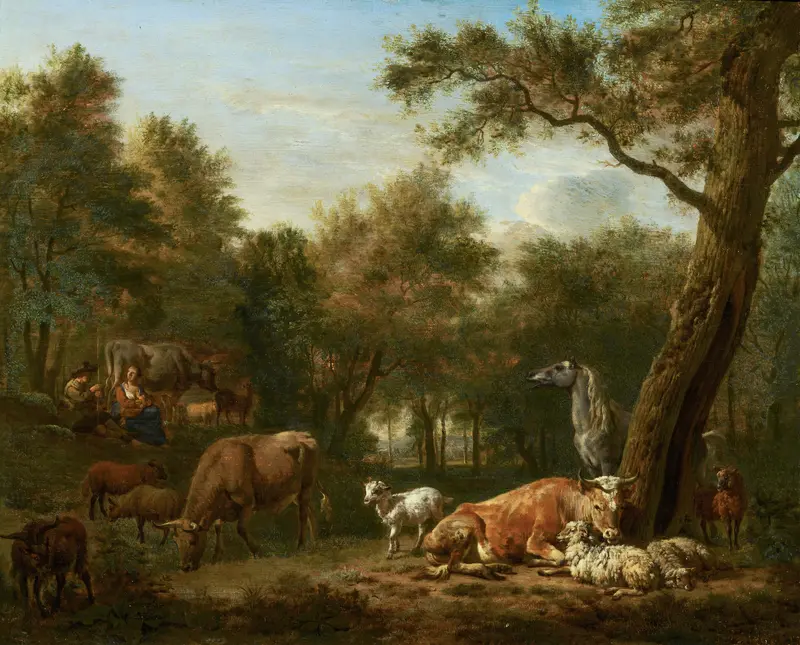
Wooded Landscape with Cattle
Adriaen van de Velde
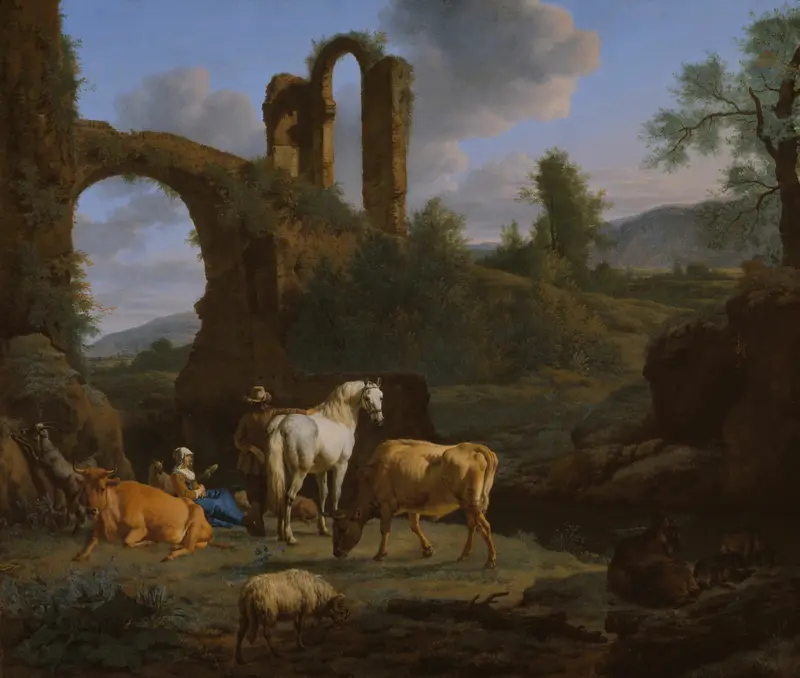
Pastoral Landscape with Ruins
Adriaen van de Velde
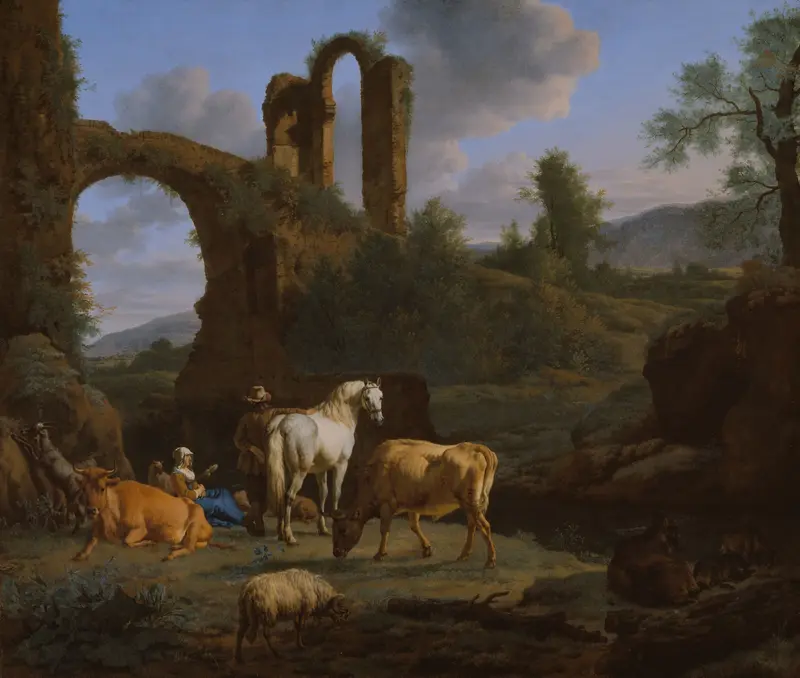
Pastoral Landscape with Ruins
Adriaen van de Velde
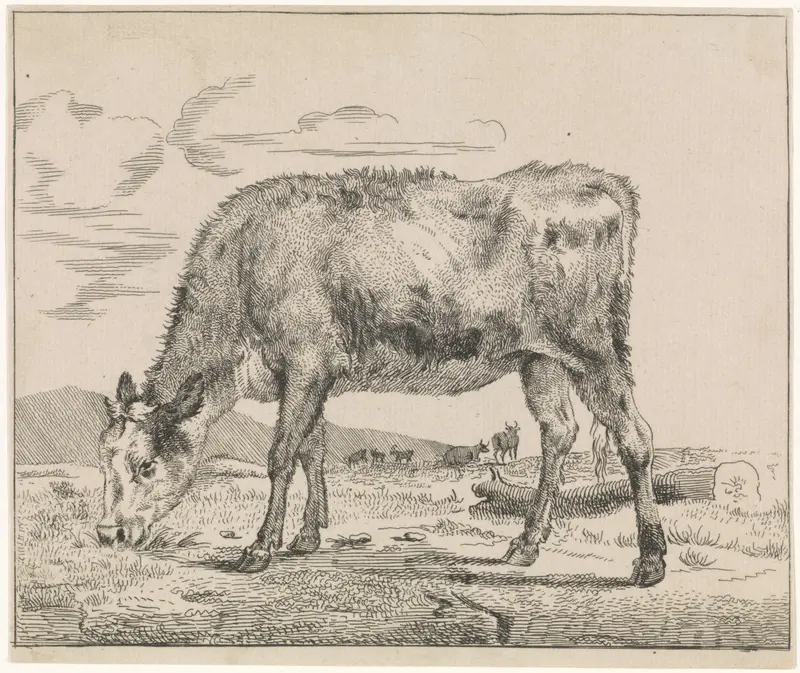
Grazend kalf
Adriaen van de Velde
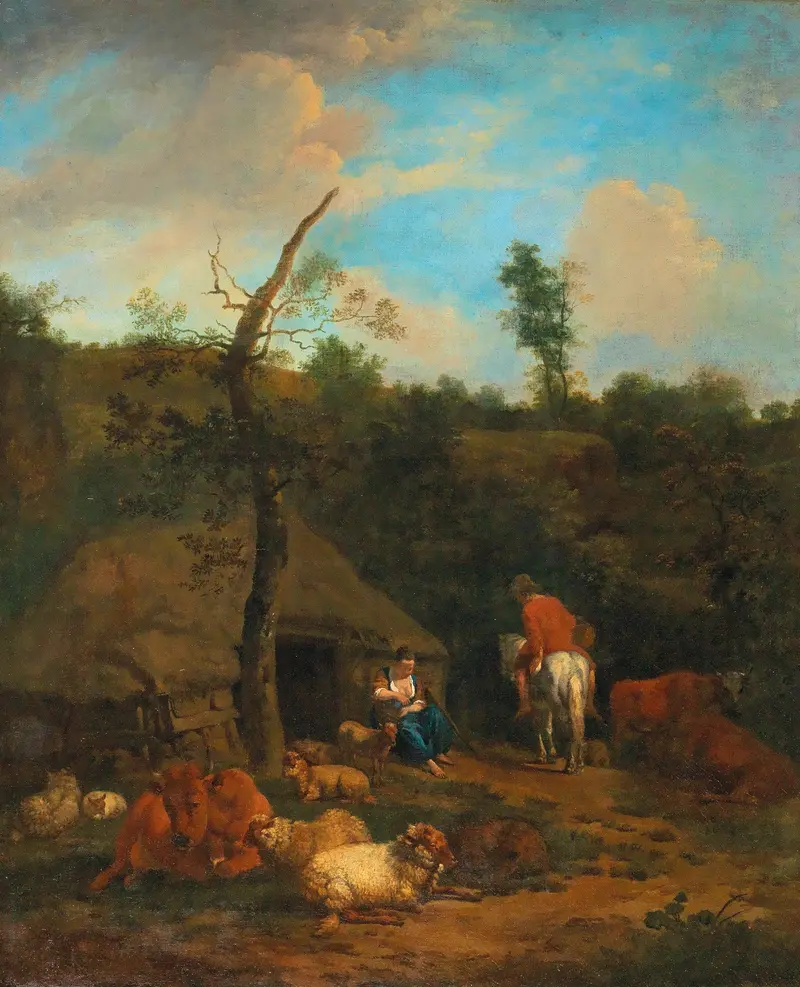
A herdsman and a shepherdess in front of a wooden farmhouse
Adriaen van de Velde
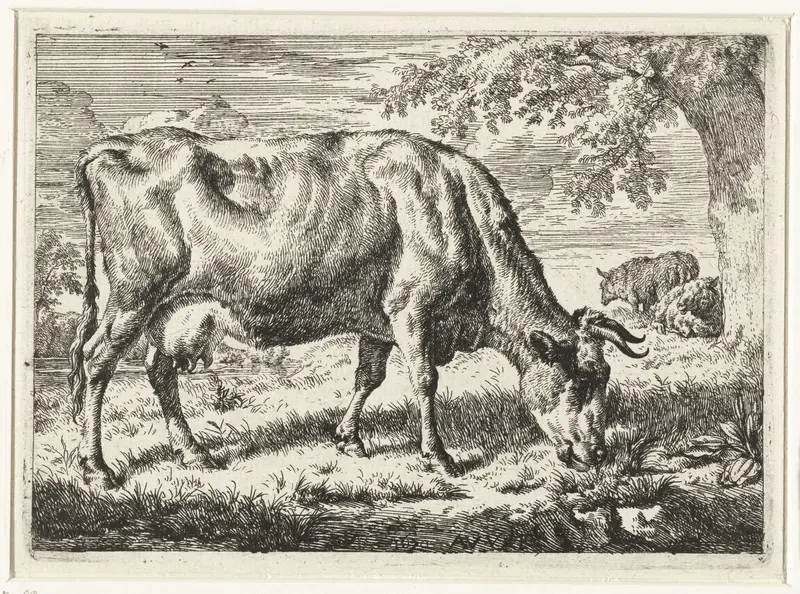
Grazende koe en twee schapen
Adriaen van de Velde
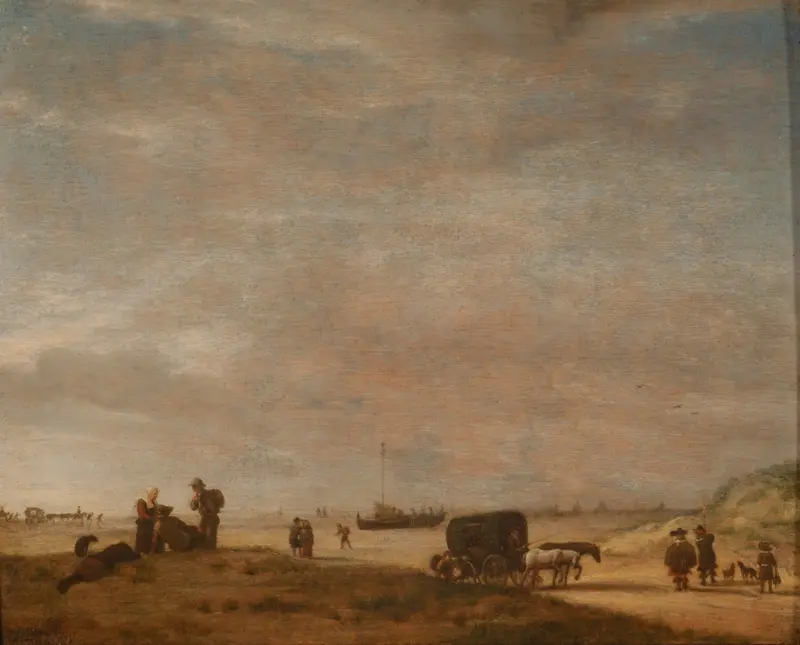
Scheveningen Beach
Adriaen van de Velde
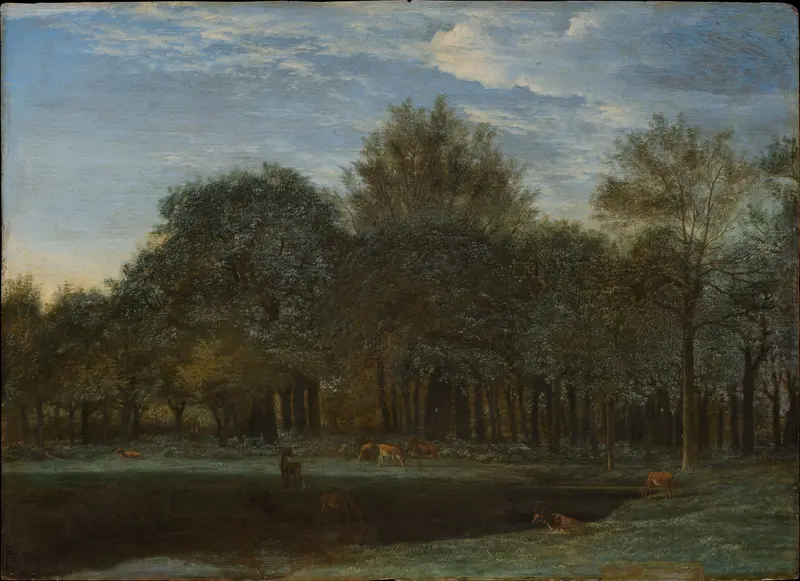
Forest Clearing with Grazing Deer
Adriaen van de Velde
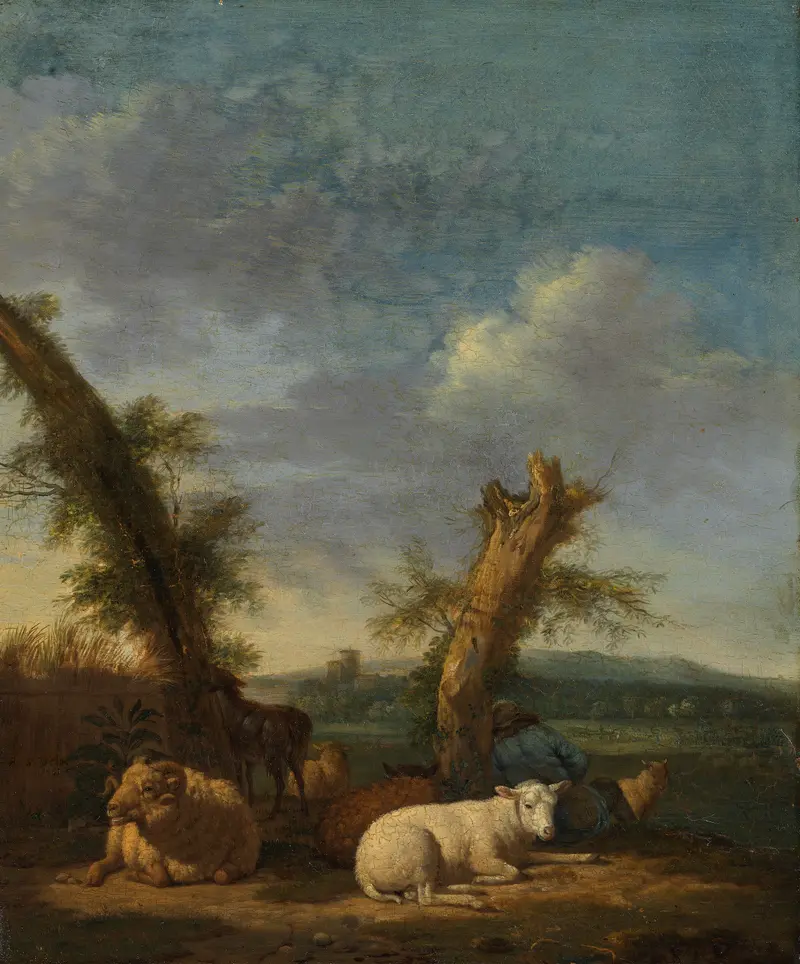
Landscape with Sheep and a Sleeping Shepherd
Adriaen van de Velde
More Genre Scene Art

Banquet of the Officers of the St George Civic Guard
Frans Hals

Rembrandt and Saskia in the Scene of the Prodigal Son
Rembrandt van Rijn

Bal du moulin de la Galette
Pierre-Auguste Renoir

Quadrille at the Moulin Rouge
Henri de Toulouse-Lautrec

A Burial at Ornans
Gustave Courbet

When Will You Marry?
Paul Gauguin