
The four fathers of the Latin Church venerating the Eucharist — History & Facts
What first catches the eye in The four fathers of the Latin Church venerating the Eucharist is the golden, radiant burst of light that crowns the upper center of the scene, as if heaven itself has opened above the gathering. The composition draws the viewer into an intimate conversation among four monumental figures, each deeply absorbed in the mystery at the altar’s heart. The vivid drapery, rendered in lush reds and purples, frames the tableau like a stage curtain, focusing attention on the central Eucharistic vessel and the open book held aloft by cherubs—symbols of divine wisdom and the sacrament’s sacredness.
The gestures are telling: one bishop points upward, another bows in contemplation, while the aged figure at the center, likely Saint Jerome, leans forward with intensity, his weathered hands and bare torso contrasting with the sumptuous vestments of his companions. Light falls strategically across their faces and garments, guiding the viewer’s gaze from the earthly gathering to the celestial vision above, where a dove—emblem of the Holy Spirit—hovers in a blaze of glory. Painted in 1632 by Abraham Bloemaert, this work belongs to a period when religious art was charged with reaffirming Catholic doctrine in the face of Reformation debates. Such images were often commissioned for churches or private chapels, intended to instruct and inspire the faithful by visualizing the unity of Church tradition and the mysteries of faith.
The four figures—traditionally identified as Ambrose, Augustine, Jerome, and Gregory—were seen as pillars of Western theology, and their veneration of the Eucharist underscored the centrality of the sacrament in Catholic worship. Bloemaert, active in Utrecht and known for his versatility, here fuses Northern precision with Italianate grandeur, a hallmark of the Counter-Reformation’s visual language. History has kept few traces of this particular painting’s early journey, but its presence in a modern collection invites us to linger over the drama of color, gesture, and light—each detail a testament to the enduring dialogue between heaven and earth.
More Artworks by Abraham Bloemaert

Adam and Eve
Abraham Bloemaert
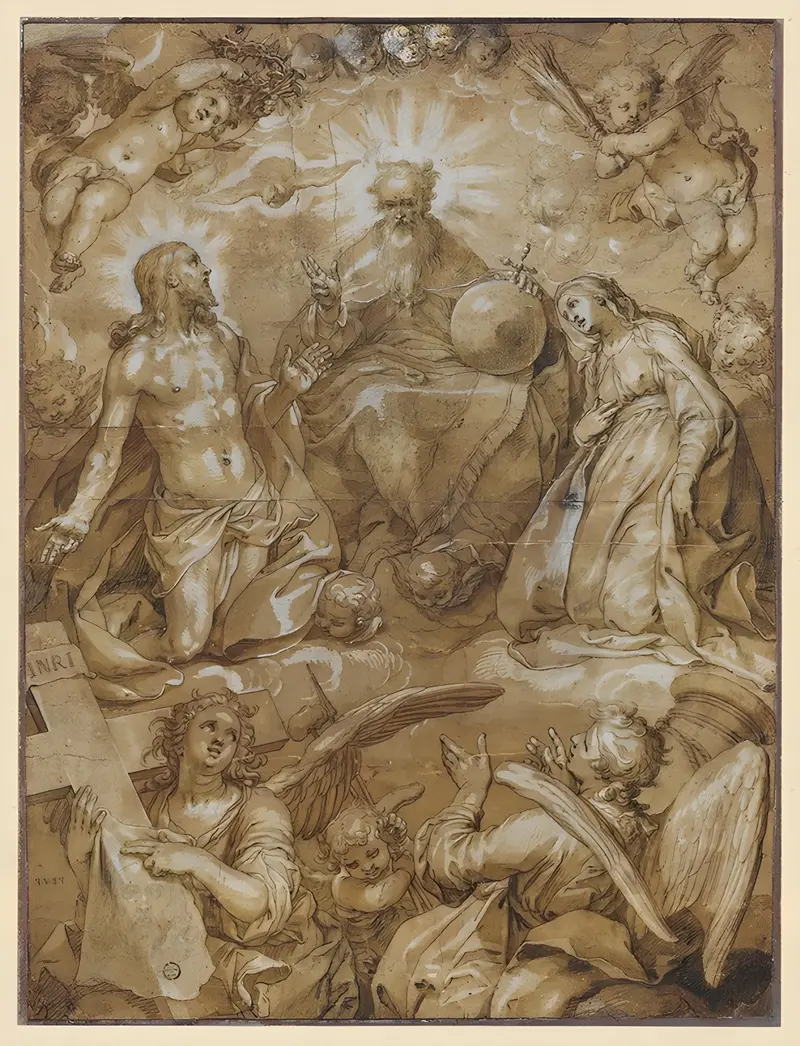
Intercession of Christ and Mary before God the Father
Abraham Bloemaert
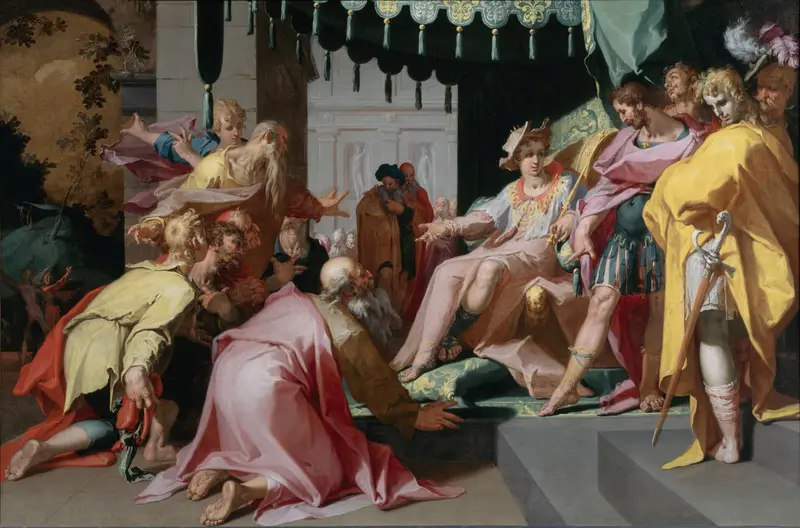
Joseph and his Brothers
Abraham Bloemaert
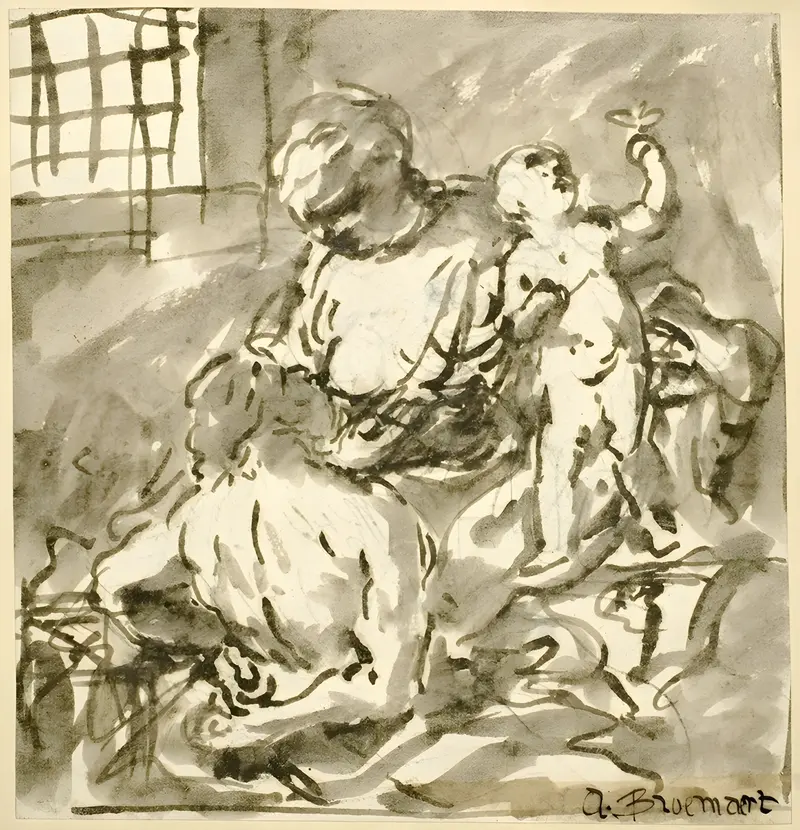
Caritas Romana
Abraham Bloemaert
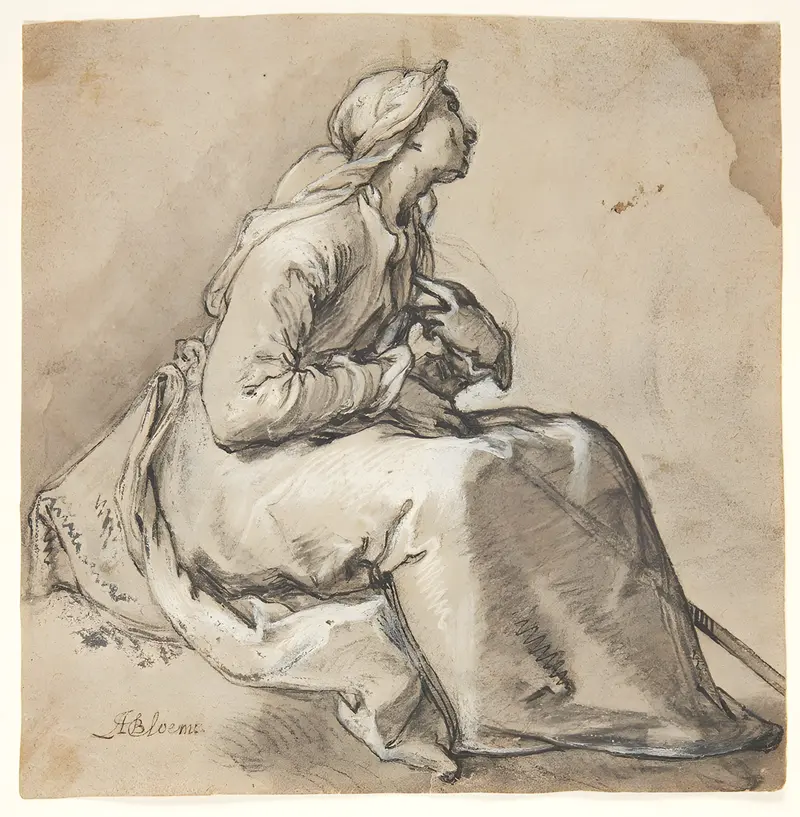
A seated woman facing right
Abraham Bloemaert
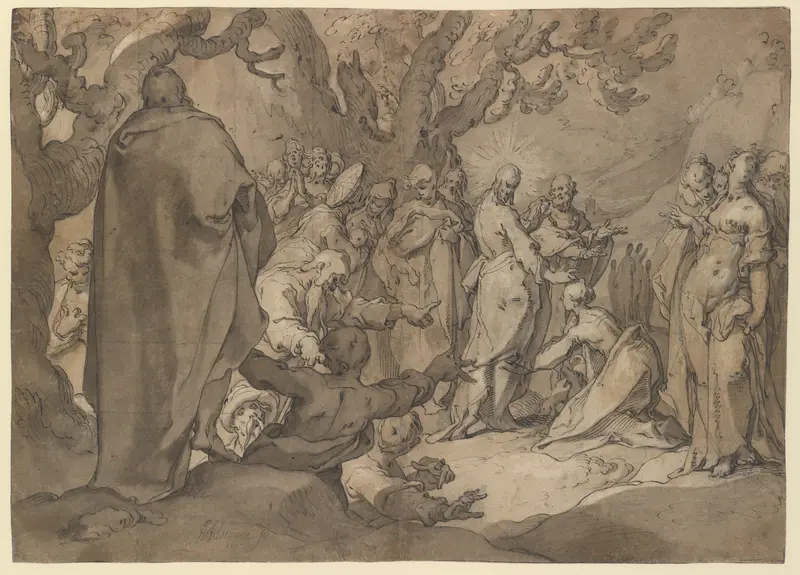
Christ and the Canaanite Women
Abraham Bloemaert
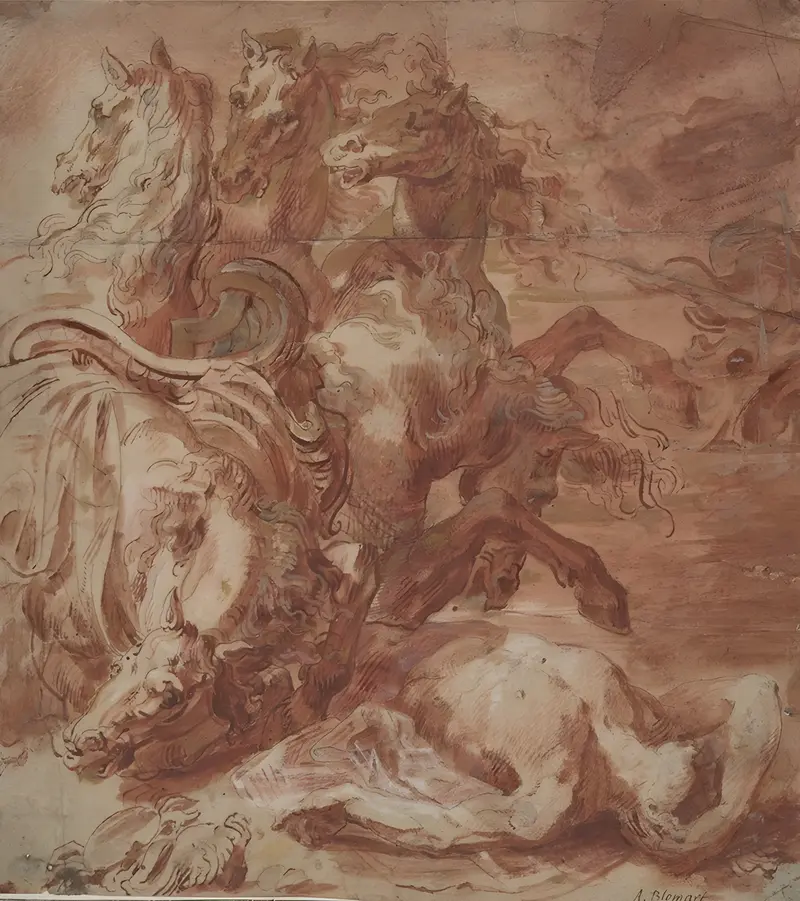
Hippolytus
Abraham Bloemaert
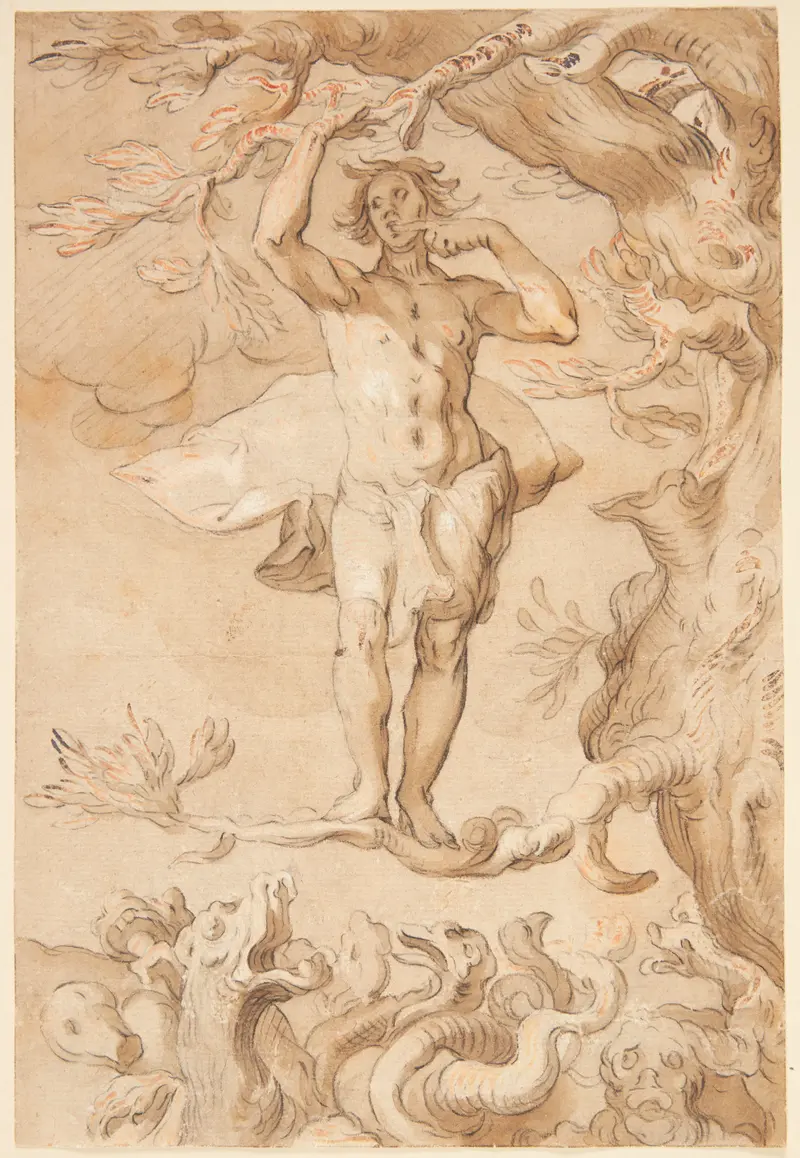
Den menneskelige glædes skrøbelighed En mand, der jages af en drage, klynger sig til en gren, mens han slikker honning af sin finger
Abraham Bloemaert

Moses Striking the Rock
Abraham Bloemaert
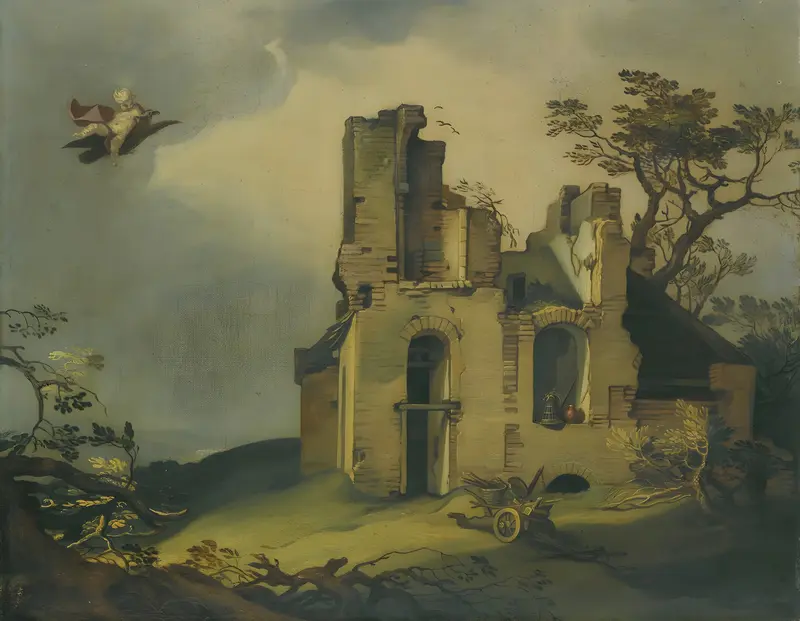
A Landscape With Ruins, With The Rape Of Ganymede
Abraham Bloemaert





