
The Four Seasons: Martivs — History & Facts
What first catches the eye in The Four Seasons: Martivs by Abel Grimmer is the sense of daily life unfolding in a landscape just waking from winter’s grip. The bare trees stretch their branches like fingers against a sky that is clearing, while the people below are busy with the rituals of early spring. The painter leads us from the shaded foreground—where women sit and a dog tumbles—toward the orderly gardens and stately house at the heart of the scene.
Each figure is absorbed in their task: a man loads a cart, children play, and gardeners tend the budding plots, all under a light that is soft but growing in strength. The palette is cool and earthy, giving the impression of a world poised between seasons, full of anticipation. Works like this, painted in the Low Countries around the turn of the seventeenth century, were often created for prosperous townsfolk eager to see their world reflected in art. Abel Grimmer was known for his landscape cycles, capturing the changing year and the activities it brought.
Such paintings served as both decoration and a gentle reminder of nature’s rhythms, hung in homes or guildhalls to mark the passage of time. The presence of the windmill, manor, and garden walls speaks to a society shaped by both agriculture and rising civic pride. This particular work, now held in the Art UK collection, is a window into that era’s quiet confidence—inviting us to wander its lanes and imagine the stories behind each figure’s day.
More Artworks by Abel Grimmer

Flemish proverbs
Abel Grimmer
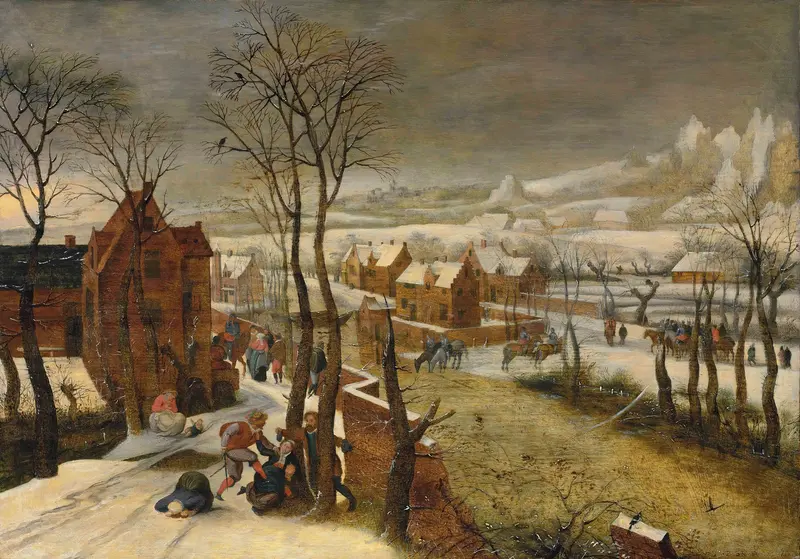
A Village Landscape In Winter With The Massacre Of The Innocents
Abel Grimmer
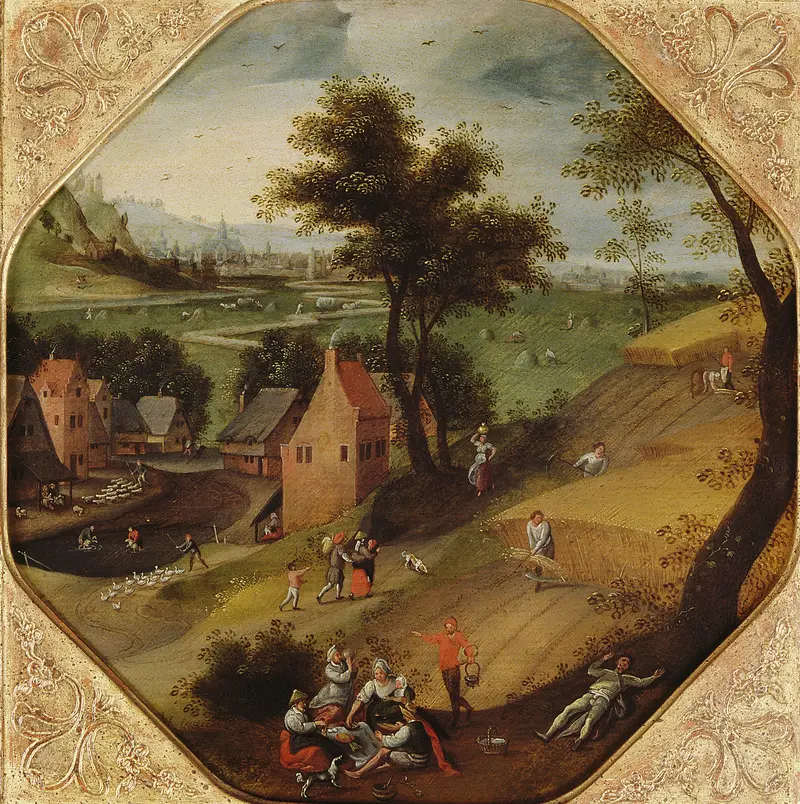
De Zomer
Abel Grimmer
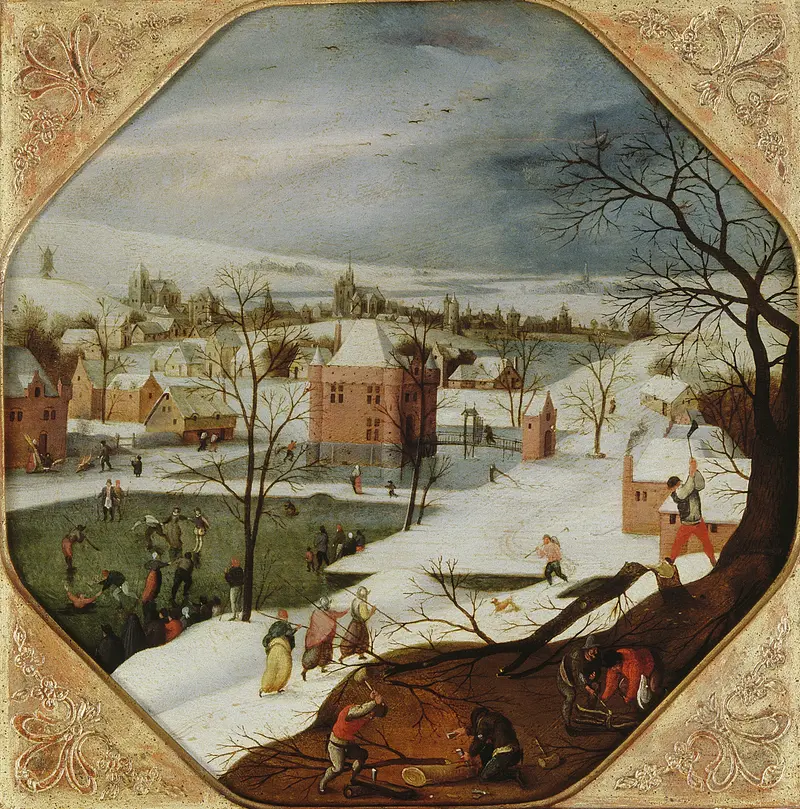
De Winter
Abel Grimmer
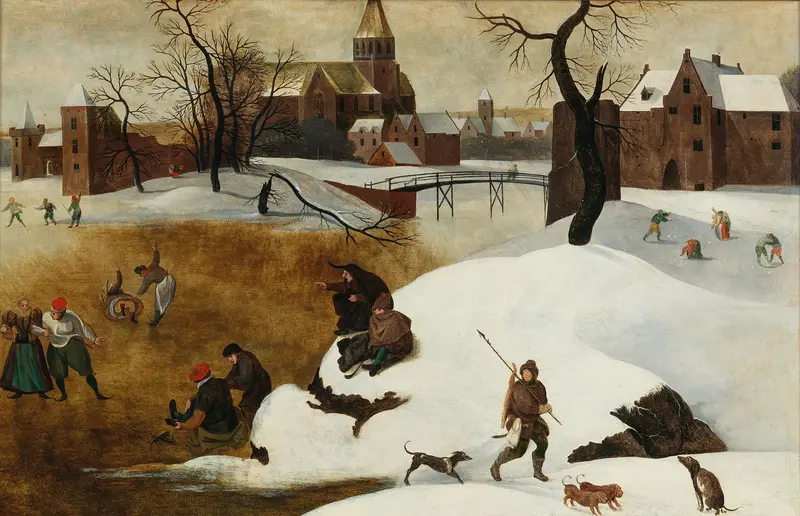
winter landscape with skaters
Abel Grimmer
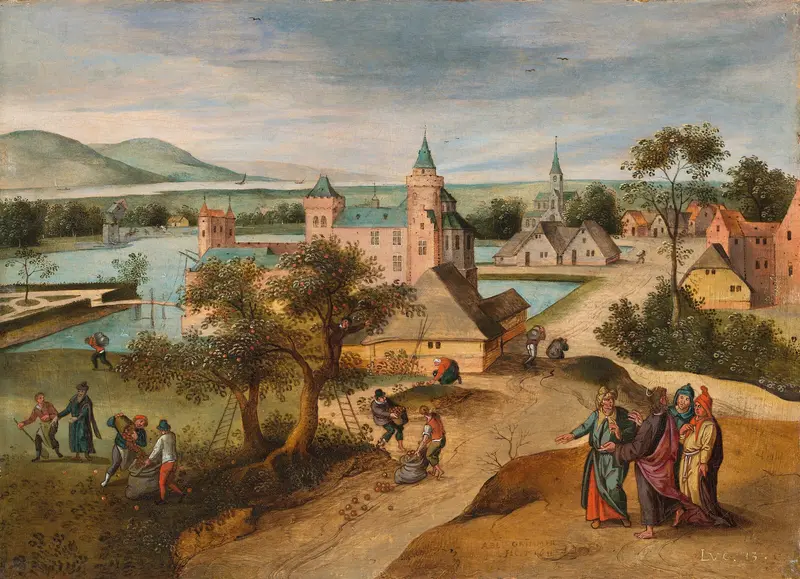
September – The Parable of the Barren Fig Tree
Abel Grimmer
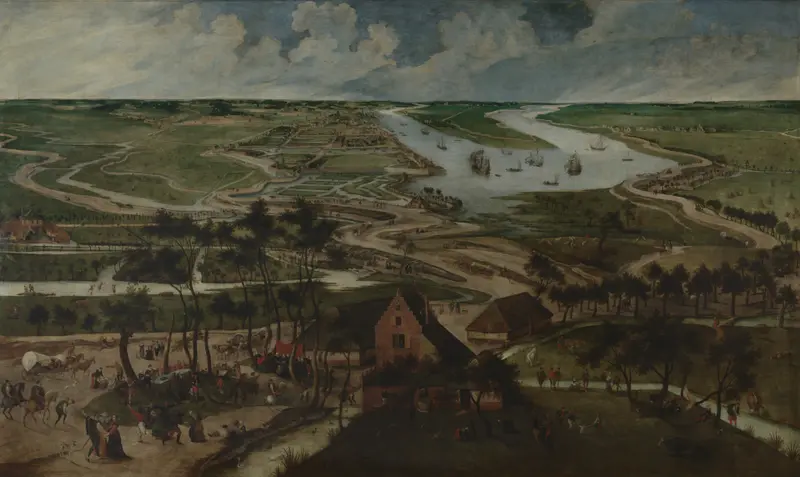
The Eel Huts in the Antwerp Polder outside the Lillo or Slijk Gate
Abel Grimmer
De Antwerpse polder en de Palinghuizen buiten de Slijk- of Lillopoort
Abel Grimmer
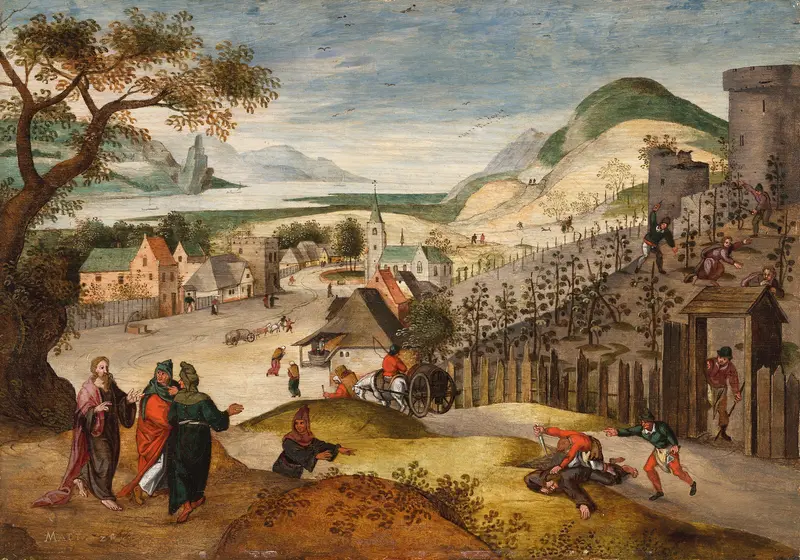
October – The Parable of the Vineyard
Abel Grimmer
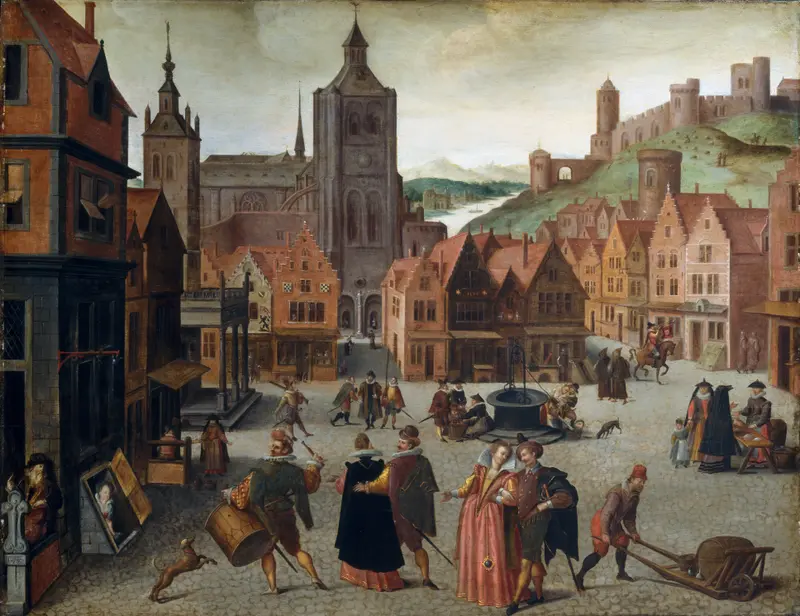
The Marketplace in Bergen op Zoom
Abel Grimmer
More Landscape Art

The Starry Night
Vincent van Gogh

View of Delft
Johannes Vermeer

Water Lilies
Claude Monet

The Grand Canal, Venice, looking north-west from the Ca' Corner to the Ca' Contarini degli Scrigni, with the campanile of Santa Maria della Carità
Canaletto

Windsor Castle
Canaletto

The Grand Canal looking North-East from the Palazzo Dolfin-Manin to the Rialto Bridge
Canaletto