
The Four Seasons, Spring: Sheep-Dipping — History & Facts
A round window opens onto a bustling spring day, where the rhythm of rural life is set by the flock and the hands that tend it. At the water’s edge, two figures stoop to their work, half-submerged as they dip sheep into the pond—an annual ritual that marks the changing season and the promise of new wool. The painter leads your eye from this intimate labor outward, past the clustered animals and busy figures, to a fortified manor with its green roofs and watchful towers.
Light pools in the center, drawing warmth from the ochre walls and fresh grass, while the distant village and scattered birds hint at a world beyond this enclosure. Every gesture is purposeful: the stoop of the washer, the steadying arm, the watchful shepherd, all set against the ordered geometry of the estate. Works like this by Abel Grimmer belong to a tradition that flourished in the Low Countries around the turn of the seventeenth century, when scenes of everyday labor became prized for both their decorative charm and their quiet lessons about the cycles of nature. Such paintings often formed part of a series—one for each season—commissioned to adorn the homes of prosperous burghers who saw their own values reflected in the industry and order of rural life.
The round format, too, is no accident: it invites the viewer to see the world as a turning wheel, each activity returning in its time. Though the exact date and medium of this Spring: Sheep-Dipping remain uncertain, its presence in the Art UK collection ensures that this moment of communal effort, half forgotten by history, can still draw us in to look, and look again.
More Artworks by Abel Grimmer

Flemish proverbs
Abel Grimmer
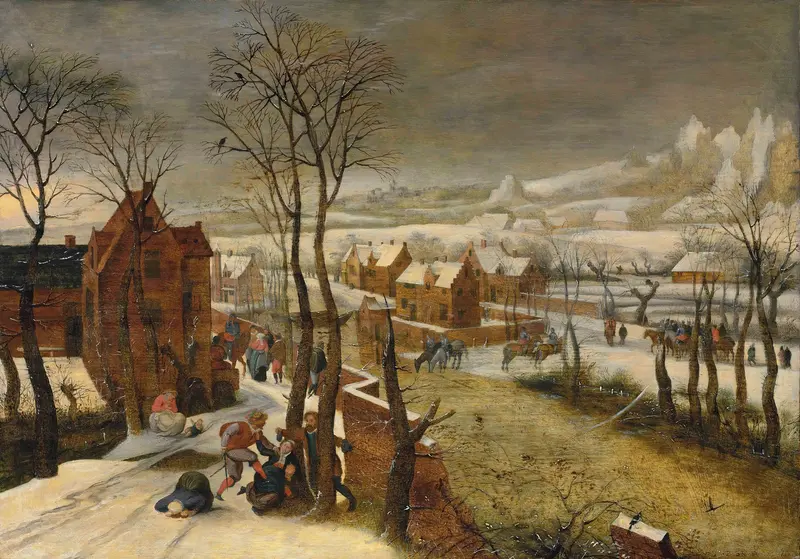
A Village Landscape In Winter With The Massacre Of The Innocents
Abel Grimmer
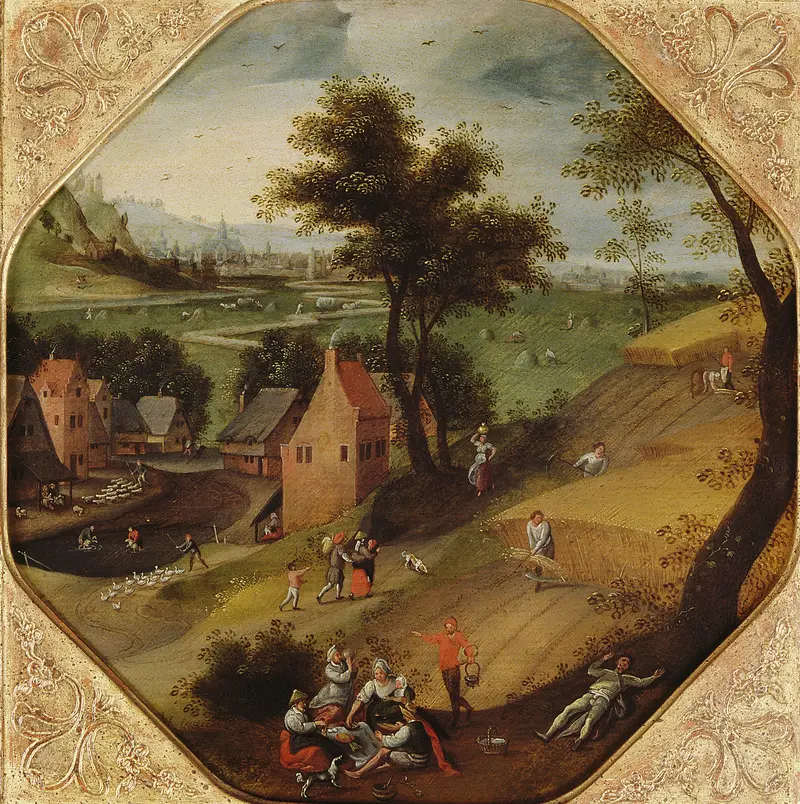
De Zomer
Abel Grimmer
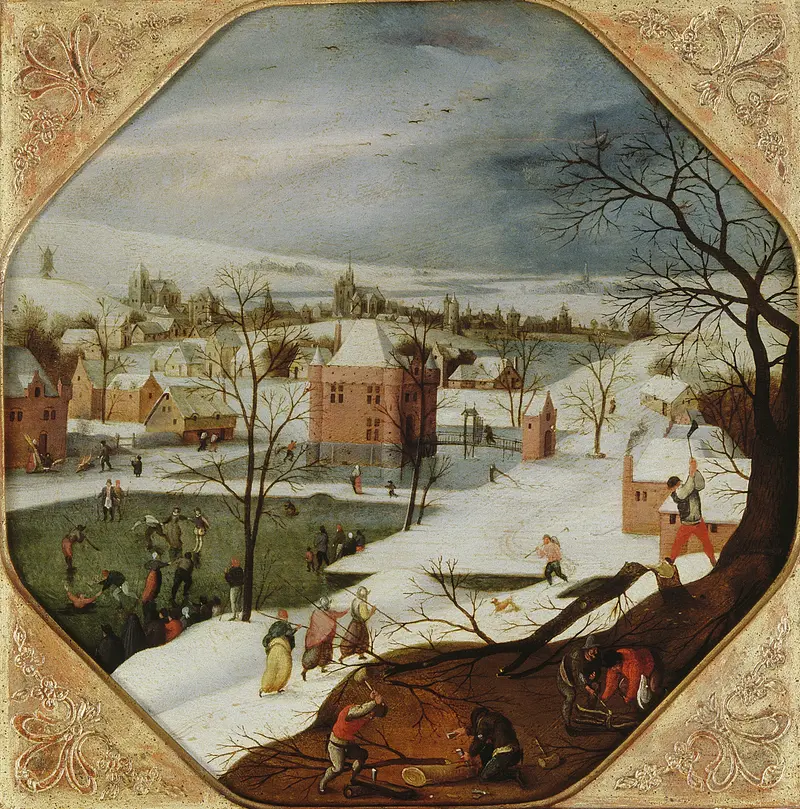
De Winter
Abel Grimmer
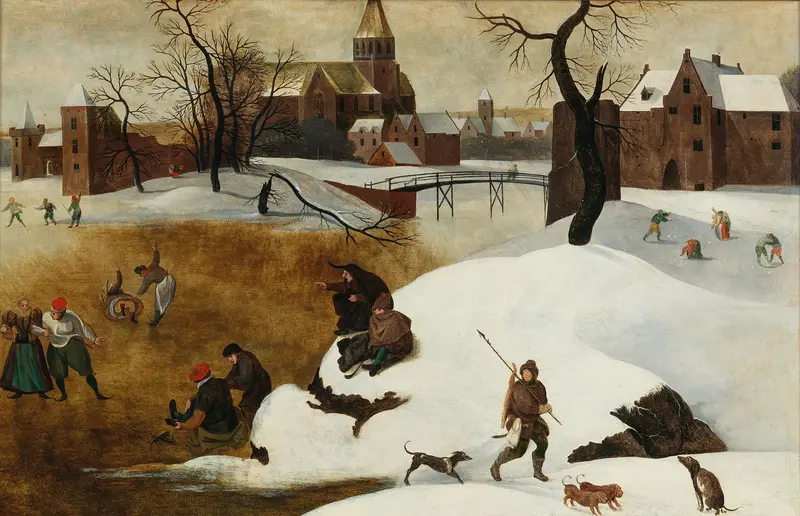
winter landscape with skaters
Abel Grimmer
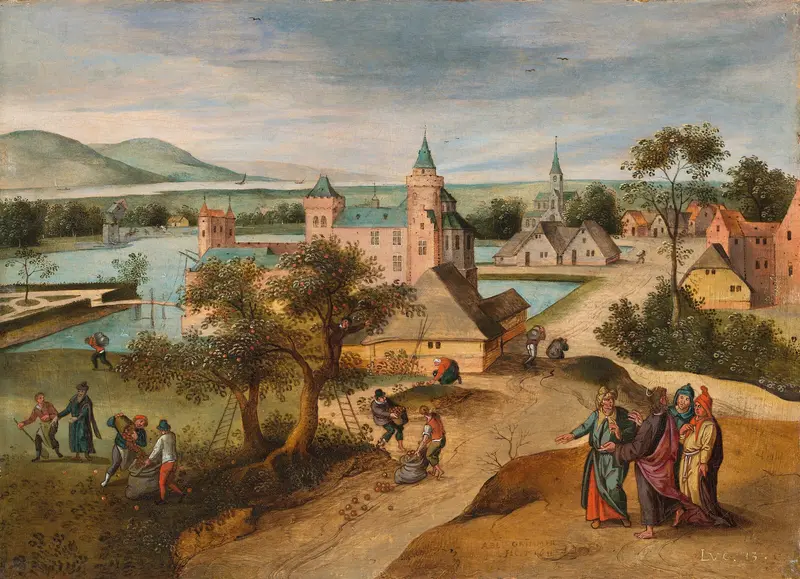
September – The Parable of the Barren Fig Tree
Abel Grimmer
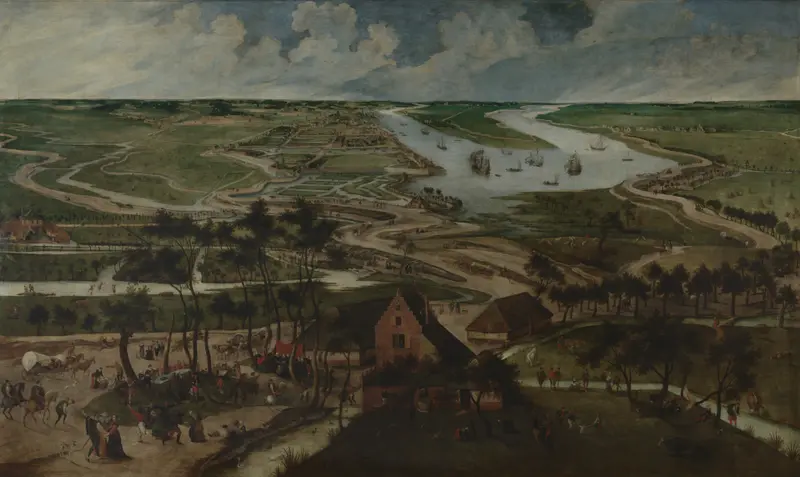
The Eel Huts in the Antwerp Polder outside the Lillo or Slijk Gate
Abel Grimmer
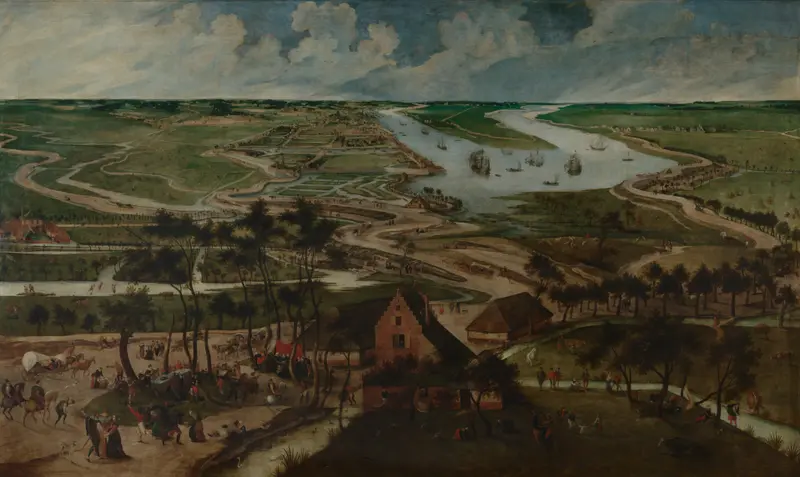
De Antwerpse polder en de Palinghuizen buiten de Slijk- of Lillopoort
Abel Grimmer
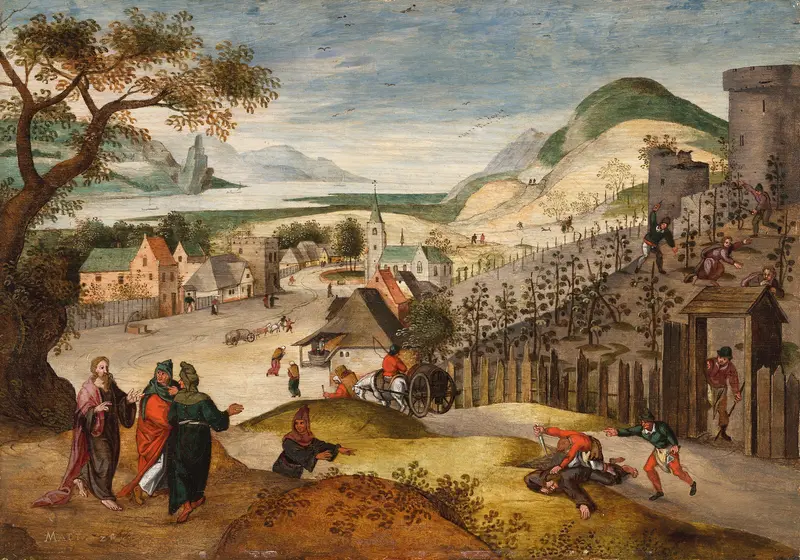
October – The Parable of the Vineyard
Abel Grimmer
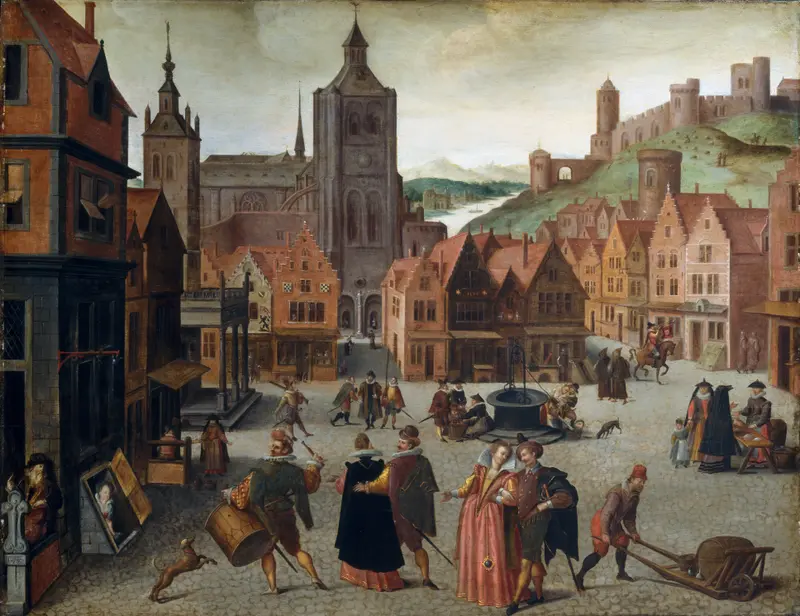
The Marketplace in Bergen op Zoom
Abel Grimmer
More Landscape Art

The Starry Night
Vincent van Gogh

View of Delft
Johannes Vermeer

Water Lilies
Claude Monet

The Grand Canal, Venice, looking north-west from the Ca' Corner to the Ca' Contarini degli Scrigni, with the campanile of Santa Maria della Carità
Canaletto

Windsor Castle
Canaletto

The Grand Canal looking North-East from the Palazzo Dolfin-Manin to the Rialto Bridge
Canaletto