
The Garden in Åsgårdstrand — History & Facts
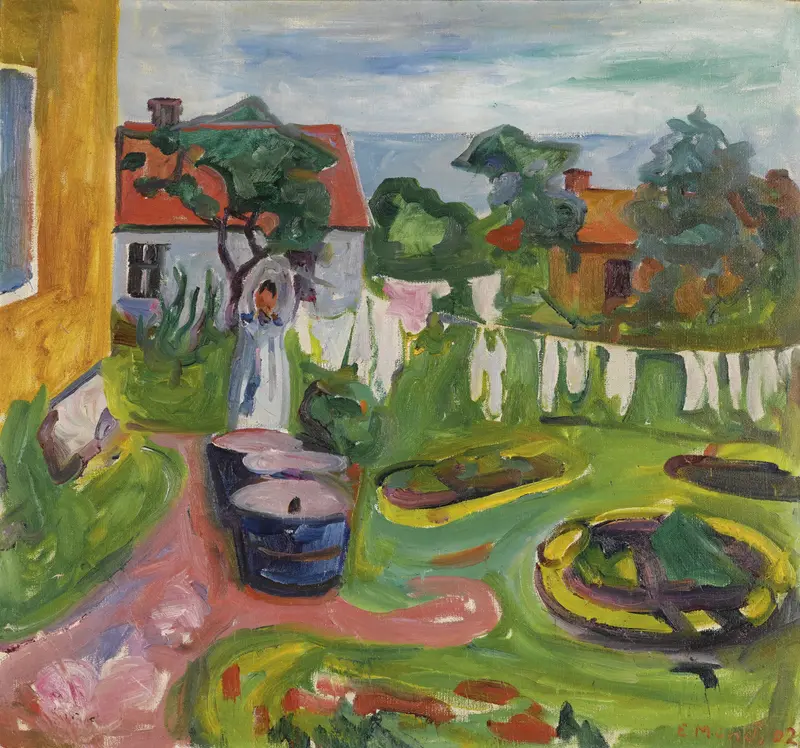
The eye is immediately drawn to the sweep of color that seems to pulse with life, as if the garden itself were breathing in the sea air. In The Garden in Åsgårdstrand, Edvard Munch uses bold, swirling brushstrokes to turn an ordinary coastal view into something charged with memory and emotion. The trees bend and twist, their trunks outlined in electric blue, guiding the gaze toward the shimmering water and the ochre roofs beyond.
Sunlight spills across the grass in looping paths, suggesting both movement and the passage of time, while the house at the right edge anchors the scene with its quiet presence. This is not a tranquil garden, but a place alive with energy, where every shape and hue seems to vibrate with the artist’s inner world. Painted in 1904, this work belongs to a period when Munch was exploring the expressive power of color and line, moving beyond naturalistic representation into the territory of feeling. Such landscapes were often painted for private patrons or as personal meditations, capturing the spirit of a place rather than its literal appearance.
The Norwegian coast, with its shifting light and restless weather, was a recurring subject for Munch and his contemporaries, but here the garden is less a setting than a state of mind. History has kept few traces of this particular painting’s early journey, but its presence in a modern collection invites us to linger, to follow the winding paths of color, and to imagine the stories that might unfold beneath these trees.
More Artworks by Edvard Munch

The Scream
Edvard Munch

The Scream (1910 version)
Edvard Munch

Despair
Edvard Munch

The Day After
Edvard Munch

The Sick Child
Edvard Munch
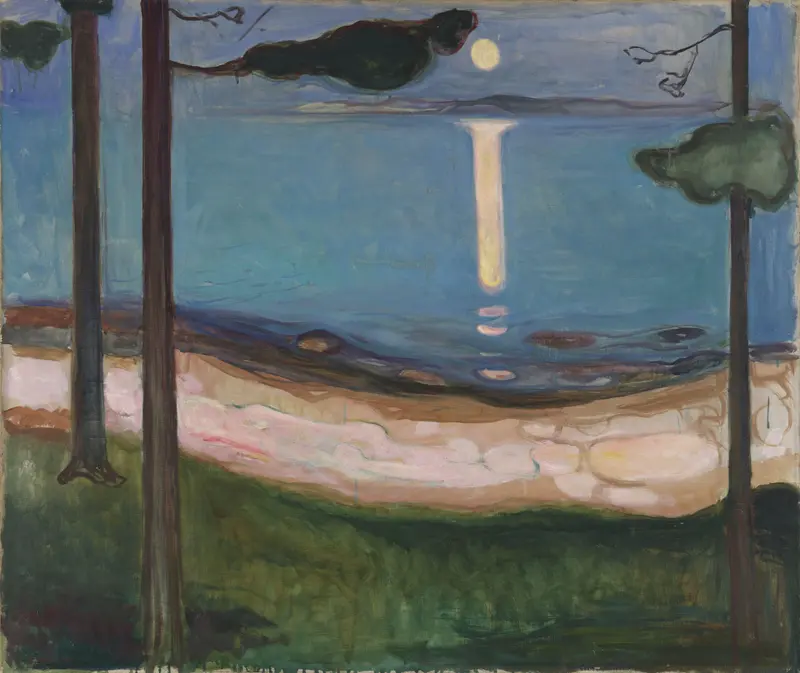
Moonlight
Edvard Munch
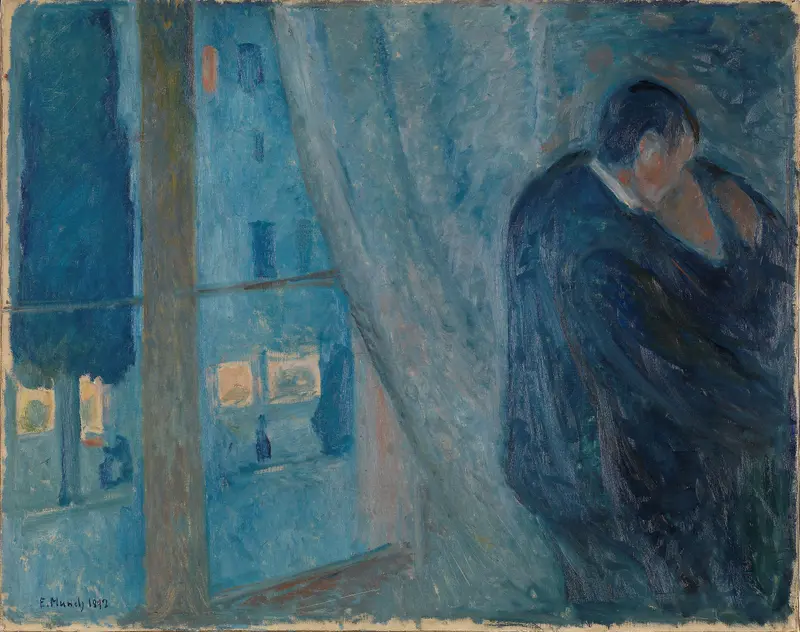
The Kiss
Edvard Munch
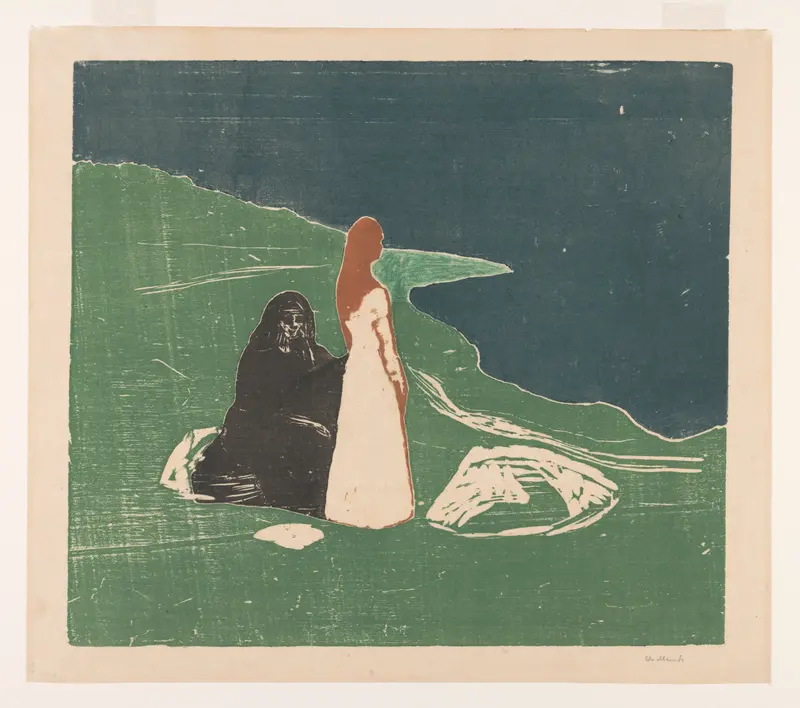
Two Women on the Shore
Edvard Munch
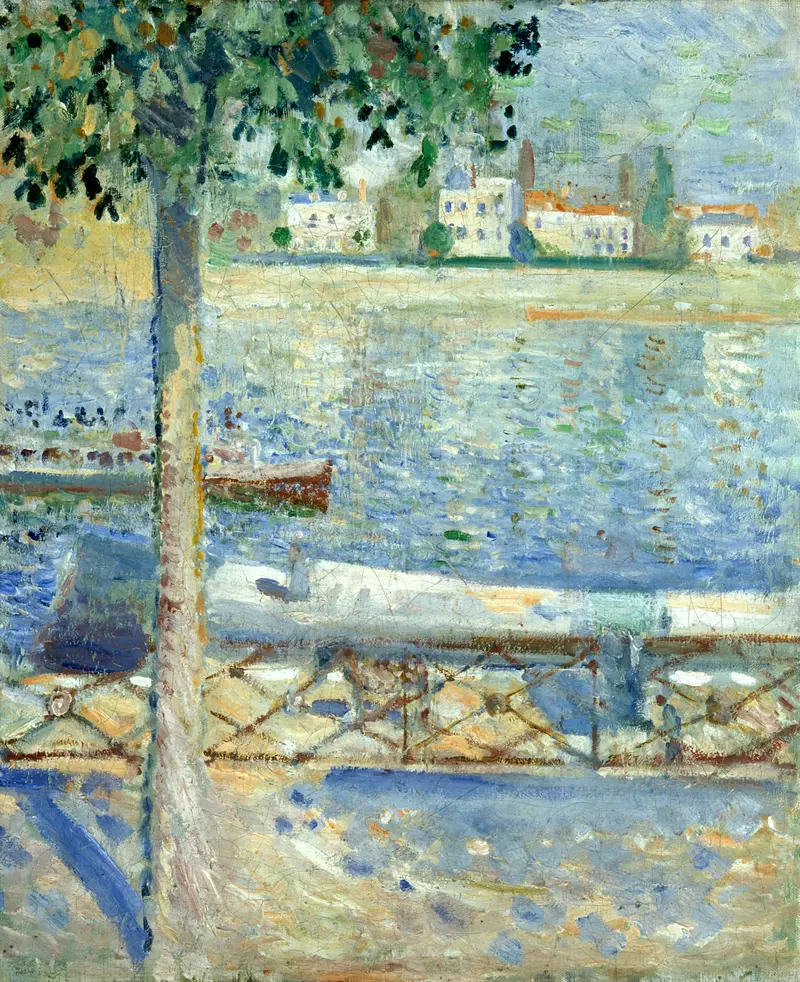
The Seine At Saint-Cloud
Edvard Munch
Klestørk I Åsgårdstrand (Clothes On A Line In Åsgårdstrand)
Edvard Munch
More Landscape Art

The Starry Night
Vincent van Gogh

View of Delft
Johannes Vermeer

Water Lilies
Claude Monet

The Grand Canal, Venice, looking north-west from the Ca' Corner to the Ca' Contarini degli Scrigni, with the campanile of Santa Maria della Carità
Canaletto

Windsor Castle
Canaletto

The Grand Canal looking North-East from the Palazzo Dolfin-Manin to the Rialto Bridge
Canaletto