
The Gravelines Channel, towards the sea — History & Facts
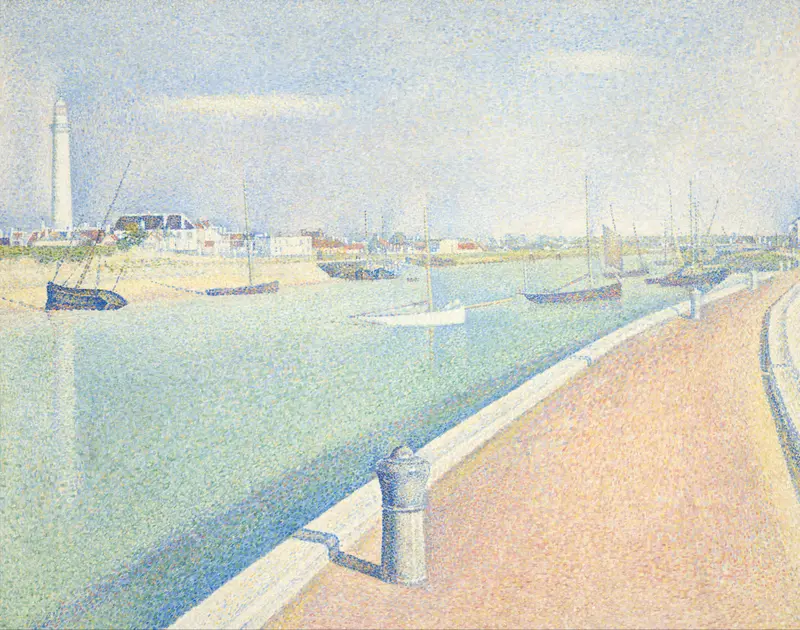
When Georges Seurat painted The Gravelines Channel, towards the sea in 1890, he was at the very end of his short life, working feverishly on a series of coastal scenes that would be his last. This painting belongs to a group of works Seurat completed during a summer stay in Gravelines, a quiet port town near the Belgian border, far from the bustle of Paris. Unlike his earlier, more crowded compositions, these late canvases are marked by an almost meditative stillness and a focus on the subtle play of light and water.
The precise date of completion is not recorded, but Seurat died in March 1891 at the age of just 31, making this one of his final statements in paint. Here, Seurat chooses a moment of calm at the mouth of the channel, where the inland waters meet the open sea. The horizon is a thin, pale line, and the boats are reduced to delicate silhouettes, their forms almost dissolving into the luminous air. The artist’s pointillist technique—placing tiny dots of color side by side—creates a shimmering effect, capturing the way sunlight dances on water and sky.
Unlike the bustling harbor scenes of Claude Monet or the lively figures in Seurat’s own A Sunday on La Grande Jatte, this painting is nearly empty of human presence, emphasizing instead the quiet geometry of piers, boats, and water. The composition invites the viewer to linger, tracing the subtle gradations of blue and green that define the channel’s gentle flow. The precise history of this particular canvas is less documented than that of some of Seurat’s larger works, but it is known that the Gravelines series was not painted on commission; rather, Seurat undertook it on his own initiative, seeking new inspiration and a change of pace from Paris. After his death, his paintings were handled by his family and a small circle of supporters, eventually entering private and public collections across Europe.
Today, The Gravelines Channel, towards the sea is recognized as a key example of Seurat’s late style, marking a shift toward greater abstraction and serenity. It stands as a quiet testament to his relentless experimentation and the brief, intense career that helped shape the course of Post-Impressionism.
More Artworks by Georges Seurat
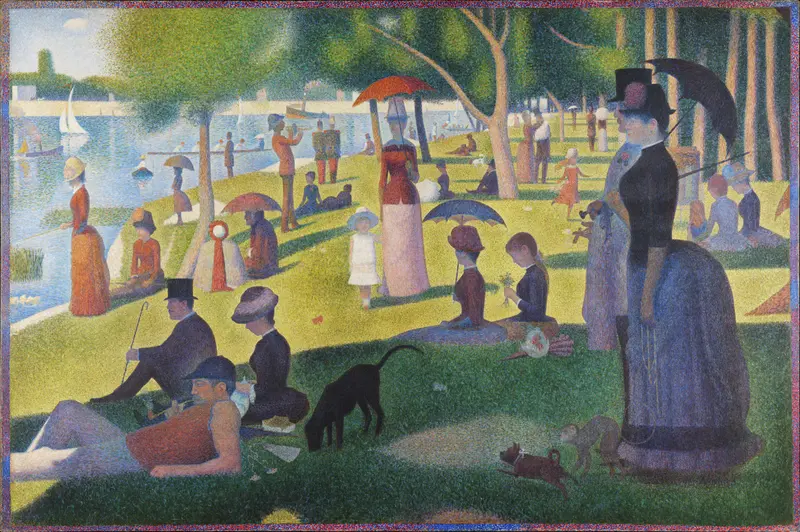
A Sunday Afternoon on the Island of La Grande Jatte
Georges Seurat
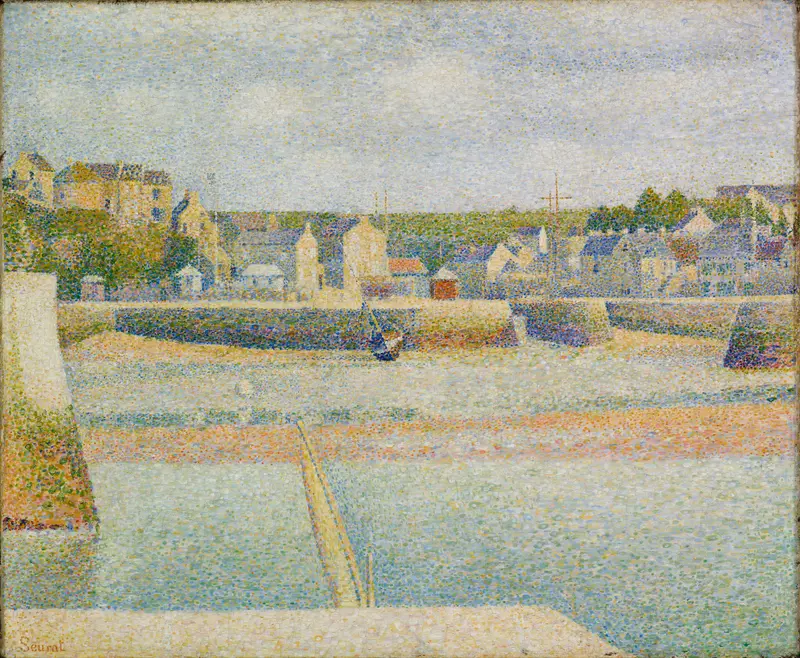
Port-en-Bessin, The Outer Harbor (Low Tide)
Georges Seurat
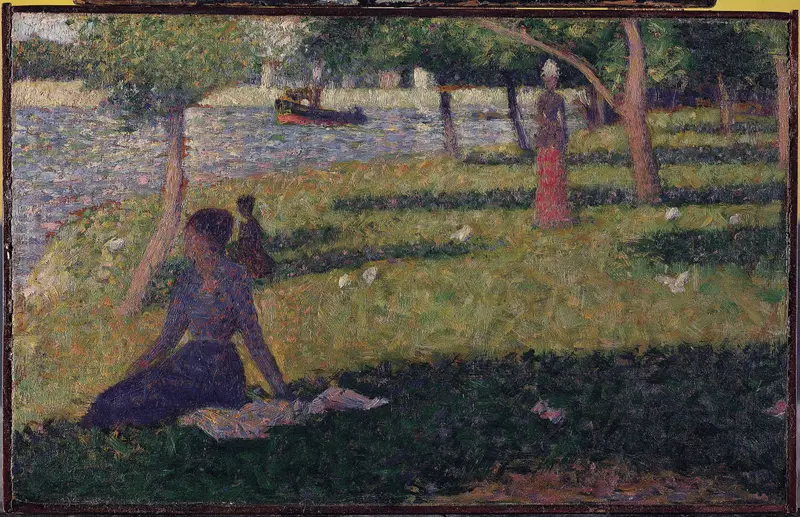
Étude pour ‘La Grande Jatte’ (Study for ‘La Grande Jatte’)
Georges Seurat
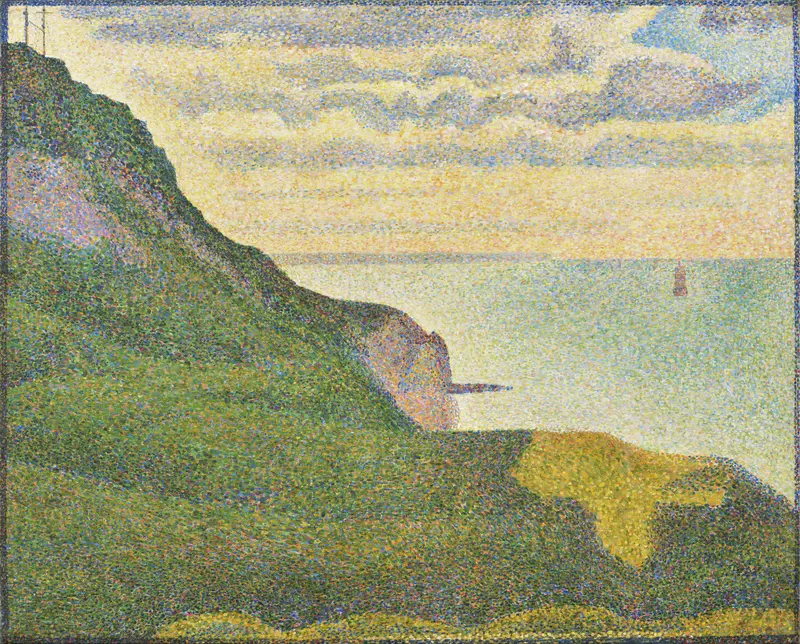
Seascape at Port-en-Bessin,Normandy
Georges Seurat
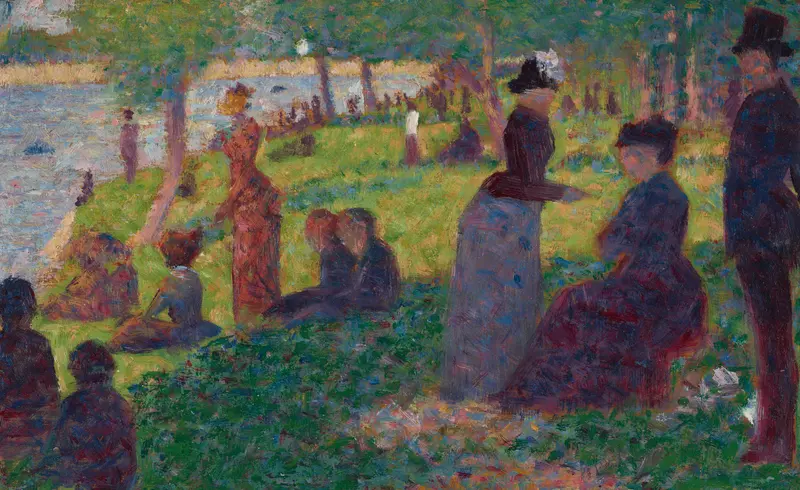
Oil Sketch for "A Sunday on La Grande Jatte — 1884"
Georges Seurat
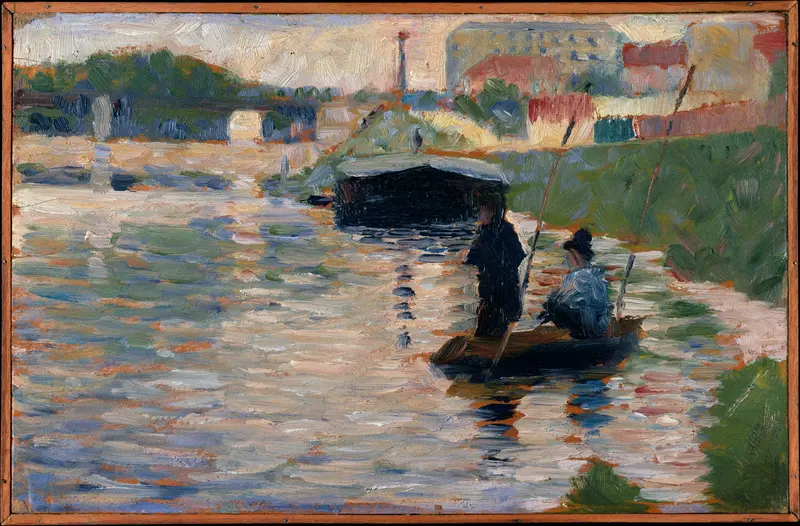
View of the Seine
Georges Seurat
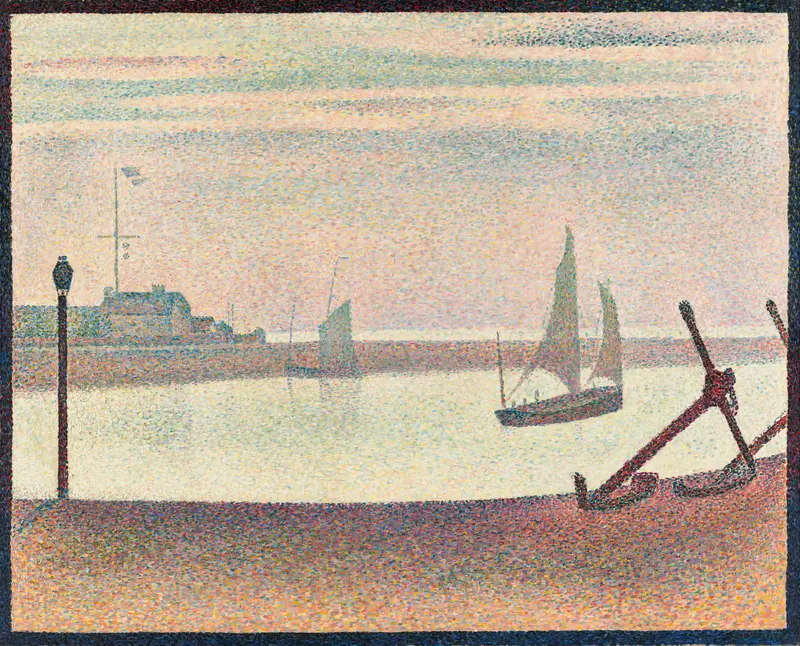
The Channel at Gravelines, Evening
Georges Seurat
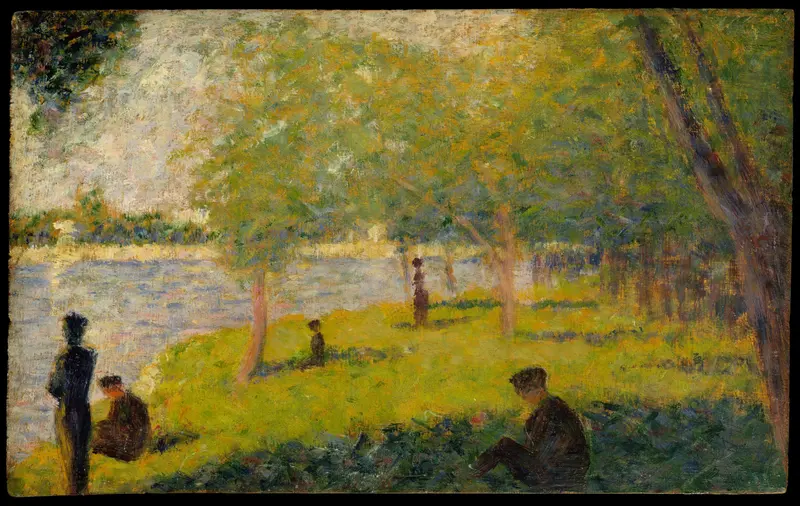
Study for ‘A Sunday on La Grande Jatte’
Georges Seurat
Study for A Sunday on La Grande Jatte
Georges Seurat
The Channel of Gravelines, Petit Fort Philippe
Georges Seurat





