
The Hermit — History & Facts
In the tranquil embrace of solitude, a profound revolution unfolds within the stillness of the human heart. Look to the center, where the hermit stands, enveloped by lush greenery that blends seamlessly into the misty background. Notice how the soft, diffused light casts a gentle glow, illuminating the figure's contemplative posture while rendering the surrounding trees in muted hues. The interplay of earth tones and subtle textures invites the viewer to linger, as if caught in a dream that blurs the lines between reality and reflection. Beyond the serene exterior lies a tension between isolation and enlightenment.
The hermit's gaze, though directed inward, is deeply connected to the vibrant life surrounding him. The faint whispers of wind and rustling leaves suggest that there is movement, a silent dialogue between the hermit and nature. This communion hints at an awakening—a personal revolution eager to break free from the chains of the mundane. Inness painted this work during a period of introspection and transformation, between 1883 and 1885, while living in Montclair, New Jersey.
Influenced by the ideals of the American Transcendentalists, he sought to convey the profound connection between humanity and the natural world. The late 19th century was a time of artistic experimentation and redefinition, as artists began to embrace emotive landscapes that reflected their inner thoughts and societal changes.
More Artworks by George Inness
Browse all →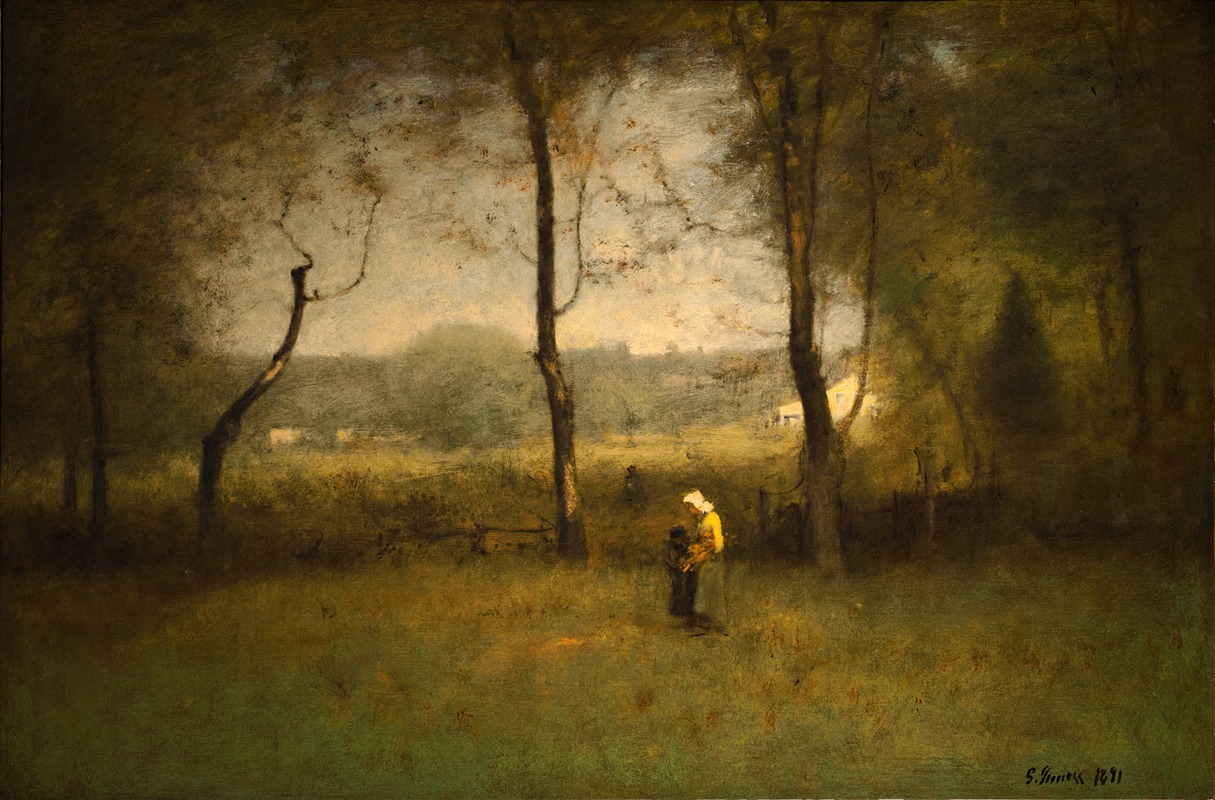
Autumn Woods
George Inness
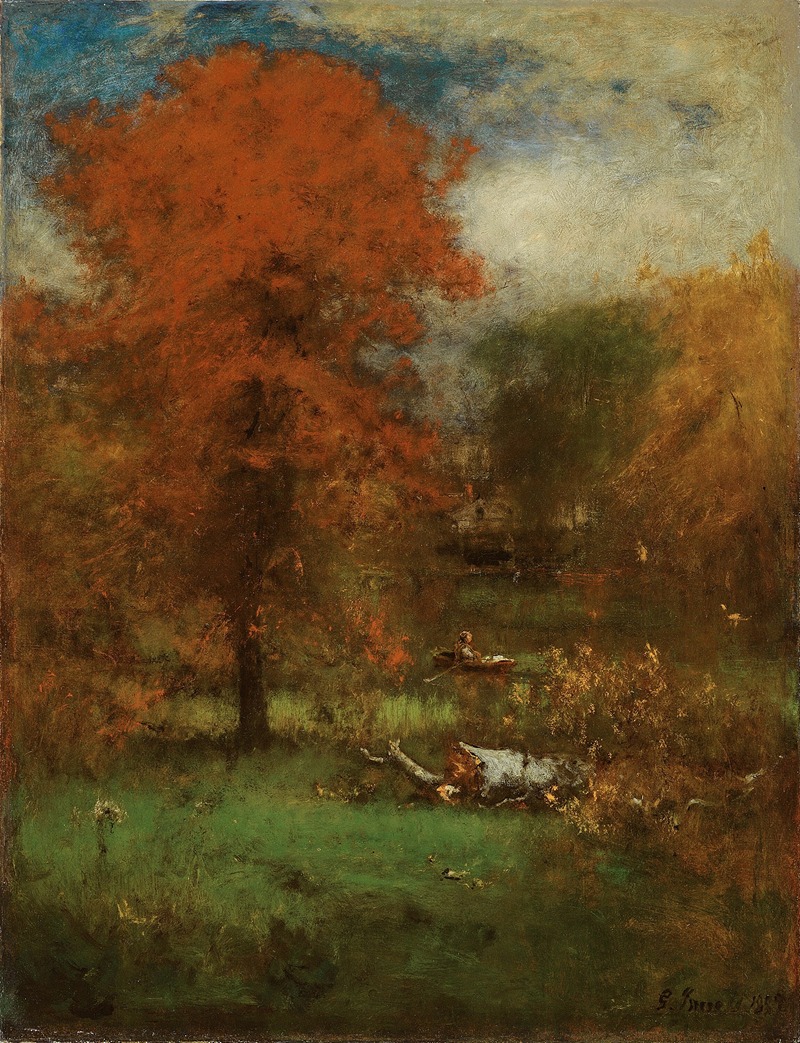
The Mill Pond
George Inness
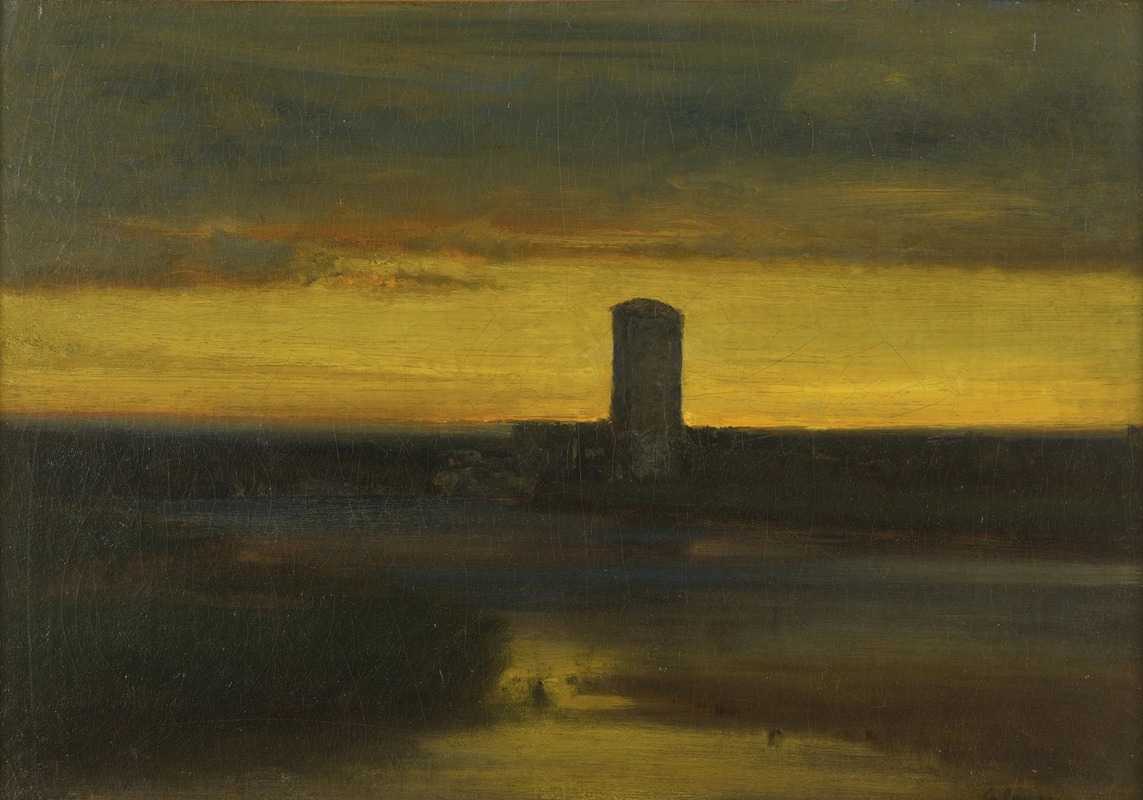
Afterglow
George Inness
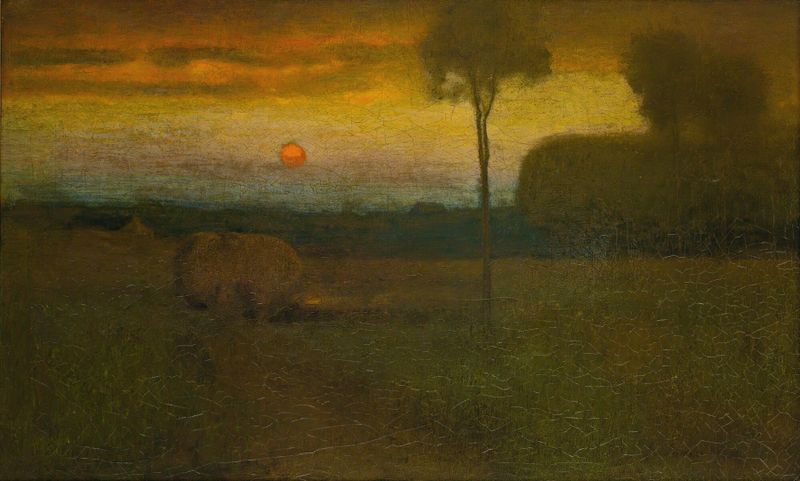
Landscape (Evening Landscape)
George Inness

Montclair
George Inness

View in Berkshire County, Massachusetts, Clearing Off after a September Storm
George Inness

October
George Inness
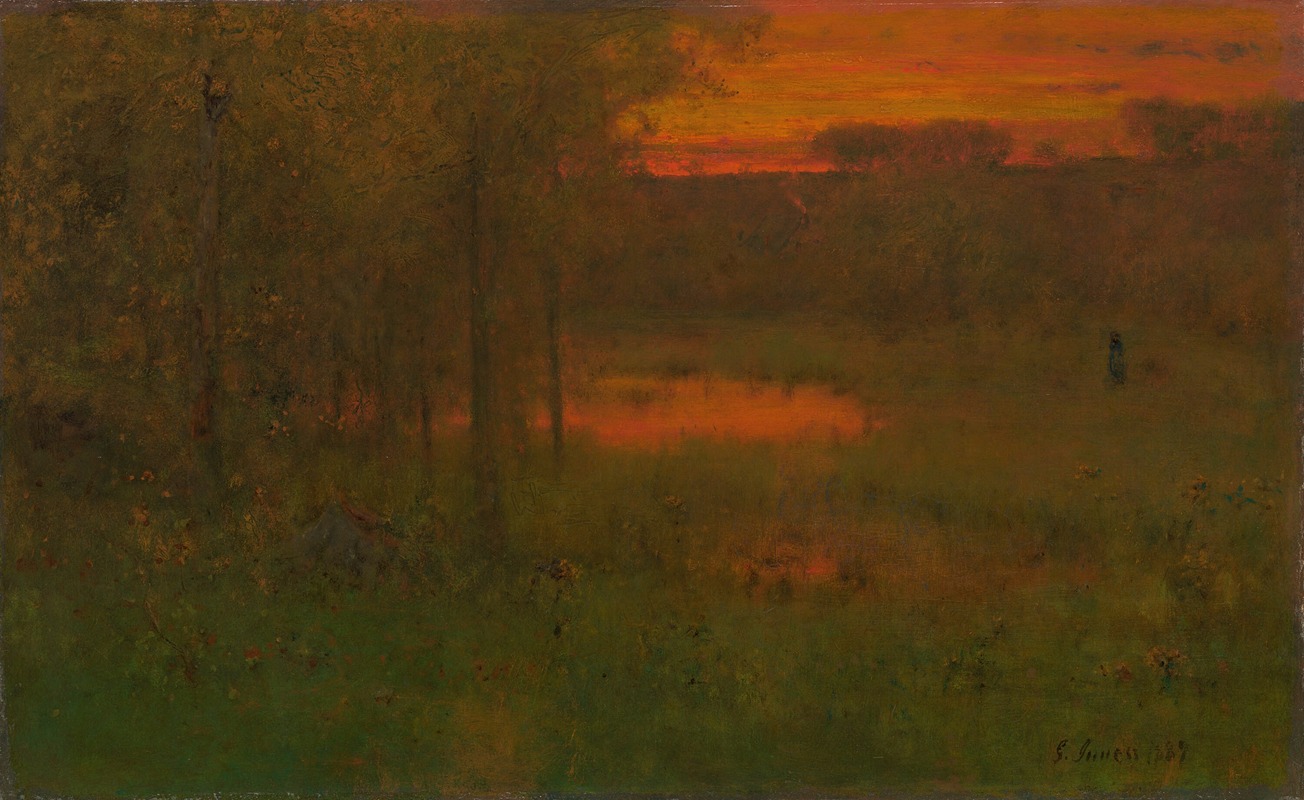
Landscape, Sunset
George Inness
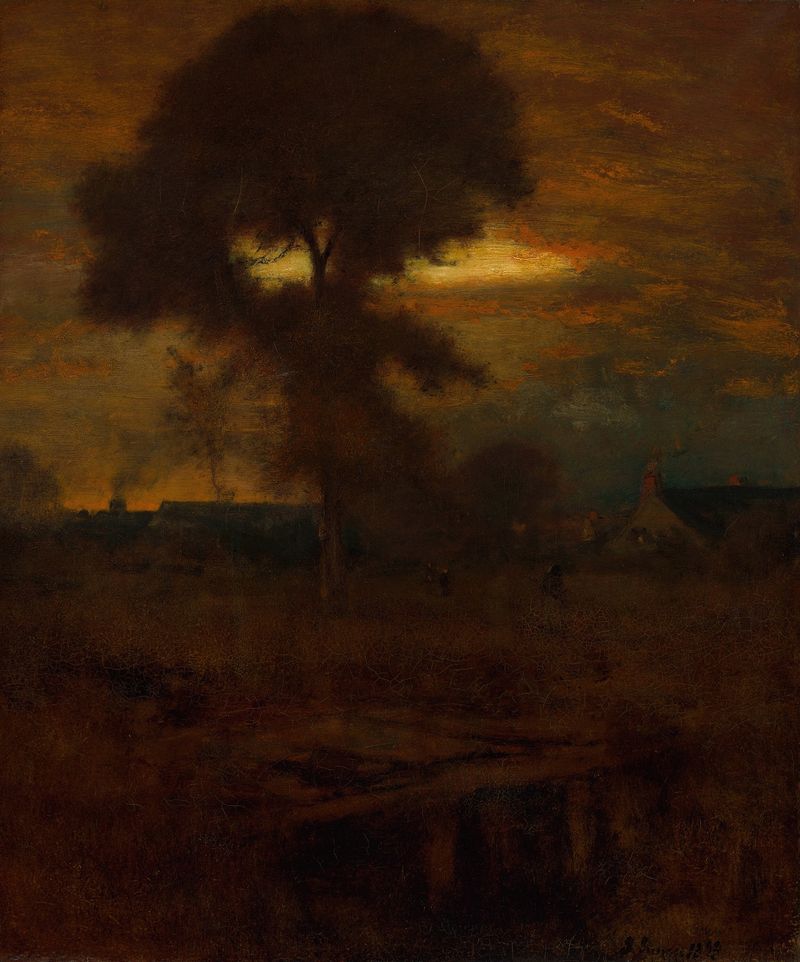
Afterglow
George Inness
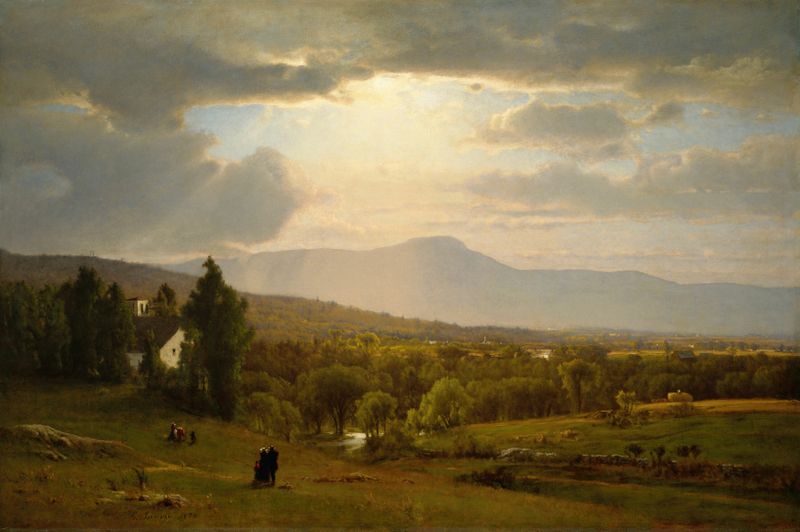
Catskill Mountains
George Inness





