
The hunting party — History & Facts
What draws the eye first is the quiet anticipation that hangs in the air, as if the landscape itself is holding its breath alongside the assembled hunting party. The open gate on the left, painted with a gentle but deliberate red, signals the threshold between cultivated estate and the wild, unpredictable countryside beyond. Horses stand ready, their coats gleaming in the angled morning light, while the dogs—alert, noses to the ground—seem to sense the promise of the chase.
The figures are caught in a moment of preparation, their gestures purposeful yet unhurried: a man adjusts a bridle, another crouches to pet a hound, and a third leans casually on his musket. The broad sweep of sky and the rolling green distances give the scene a sense of spaciousness and ease, inviting the viewer to linger and imagine what comes next. Painted in 1669, The hunting party belongs to the world of the Dutch Golden Age, when scenes of country leisure and landed privilege were both a celebration and a subtle display of status. Such paintings were often commissioned by wealthy landowners, eager to commemorate their estates and their refined pursuits.
The genre thrived in a society where prosperity and rural life were closely linked, and where the pleasures of the hunt were as much about sociability and spectacle as about sport. Little is recorded about the specific journey of this work, now held in the Rijksmuseum, but its careful attention to costume, animal, and landscape speaks to a time when art was a mirror to both aspiration and daily life. Pause on the details—the flash of a red saddlecloth, the glint of a dog’s collar—and you glimpse the rhythms of a vanished world.
More Artworks by Adriaen van de Velde

Staande stier
Adriaen van de Velde
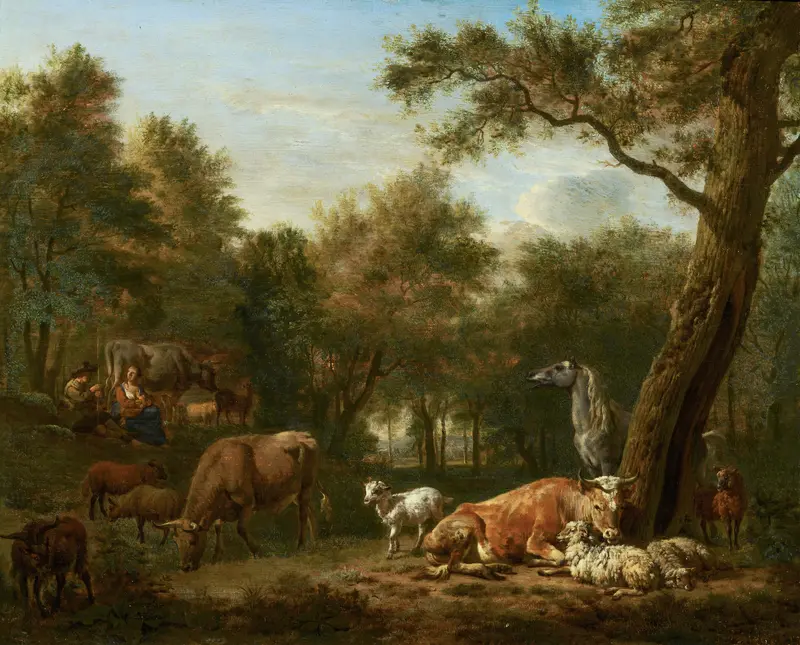
Wooded Landscape with Cattle
Adriaen van de Velde
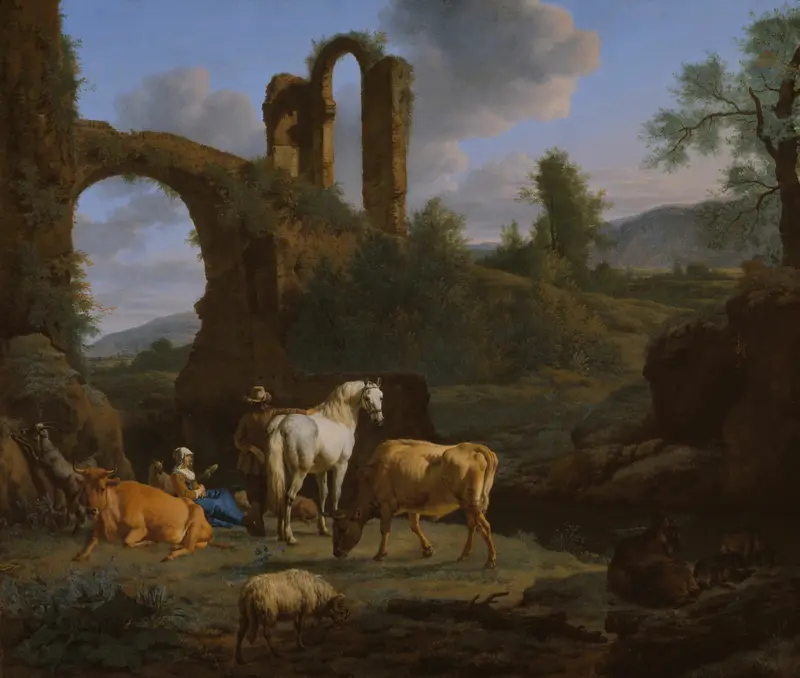
Pastoral Landscape with Ruins
Adriaen van de Velde
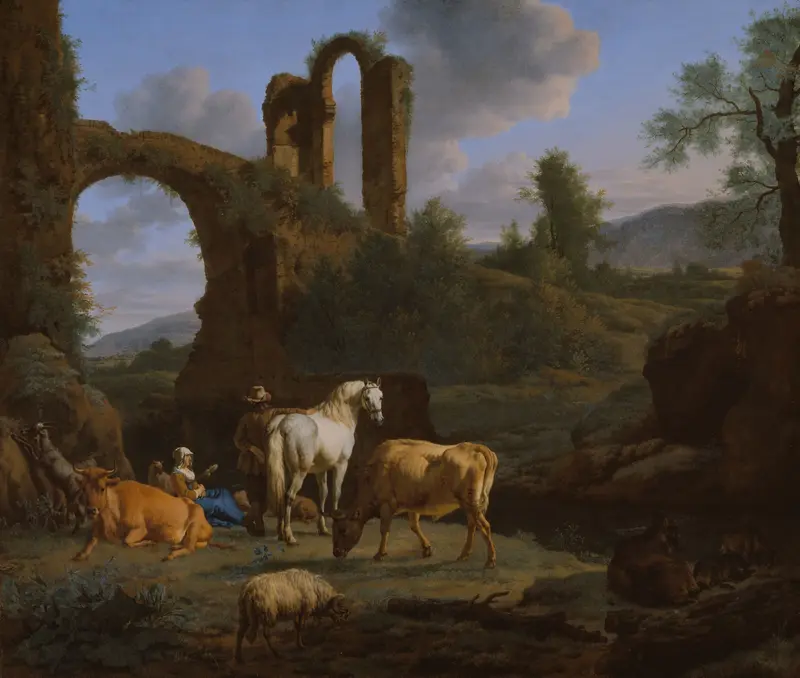
Pastoral Landscape with Ruins
Adriaen van de Velde
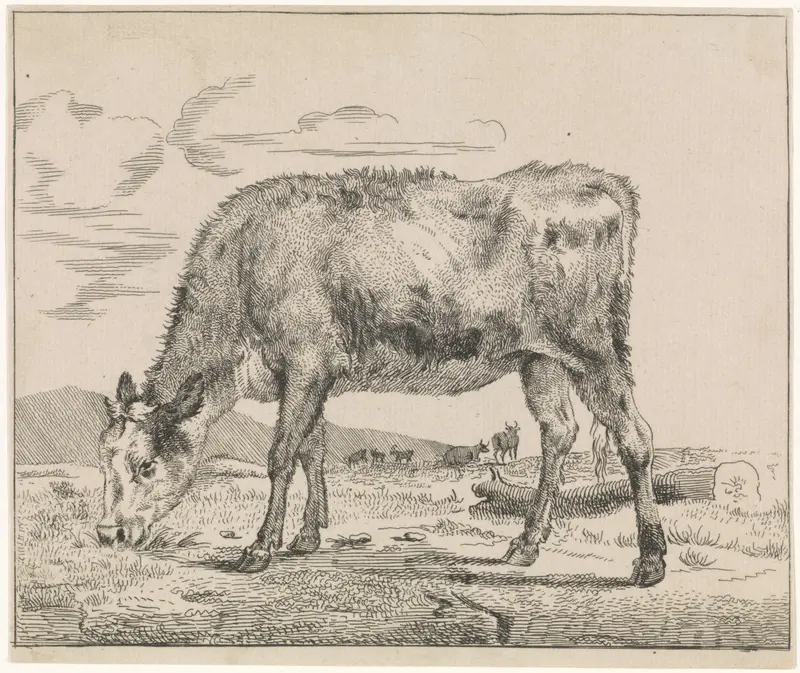
Grazend kalf
Adriaen van de Velde
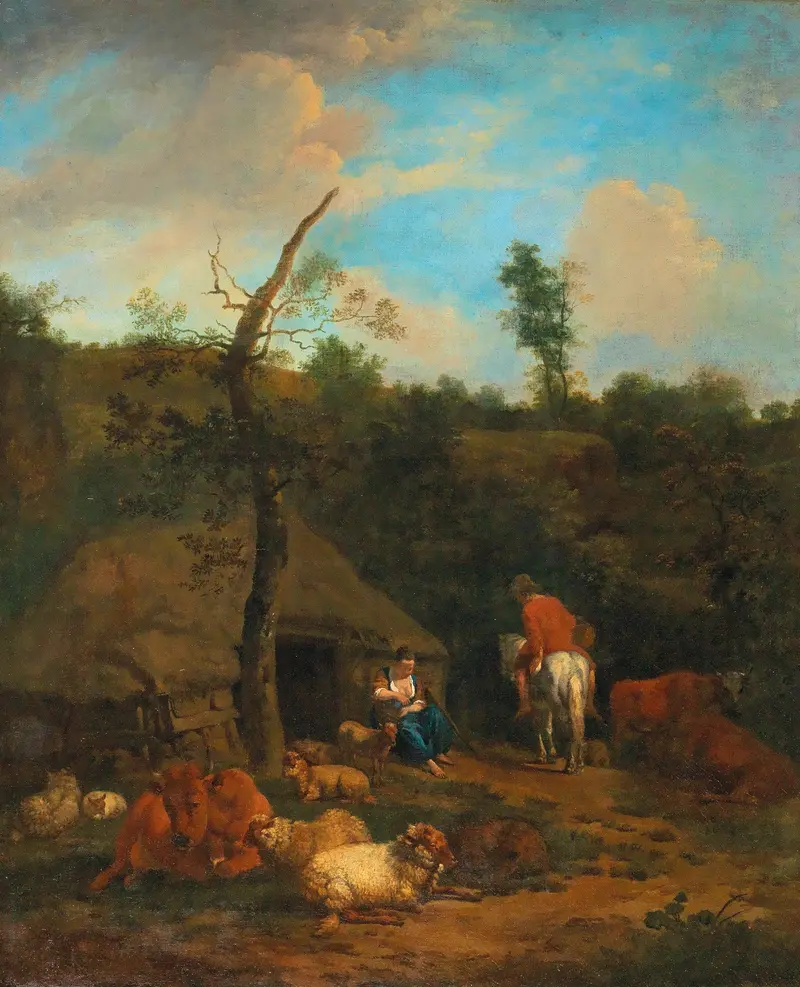
A herdsman and a shepherdess in front of a wooden farmhouse
Adriaen van de Velde
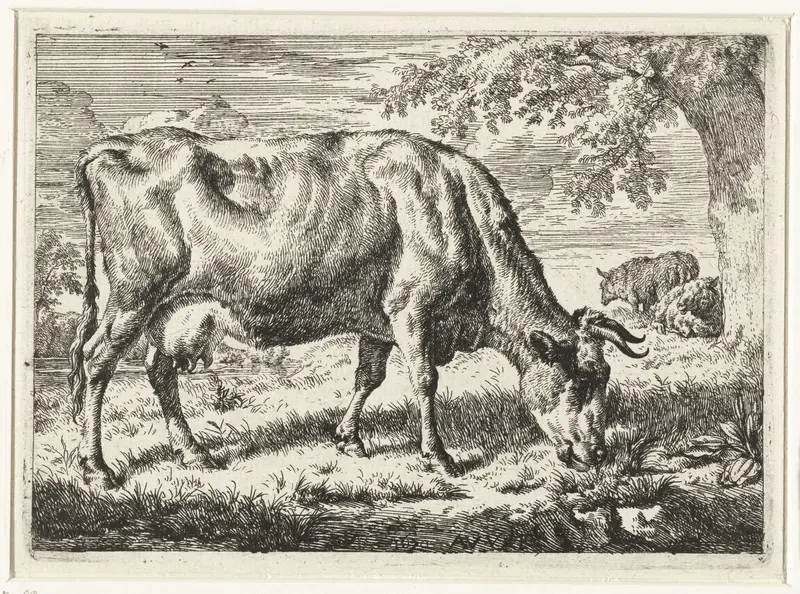
Grazende koe en twee schapen
Adriaen van de Velde
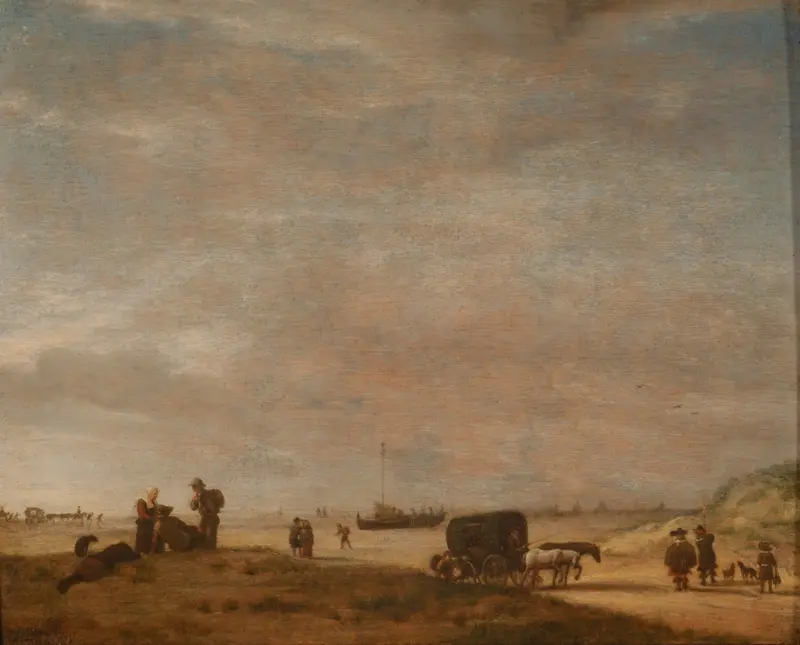
Scheveningen Beach
Adriaen van de Velde
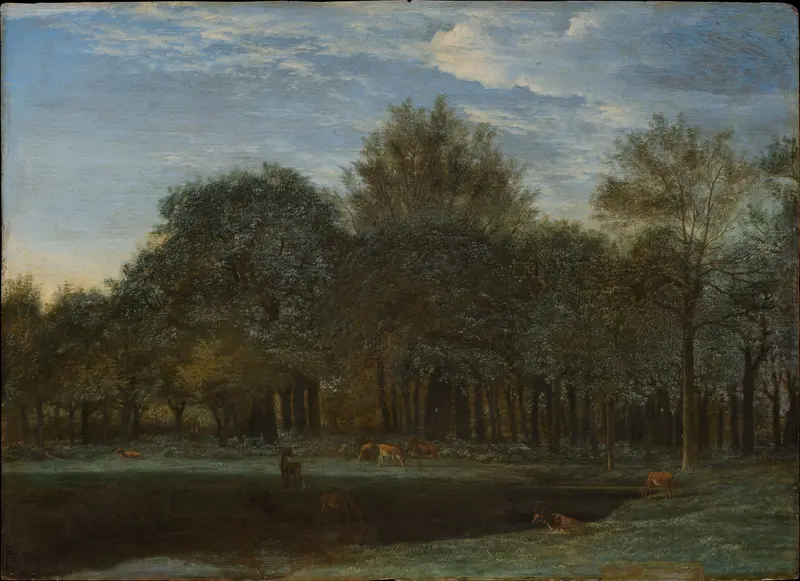
Forest Clearing with Grazing Deer
Adriaen van de Velde
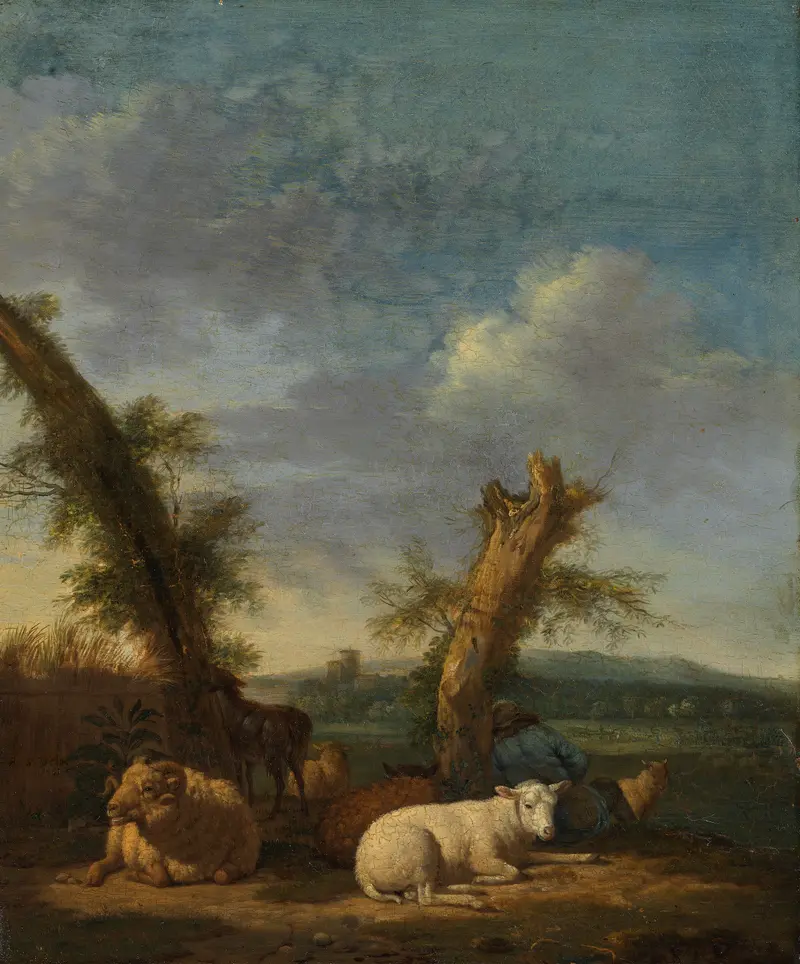
Landscape with Sheep and a Sleeping Shepherd
Adriaen van de Velde
More Genre Scene Art

Banquet of the Officers of the St George Civic Guard
Frans Hals

Rembrandt and Saskia in the Scene of the Prodigal Son
Rembrandt van Rijn

Bal du moulin de la Galette
Pierre-Auguste Renoir

Quadrille at the Moulin Rouge
Henri de Toulouse-Lautrec

A Burial at Ornans
Gustave Courbet

When Will You Marry?
Paul Gauguin