
The Inmates of my House — History & Facts
A hush of private drama lingers in The Inmates of my House, where five figures are gathered in a moment that feels both staged and deeply personal. The eye is drawn first to the trio at the right: two women, one in creamy white with a coral shawl, the other in a pale yellow wrap, stand close enough to suggest kinship or shared confidence, their gazes direct and unflinching. At center, an older man sits behind a table, his hand raised in a gesture that could be thought or caution, while a black-clad woman and a seated figure in russet complete the group.
The table, draped and cluttered with books and papers, becomes a silent witness to the scene, its presence hinting at a life of intellect or perhaps the rituals of family governance. Painted in 1915, this work by Thérèse Schwartze belongs to a world on the cusp of modernity, yet firmly rooted in the traditions of Dutch portraiture. Such group portraits, often commissioned by prosperous families or civic groups, were a way to assert identity and legacy, capturing not just likeness but the subtle negotiations of status and affection. By the early twentieth century, artists like Schwartze—herself celebrated for her psychological insight—were reimagining these conventions, trading the stiff formality of earlier eras for a more intimate, almost theatrical immediacy.
Little is recorded about the specific journey of this painting, but its survival in a digital collection today lets us step into that charged domestic space, where every glance and gesture is loaded with meaning, and the story is ours to finish.
More Artworks by Thérèse Schwartze

Self-portrait
Thérèse Schwartze
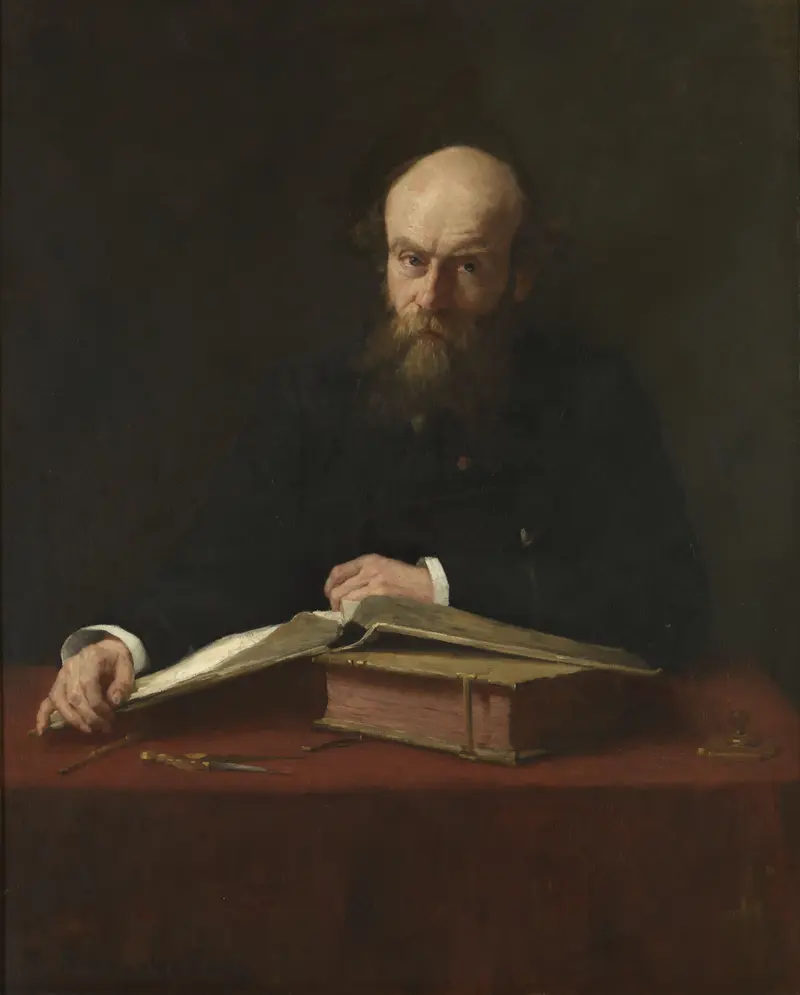
Portrait of Dr. P.J.H. Cuypers (1827-1921)
Thérèse Schwartze
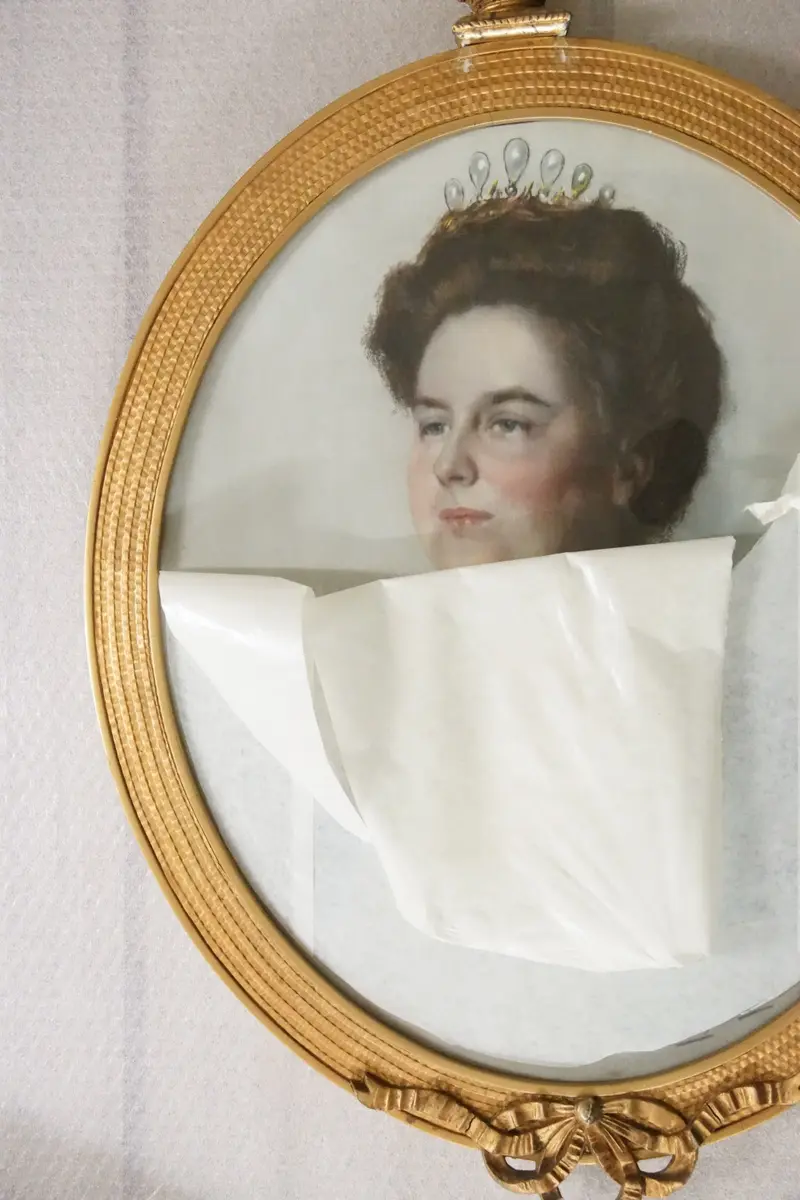
Portret Wilhelmina 020904 Stedelijk Museum Alkmaar
Thérèse Schwartze
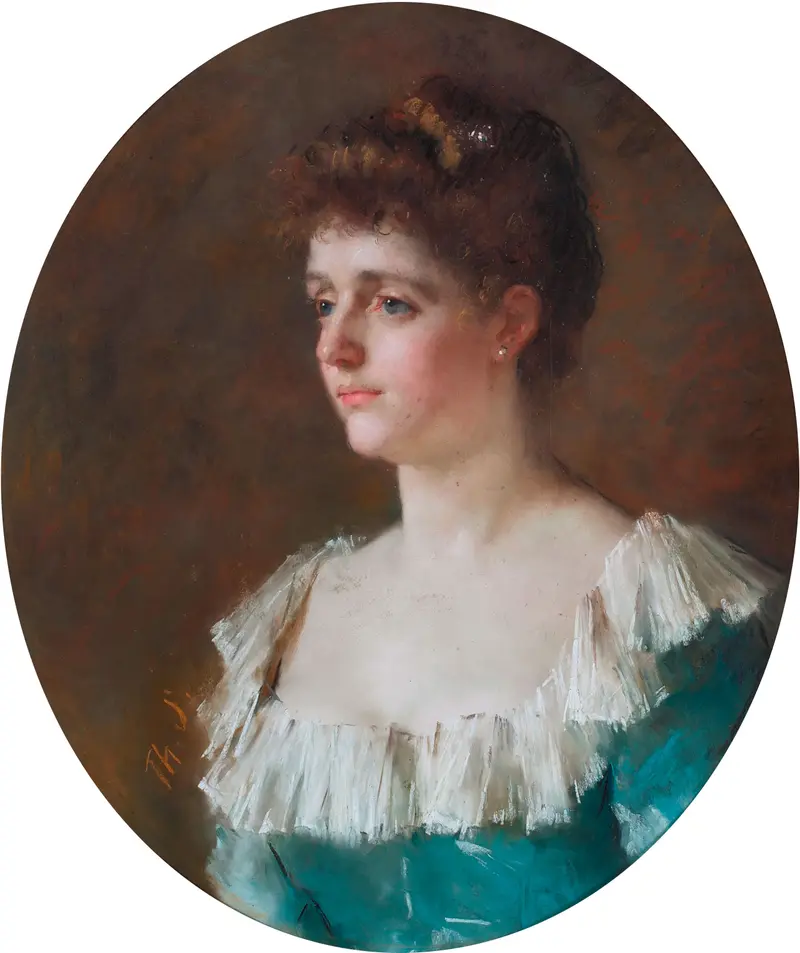
Portrait of Maria Cornelia Schimmelpenninck van der Oye (1857-1891)
Thérèse Schwartze
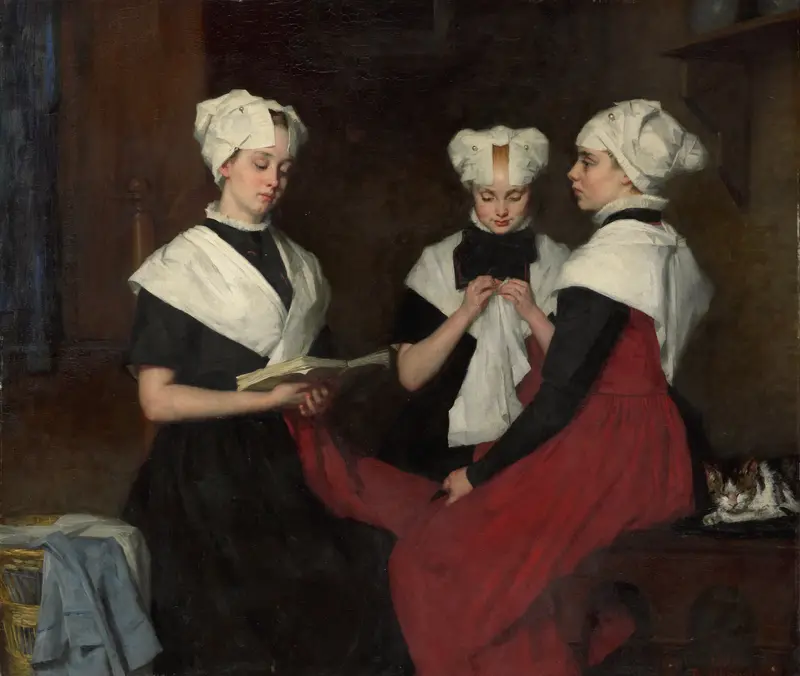
Three girls from the Amsterdam Orphanage
Thérèse Schwartze
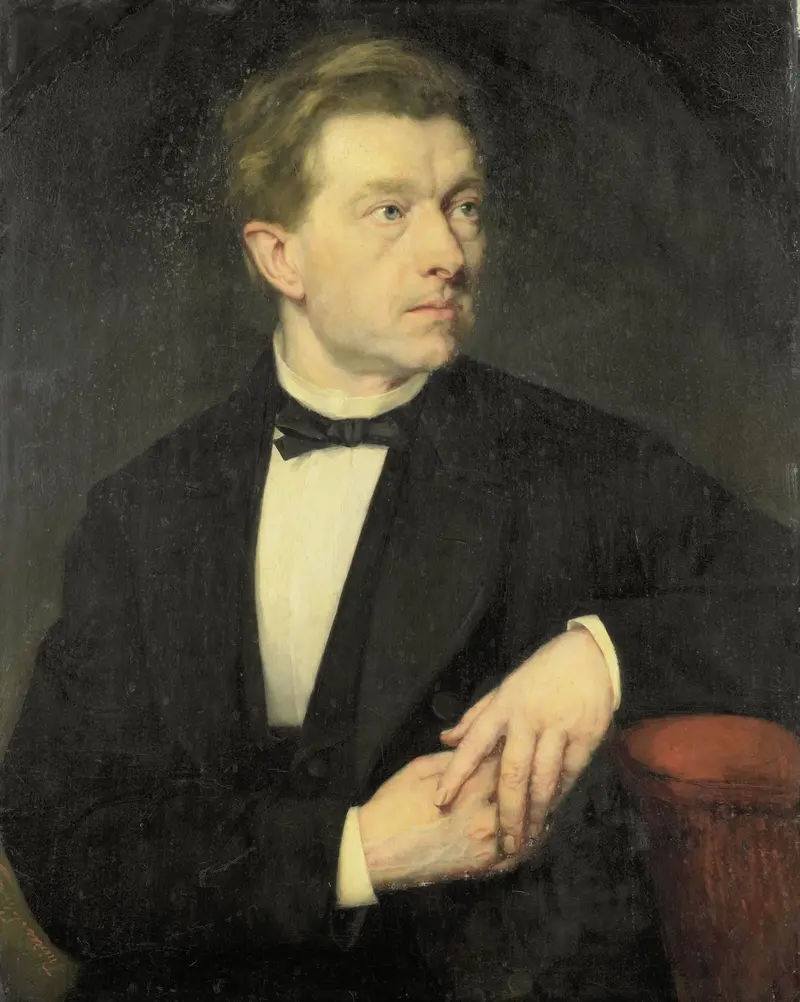
Portrait of Dr. J. L. Dusseau
Thérèse Schwartze
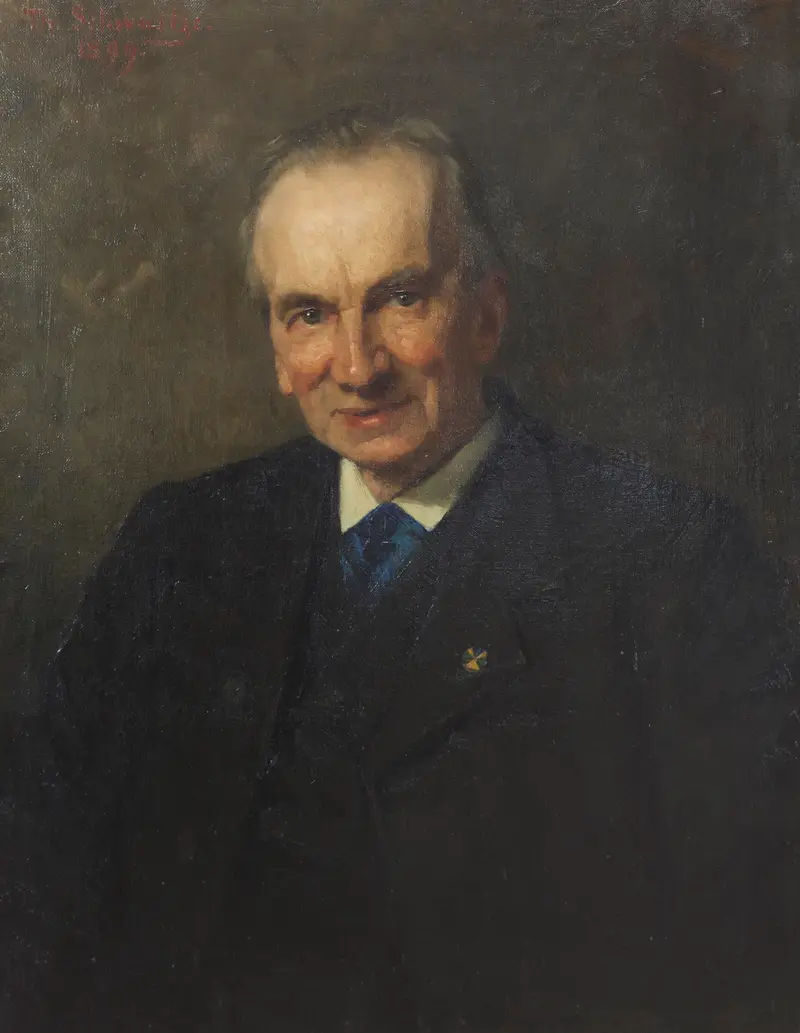
Portrait of Frederik Willem van Eeden
Thérèse Schwartze
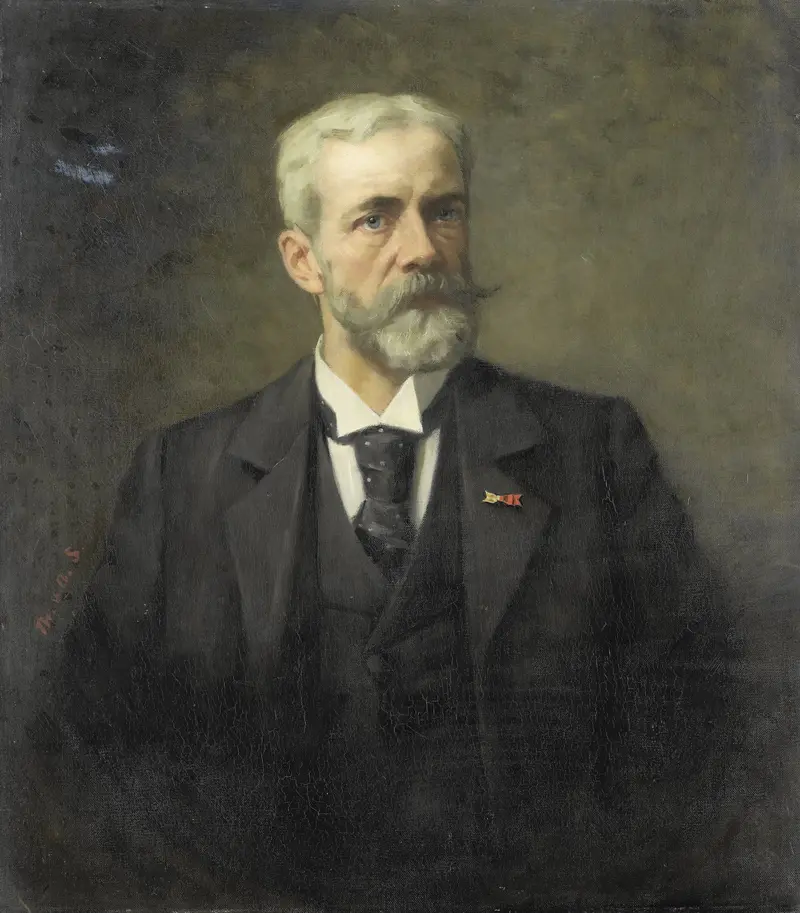
Portrait of Frederik Daniël Otto Obreen (1840-96), director Rijksmuseum
Thérèse Schwartze
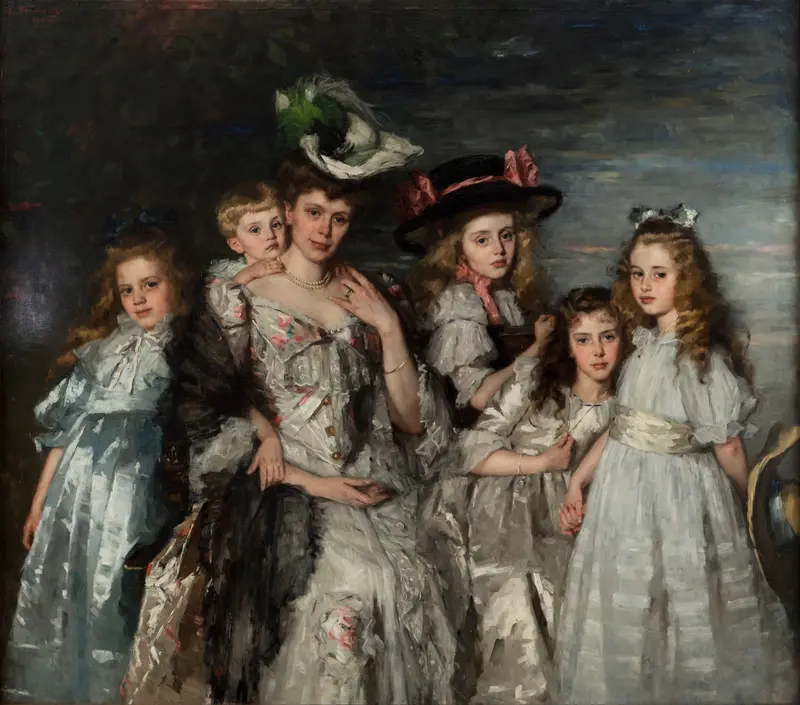
Portrait of Mrs. A.G.M. van Ogtrop-Hanlo (1871-1944) and her five children
Thérèse Schwartze
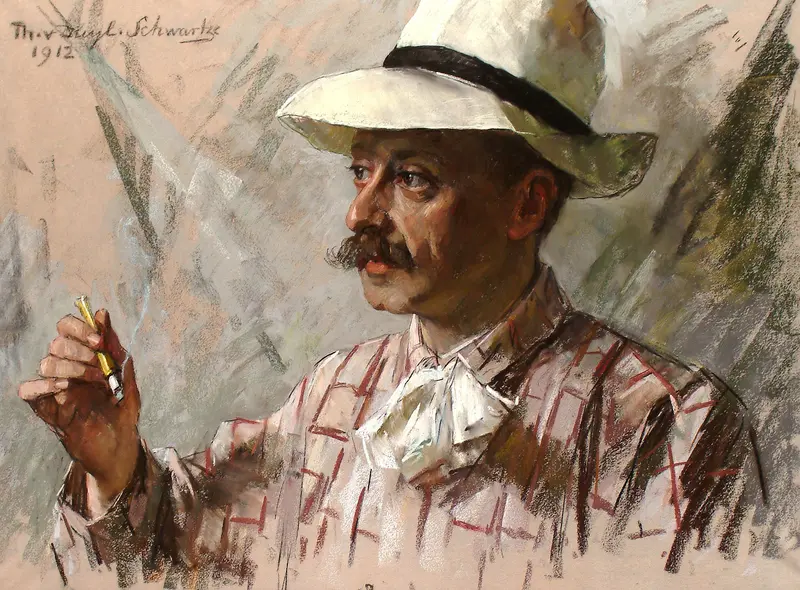
Portrait of Dr. Salomon Benjamin Druif
Thérèse Schwartze



