
The Island of Ischia by Achille Etna Michallon, Phoenix Art Museum — History & Facts
What first arrests the eye in The Island of Ischia is the hush that seems to settle over land and water alike, as if the entire scene is caught in a moment just before something stirs. The view unfolds from a vantage point above the shore, where dense greenery frames the foreground, guiding the gaze down toward a secluded cove and out across the calm, silvery water. A lone, humble building nestles at the edge of the beach, its red roof catching the last warmth of the sun.
The horizon dissolves into a haze of distant islands and gentle mountain silhouettes, their shapes softened by the golden light that fills the sky and reflects off the sea. The palette is restrained yet luminous, with a sweep of pale blue and honeyed tones that infuse the scene with a quiet, contemplative air. Painted in 1819, this work belongs to a period when European artists were increasingly drawn to the natural world, seeking to capture not only its appearance but its atmosphere and mood. Achille Etna Michallon was among the early practitioners of oil landscape painting in France, working at a time when artists ventured outdoors to paint directly from nature—a radical shift from the studio-bound traditions of the previous century.
Little is recorded about the specific history of this painting now in the Phoenix Art Museum, but it stands as a testament to that era’s fascination with travel, discovery, and the poetry of unspoiled places. The viewer is left to wonder about the stories hidden in the quiet corners of the island, and invited to linger in the tranquil light that Michallon so carefully observed.
More Artworks by Achille Etna Michallon

Forest interior
Achille Etna Michallon
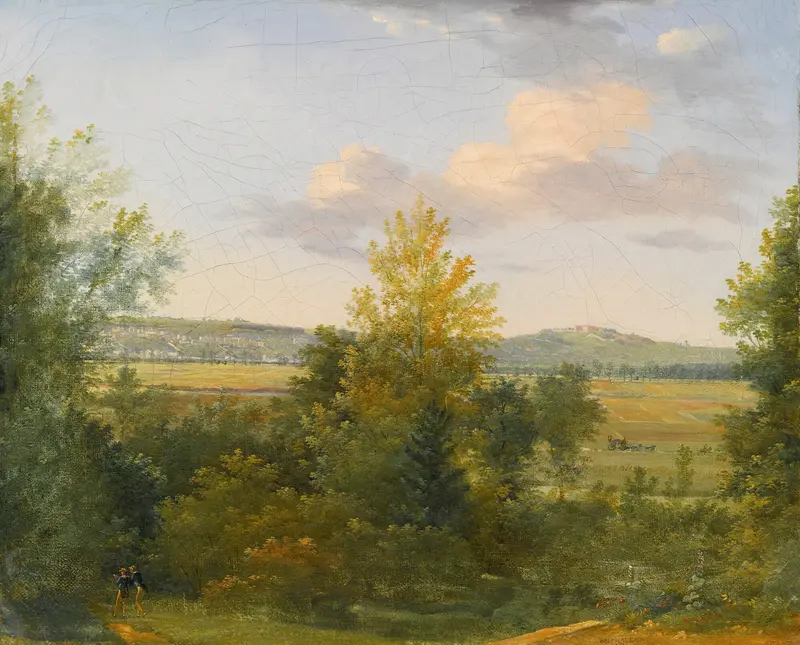
Pastoral landscape with two travellers
Achille Etna Michallon

Die Mündung der Rance bei Saint-Servan (Bretagne)
Achille Etna Michallon

View of a Waterfall through a Ravine
Achille Etna Michallon
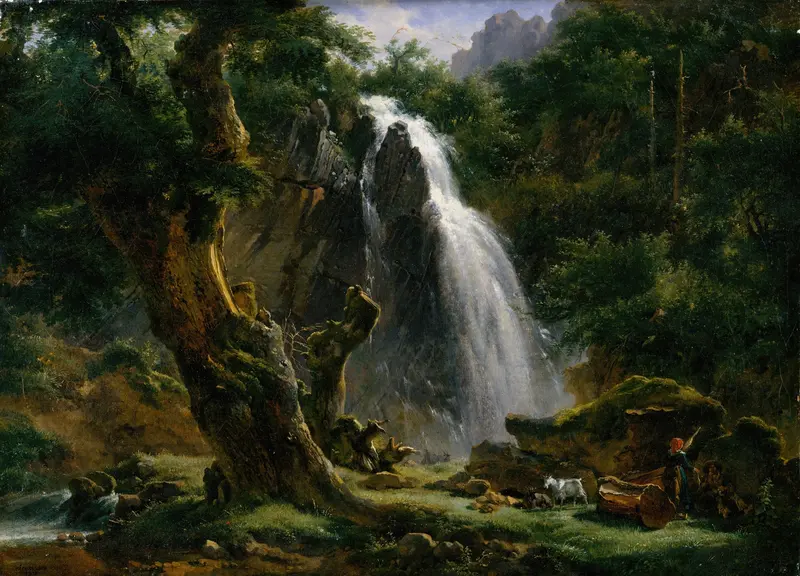
Waterfall at Mont-Dore
Achille Etna Michallon
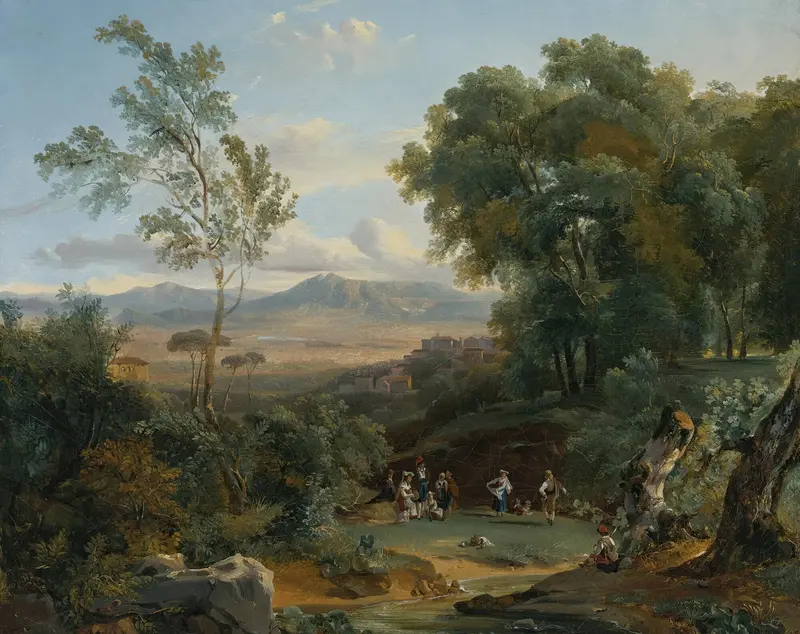
Landscape With A View Of Frascati
Achille Etna Michallon
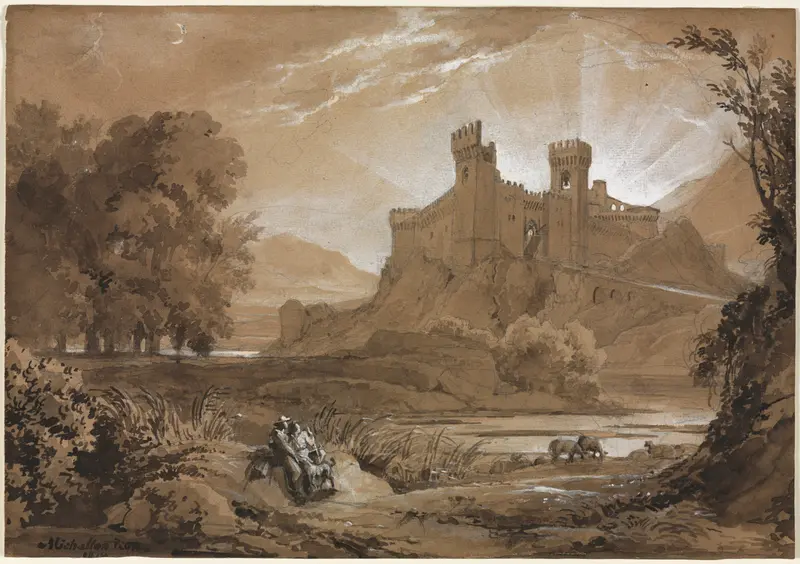
Landscape with Castle and Shepherds
Achille Etna Michallon
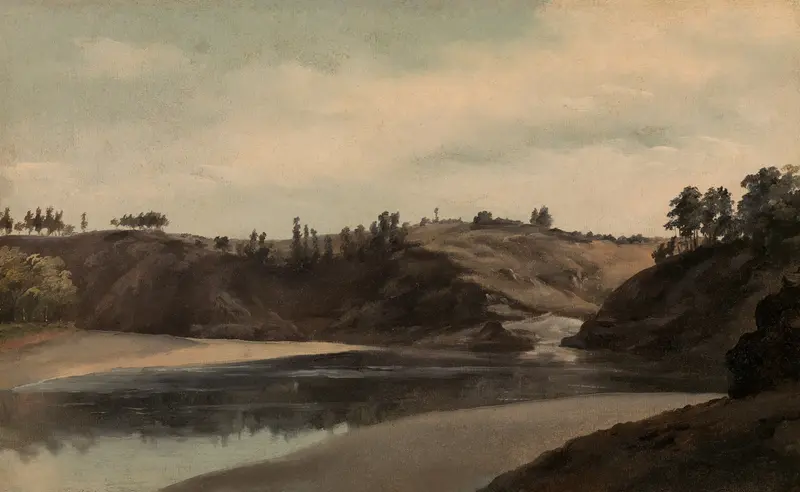
River landscape in Brittany
Achille Etna Michallon
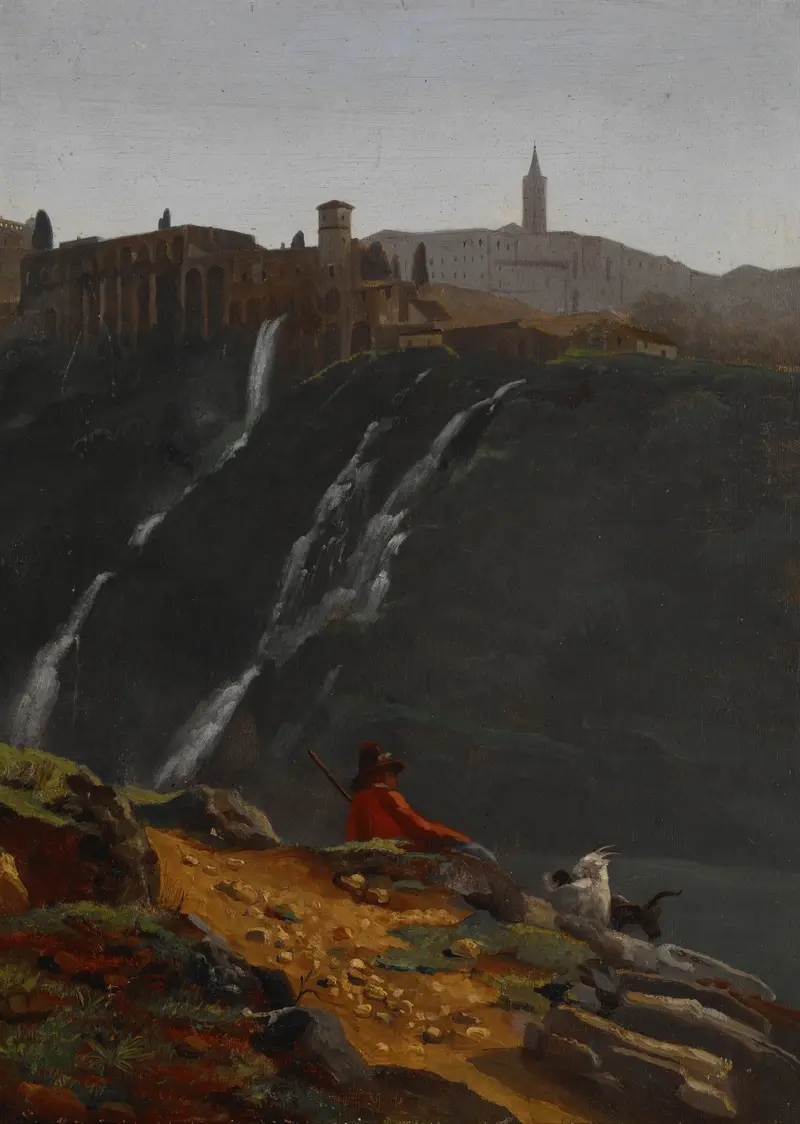
Goatherd Opposite the Falls of Tivoli
Achille Etna Michallon
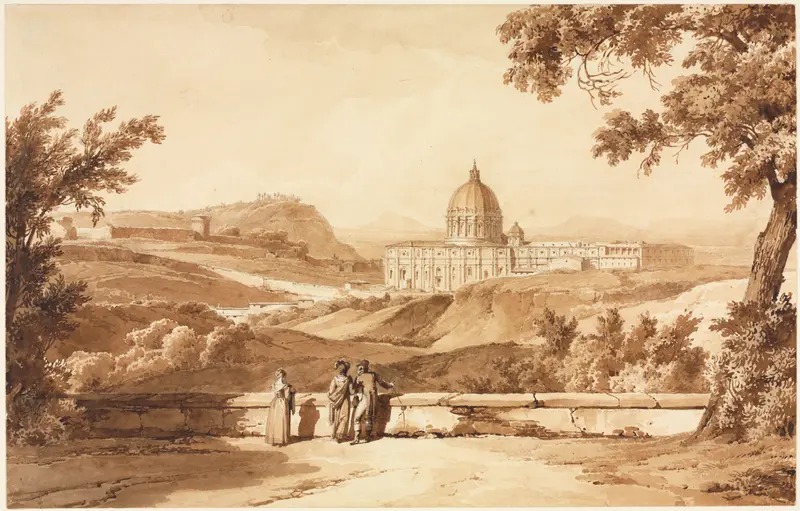
View of St. Peters, Rome
Achille Etna Michallon
More Landscape Art

The Starry Night
Vincent van Gogh

View of Delft
Johannes Vermeer

Water Lilies
Claude Monet

The Grand Canal, Venice, looking north-west from the Ca' Corner to the Ca' Contarini degli Scrigni, with the campanile of Santa Maria della Carità
Canaletto

Windsor Castle
Canaletto

The Grand Canal looking North-East from the Palazzo Dolfin-Manin to the Rialto Bridge
Canaletto