
The Jester Named Don John of Austria — History & Facts
In the court of Philip IV of Spain, jesters were more than mere entertainers—they were fixtures of palace life, often immortalized by the brush of Diego Velázquez. Among the most curious is The Jester Named Don John of Austria, painted around 1632, which records a peculiar tradition: the court’s fools sometimes performed in elaborate costumes, assuming the identities of famous figures. The sitter here, Cristóbal Castañeda, was nicknamed after Don John of Austria, the celebrated half-brother of King Philip II and hero of Lepanto.
The painting blurs the line between mockery and homage, capturing a moment when status and identity were playfully upended before the eyes of Spain’s most powerful. Velázquez chooses to depict Castañeda seated, clad in the ornate armor and sash of a general, a baton of command resting in his hand. The jester’s face is serious, even contemplative, as if he truly bore the weight of military command—a sharp contrast to the absurdity of his role. Behind him, a battered drum and a tattered banner hint at mock battles staged for the court’s amusement.
The light falls with precision, isolating the figure against a muted background, much as Velázquez does in his portraits of real nobles, granting the jester a dignity usually reserved for his betters. Unlike Francisco de Goya’s later, more mocking depictions of court jesters, Velázquez’s approach is subtle, inviting us to question the boundaries of power, performance, and reality. The painting was likely commissioned for the Buen Retiro Palace, where Velázquez produced many of his portraits of court dwarfs and jesters during the 1630s. It remained in royal collections, surviving the dispersals and upheavals that scattered many works across Europe.
Today, The Jester Named Don John of Austria hangs in the Museo del Prado, a testament to Velázquez’s fascination with the marginal figures of the Spanish court. For Velázquez, these portraits were not mere curiosities—they were opportunities to explore character, status, and the artifice of portraiture itself, themes that would reach their height in his later masterpiece, Las Meninas.
More Artworks by Diego Velázquez

Las Meninas
Diego Velázquez

The Triumph of Bacchus
Diego Velázquez

Rokeby Venus
Diego Velázquez

Equestrian Portrait of Prince Balthasar Charles
Diego Velázquez

Bacchus
Diego Velázquez

Don Gaspar de Guzmán (1587–1645), Count-Duke of Olivares
Diego Velázquez
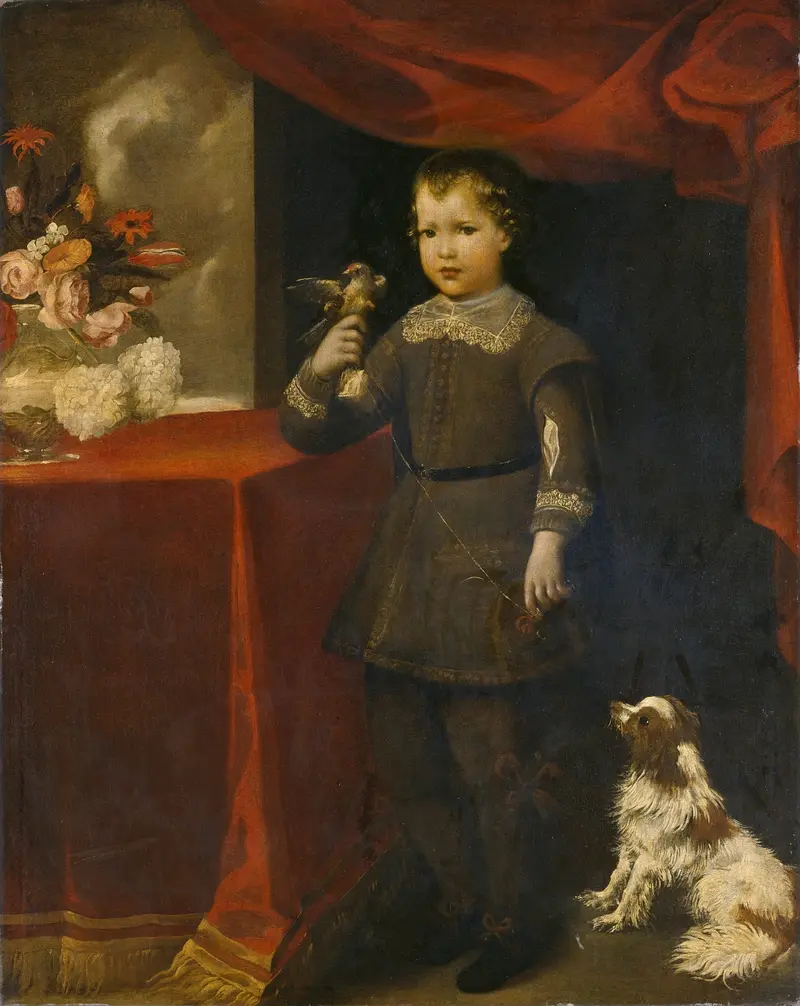
El príncipe Baltasar Carlos de Austria
Diego Velázquez

Equestrian Portrait of Philip III
Diego Velázquez

Equestrian Portrait of Margarita of Austria
Diego Velázquez
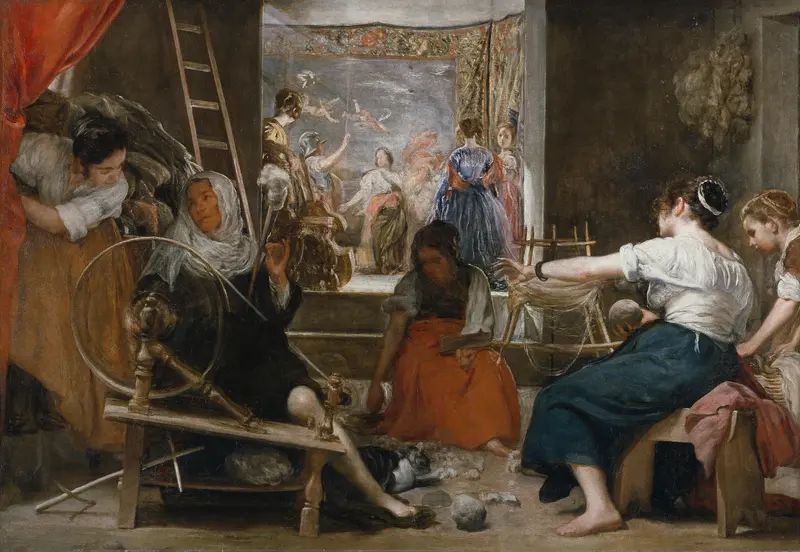
Las Hilanderas
Diego Velázquez




