
The Kensington Gravel Pits — History & Facts
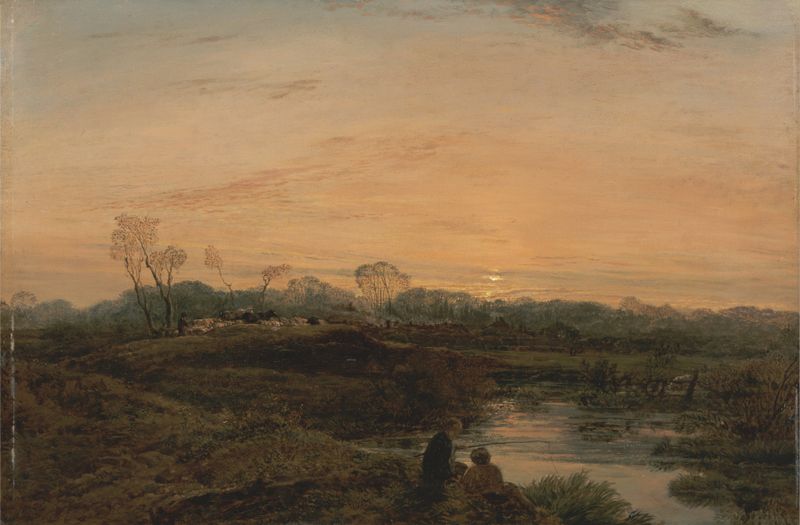
Who listens when art speaks of silence? In the hushed expanse of The Kensington Gravel Pits, one finds an echoing void that invites contemplation and introspection. Look to the center of the composition, where the still, muted water reflects the overcast sky. Notice the subtle gradations of gray and brown that convey a sense of tranquility, yet also hint at an unsettling emptiness. The barren trees in the foreground stand tall and dormant, their branches reaching out like skeletal fingers against the backdrop of an indifferent horizon.
The carefully structured arrangement of shapes leads your eye across the canvas, revealing the artist's meticulous technique in capturing both stillness and a fleeting moment in time. In this seemingly desolate scene, there lies an emotional tension between nature's beauty and its starkness. The abandoned gravel pits, remnants of human industry, serve as a poignant reminder of the passage of time and the impermanence of labor. The interplay of light and shadow adds depth, creating a sense of melancholy that resonates deeply, inviting the viewer to reflect on loss, absence, and the quiet revival of nature. John Linnell created this piece in 1857, a time when he was exploring themes of English landscape and the relationship between mankind and nature.
The industrial revolution was reshaping the environment, prompting many artists to meditate on what was being lost amidst progress. In The Kensington Gravel Pits, Linnell channels this tension into a powerful visual statement about emptiness and the landscapes that bear witness to change.
More Artworks by John Linnell
Browse all →
A View Near Hampstead
John Linnell
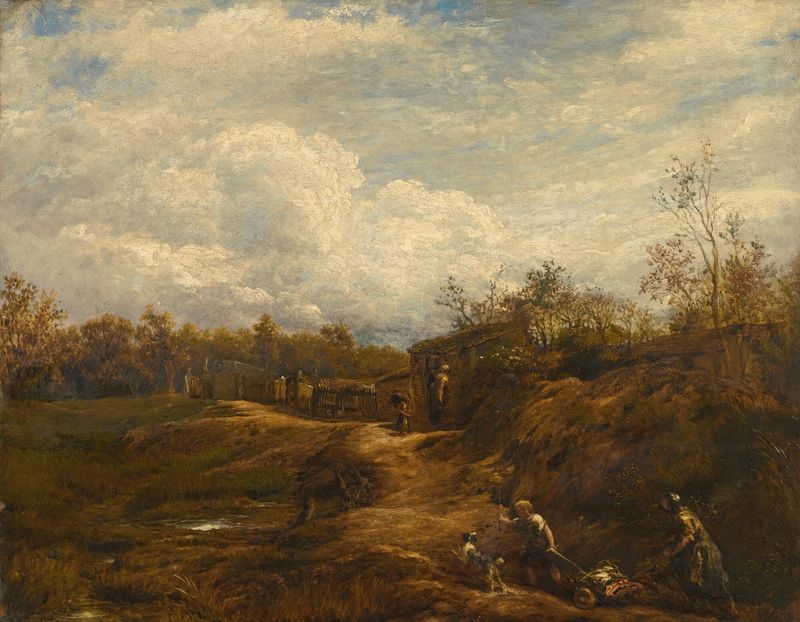
An English Landscape
John Linnell

Travelers Resting by a Fallen Tree
John Linnell
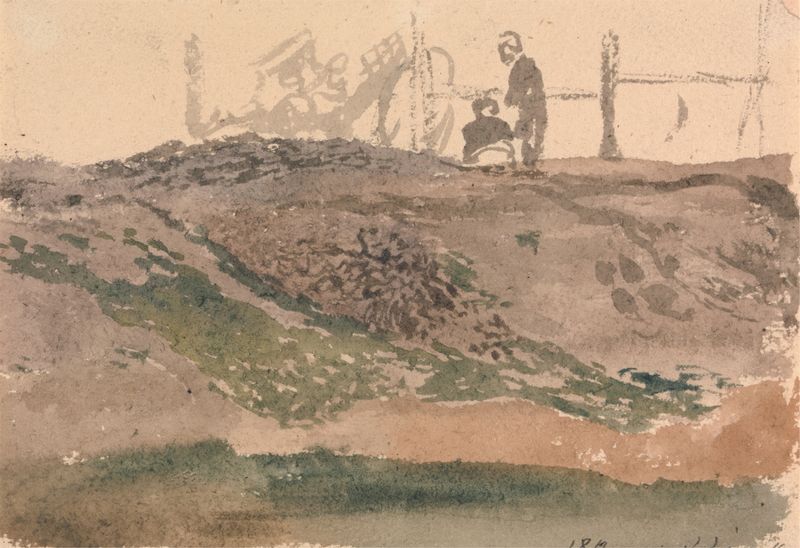
Figures on a Bank, Kensington Gravel Pits
John Linnell
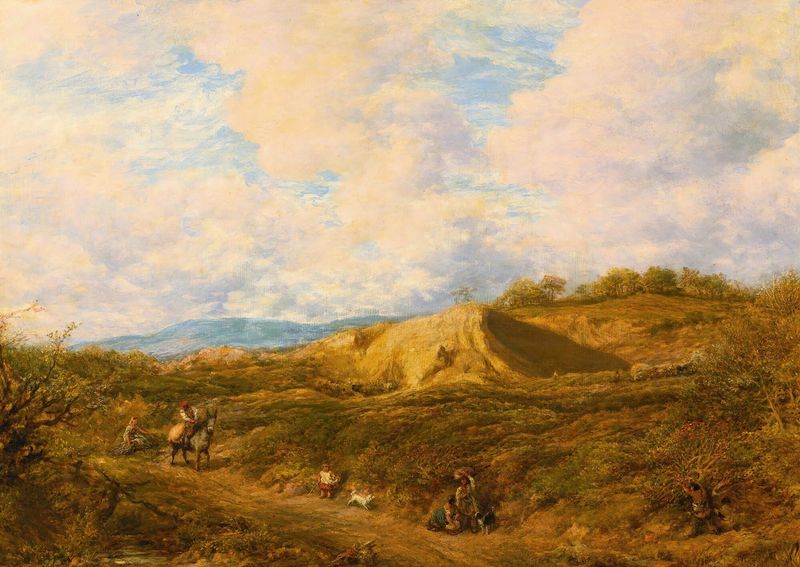
Redhill Common, Surrey
John Linnell

Netley Abbey
John Linnell

The Sand Pits, Hampstead Heath
John Linnell
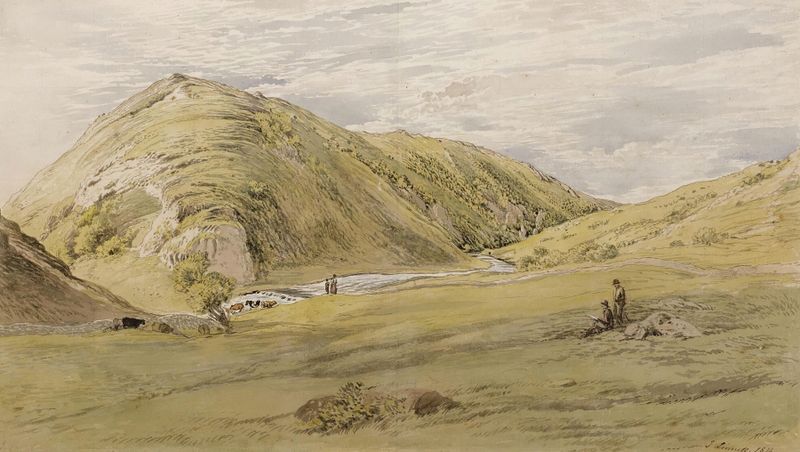
Entrance To Dovedale From Ashbourne, Derbyshire
John Linnell
Evening, Bayswater
John Linnell

In Dovedale
John Linnell





