
The Knickerbocker Steamboat — History & Facts
The first thing that catches the eye in The Knickerbocker Steamboat is the crisp geometry of the ship itself, slicing through the choppy green waves with a purposeful energy. Antonio Jacobsen, a painter known for his affinity with the sea and its vessels, gives the steamboat a sense of presence that feels almost architectural. The hull’s deep black is punctuated by rows of portholes and the sharp gold trim, while the white sails billow with a promise of speed, even as the black smoke from the funnel reminds us of the era’s embrace of steam power.
Flags snap at the masts—the red pennant boldly spelling out the ship’s name, the American flag streaming at the stern—signaling identity and national pride. The horizon sits low, granting the sky a sweeping expanse that frames the ship as the true protagonist, while the angled lines of rigging and mast draw the viewer’s gaze forward, into the future the vessel is forging. Painted in 1892, this work belongs to a world in the midst of transformation, when steamships were the marvels of modernity and the Atlantic was a highway of commerce and migration. Marine portraits like this were often commissioned by shipowners eager to celebrate their latest technological triumphs, or by captains and crew who wanted a lasting record of their service.
Antonio Jacobsen was a favored artist for such commissions, his detailed style and accuracy making his works prized among collectors and maritime enthusiasts alike. Though the specific journey of this painting is little documented beyond its appearance at Heritage Auctions, its date and subject place it firmly in the age when the American coastline was dotted with shipyards and the romance of steam was at its height. To stand before this image is to feel the optimism and ambition of that era, as solid and bracing as the wind in the sails.
More Artworks by Antonio Jacobsen

Het stoomschip met hulpzeilvermogen ‘Kroonland’
Antonio Jacobsen

The Barque Vigilant
Antonio Jacobsen
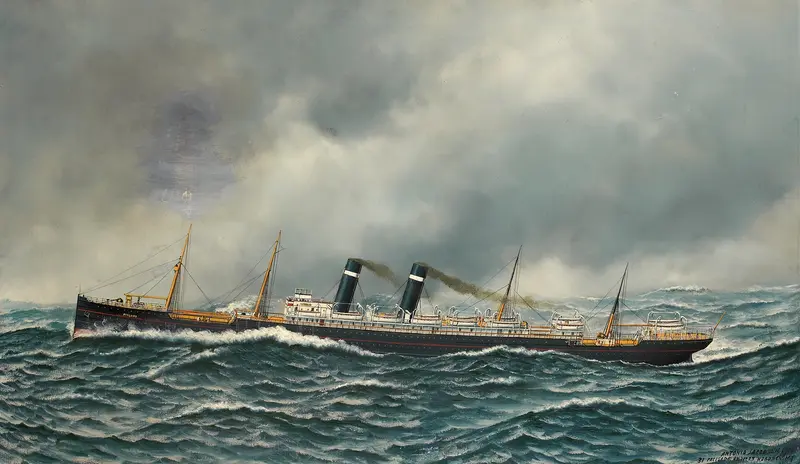
Het stoomschip ‘Finland’ te New York
Antonio Jacobsen
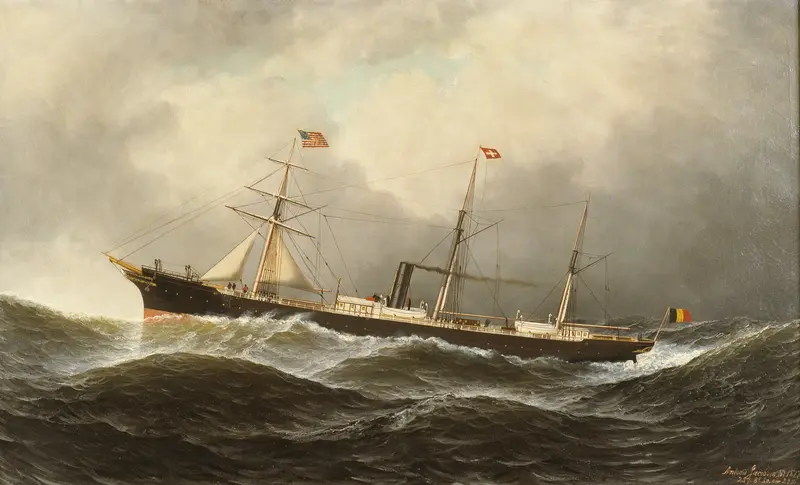
Het Belgische stoomschip met hulpzeilvermogen ‘Ludwig’ op zee
Antonio Jacobsen
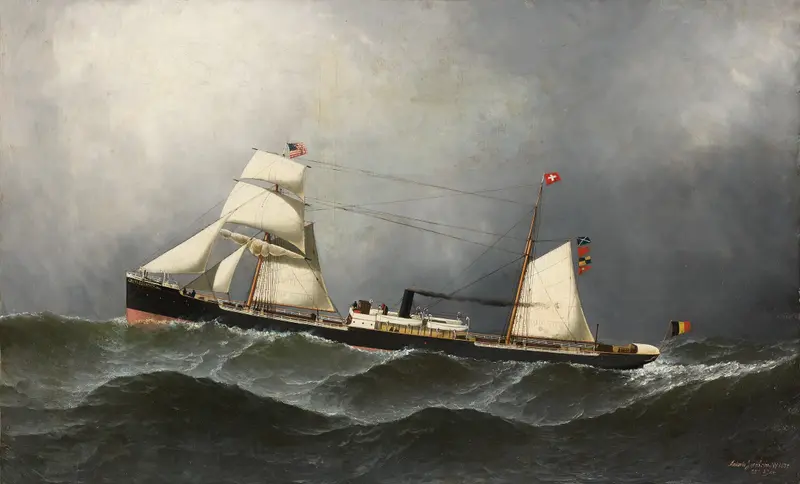
Het stoomschip met hulpzeilvermogen ‘Daniel Steinmann’ van de White Cross Line
Antonio Jacobsen
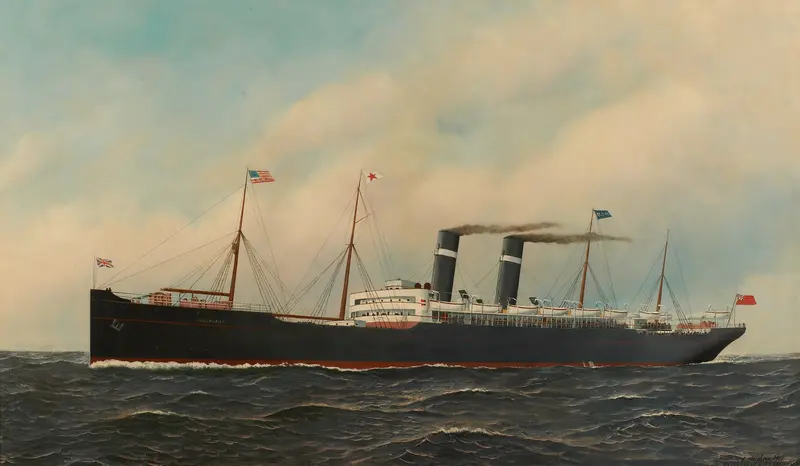
Het passagiersstoomschip Vaderland
Antonio Jacobsen
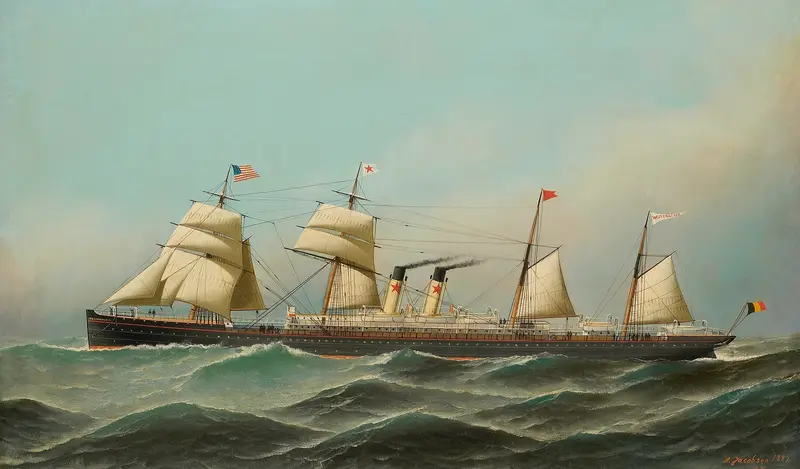
Het stoomschip met hulpzeilvermogen ‘Westernland’
Antonio Jacobsen
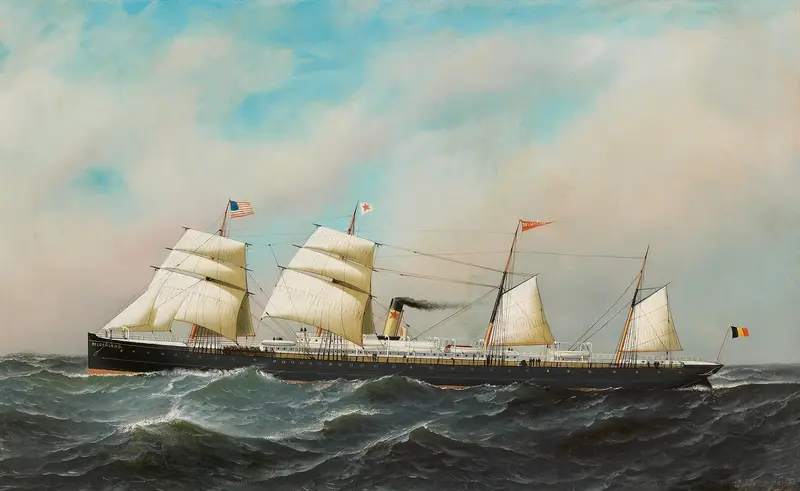
Het stoomschip met hulpzeilvermogen Belgenland
Antonio Jacobsen
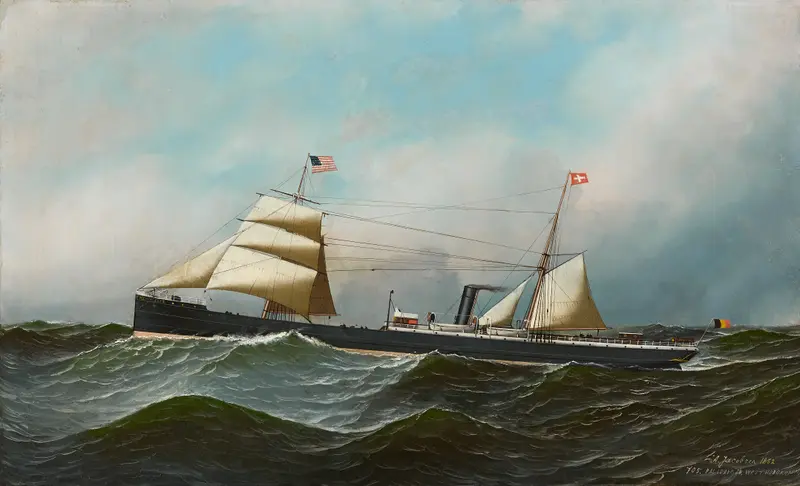
Het stoomschip met hulpzeilvermogen ‘Henry Edye’ van de White Cross Line
Antonio Jacobsen
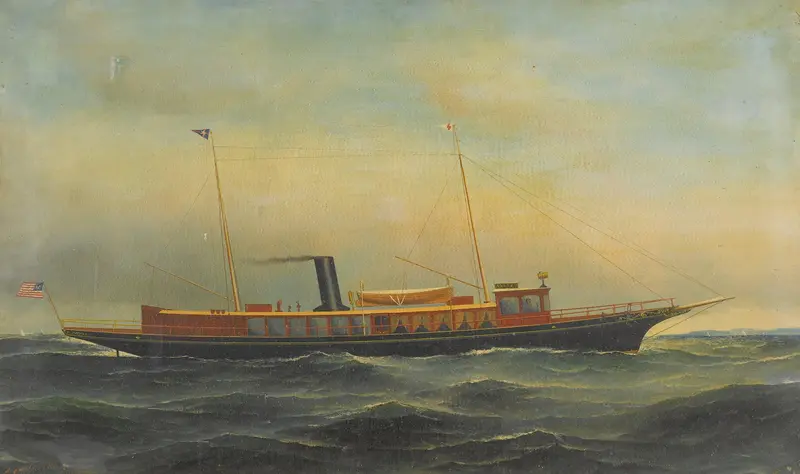
The Yacht ‘aztec’
Antonio Jacobsen





