The Market in front of the Theatre in Antwerp — History & Facts
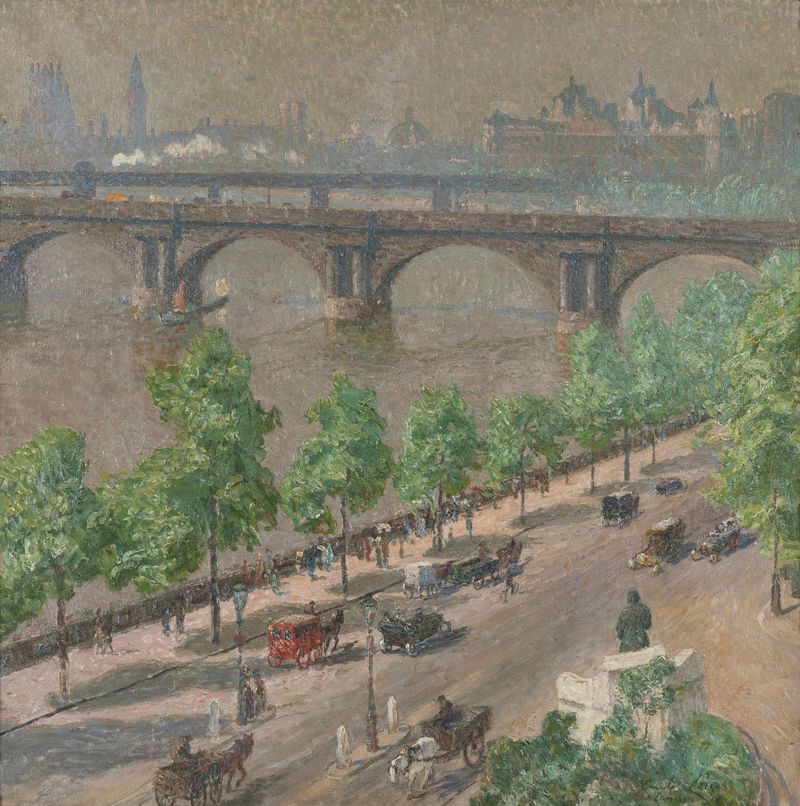
What if beauty was never meant to be finished? In the heart of the bustling market, a sense of quietude lingers, as if the scene is frozen in time, capturing both the vibrancy of life and the weight of absence. Focus on the foreground, where vibrant splashes of color bring the market to life. Notice how the figures are clustered together, their gestures animated yet betraying a collective stillness, as if waiting for something to unfold. The lively reds and deep greens contrast sharply with the more subdued tones of the theatre behind them, drawing your gaze into the composition's layered complexity.
The interplay of light reveals the textures of fabrics and produce, inviting you to explore the details that Claus so meticulously rendered. Yet, amid this palpable energy, an unsettling emptiness pervades the canvas. The theatre looms large, an architectural marvel that stands as a testament to culture, yet its doors are closed, suggesting a disconnect between the enthusiasm of the market and the silent void that the theatre represents. The juxtaposition of lively figures and the barren stage stirs a contemplation of lost connections, hinting at the transient nature of joy that is often punctuated by an undercurrent of longing. Emile Claus painted this work in a period when the art world was shifting, moving towards impressionism and an exploration of modern life.
Though the exact date of creation is unknown, it was likely during the late 19th or early 20th century, a time when markets were central to community life in Belgium, reflecting both societal vibrancy and unspoken solitude. This was a moment of transformation not just for Claus himself, but for the broader artistic landscape, moving towards capturing everyday life with emotional depth and nuance.