
The Milkmaid Near the River Bank of the Oude Maas — History & Facts
What first draws the eye in The Milkmaid Near the River Bank of the Oude Maas by Aelbert Cuyp is the sheer breadth of sky, its pale, shifting light spilling across the water and bathing the landscape in a gentle haze. The drama here is not in grand gestures but in the quiet, daily rhythm of rural life: a milkmaid crouches at her task, half-sheltered by the bulk of her cows, while the distant town and sails drift in and out of the mist. The low horizon gives the sky a commanding presence, making the human and animal figures feel small yet essential, anchored to the earth by their work.
Every detail—the glint of milk pails, the relaxed posture of the cattle—serves to root us in this moment, as if the world itself pauses to watch the scene unfold. This painting belongs to the Dutch Golden Age, a period when artists like Cuyp transformed the ordinary countryside into a stage for light, atmosphere, and the quiet dignity of labor. Such works were often commissioned by prosperous townspeople who saw their own values reflected in these scenes of order and abundance. Painted sometime between 1645 and 1700, and now housed in the collection at http://collectie.boijmans.nl/object/3195, this piece is a testament to how landscape painting became a celebration of both nature and the people who shaped it.
The world that produced this painting was one of trade, rising civic pride, and a fascination with the land’s changing moods—an invitation to linger, and to look again.
More Artworks by Aelbert Cuyp

The Maas at Dordrecht
Aelbert Cuyp
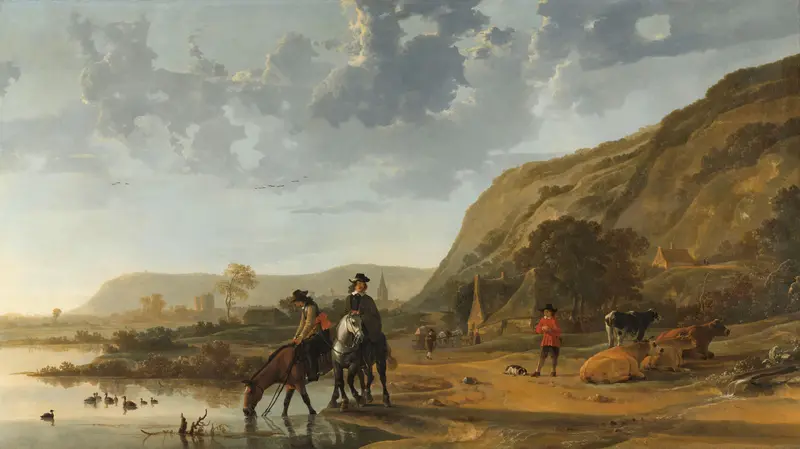
River Landscape with Riders
Aelbert Cuyp

The Maas at Dordrecht
Aelbert Cuyp
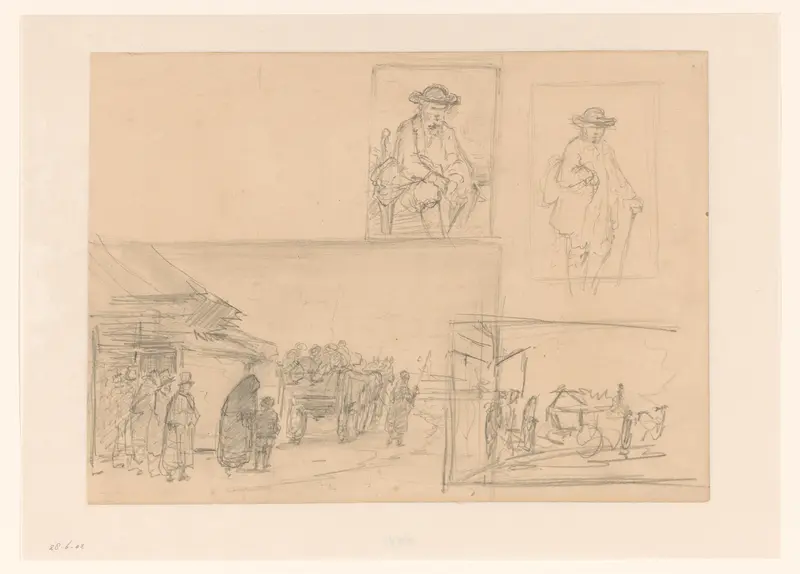
Gezicht op Dordrecht
Aelbert Cuyp
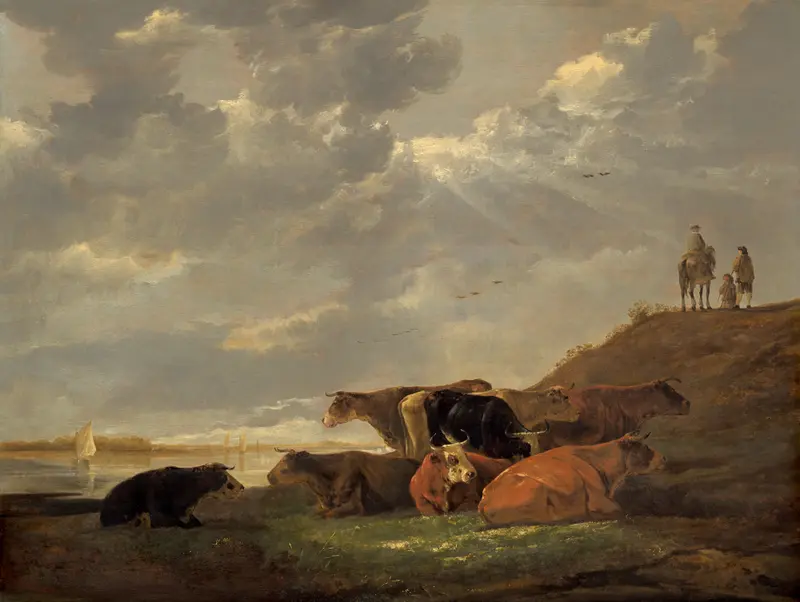
River Landscape with Cows
Aelbert Cuyp
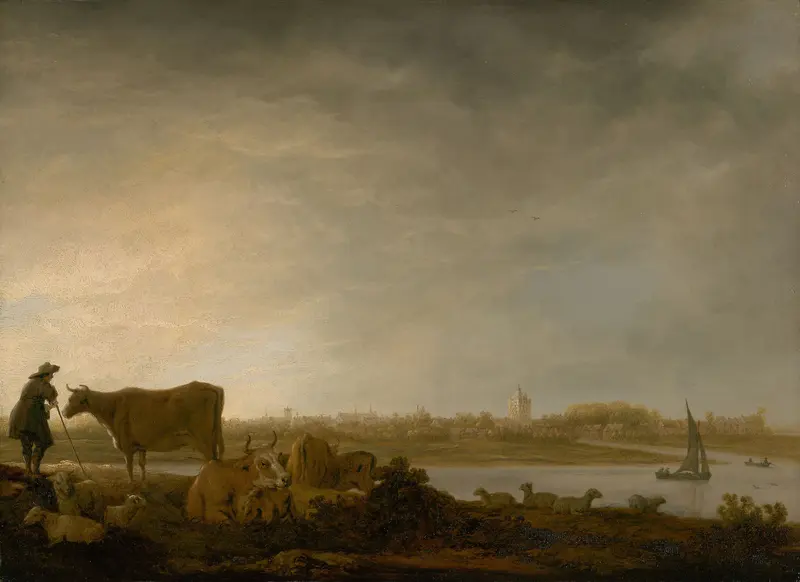
A View of Vianen with a Herdsman and Cattle by a River
Aelbert Cuyp
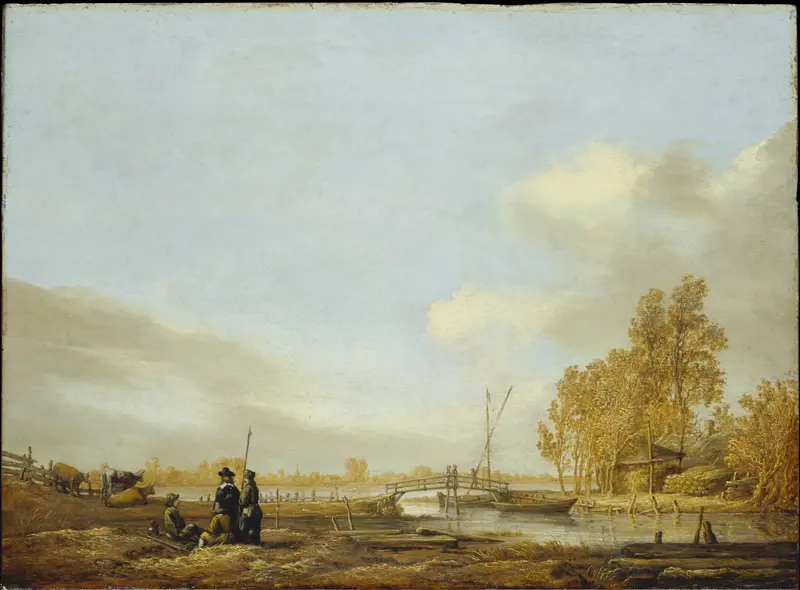
River Landscape with Footbridge
Aelbert Cuyp
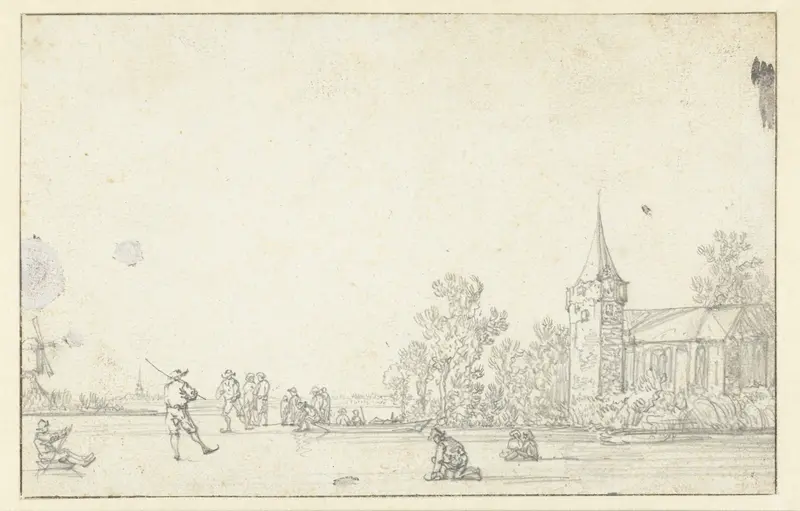
Bevroren rivier met schaatsers bij een kerk
Aelbert Cuyp

Cattle near a River
Aelbert Cuyp
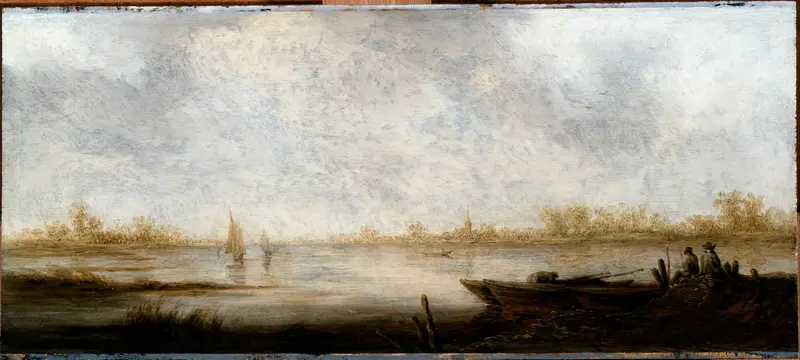
River Landscape
Aelbert Cuyp
More Landscape Art

The Starry Night
Vincent van Gogh

View of Delft
Johannes Vermeer

Water Lilies
Claude Monet

The Grand Canal, Venice, looking north-west from the Ca' Corner to the Ca' Contarini degli Scrigni, with the campanile of Santa Maria della Carità
Canaletto

Windsor Castle
Canaletto

The Grand Canal looking North-East from the Palazzo Dolfin-Manin to the Rialto Bridge
Canaletto