
The Month of February — History & Facts
What draws the eye first in The Month of February by Abel Grimmer is the improbable castle, perched like a stone crown above the daily rhythms of village life. The scene is a tapestry of late winter’s quiet labor: bare trees stretch their fingers against a pale sky, while in the foreground, figures stoop to their work or travel along muddy paths. The composition leads you in a gentle spiral—past the watermill’s turning wheel, across the bridge, up the winding road, and finally to the fortress itself, its towers clustered in a way that feels both protective and watchful.
Grimmer’s palette is muted, but not cold: the ochres and greens suggest a world waiting for spring, while the careful placement of red roofs and figures animates the landscape with small pulses of warmth. Painted in the first half of the seventeenth century, this work belongs to a tradition of calendar scenes that flourished in the Low Countries, where artists like Grimmer translated the rhythms of rural life into visual cycles of the months. Such paintings were often commissioned by prosperous burghers or guilds, eager to display both their piety and their connection to the land. The genre was shaped by changing ideas about time, labor, and nature in an era of growing urban wealth and scientific curiosity.
History has kept few traces of this specific painting’s journey, but its presence in the Web Gallery of Art collection today allows us to step into a world where the turning of the year was both a spectacle and a shared, enduring story—one that invites us to look again, and find our place in its unfolding.
More Artworks by Abel Grimmer

Flemish proverbs
Abel Grimmer
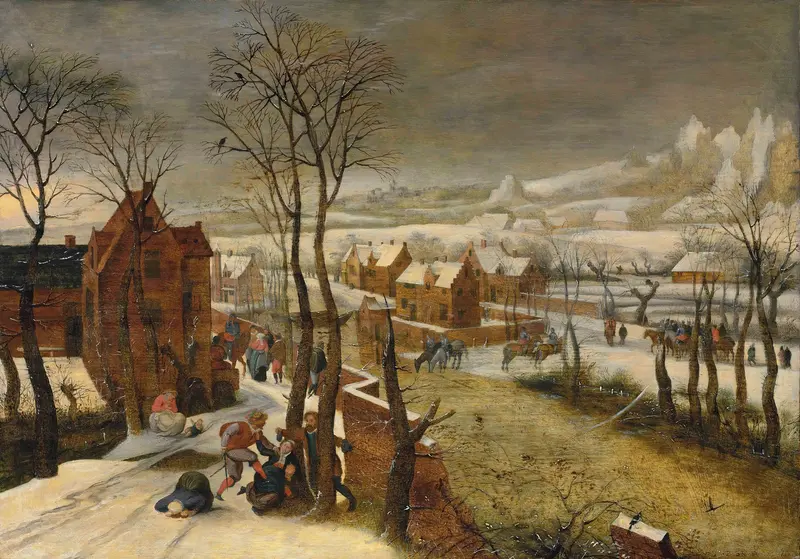
A Village Landscape In Winter With The Massacre Of The Innocents
Abel Grimmer
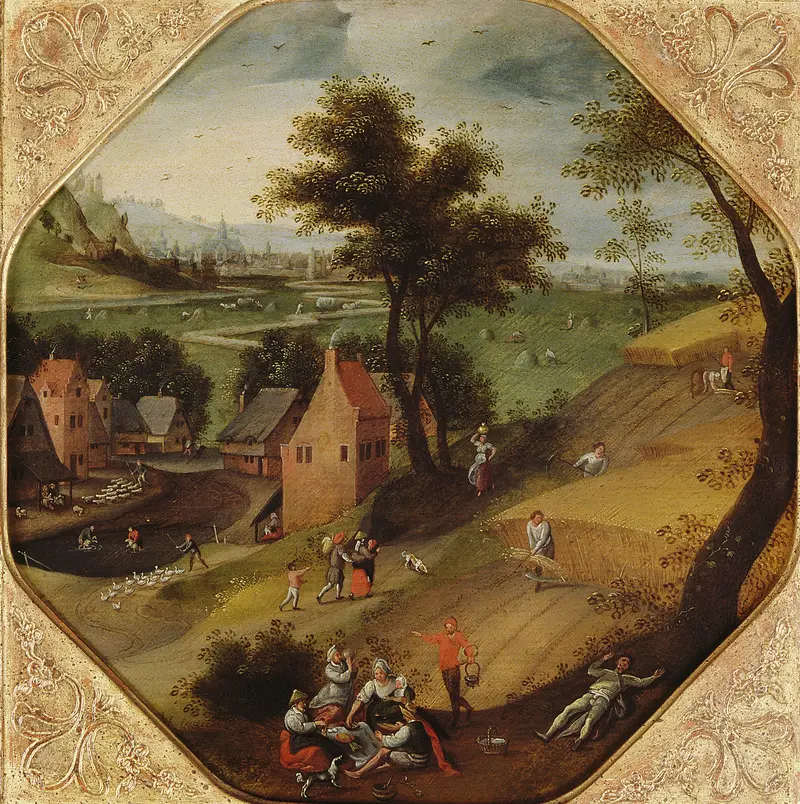
De Zomer
Abel Grimmer
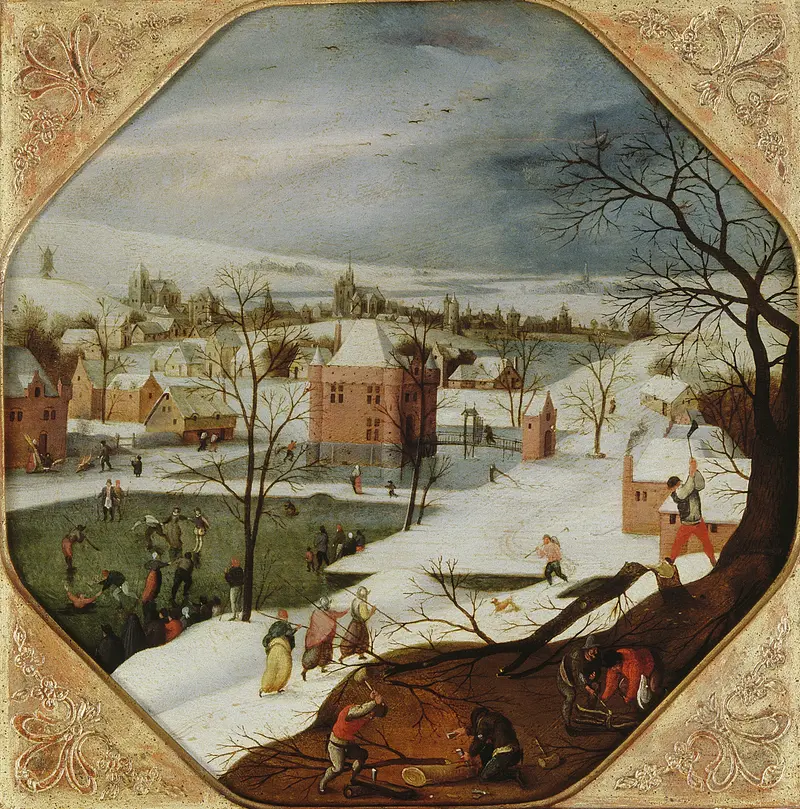
De Winter
Abel Grimmer
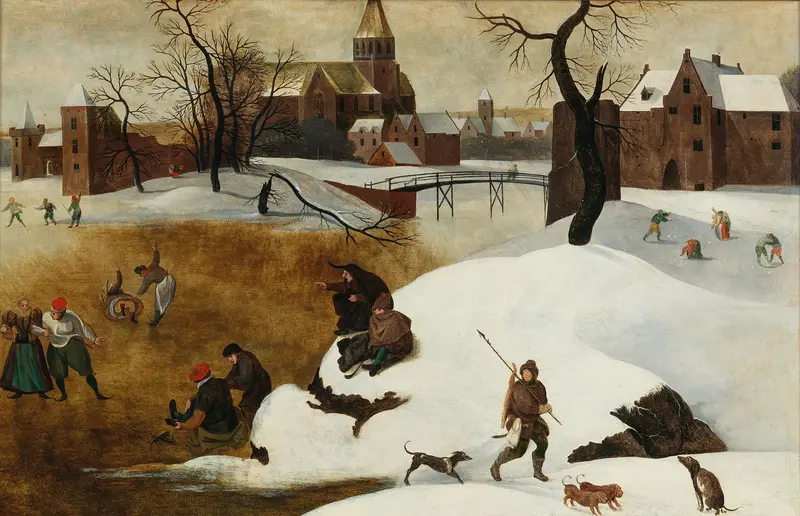
winter landscape with skaters
Abel Grimmer
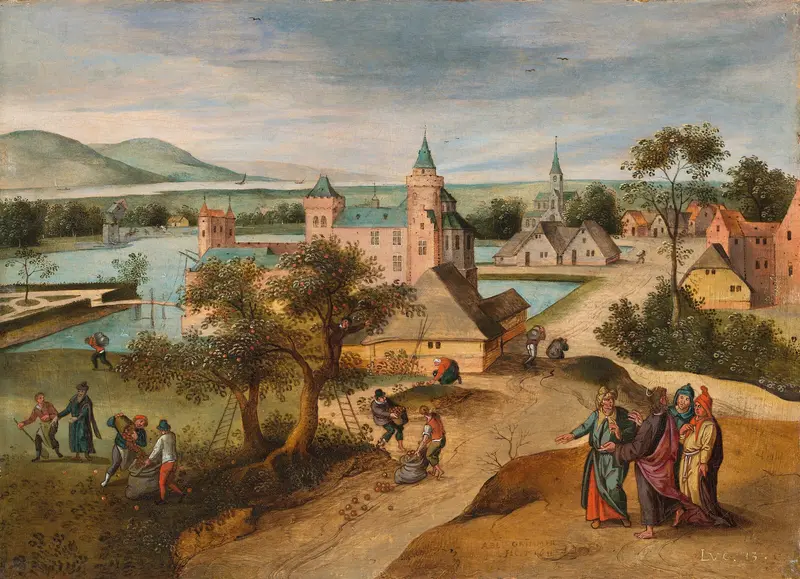
September – The Parable of the Barren Fig Tree
Abel Grimmer
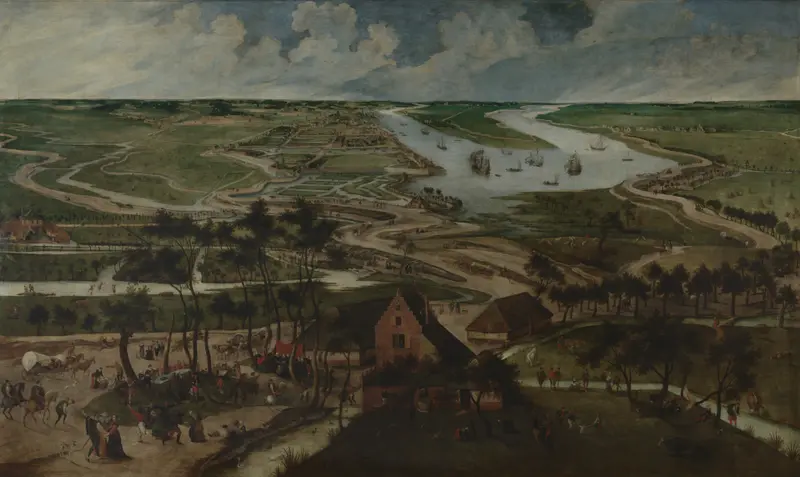
The Eel Huts in the Antwerp Polder outside the Lillo or Slijk Gate
Abel Grimmer
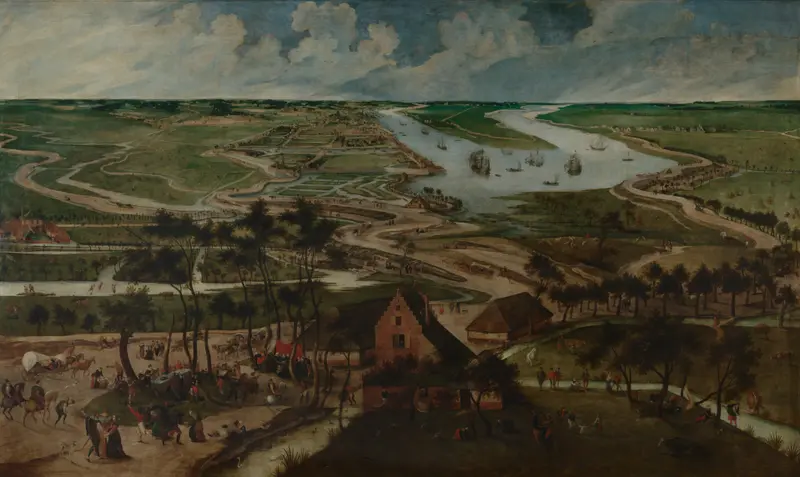
De Antwerpse polder en de Palinghuizen buiten de Slijk- of Lillopoort
Abel Grimmer
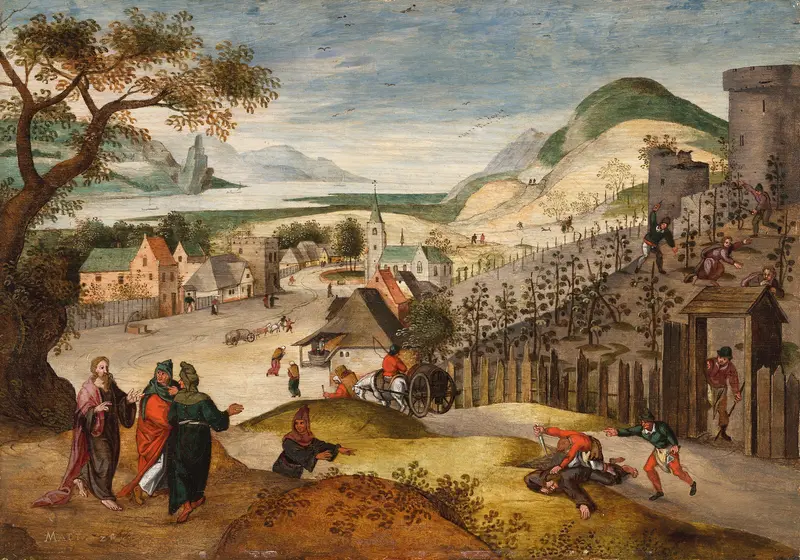
October – The Parable of the Vineyard
Abel Grimmer
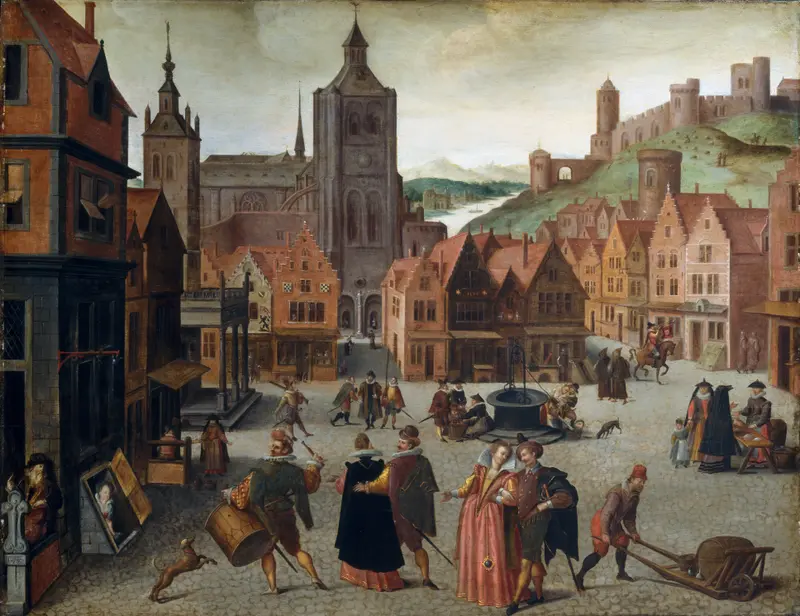
The Marketplace in Bergen op Zoom
Abel Grimmer
More Landscape Art

The Starry Night
Vincent van Gogh

View of Delft
Johannes Vermeer

Water Lilies
Claude Monet

The Grand Canal, Venice, looking north-west from the Ca' Corner to the Ca' Contarini degli Scrigni, with the campanile of Santa Maria della Carità
Canaletto

Windsor Castle
Canaletto

The Grand Canal looking North-East from the Palazzo Dolfin-Manin to the Rialto Bridge
Canaletto