
The Musical Shepherdess — History & Facts
What if silence could speak through light? In The Musical Shepherdess, the interplay of soft hues and gentle forms whispers the longing and desire that reside within the heart. The painting is not just an image; it is an echo of emotions, a dialogue between the viewer and the scene, where every detail invites deeper contemplation. To truly appreciate the piece, look first at the shepherdess, seated gracefully on a grassy knoll. Her delicate figure, adorned in light pastels, draws the eye immediately, while the soft sunlight bathes her in an ethereal glow.
Notice how the instrument cradled in her arms reflects the warmth of her surroundings, its golden tones harmonizing with the lush greens of the landscape. The gentle strokes of the artist convey not only form but also the essence of the pastoral life she inhabits, enveloped in tranquility. Yet, beneath this serene surface lies a rich tapestry of emotions. The shepherdess's gaze, perhaps yearning or contemplative, speaks to a complex desire—one of connection, beauty, and the transient nature of joy.
The scattered sheep in the background, seemingly carefree, contrast with her solitary presence, hinting at a deeper solitude amidst pastoral harmony. The overall composition evokes a sense of longing, as if the very air vibrates with unspoken wishes and dreams. Created in 1658, this work is emblematic of Berchem's contributions to the Dutch Golden Age, a period marked by flourishing artistic expression. At this time, he was deeply engaged in the pastoral genre, drawing inspiration from nature and the simplicity of rural life.
The scene reflects the broader artistic trends of the era, intertwining themes of beauty, daily life, and emotional depth, presenting a captivating glimpse into both the artist's vision and the world he inhabited.
More Artworks by Nicolaes Pietersz Berchem
Browse all →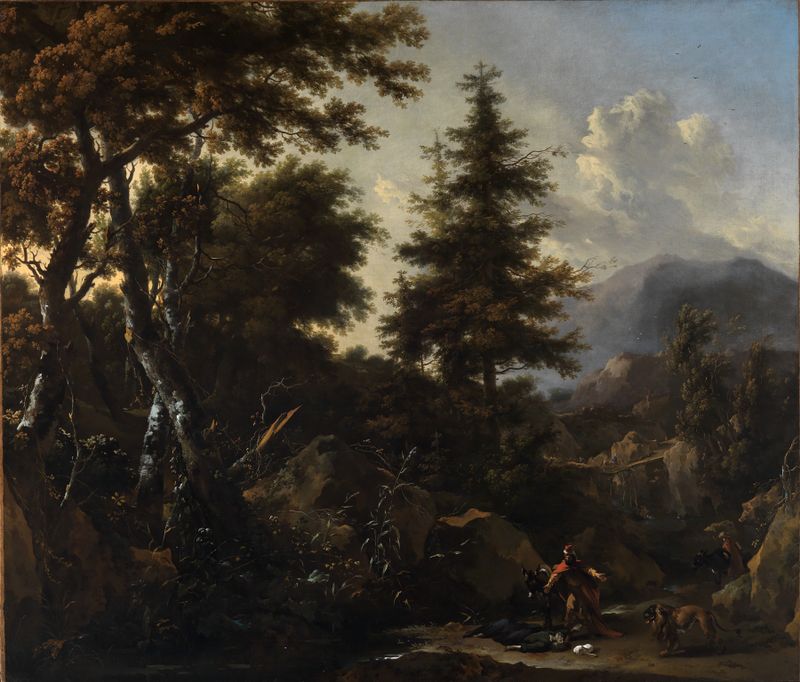
Schlucht im Bergwald mit alttestamentlicher Staffage
Nicolaes Pietersz Berchem
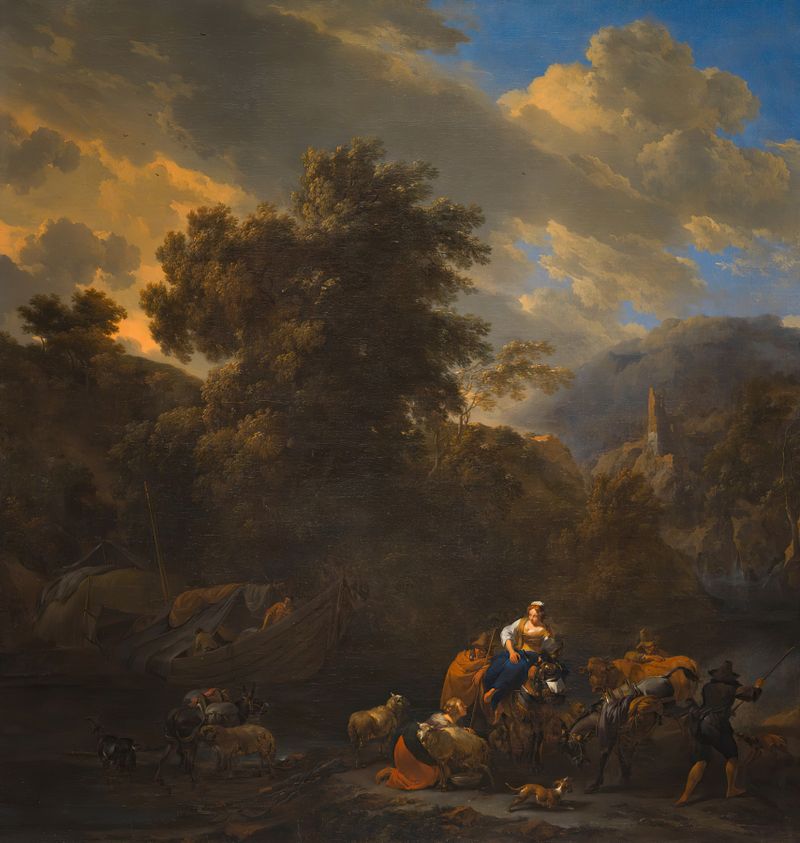
Italianate Landscape with Figures and Pack Animals on the Banks of a River
Nicolaes Pietersz Berchem
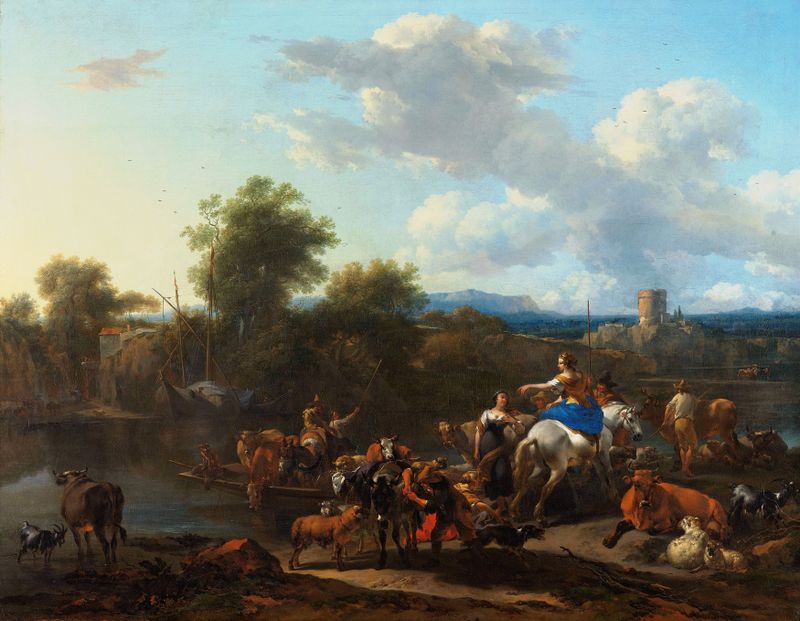
The Cattle Ferry
Nicolaes Pietersz Berchem
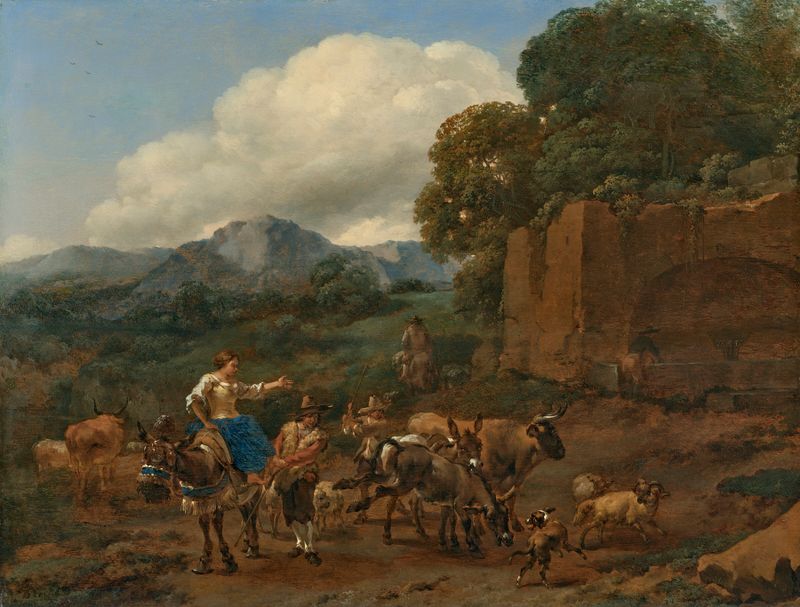
An Italianate landscape with a shepherdess on a mule and a shepherd, herding cattle, sheep, donkeys and dogs on a mountain track next to ruins
Nicolaes Pietersz Berchem
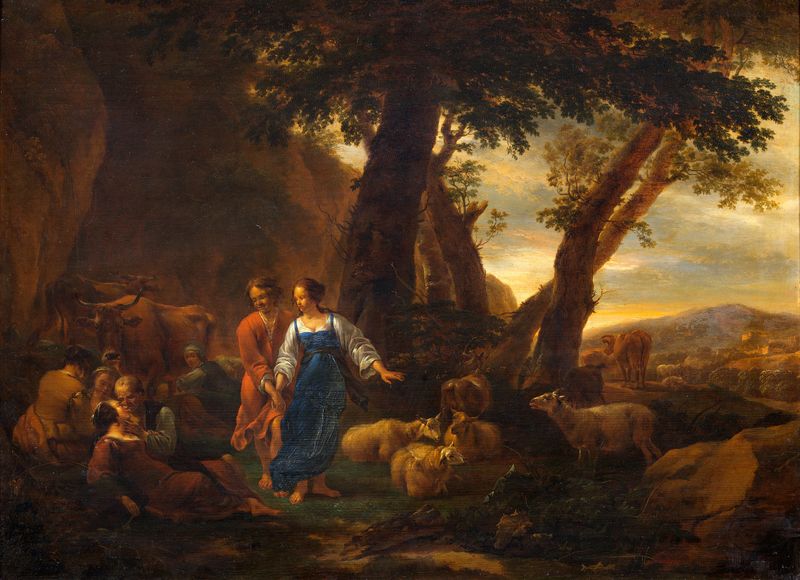
Landscape with Peasants and Cattle
Nicolaes Pietersz Berchem
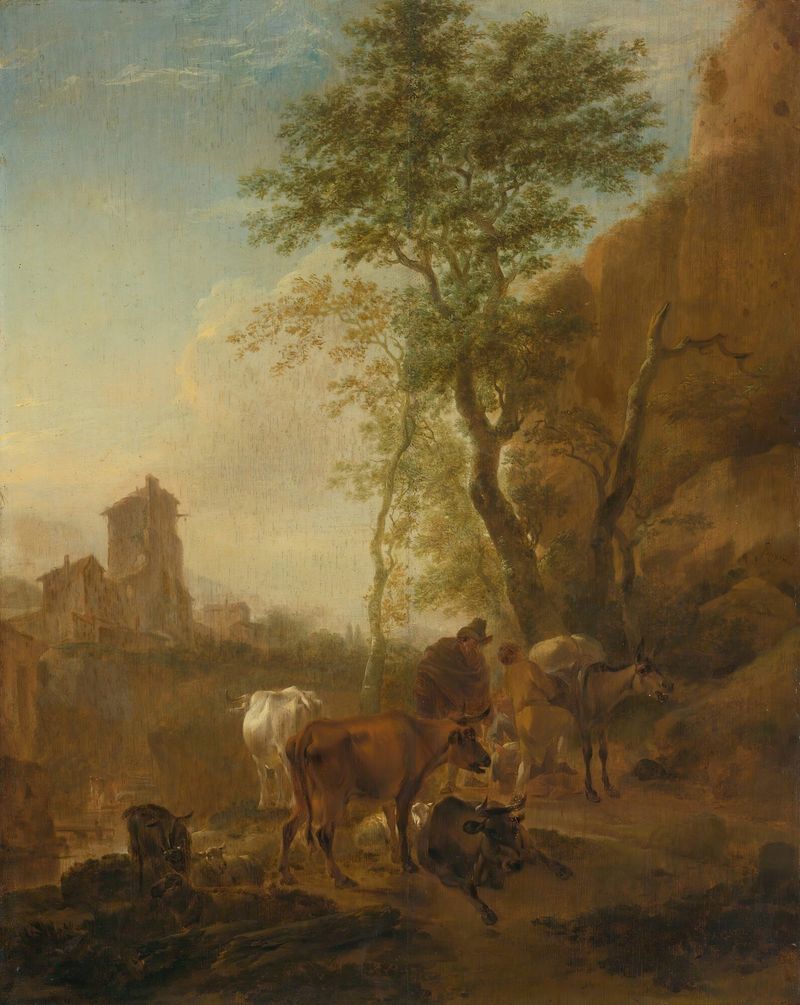
Italianate Landscape With Cows
Nicolaes Pietersz Berchem
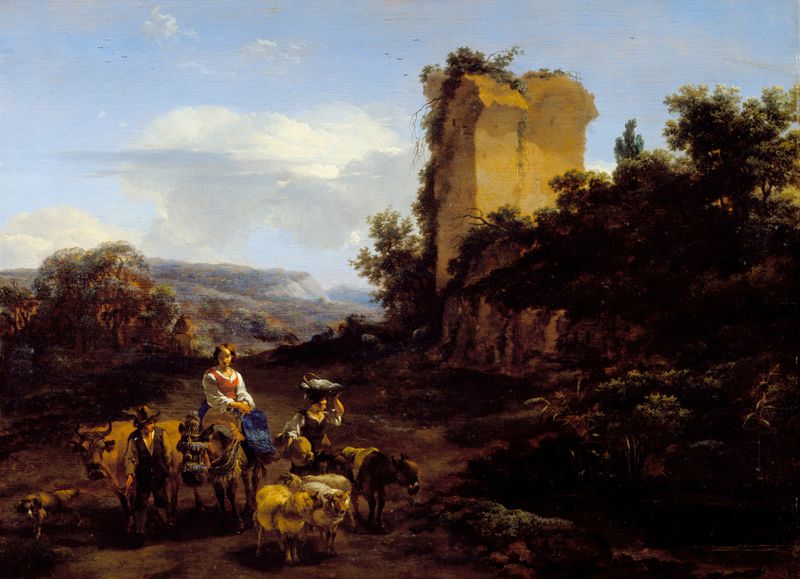
Landscape with Ruins and Travelers
Nicolaes Pietersz Berchem
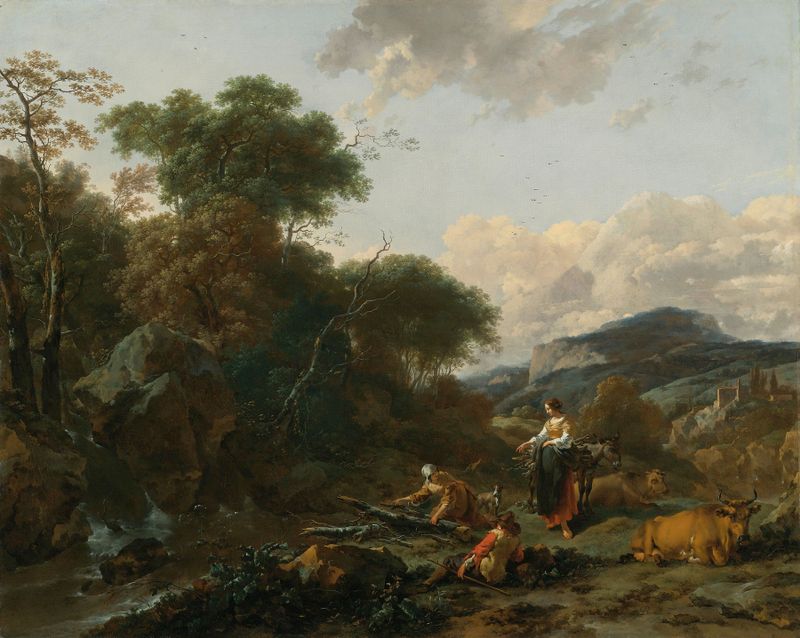
A Landscape With Figures
Nicolaes Pietersz Berchem
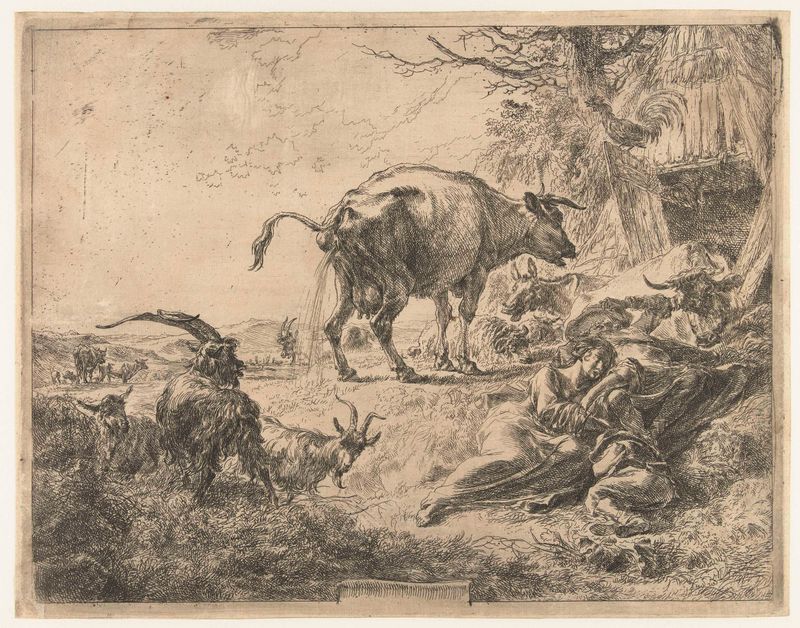
Slapende herdersfamilie en rustend vee
Nicolaes Pietersz Berchem
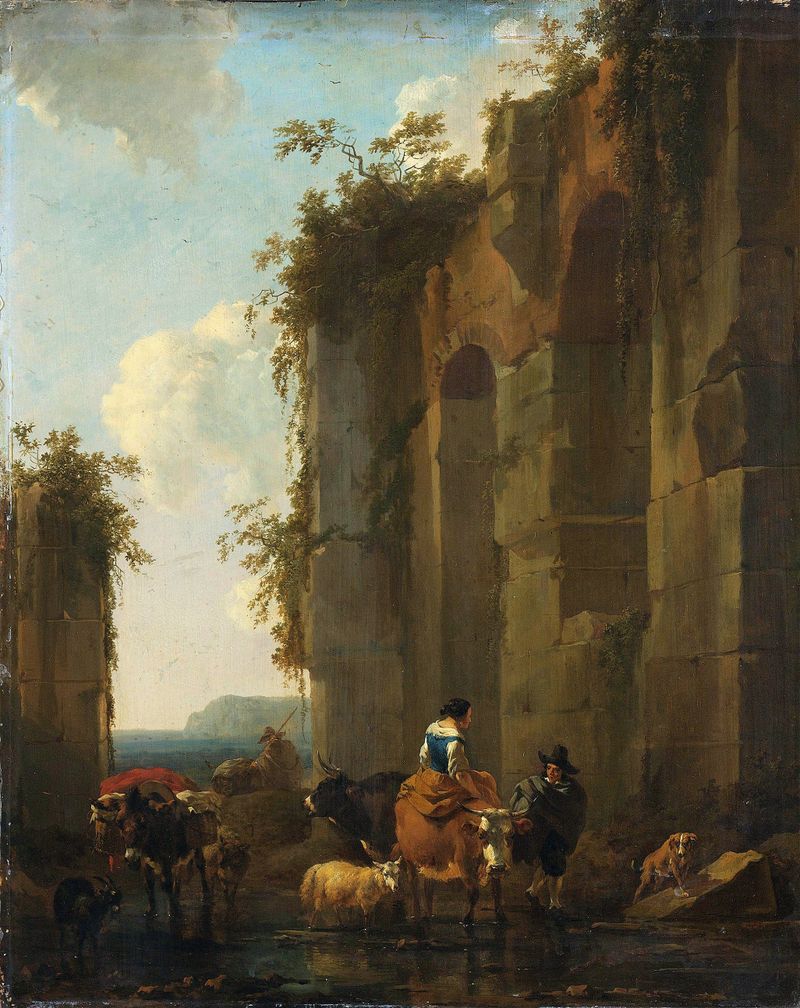
Ruins in Italy
Nicolaes Pietersz Berchem





