
The Nature as a Symbol of Vanitas — History & Facts
A burst of luminous flowers, impossibly fresh, rises from the shadowy heart of a ruined world—this is the paradox that seizes the viewer in The Nature as a Symbol of Vanitas by Abraham Mignon. The eye is drawn first to the riot of poppies, roses, and irises, their petals rendered with such precision that they seem to glow against the darkness. But the longer you look, the more the scene unravels into a meditation on decay: the cracked stone globe beneath the bouquet, the lizards and moths that creep and flutter at its base, the nest of eggs precariously balanced on a broken branch.
Light falls with deliberate drama, isolating each detail and reminding us that beauty here is always on the verge of collapse. This painting belongs to the world of the late seventeenth century, when Dutch and German artists like Mignon perfected the still life as a stage for philosophical reflection. Such works were prized by collectors who delighted in their technical bravura but also in their coded warnings: all earthly splendor fades, every bloom withers, every creature must die. The period between 1665 and 1679, when this piece was created, saw the height of the vanitas tradition—paintings that asked their viewers to contemplate the brevity of life and the futility of worldly pursuits.
History has kept few traces of this specific canvas beyond its presence in the Web Gallery of Art, but its message is as clear as the day it was painted: look again, and see how life and death are knotted together in every corner.
More Artworks by Abraham Mignon

Still Life with Flowers and a Watch
Abraham Mignon
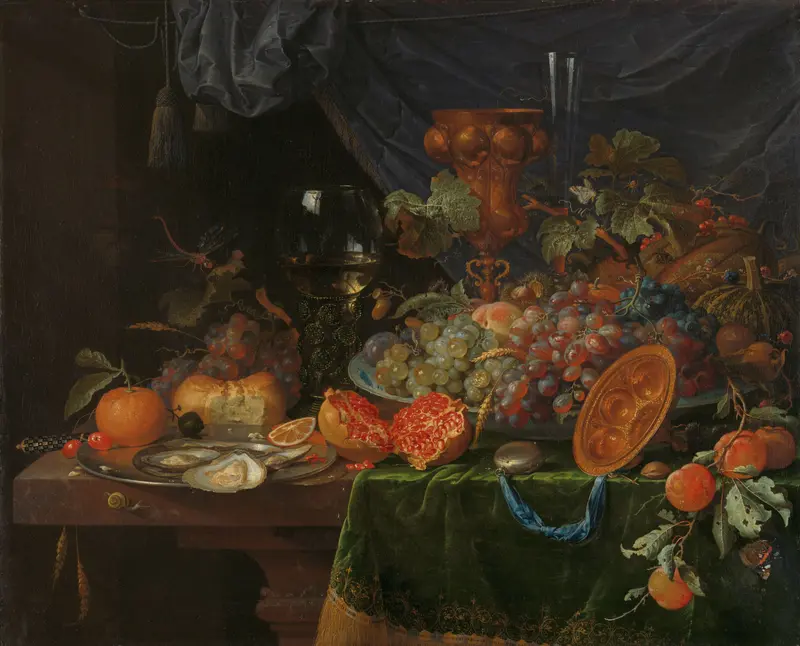
Still Life with Fruit and Oysters
Abraham Mignon
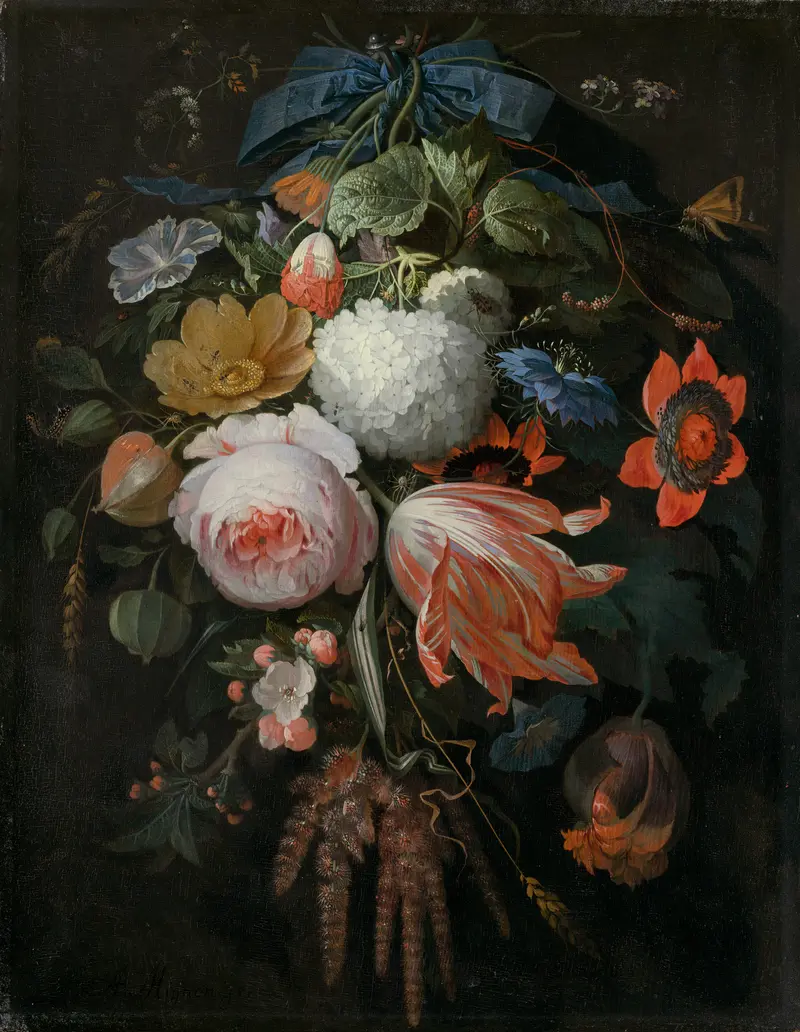
A Hanging Bouquet of Flowers
Abraham Mignon
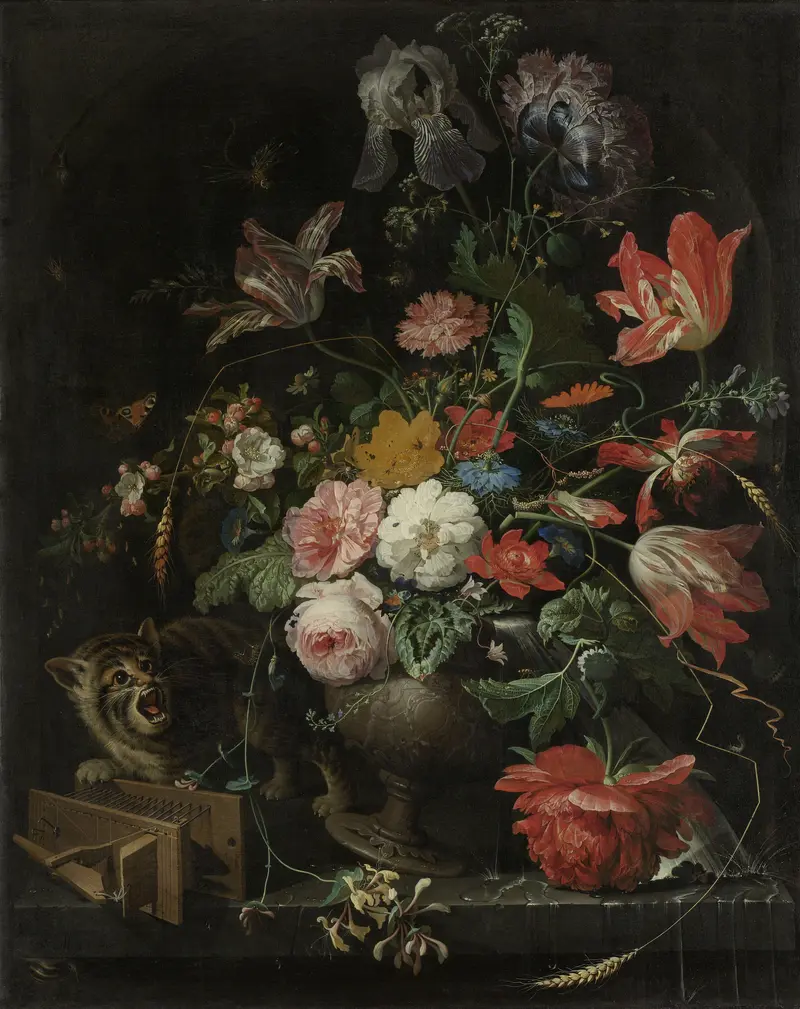
Bouquet with cat and mousetrap
Abraham Mignon
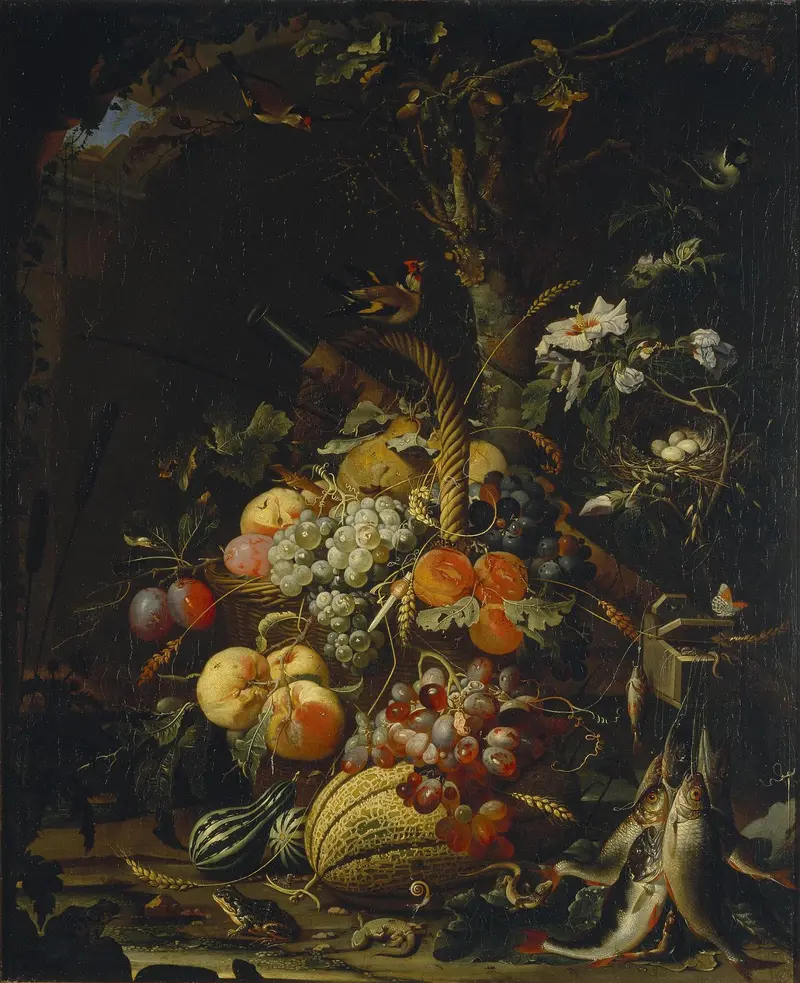
Forest floor still life with fruit, fish and a bird's nest
Abraham Mignon
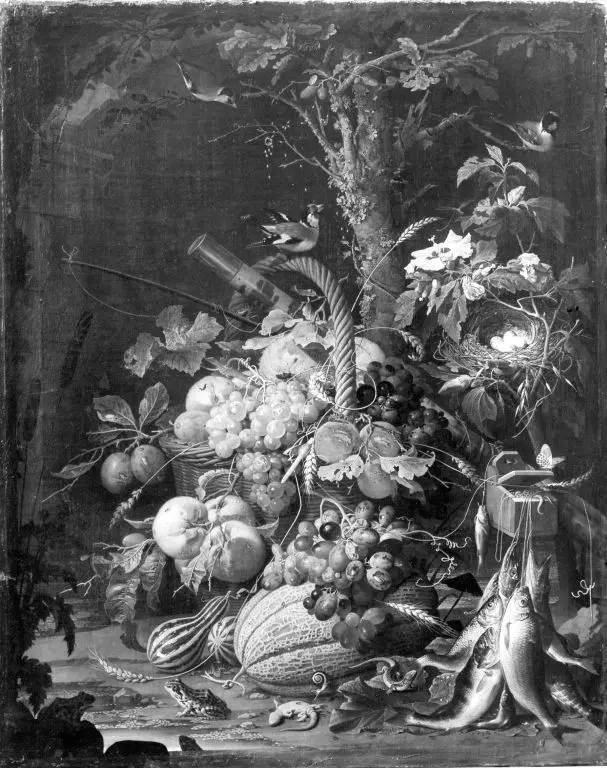
Still life with fruit, fish and a bird's nest
Abraham Mignon
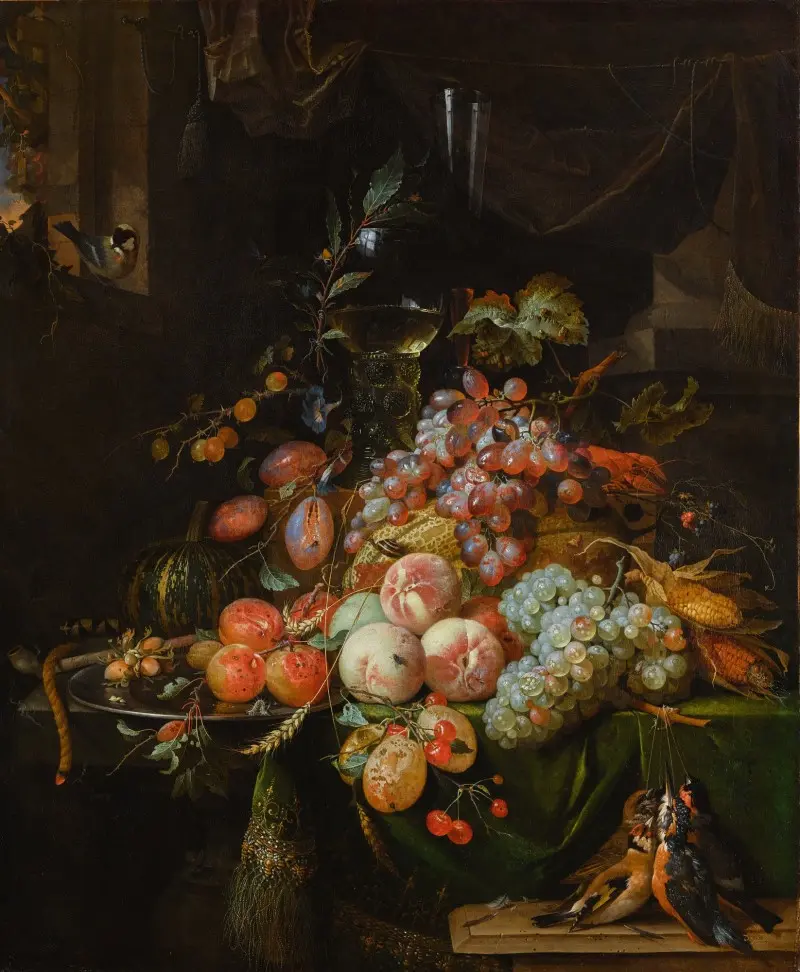
Still Life with Plums, Peaches, Apricots, Grapes and a Melon
Abraham Mignon
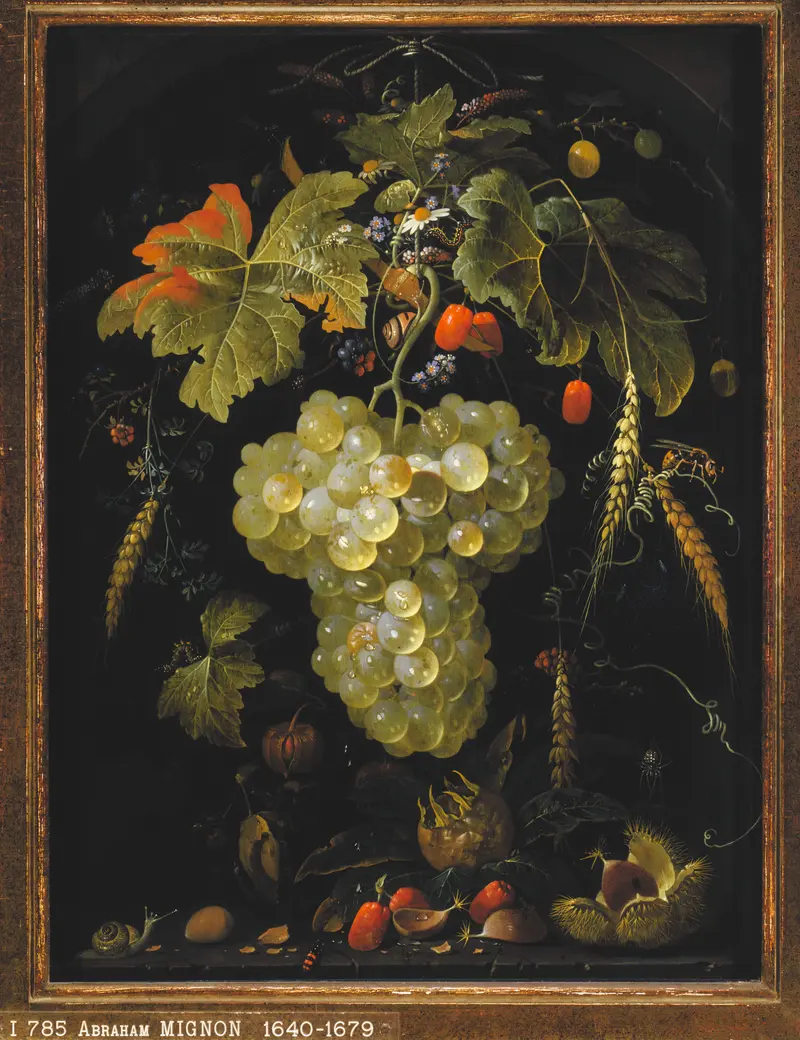
Festoon of fruit suspended from a rope, in a niche
Abraham Mignon
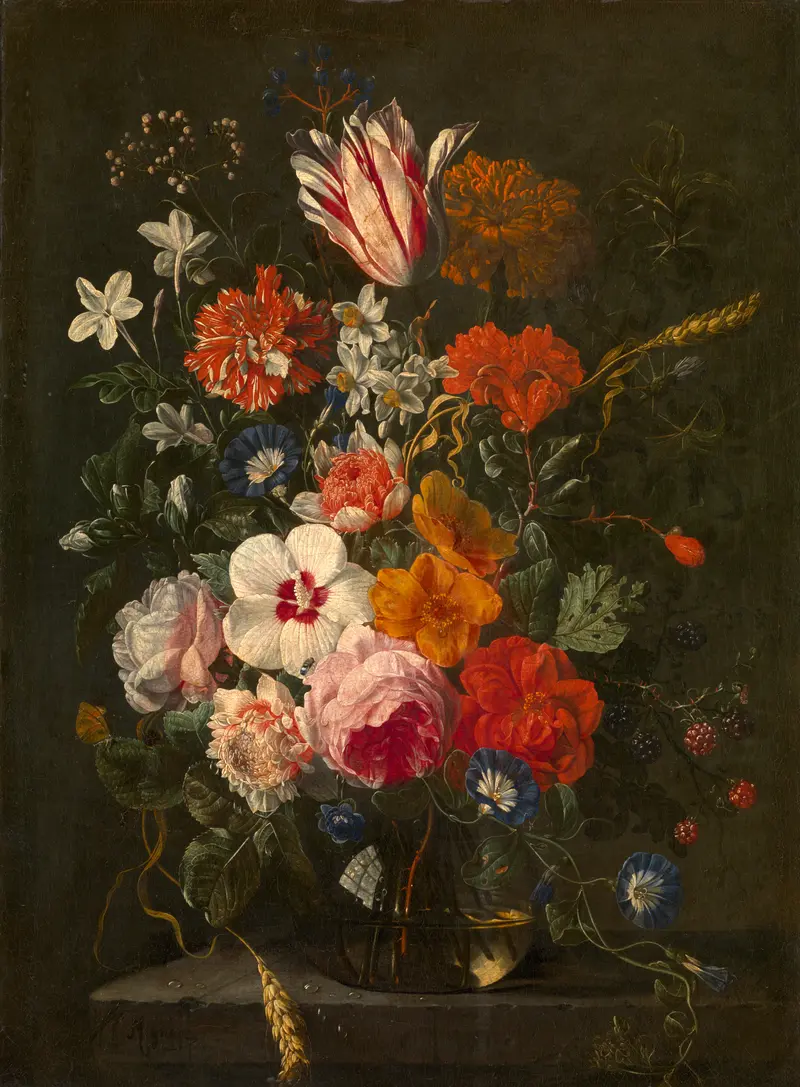
Flowers and a branch of berries in a glass vase on a stone ledge
Abraham Mignon
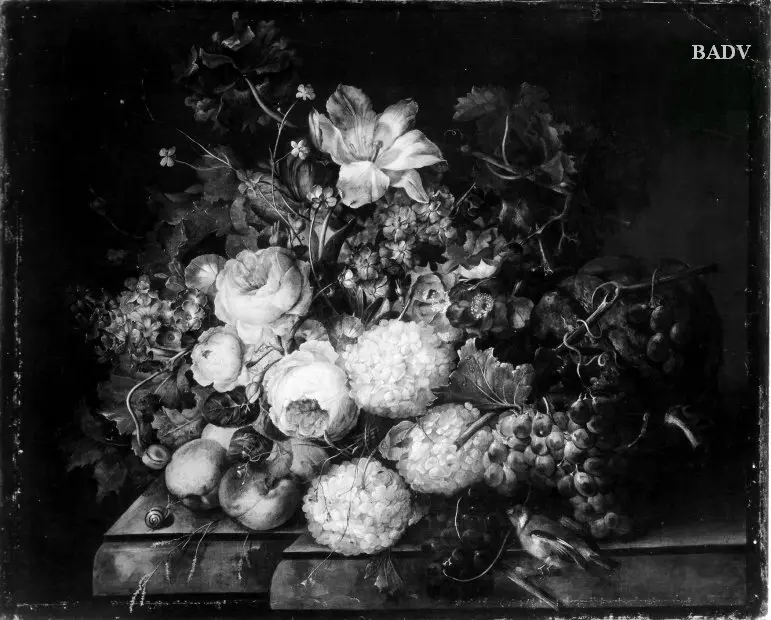
Flowers and fruit on a plinth
Abraham Mignon





