
The poacher — History & Facts
What draws the eye first in The poacher is not the figure, but the hush of the landscape itself—a world held in suspense between the last light of day and the coming dark. The sky glows with a band of gold and blue, a thin promise of warmth above a land already surrendered to shadow. At the bottom right, a solitary man slips along a path, his form half-swallowed by gloom, the long barrel of his gun slanting across his back.
The light is cunningly rationed: a glint on water, a pale shirt, the ghost of a face beneath a wide-brimmed hat. Every detail is set to heighten the sense of secrecy, of a trespasser moving under cover, watched only by the silent trees. Painted by Alexandre-Gabriel Decamps between circa 1857 and 1858, this work belongs to a moment when French artists were turning their gaze from grand history to the drama of ordinary lives and wild places. Scenes like this—half-genre, half-landscape—were prized by collectors who wanted to feel the pulse of the countryside and the thrill of forbidden adventure.
Decamps was known for his bold contrasts and atmospheric effects, and here he uses them to conjure a world where law and survival blur at dusk. Now part of The Mesdag Collection, The poacher stands as a quiet testament to the fascination with nature’s margins and the figures who haunt them. Look again at the darkness gathering in the trees, and imagine what stories the night will keep.
More Artworks by Alexandre-Gabriel Decamps

Still Life with Herring, Bread, and Cheese
Alexandre-Gabriel Decamps
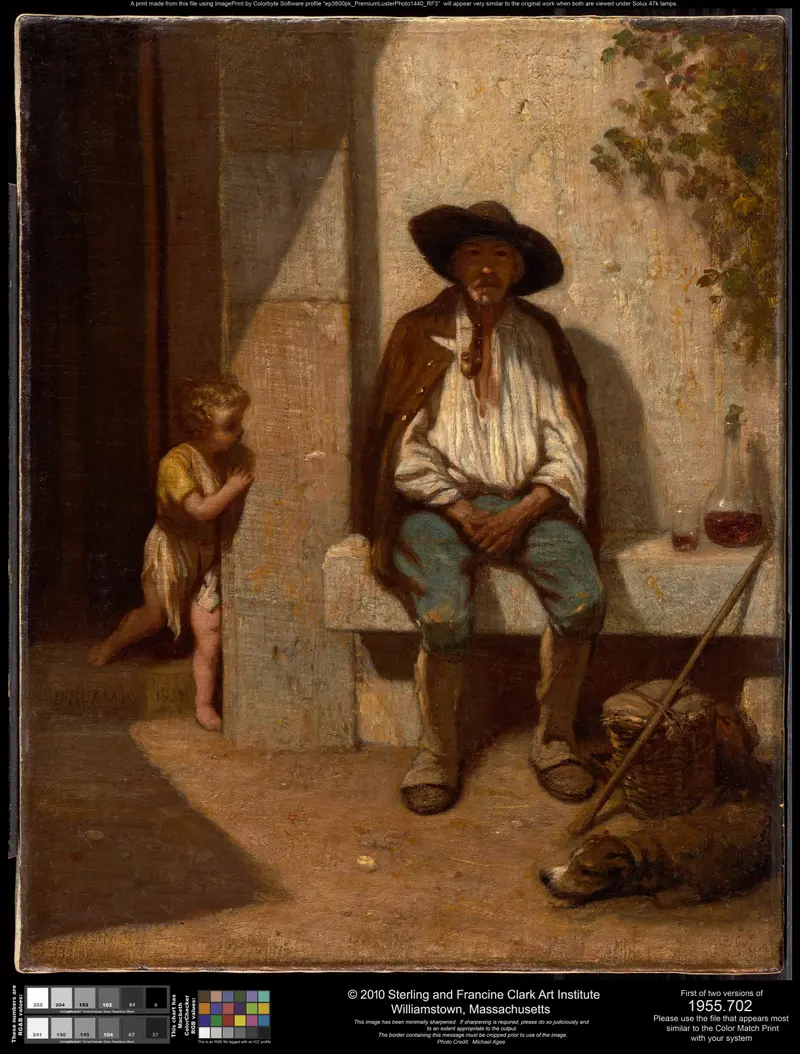
Italian Peasant
Alexandre-Gabriel Decamps
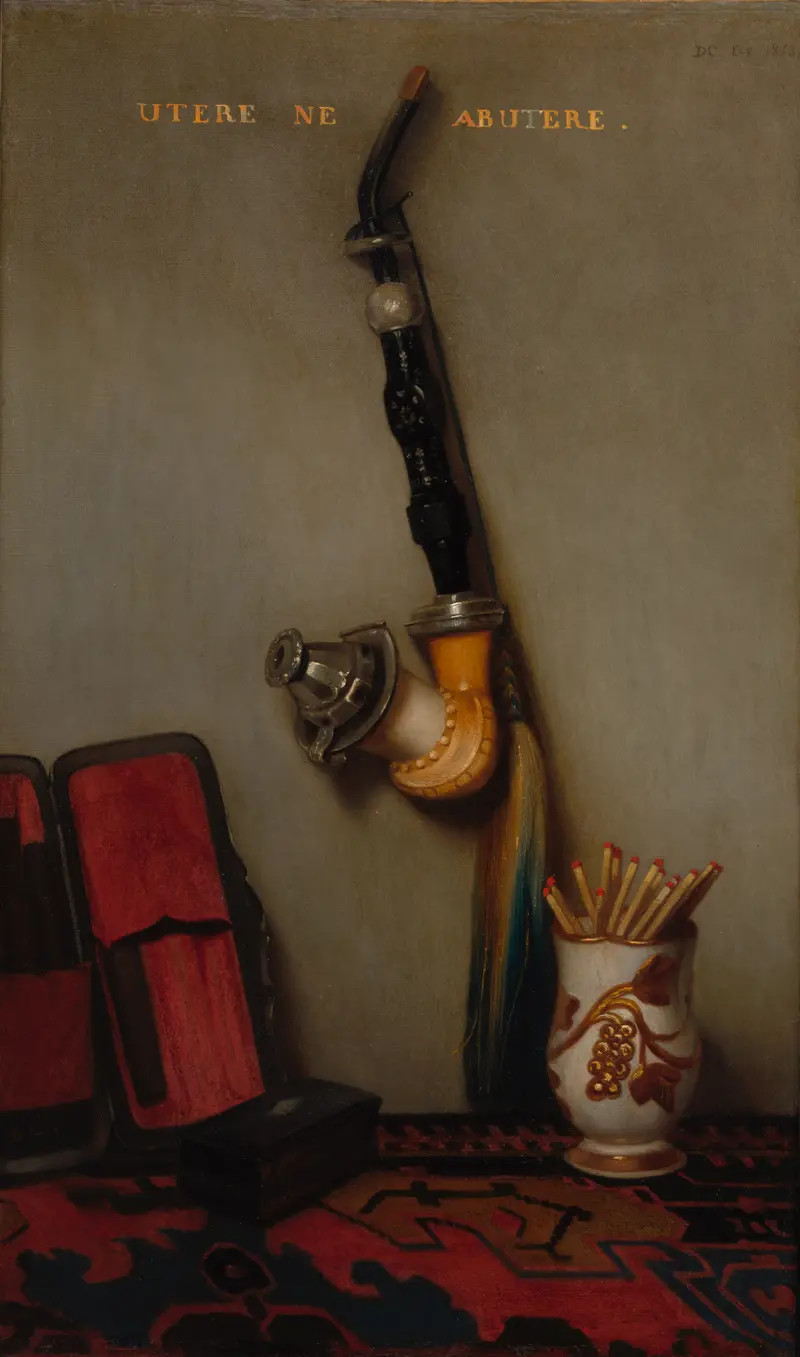
Still Life with Pipe and Matches
Alexandre-Gabriel Decamps
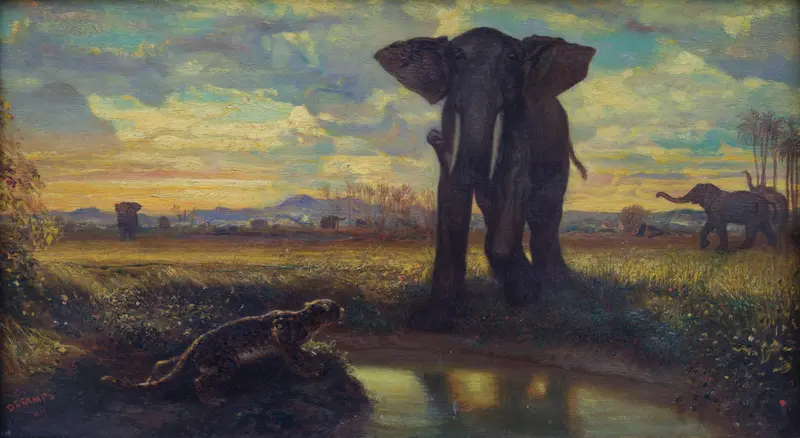
Tigre et éléphant à la source Musée du Louvre Peintures RF
Alexandre-Gabriel Decamps
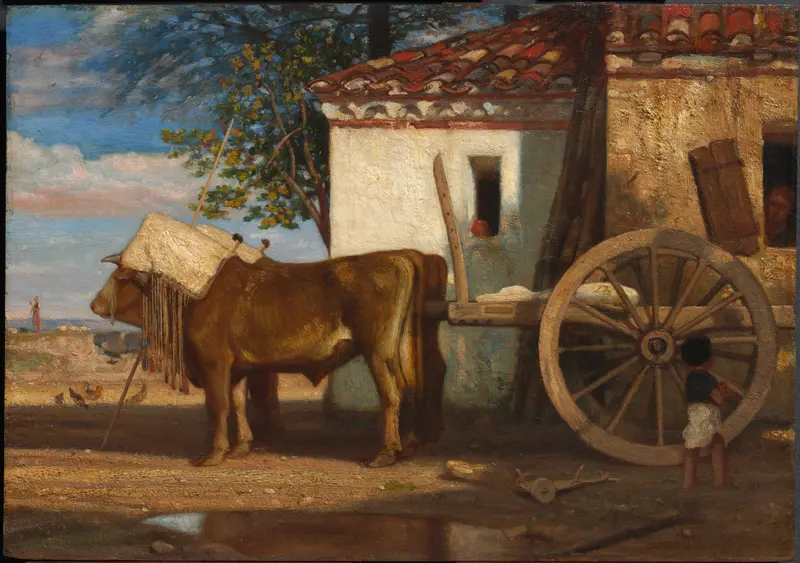
Oxen before a Farmhouse at Le Verrier
Alexandre-Gabriel Decamps
Cat, Weasel, and Rabbit
Alexandre-Gabriel Decamps
Goatherd of the Abruzzi
Alexandre-Gabriel Decamps
Jésus sur le lac de Génésareth Musée du Louvre Peintures RF
Alexandre-Gabriel Decamps

Espagnols jouant aux cartes Musée du Louvre Peintures RF
Alexandre-Gabriel Decamps
La battue en plaine Musée du Louvre Peintures RF
Alexandre-Gabriel Decamps
More Landscape Art

The Starry Night
Vincent van Gogh

View of Delft
Johannes Vermeer

Water Lilies
Claude Monet

The Grand Canal, Venice, looking north-west from the Ca' Corner to the Ca' Contarini degli Scrigni, with the campanile of Santa Maria della Carità
Canaletto

Windsor Castle
Canaletto

The Grand Canal looking North-East from the Palazzo Dolfin-Manin to the Rialto Bridge
Canaletto