
The Poplar Avenue, after Hobbema — History & Facts
When did color learn to lie? In a world where vibrant hues can distort reality, The Poplar Avenue, after Hobbema invites us to confront the paradox of beauty and madness nestled within nature's palette. Look to the left at the deep green poplars, their towering forms reaching towards a cerulean sky. Notice how the light falls upon the textured bark, casting shadows that stretch like fingers across the path below. The brushstrokes, both loose and deliberate, create a sense of movement, as if the trees are whispering secrets to the viewer.
The interplay of light and shadow gives life to the scene, revealing a serene yet uneasy tranquility. As you explore further, the painting reveals layers of emotional tension. The winding path beckons, inviting the viewer to wander yet hinting at an unsettling absence of humanity. The vibrant colors contrast with the muted tones of the ground, suggesting an underlying madness lurking just beneath the surface of idyllic beauty.
Each shade feels deliberate, a reflection of both nature's allure and its unpredictable chaos. David Cox painted this work in 1835 while living in England, a period marked by a burgeoning fascination with landscape art and the natural world. The Romantic movement was gaining momentum, emphasizing emotion and individual experience in response to industrialization and urbanization. As artists sought to capture the sublime, Cox’s interpretation of Hobbema's earlier works illustrates this tension between beauty and the darker, uncharted realms of the landscape.
More Artworks by David Cox
Browse all →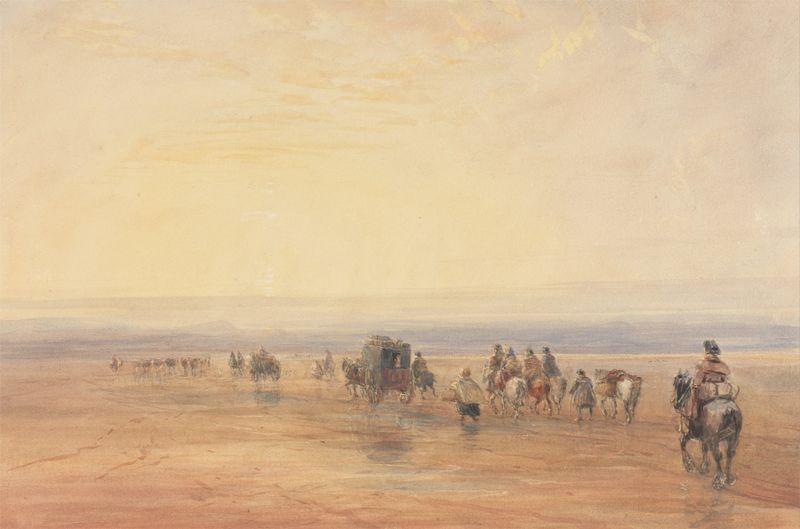
Crossing Lancaster Sands
David Cox
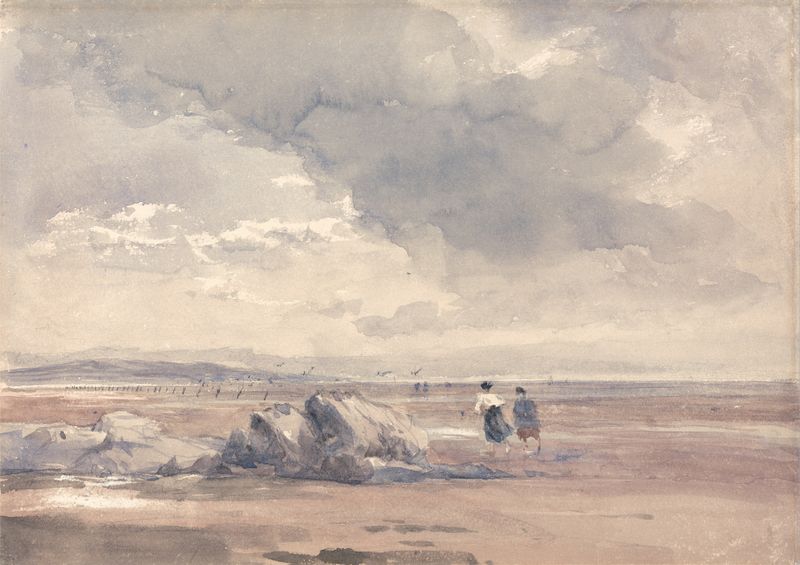
On Lancaster Sands, Low Tide
David Cox

Lincoln Cathedral from Brayford Pool
David Cox

View in Wales
David Cox
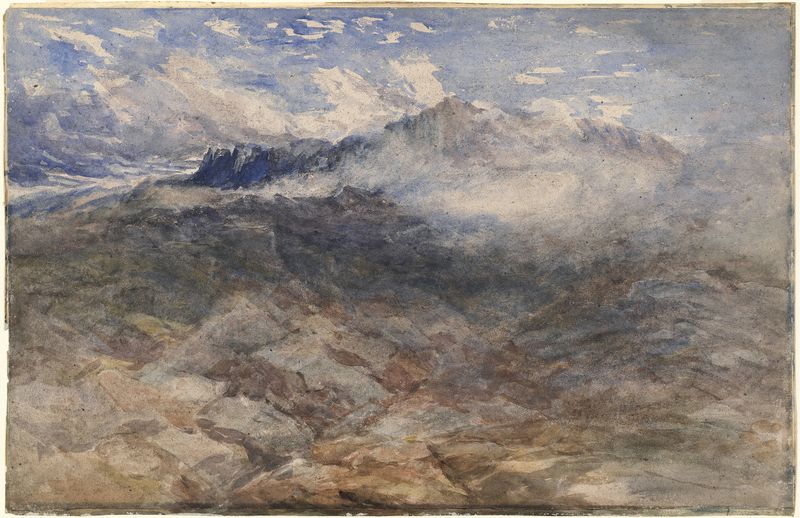
Mountain Heights, Cader Idris
David Cox

Bergen op Zoom
David Cox

Boating Before Lambeth Palace, London
David Cox
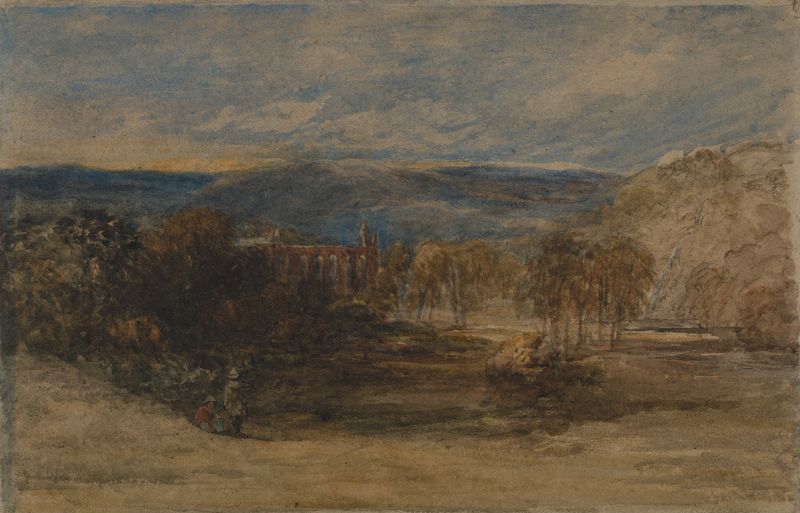
Bolton Abbey
David Cox

London Bridge
David Cox
Westminster from Lambeth
David Cox





