
The Port at Lorient — History & Facts
A single figure, dressed in pale tones and shaded by a parasol, sits quietly at the edge of the quay, her gaze lowered and her presence almost blending into the sunlit stone. The sweep of the river draws the eye into the heart of the port, where ships cluster along the banks and the distant town basks in the gentle haze of afternoon. The low horizon gives the sky an expansive role, its cool blues and soft clouds amplifying the sense of calm.
Every brushstroke in The Port at Lorient by Berthe Morisot seems to weigh the balance between solitude and the gentle bustle of the harbor, inviting the viewer to linger in the hush before movement resumes. The woman’s parasol is not just a shield from the sun—it is a marker of leisure, a subtle signal of the new rhythms of modern life. Painted in 1869, this work stands at the threshold of the Impressionist revolution, when artists like Morisot turned their attention to scenes of everyday life and the fleeting effects of light. Ports and riversides had long been favored by painters, but in this era, they became sites of personal reflection as much as commercial activity.
The anonymous woman, the shimmering water, and the distant ships all speak to a world in transition, where travel, commerce, and private reverie intersect. Though little is recorded about the journey of this particular painting—its source and collection remain unknown—it carries the unmistakable mark of its time: a world opening to new ways of seeing, and inviting us to pause, just as the sitter does, on the edge of the ordinary.
More Artworks by Berthe Morisot

The Harbor at Lorient
Berthe Morisot
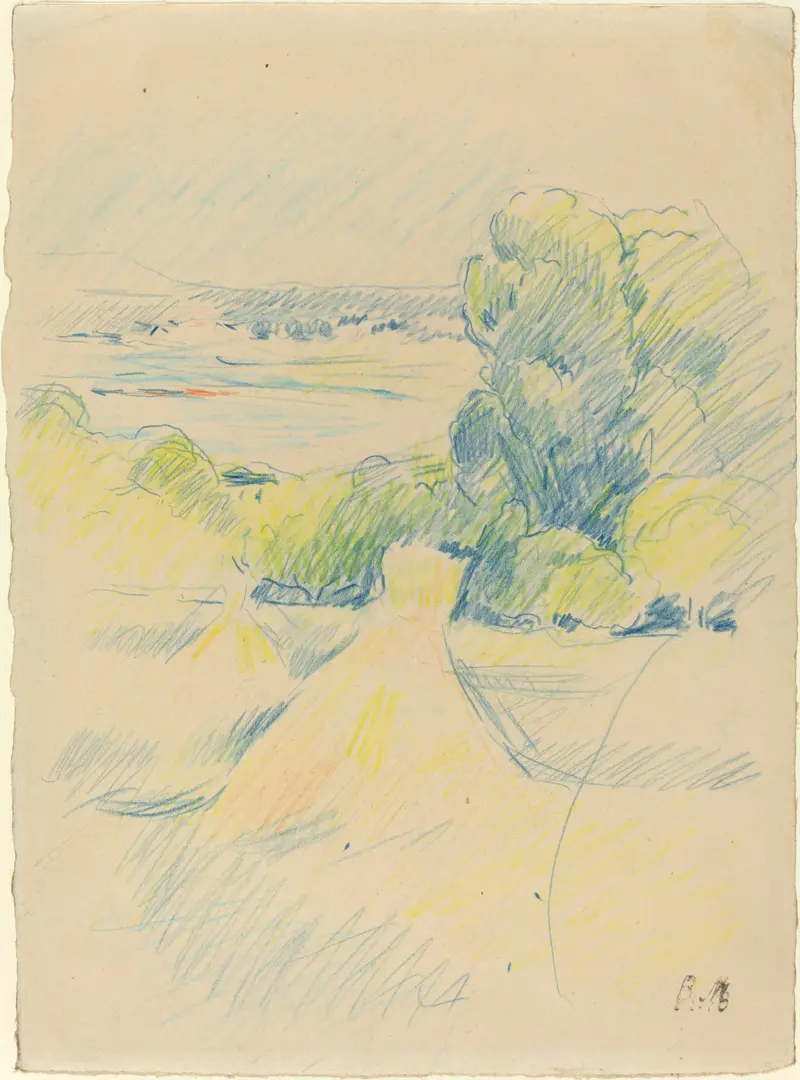
Landscape
Berthe Morisot

Hanging the Laundry out to Dry
Berthe Morisot

Woman in a Garden
Berthe Morisot

Young Girl with Hat
Berthe Morisot
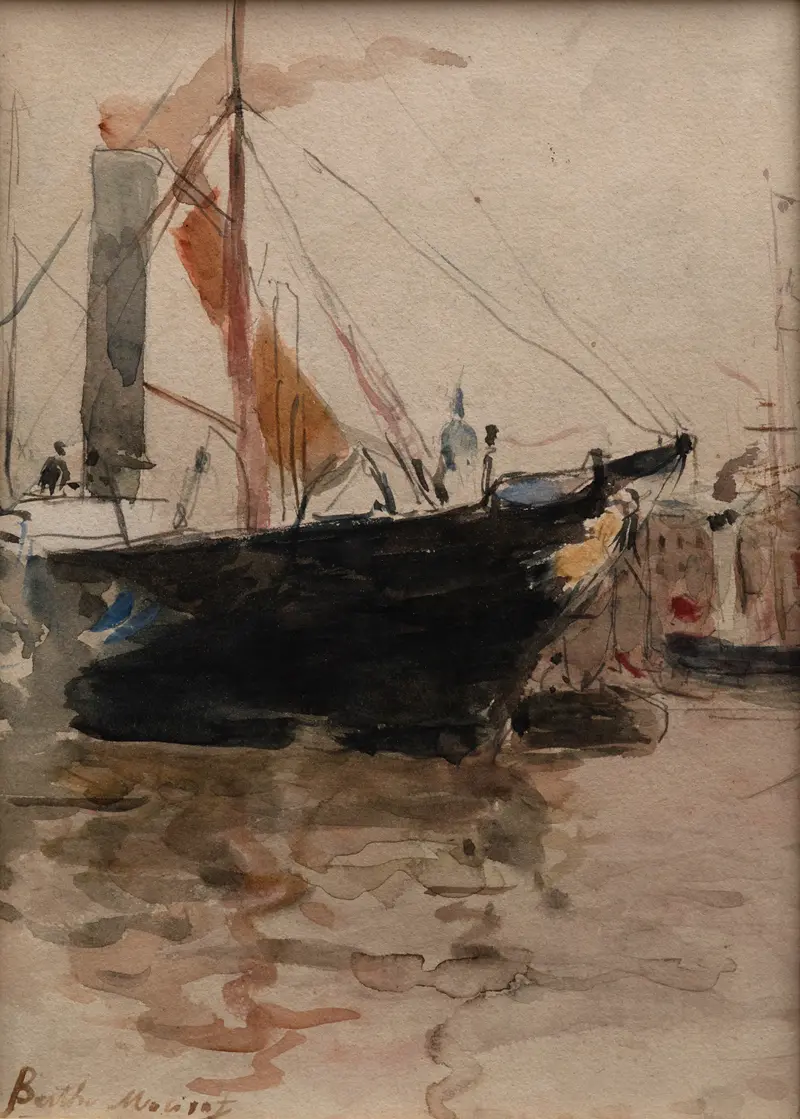
Harbor Scene, Isle of Wight
Berthe Morisot
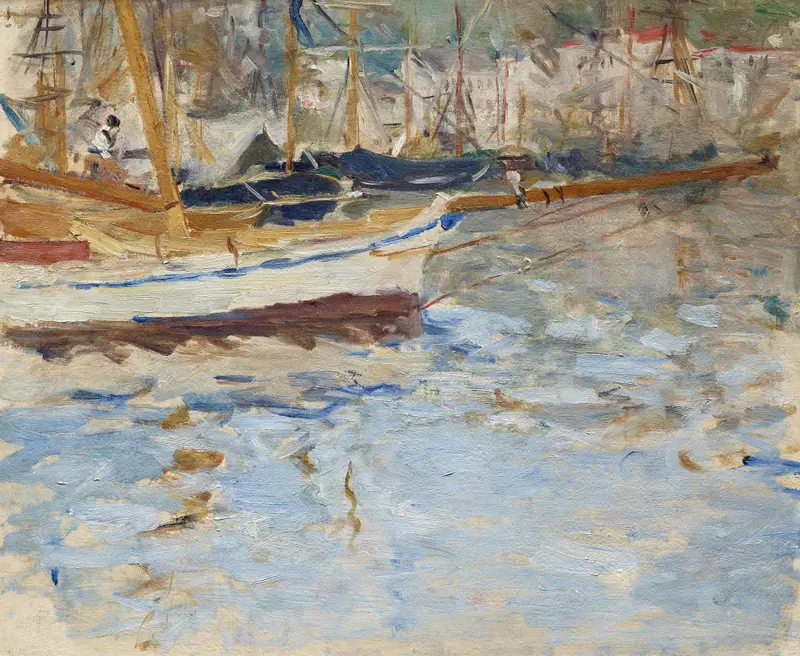
The Port of Nice
Berthe Morisot
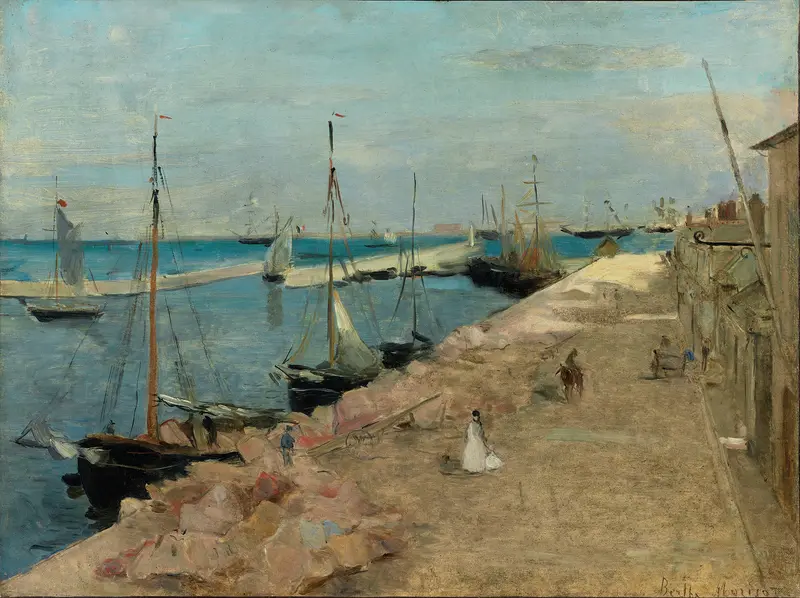
The Harbor at Cherbourg
Berthe Morisot

The Mother and Sister of the Artist
Berthe Morisot
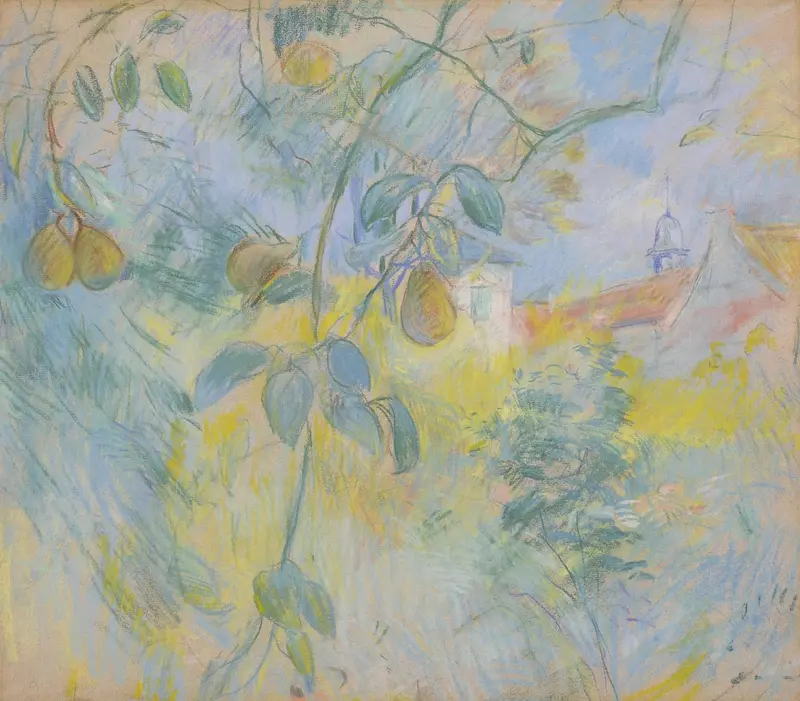
Les Poires
Berthe Morisot





