
The Road to Calvary — History & Facts
What first seizes the eye in The Road to Calvary by Abel Grimmer is the sheer sweep of the landscape, a winding procession stretching like a living river through pale hills and clustered towns. The drama is not confined to a single focal point; instead, the narrative unfolds across the entire canvas, drawing the viewer into a world bustling with figures, horses, and the architecture of a distant, imagined Jerusalem. The artist uses the meandering road as a visual thread, leading us from the foreground’s gathering crowds, past the dark cluster of trees at the center, and up toward the fortified city on the horizon.
The palette is cool and luminous, with the lightest tones reserved for the distant hills, suggesting both the passage of time and the weight of destiny. Painted in 1599, this work belongs to a moment when Flemish artists like Grimmer were reimagining biblical stories for a new audience—one that delighted in both narrative detail and panoramic views. The composition echoes the influence of Pieter Bruegel the Elder, whose own versions of this theme scatter the sacred event among the daily bustle of peasant life. Here, the story of Christ carrying the cross is woven into the fabric of a teeming world, where soldiers, onlookers, and townsfolk all play their part.
History has kept few traces of this specific painting’s journey, but its survival in the Web Gallery of Art reminds us how artists of the late sixteenth century sought to make the distant past immediate, inviting us to trace the winding road with our own eyes.
More Artworks by Abel Grimmer

Flemish proverbs
Abel Grimmer
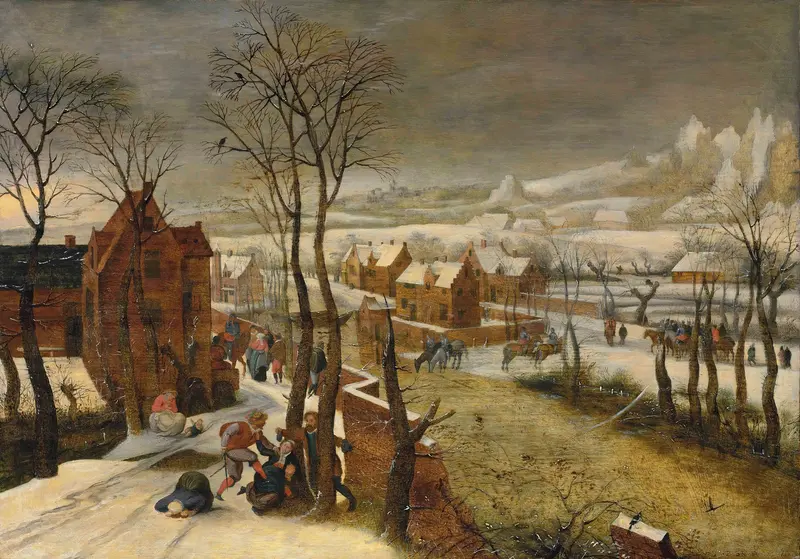
A Village Landscape In Winter With The Massacre Of The Innocents
Abel Grimmer
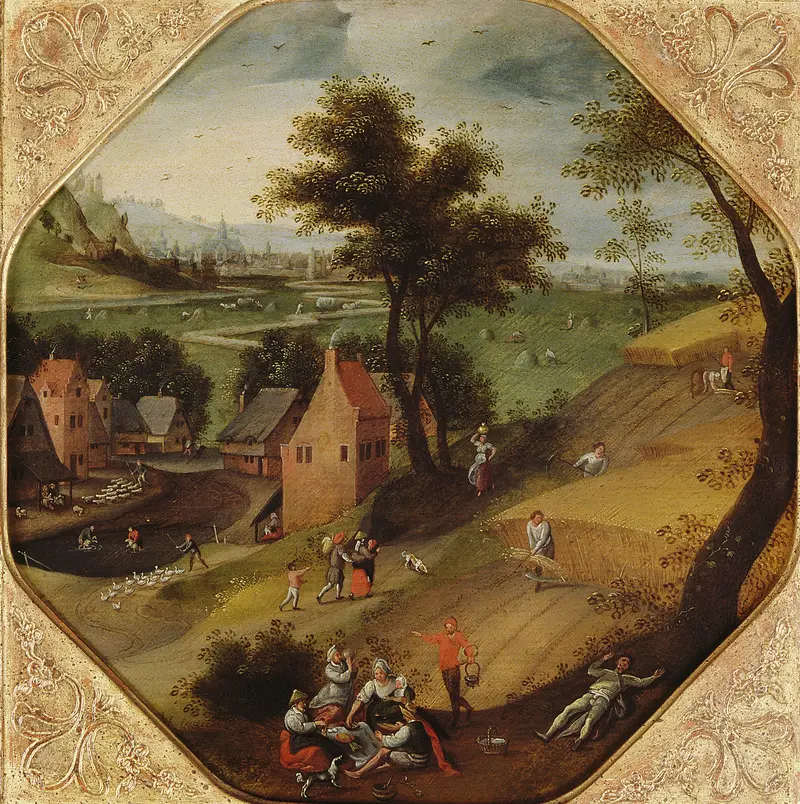
De Zomer
Abel Grimmer
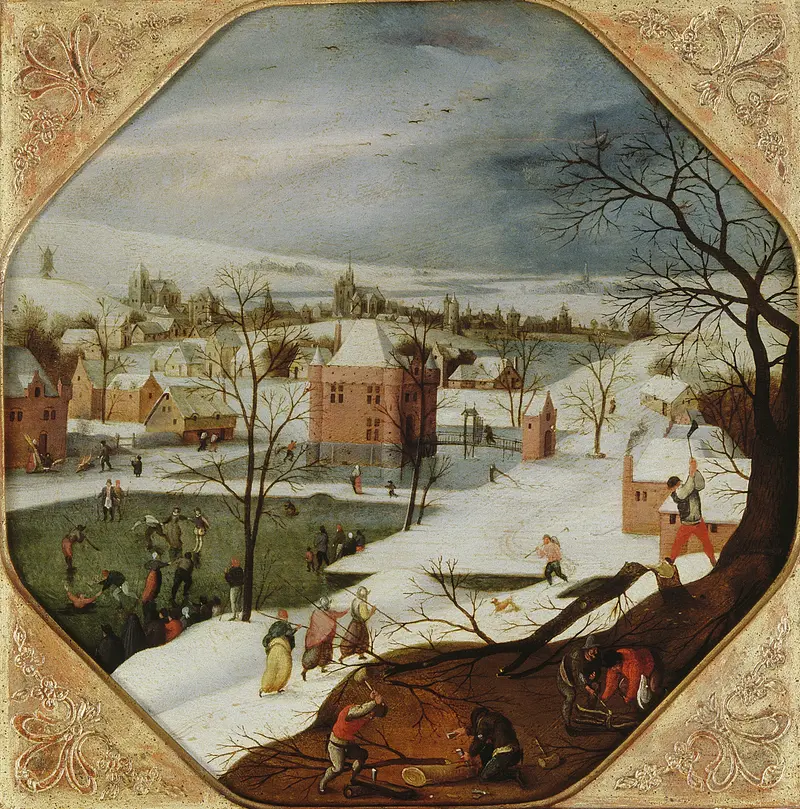
De Winter
Abel Grimmer
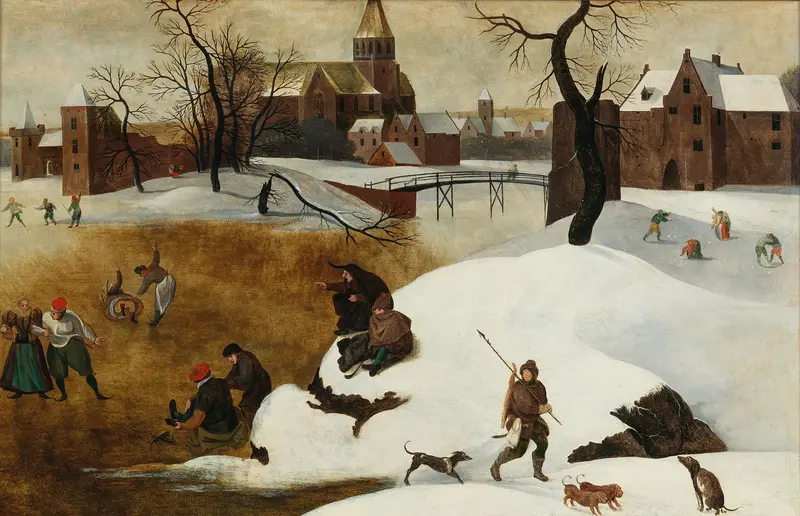
winter landscape with skaters
Abel Grimmer
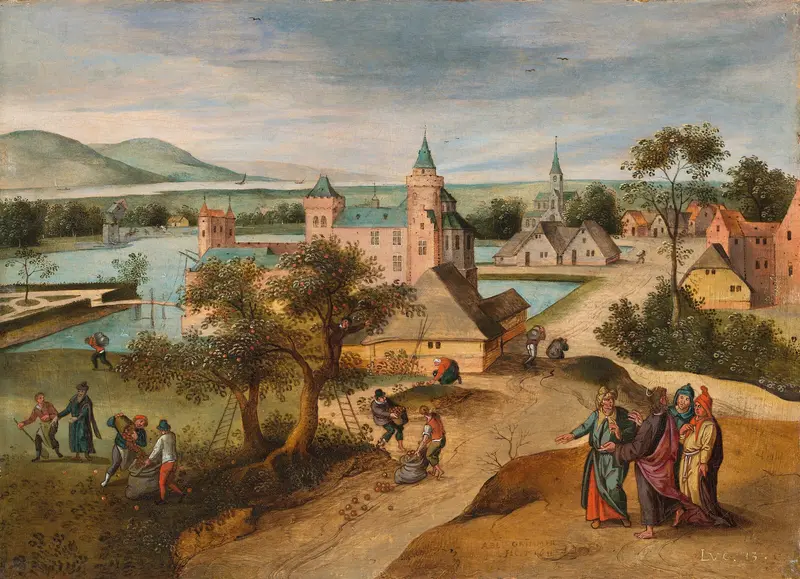
September – The Parable of the Barren Fig Tree
Abel Grimmer
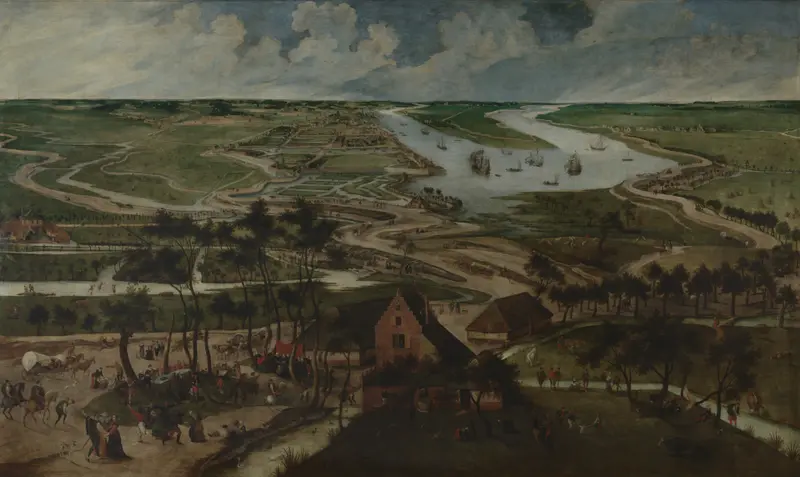
The Eel Huts in the Antwerp Polder outside the Lillo or Slijk Gate
Abel Grimmer
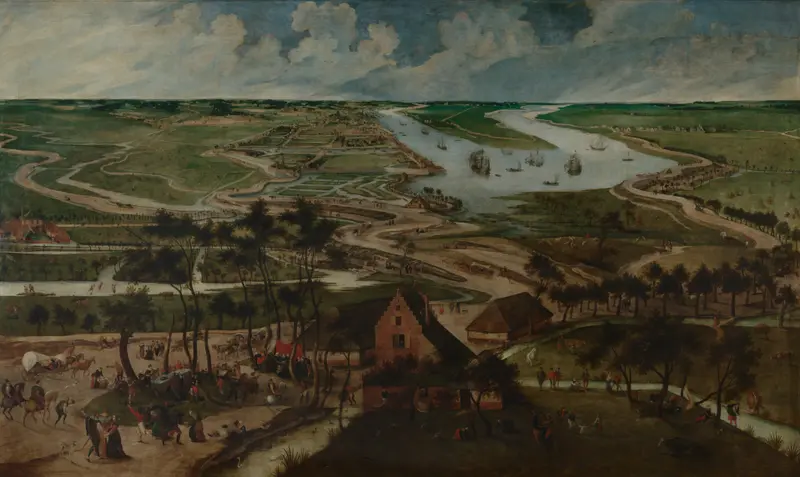
De Antwerpse polder en de Palinghuizen buiten de Slijk- of Lillopoort
Abel Grimmer
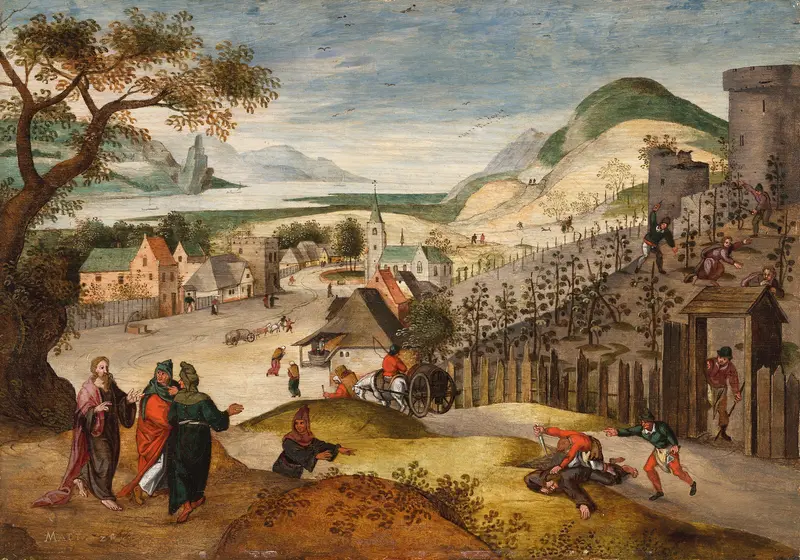
October – The Parable of the Vineyard
Abel Grimmer
The Marketplace in Bergen op Zoom
Abel Grimmer
More Landscape Art

The Starry Night
Vincent van Gogh

View of Delft
Johannes Vermeer

Water Lilies
Claude Monet

The Grand Canal, Venice, looking north-west from the Ca' Corner to the Ca' Contarini degli Scrigni, with the campanile of Santa Maria della Carità
Canaletto

Windsor Castle
Canaletto

The Grand Canal looking North-East from the Palazzo Dolfin-Manin to the Rialto Bridge
Canaletto