
The Seine at La Grande Jatte — History & Facts
When Georges Seurat returned to the banks of the Seine in 1889, he revisited a scene already immortalized by his own hand: the island of La Grande Jatte, which had been the setting for his iconic A Sunday Afternoon on the Island of La Grande Jatte just five years earlier. This return was not a repetition, but a deepening—The Seine at La Grande Jatte captures the same site from a new vantage, at a quieter hour, and with the mature refinement of Seurat’s pointillist technique. The painting marks one of the last times Seurat would paint the Seine; he died unexpectedly in 1891 at just 31.
Thus, the work stands as a late meditation on a place that shaped his vision and the Neo-Impressionist movement. In this canvas, the river glides beneath a pale sky, its surface broken into shimmering fragments of color. The trees on the island’s edge stand almost motionless, their reflections trembling in the water, while a handful of boats drift by—silent witnesses to the changing light. Seurat’s meticulous dots of paint, laid side by side, dissolve the boundaries between forms, making the air itself seem to vibrate.
Unlike Monet’s bustling Bathers at La Grenouillère, Seurat’s scene is hushed, contemplative, and almost architectural in its balance. The absence of crowds or spectacle invites the viewer to linger on the subtleties of color and the quiet order Seurat found in nature. The precise history of The Seine at La Grande Jatte as an object is less well-documented than some of Seurat’s larger works. It was likely painted in Seurat’s Paris studio, based on sketches made en plein air, and exhibited posthumously after his sudden death.
Over the years, the painting has passed through private collections and exhibitions, and today it is recognized as a significant example of late Neo-Impressionism. Its restrained palette and careful structure reveal Seurat’s ongoing experiments with color theory and perception, themes that would influence generations of artists after him. The painting’s current home allows viewers to trace the evolution of Seurat’s vision, from crowded leisure scenes to this reflective, almost solitary encounter with the river.
More Artworks by Georges Seurat
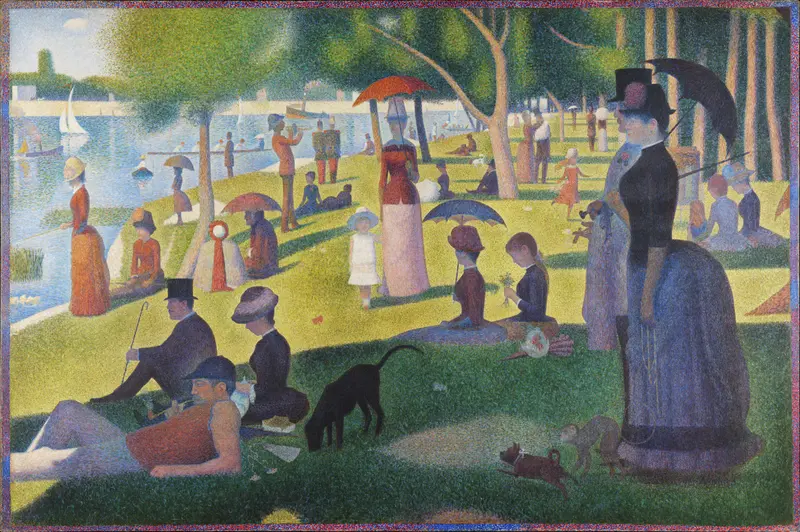
A Sunday Afternoon on the Island of La Grande Jatte
Georges Seurat
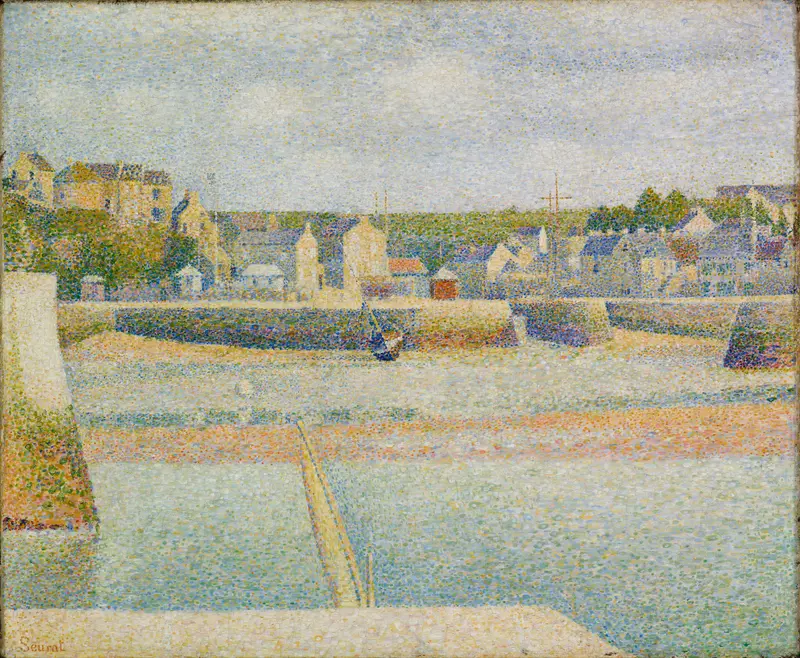
Port-en-Bessin, The Outer Harbor (Low Tide)
Georges Seurat
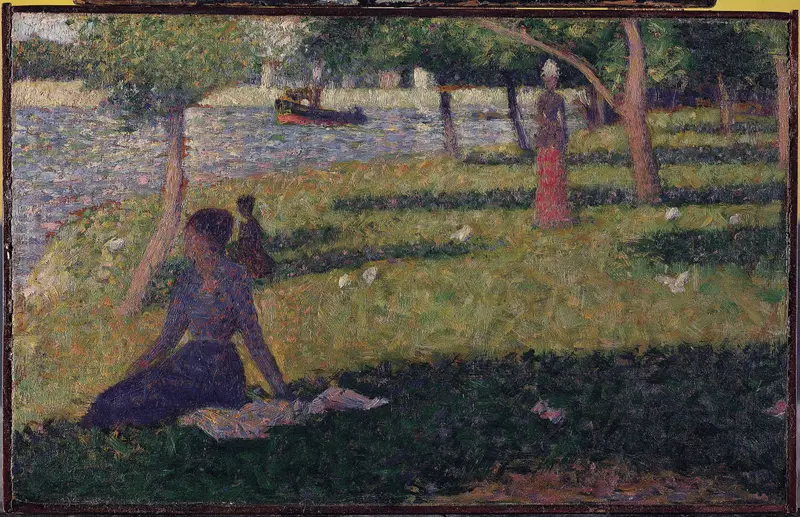
Étude pour ‘La Grande Jatte’ (Study for ‘La Grande Jatte’)
Georges Seurat
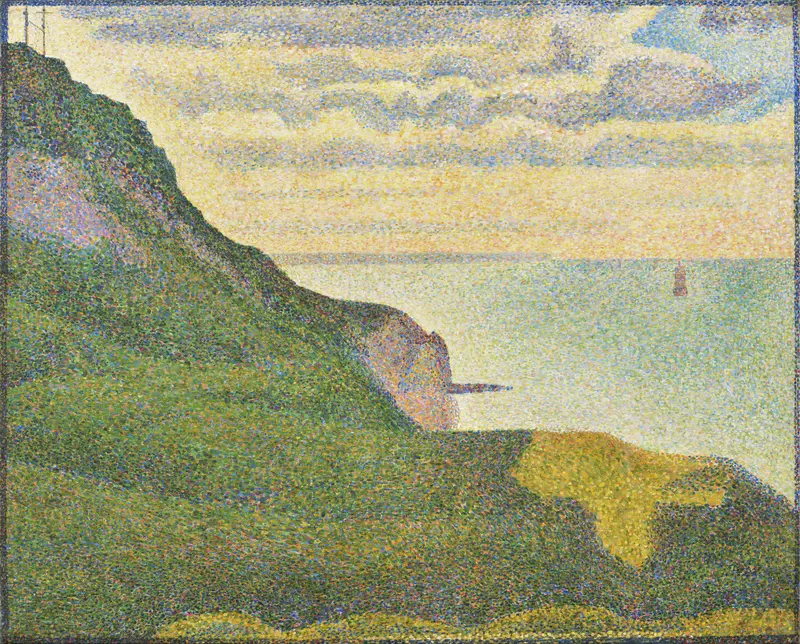
Seascape at Port-en-Bessin,Normandy
Georges Seurat
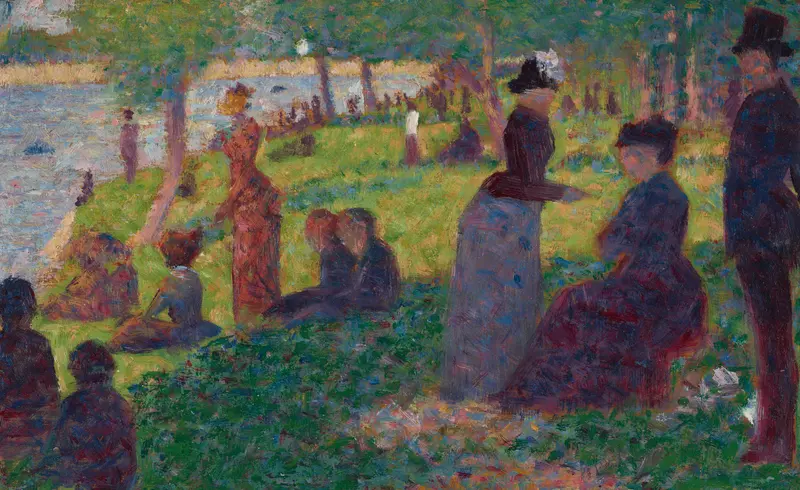
Oil Sketch for "A Sunday on La Grande Jatte — 1884"
Georges Seurat
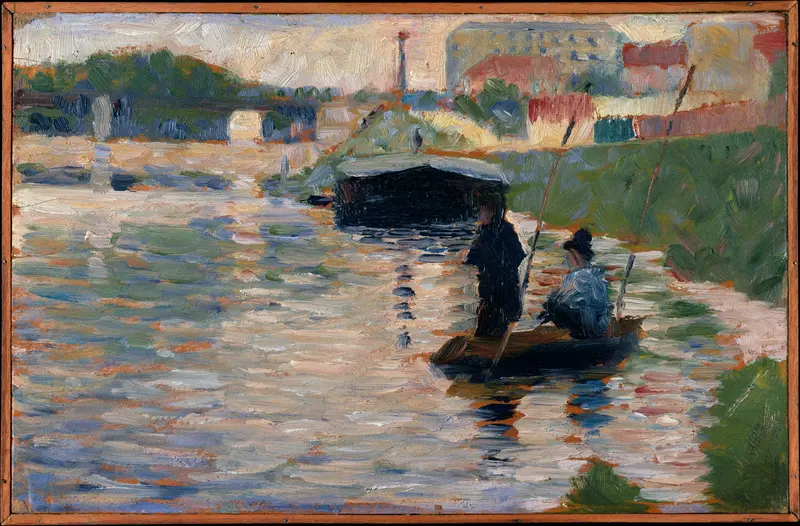
View of the Seine
Georges Seurat
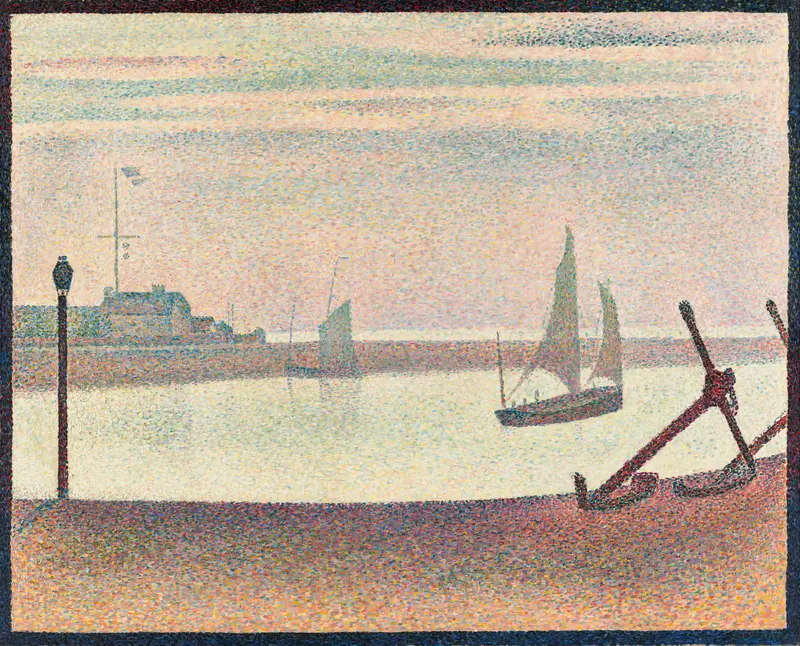
The Channel at Gravelines, Evening
Georges Seurat
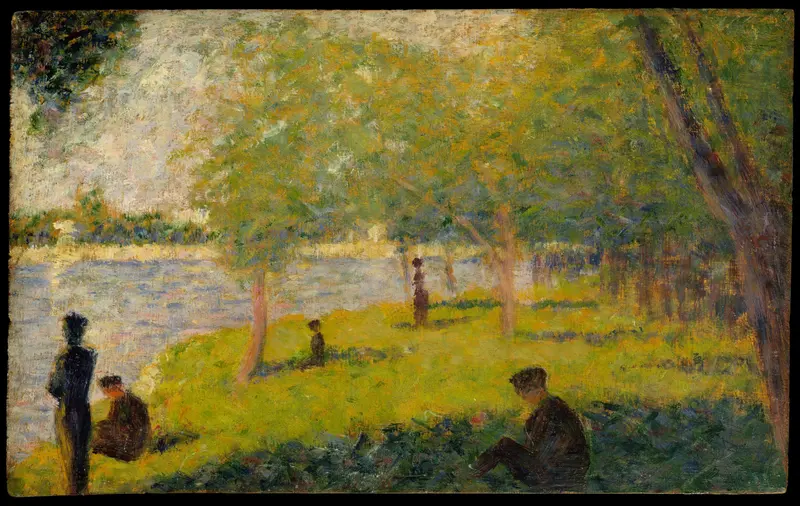
Study for ‘A Sunday on La Grande Jatte’
Georges Seurat
Study for A Sunday on La Grande Jatte
Georges Seurat
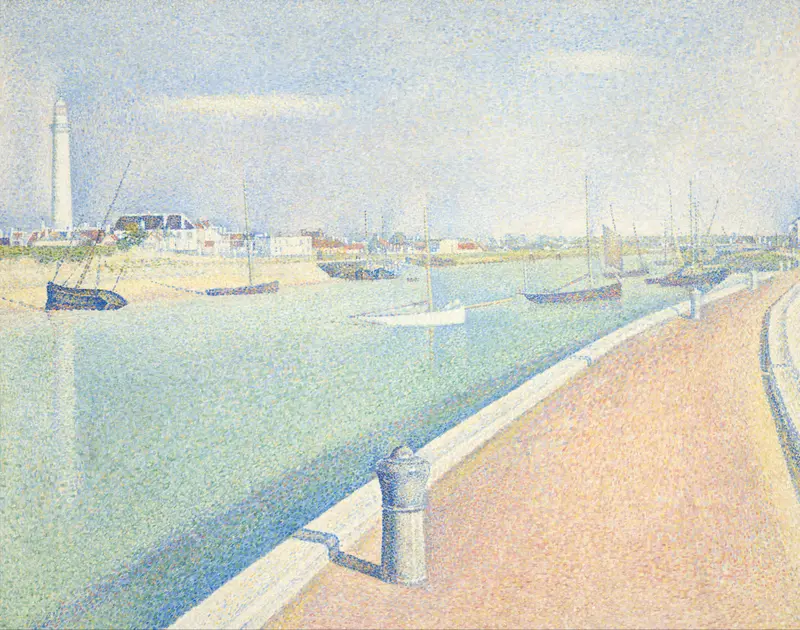
The Channel of Gravelines, Petit Fort Philippe
Georges Seurat
More Landscape Art

The Starry Night
Vincent van Gogh

View of Delft
Johannes Vermeer

Water Lilies
Claude Monet

The Grand Canal, Venice, looking north-west from the Ca' Corner to the Ca' Contarini degli Scrigni, with the campanile of Santa Maria della Carità
Canaletto

Windsor Castle
Canaletto

The Grand Canal looking North-East from the Palazzo Dolfin-Manin to the Rialto Bridge
Canaletto