
The Sentry Box on the Wall — History & Facts
A quiet sense of watchfulness settles over The Sentry Box on the Wall, drawing the viewer into a world where human presence is modest but unmistakable. The eye is first caught by the sturdy, angular form of the sentry box itself, its brickwork rendered with a patient hand, perched at the water’s edge like a silent guardian. The gentle arc of the river leads us past a cluster of boats—one with two figures bent to their task, another drifting in the distance—while a scattering of birds animates the sky above.
Every line is purposeful: the ladder propped against the embankment, the flag fluttering at the roof’s peak, the small windows peering out over the water, all suggest a place both lived-in and alert, where daily routines unfold in the shadow of old walls. Works like this, from the era of Antonie Waterloo, belong to a tradition of Dutch landscape art that flourished in the seventeenth century, when artists and collectors alike found fascination in the interplay of water, architecture, and rural life. Such images were often made for a growing middle class eager to see their world reflected with clarity and care—scenes at once familiar and quietly dignified. Though little is recorded about this specific print, now held by the National Gallery of Art and shared through their open access initiative, its careful observation and tranquil mood speak to the values of its time.
The print invites us to linger, to notice how even the most ordinary corners of the world can become sites of quiet drama and enduring beauty.
More Artworks by Antonie Waterloo
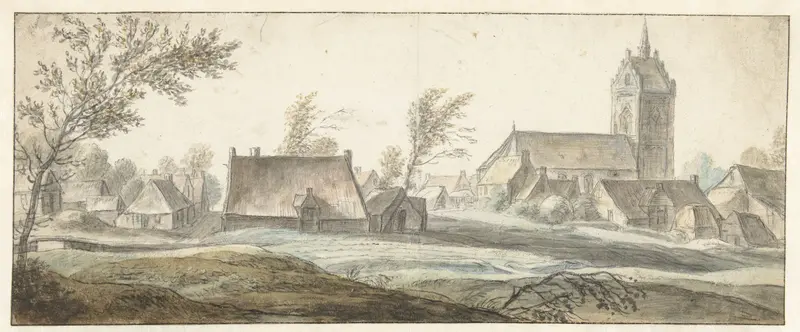
Gezicht op het dorp Soest
Antonie Waterloo
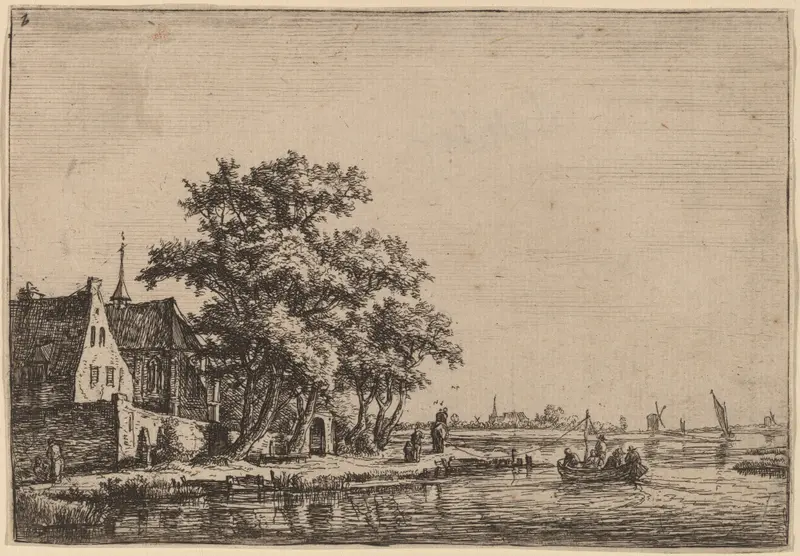
Churchyard at the Waterside
Antonie Waterloo
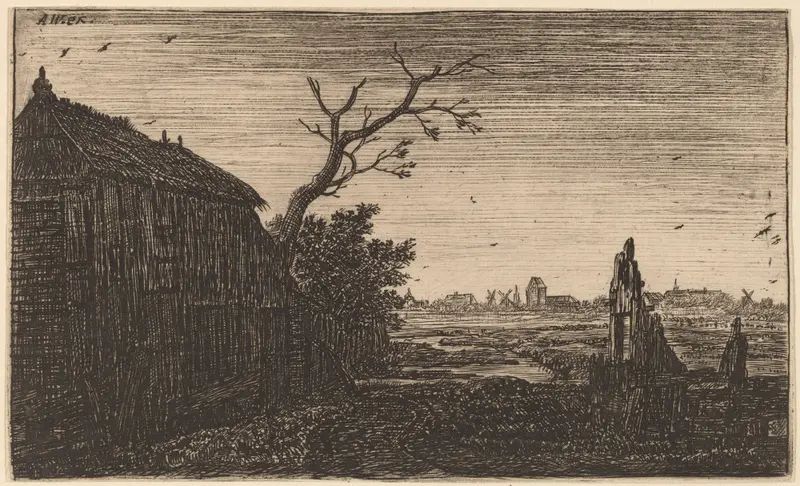
The Sluice
Antonie Waterloo
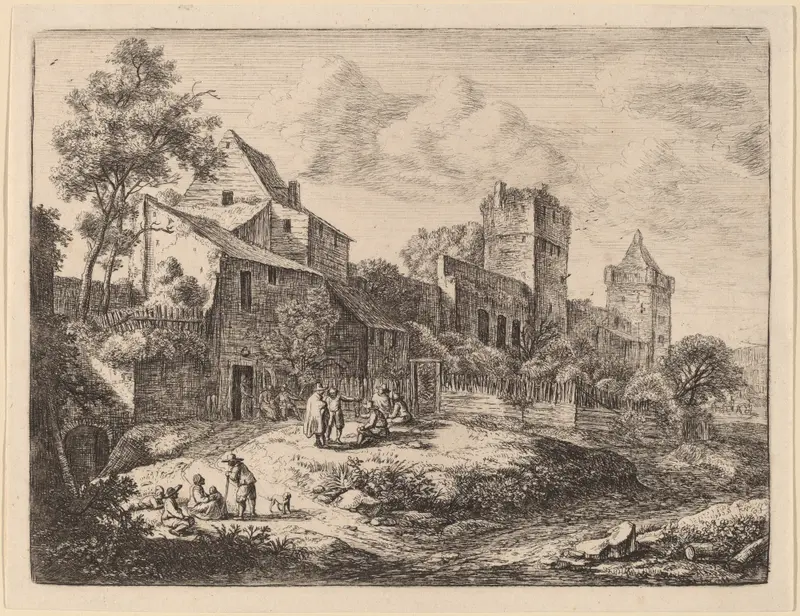
Square in Front of an Inn
Antonie Waterloo
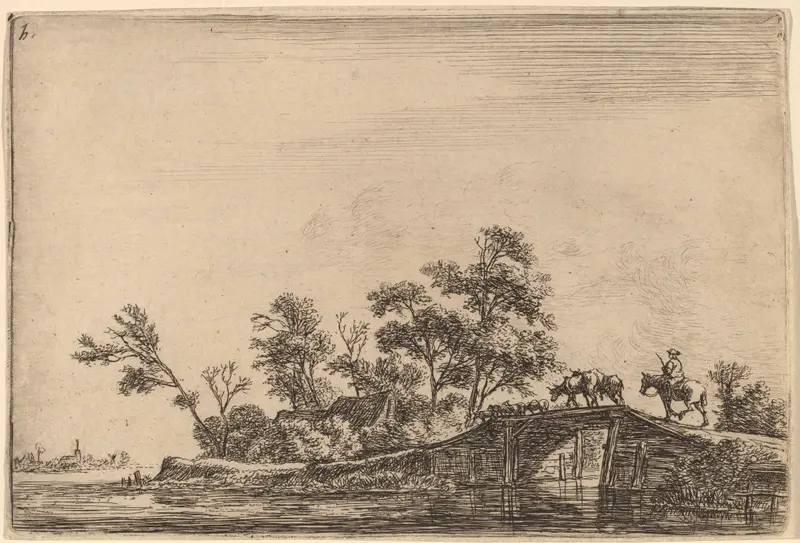
Rider and Flock on a Bridge
Antonie Waterloo
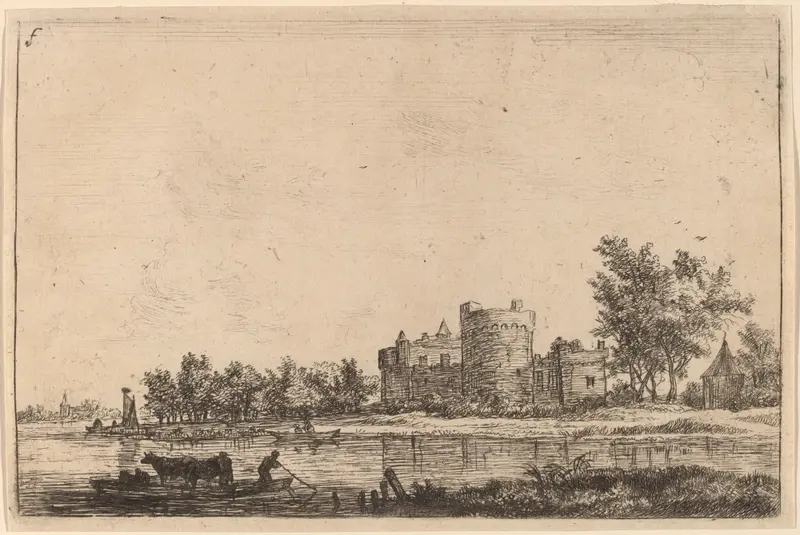
Two Cows on a Ferry
Antonie Waterloo
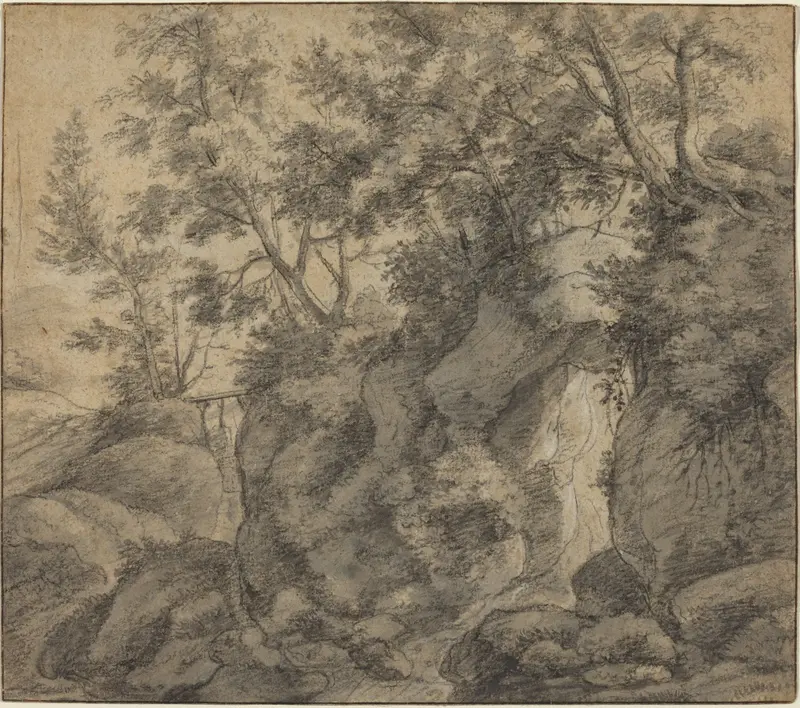
Landscape with a Wooded Ravine
Antonie Waterloo
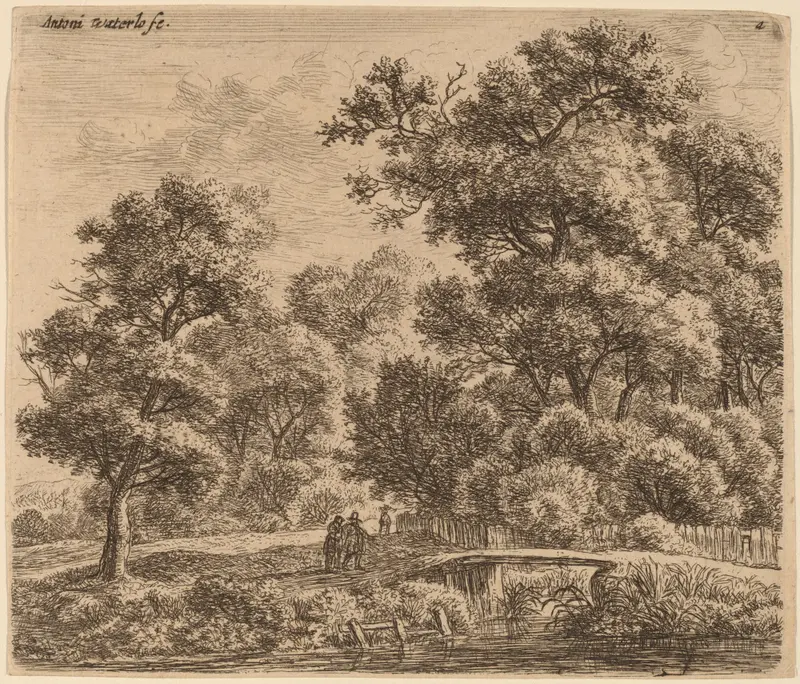
Wooded Landscape with a Bridge
Antonie Waterloo
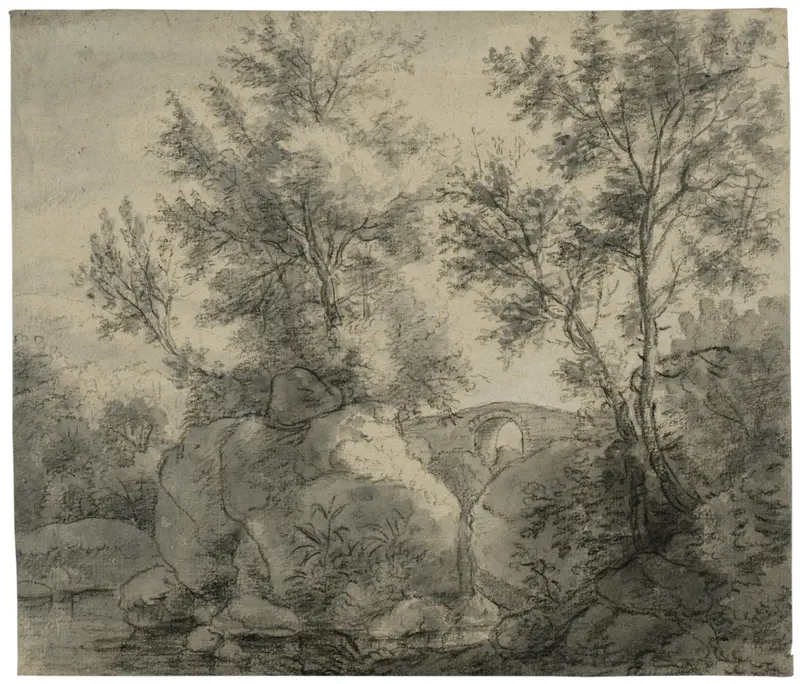
Rocky Landscape with a Stone Bridge
Antonie Waterloo
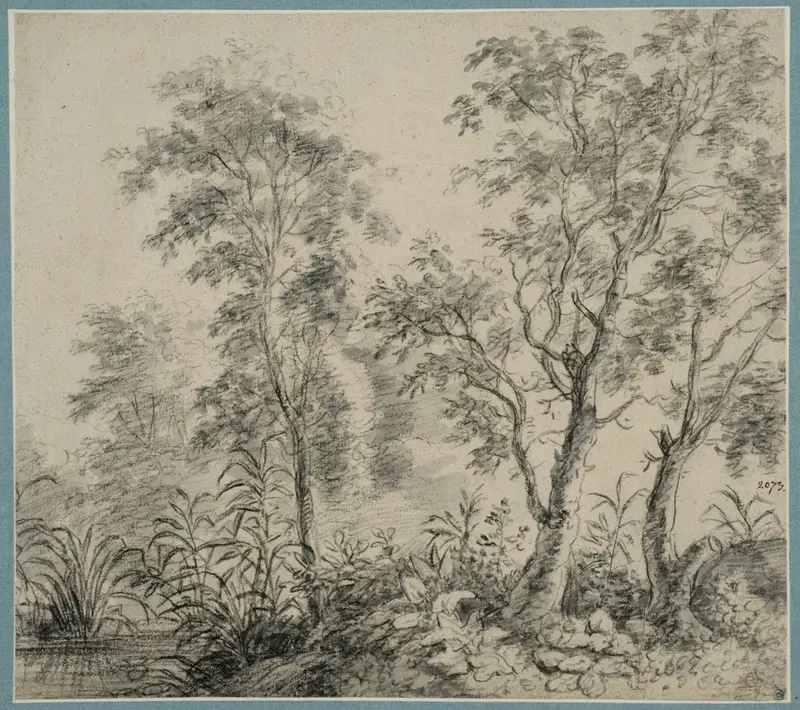
River Bank with a Row of Trees
Antonie Waterloo
More Landscape Art

The Starry Night
Vincent van Gogh

View of Delft
Johannes Vermeer

Water Lilies
Claude Monet

The Grand Canal, Venice, looking north-west from the Ca' Corner to the Ca' Contarini degli Scrigni, with the campanile of Santa Maria della Carità
Canaletto

Windsor Castle
Canaletto

The Grand Canal looking North-East from the Palazzo Dolfin-Manin to the Rialto Bridge
Canaletto