The Spotlight — History & Facts
A single shaft of light slices through the murky air, pinning two figures to the stage as if they alone exist in the world. The eye is drawn instantly to this illuminated pair, caught mid-performance, while the rest of the theater melts into shadow and suggestion. The audience, rendered in quick, dark gestures, becomes a living silhouette—anonymous yet present, their focus mirrored by our own.
The thick, energetic brushwork gives the scene a sense of immediacy, as though the paint itself is vibrating with the anticipation of applause. This is not a portrait of performers, but of the electric space between spectacle and spectator, where all eyes converge on a fleeting moment. Painted in 1919, The Spotlight belongs to a world newly enchanted with the magic of artificial light and the drama of modern entertainment. The early twentieth century saw theaters and music halls become hubs of urban life, their glowing interiors a counterpoint to the city’s night.
Artists like Arthur Clifton Goodwin captured these scenes not for patrons or official commissions, but out of fascination with the pulse of contemporary life. Little is recorded about the journey of this particular painting, now housed in the collection of the Museum of Fine Arts, Boston. What remains certain is the way it draws us into its charged atmosphere, inviting us to take a seat among the shadowed crowd and watch the story unfold.
More Artworks by Arthur Clifton Goodwin

View of the Brooklyn Bridge
Arthur Clifton Goodwin
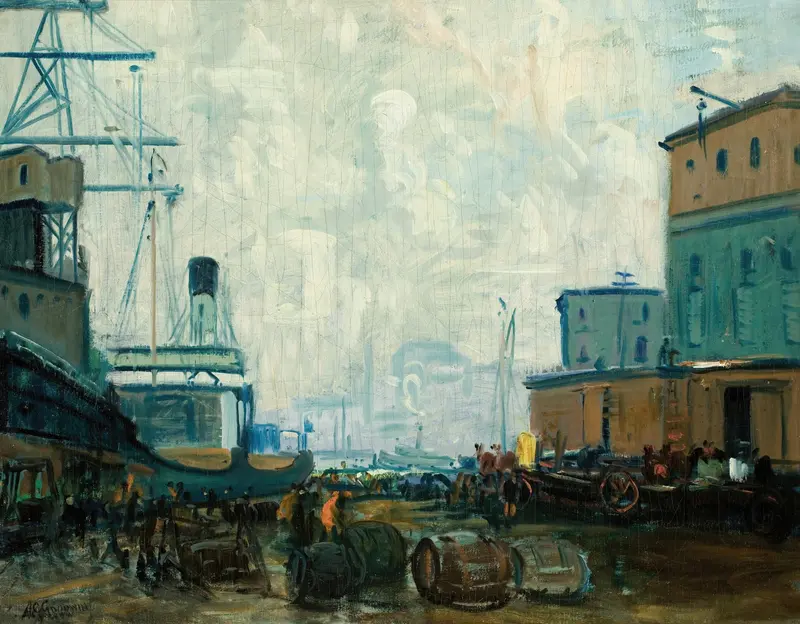
Dock Scene, Boston
Arthur Clifton Goodwin
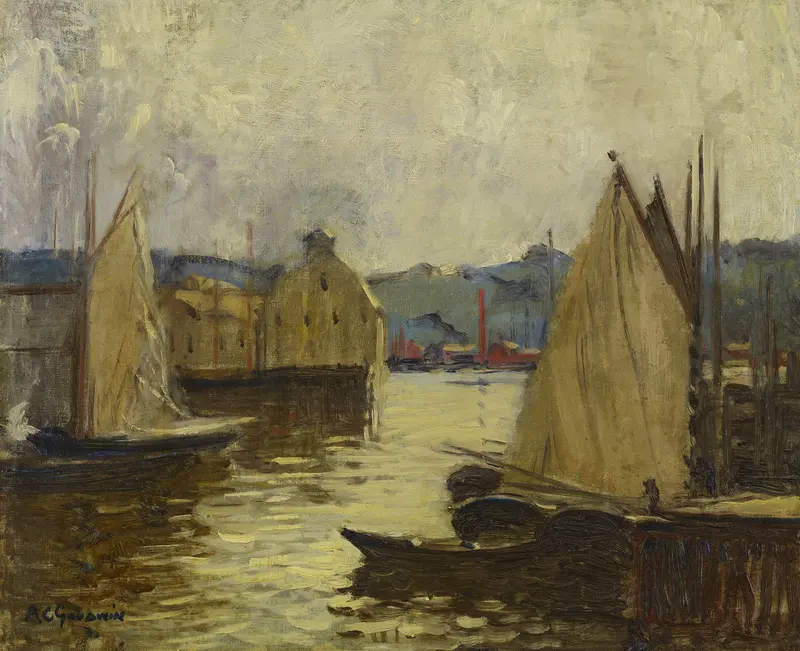
Gloucester Harbor
Arthur Clifton Goodwin
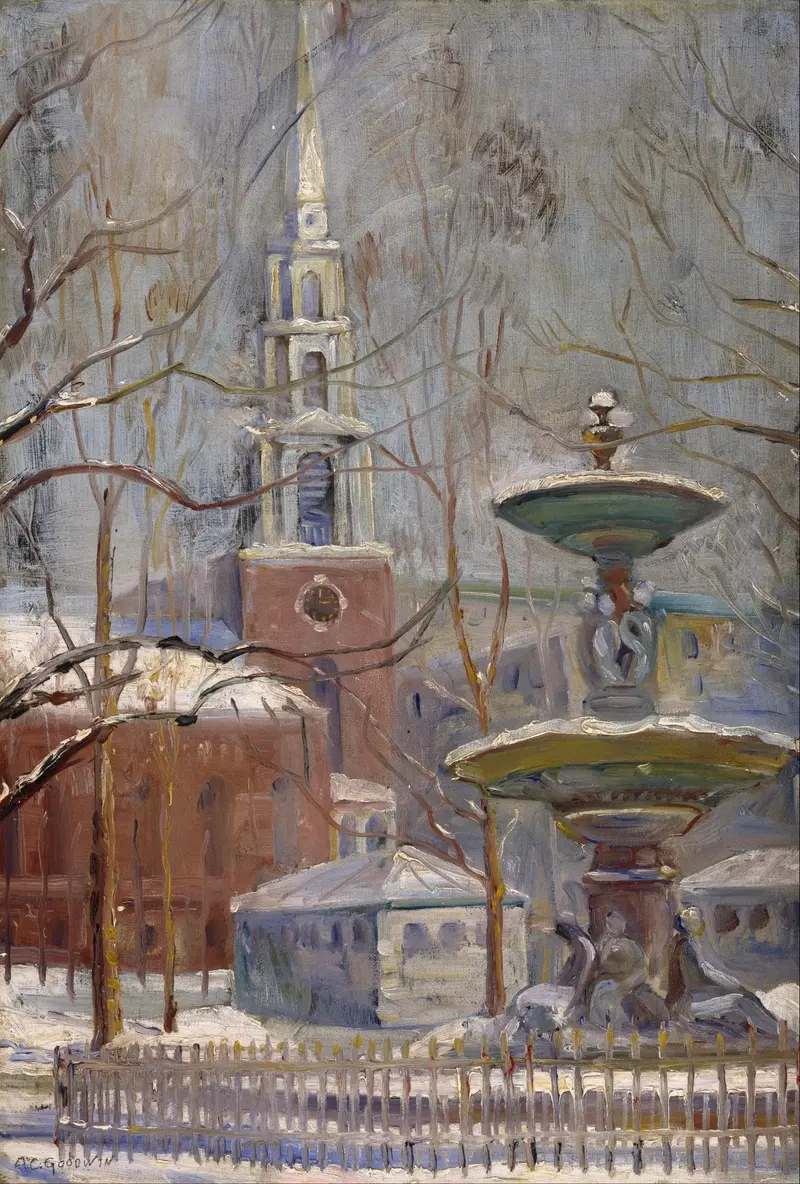
Park Street at Boston Commons
Arthur Clifton Goodwin
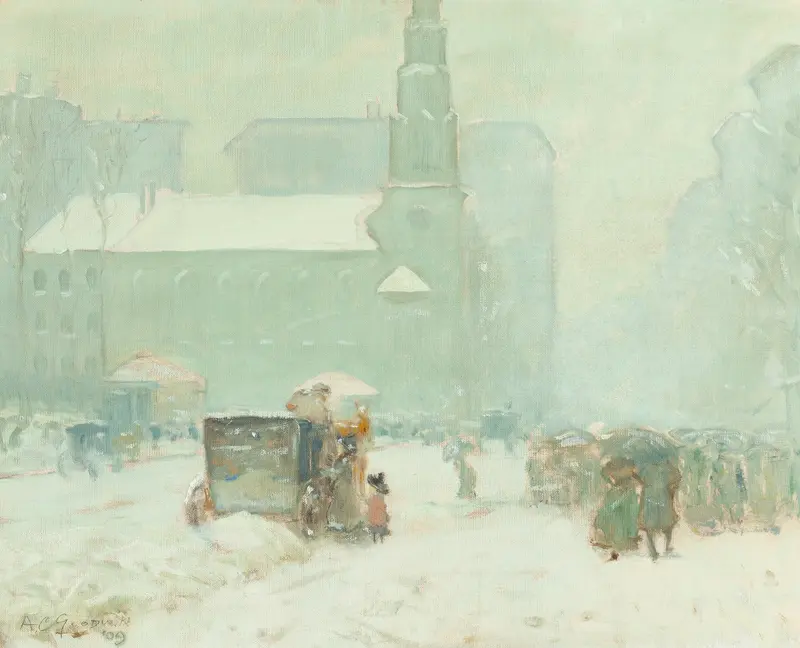
Park Street, Boston
Arthur Clifton Goodwin
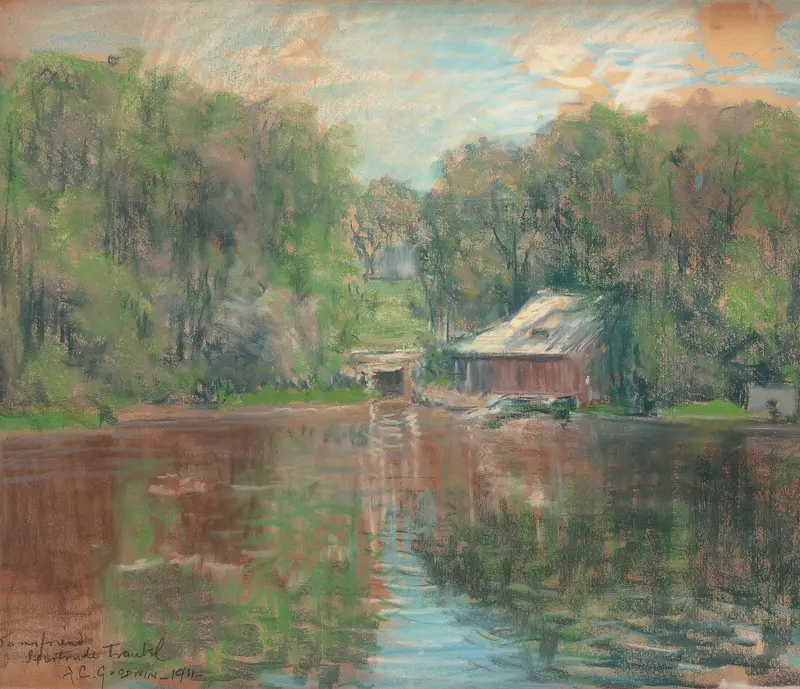
Boathouse by the Water
Arthur Clifton Goodwin
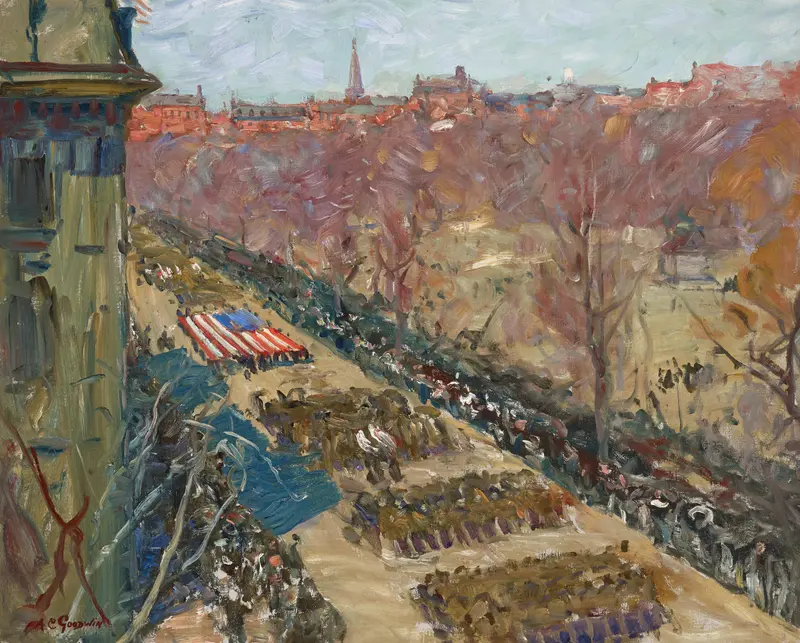
Liberty Loan Parade
Arthur Clifton Goodwin
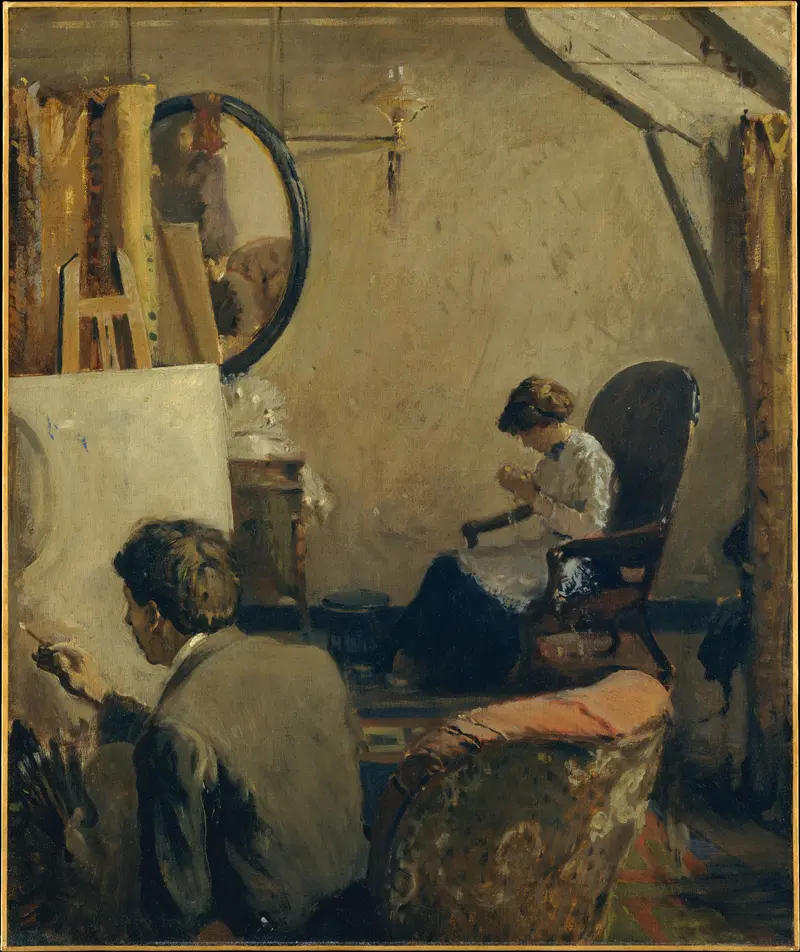
Louis Kronberg in His Studio in Copley Hall
Arthur Clifton Goodwin
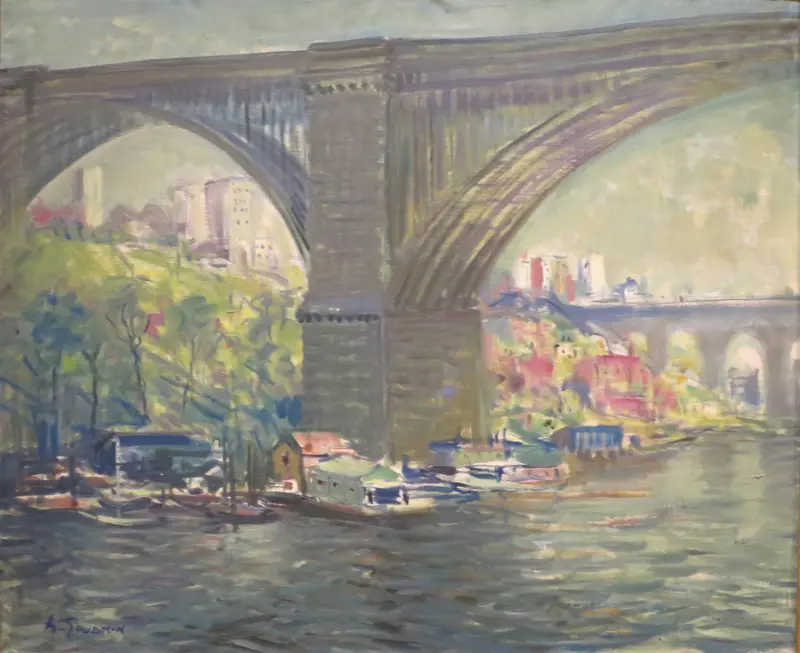
High Bridge
Arthur Clifton Goodwin
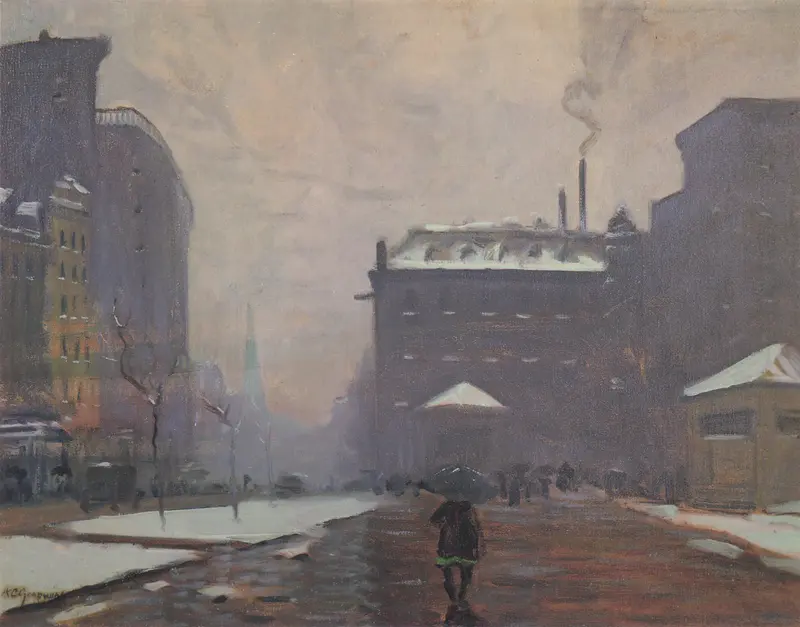
Tremont & Boylston Streets, Boston
Arthur Clifton Goodwin