The Ten Largest, No. 9, Old Age — History & Facts
Two large round rosettes made of fine looping pink lines hang side by side at the top, each edged with small yellow and blue triangles. Below them are two white cloud-like ovals, each holding two overlapping circles, then two small white seed shapes cut by a thin dark line. The ground is pale cream washed with pink, deepening toward coral at the bottom, where tiny colored circles sit inside spirals. Moderna Museet's audio guide says the organic, playful shapes of the earlier paintings give way in Old Age to a stricter, symmetrical, geometric composition.
In this first of the two, the background is pink, the color Hilma af Klint associated with Eros. The guide reads the two seed shapes as probably wheat kernels and calls the almond shape where circles intersect a vesica piscis, a primordial symbol of progress toward unity and completion. The two diagram-like flowers at the top look as if drawn with a compass.
In notes written years later, she said the painting concerns a divinity that has taken in both the male and the female principle. Af Klint stipulated that her abstract works not be shown for twenty years after her death, and they stayed all but unseen until 1986, the Guggenheim says. It belongs to the Hilma af Klint Foundation in Stockholm.
More Artworks by Hilma af Klint

Portrait
Hilma af Klint
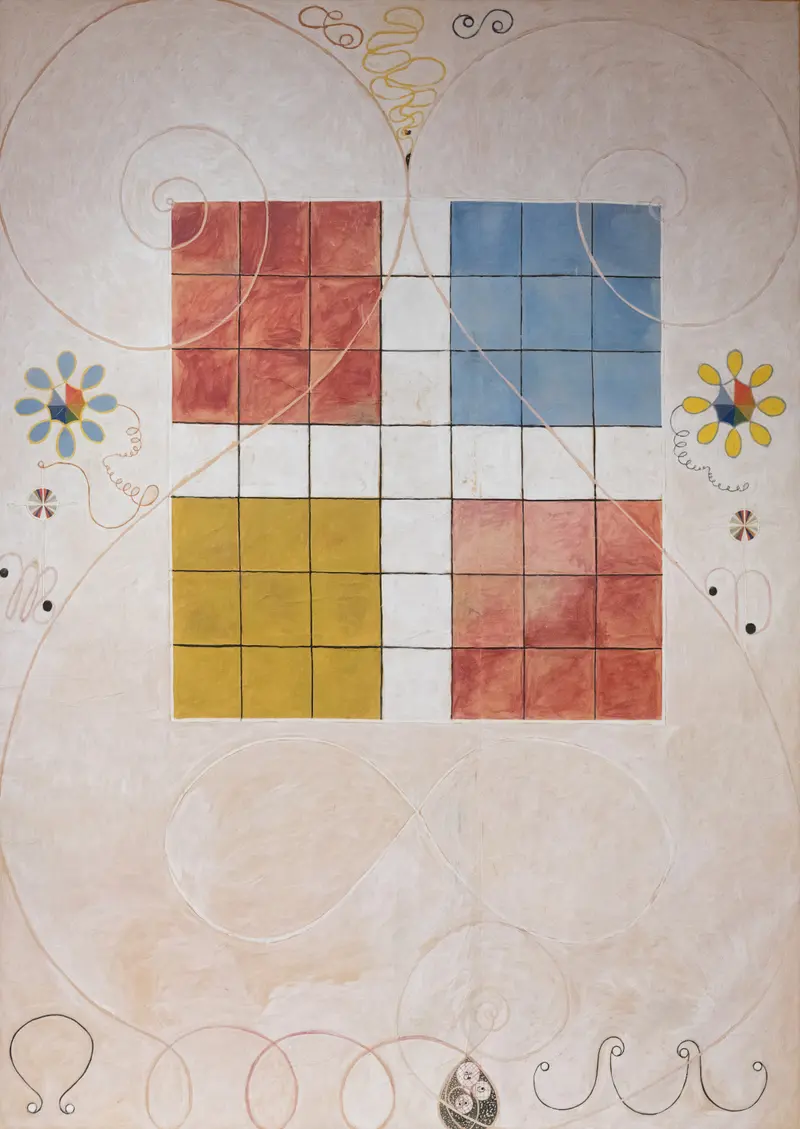
The Ten Largest, No. 10, Old Age
Hilma af Klint
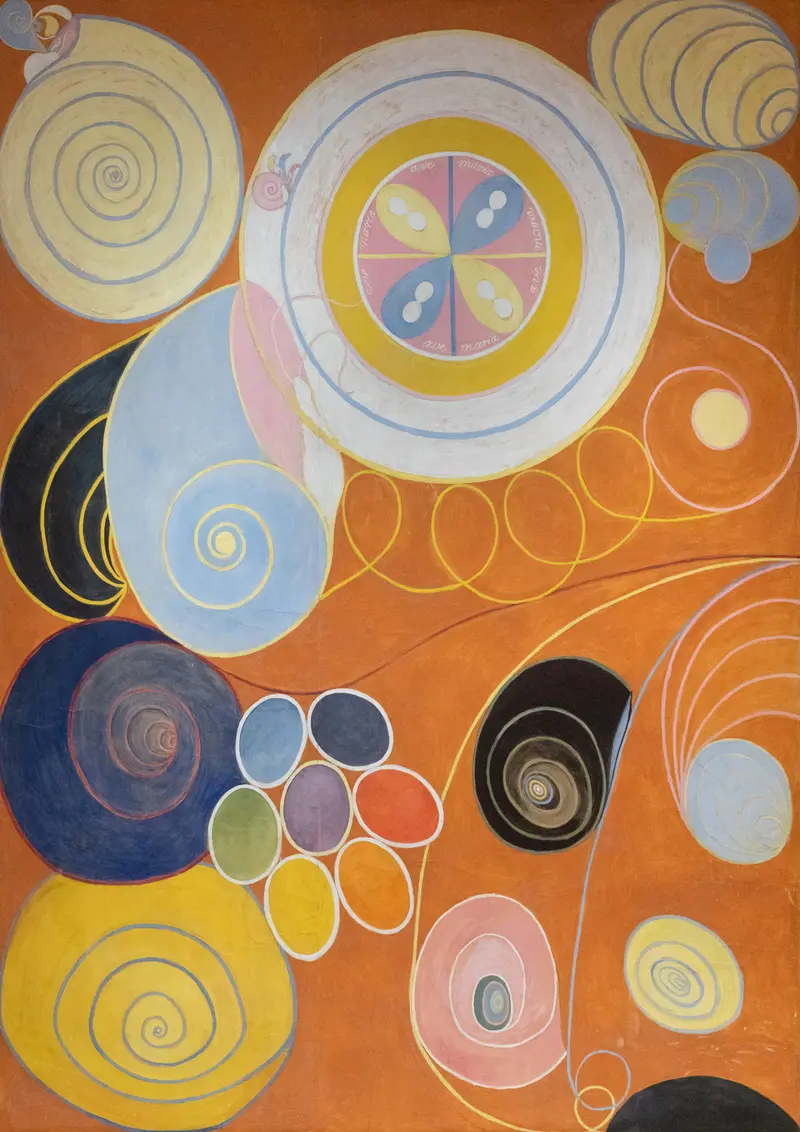
The Ten Largest, No. 3, Youth
Hilma af Klint
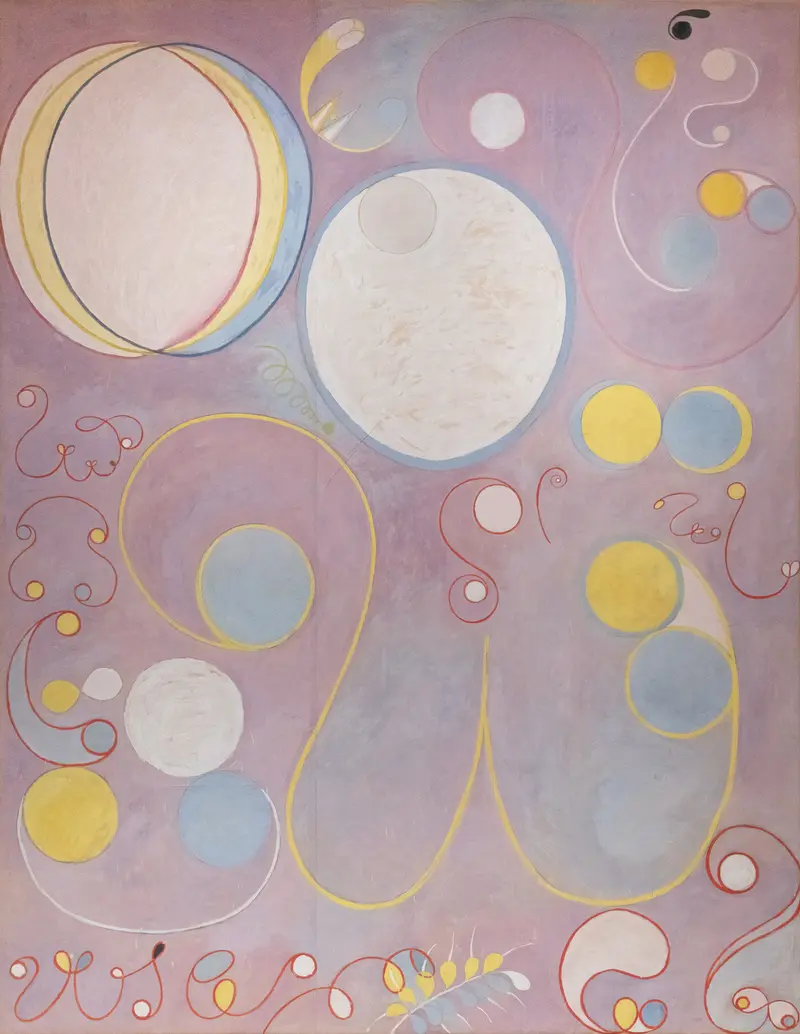
The Ten Largest, No. 8, Adulthood
Hilma af Klint
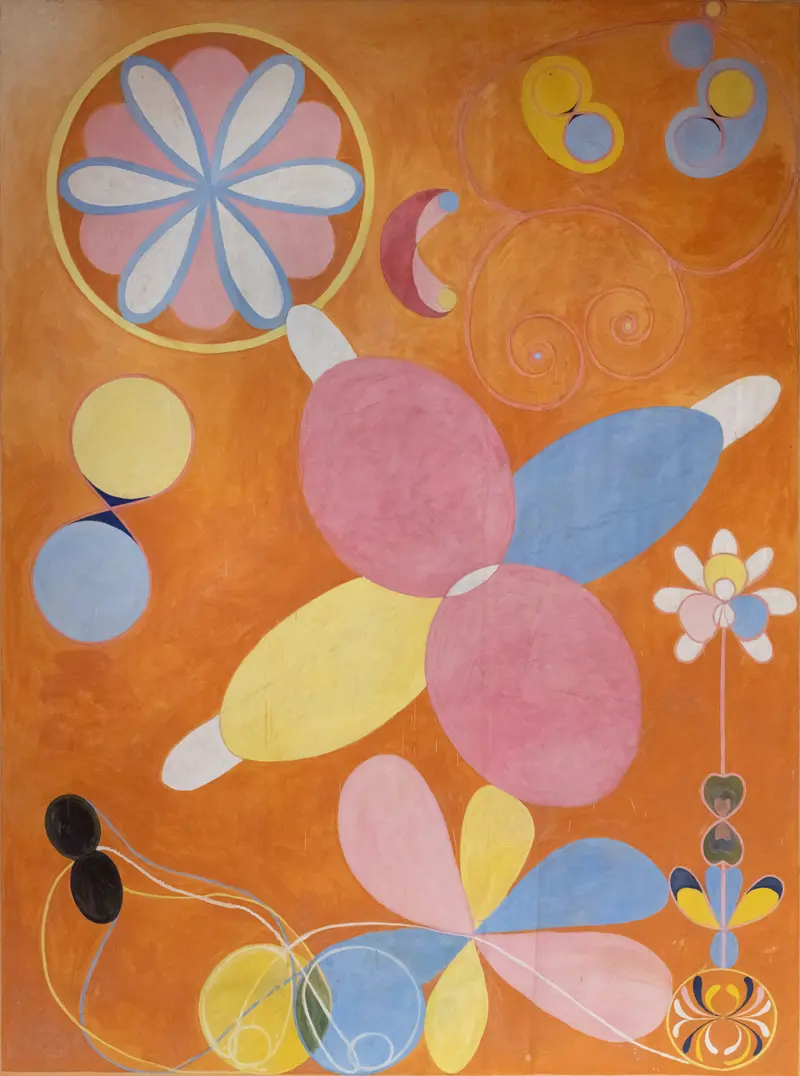
The Ten Largest, No. 4, Youth
Hilma af Klint
The Ten Largest, No. 6, Adulthood
Hilma af Klint
The Ten Largest, No. 7, Adulthood
Hilma af Klint

The Swan, No. 17, Group IX/SUW
Hilma af Klint
The Ten Largest, No. 1, Childhood
Hilma af Klint
The Ten Largest, No. 2, Childhood
Hilma af Klint