
the watering-place — History & Facts
A pause in motion is what draws the eye first: three riders, their horses halted at the edge of water, caught between journey and rest. The central figure, perched high and gesturing with a riding crop, commands attention not only by his posture but by the way the light falls on him—his gesture seems to direct not just his companions, but the viewer’s gaze as well. The horses, rendered with a keen sense of anatomy and character, dip their heads to drink or wait patiently, their bodies reflecting the quiet energy of the moment.
The dark mass of a building on the right anchors the composition, its archway hinting at shelter or passage, while the distant hills and open sky suggest a world beyond this tranquil stop. Every detail—the angle of a hat, the glint on a flank—seems chosen to evoke a sense of leisure and alertness, the brief respite of travelers in a landscape that feels both familiar and unhurried. Painted in 1645, the watering-place belongs to the world of the Dutch Golden Age, when artists like Aelbert Cuyp transformed everyday scenes into meditations on light, landscape, and human presence. In this period, prosperous citizens commissioned such works to celebrate the pleasures of rural life and the dignity of their own pursuits, whether mercantile or landed.
The painting now resides in the Deutsches Historisches Museum, a reminder of how Dutch painters, even in lesser-known works, could infuse the most ordinary halts with a sense of narrative and place. History has kept few traces of this specific canvas’s journey, but the scene it offers—a moment of calm, a pause before the road continues—invites the viewer to linger, just as the riders do.
More Artworks by Aelbert Cuyp

The Maas at Dordrecht
Aelbert Cuyp
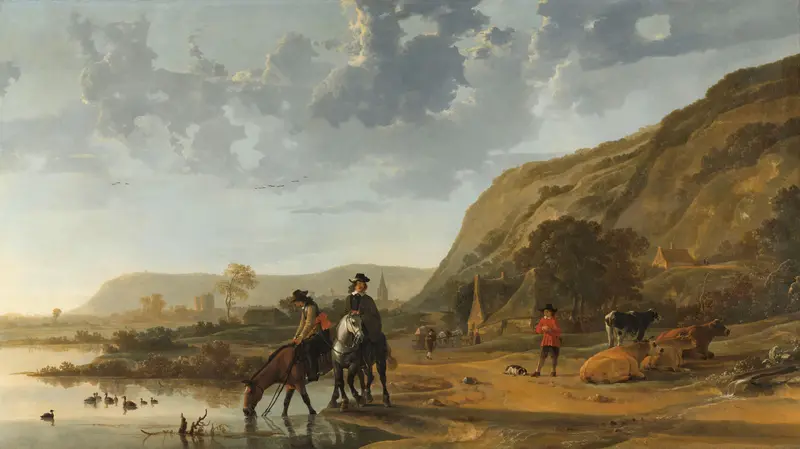
River Landscape with Riders
Aelbert Cuyp

The Maas at Dordrecht
Aelbert Cuyp
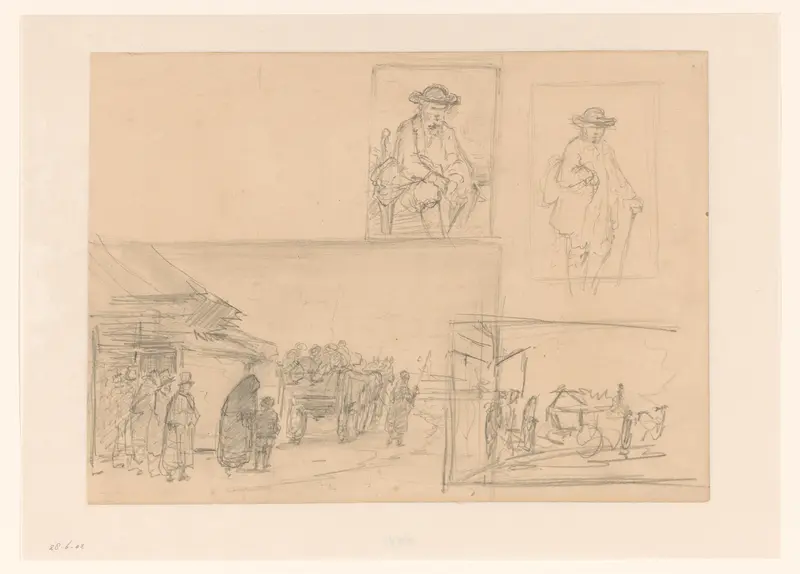
Gezicht op Dordrecht
Aelbert Cuyp
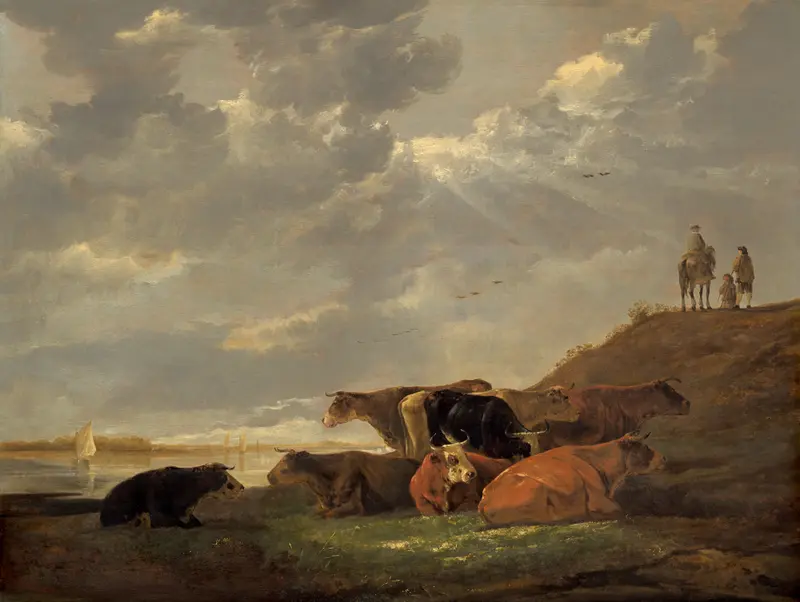
River Landscape with Cows
Aelbert Cuyp
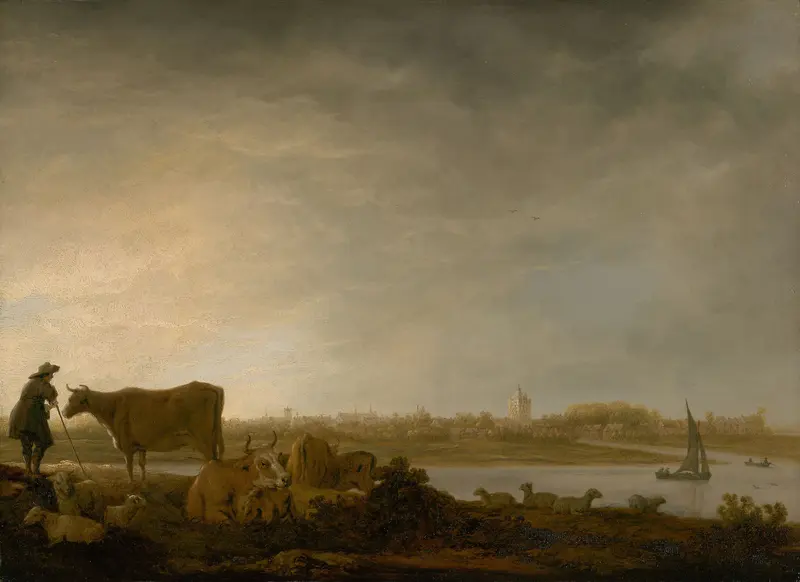
A View of Vianen with a Herdsman and Cattle by a River
Aelbert Cuyp
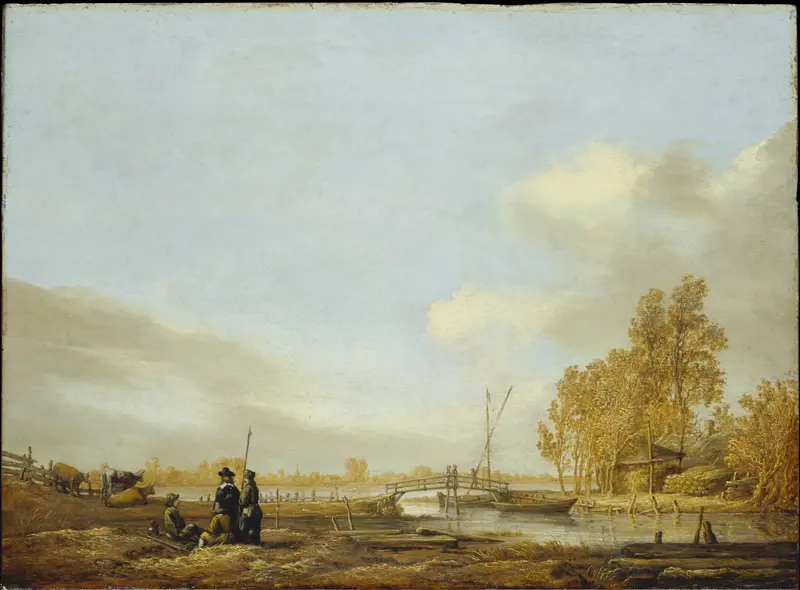
River Landscape with Footbridge
Aelbert Cuyp
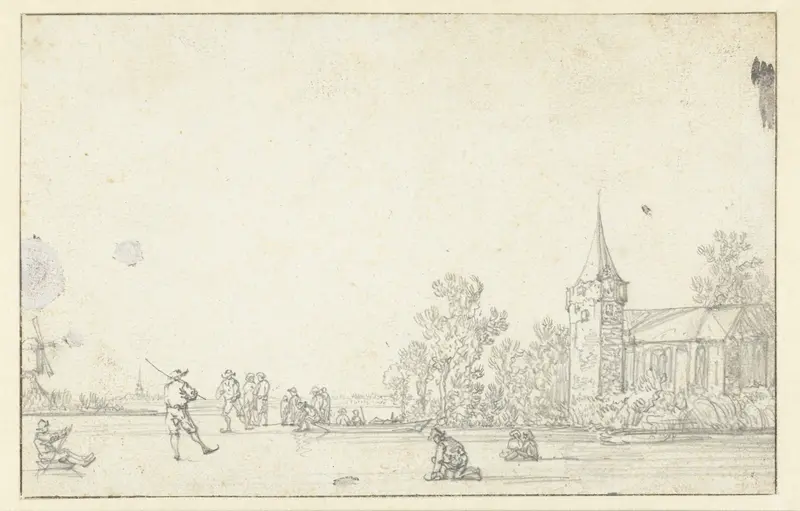
Bevroren rivier met schaatsers bij een kerk
Aelbert Cuyp

Cattle near a River
Aelbert Cuyp
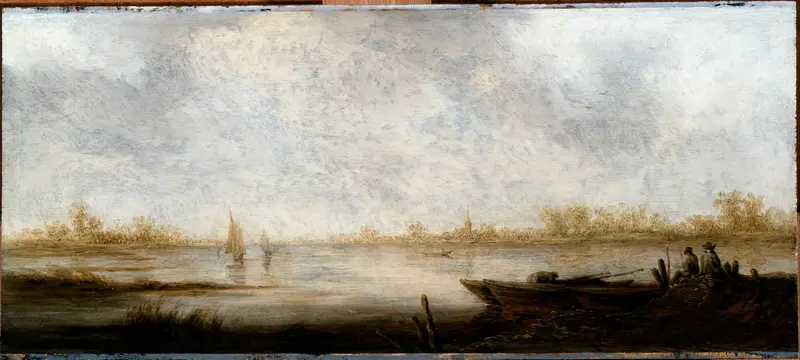
River Landscape
Aelbert Cuyp
More Landscape Art

The Starry Night
Vincent van Gogh

View of Delft
Johannes Vermeer

Water Lilies
Claude Monet

The Grand Canal, Venice, looking north-west from the Ca' Corner to the Ca' Contarini degli Scrigni, with the campanile of Santa Maria della Carità
Canaletto

Windsor Castle
Canaletto

The Grand Canal looking North-East from the Palazzo Dolfin-Manin to the Rialto Bridge
Canaletto