
The Watering Place — History & Facts
When The Watering Place first appeared in the 1880 exhibition of the American Art Association, critics found themselves both drawn to and puzzled by its moody, dreamlike landscape. Albert Pinkham Ryder was already gaining a reputation for his unconventional approach, but this painting stood out for its haunting atmosphere and ambiguous narrative. Unlike many of his contemporaries, Ryder rarely explained his intentions, leaving viewers to wonder whether the scene was real or imagined.
The work’s elusive meaning has fueled debate ever since, with some suggesting it reflects Ryder’s fascination with pastoral peace, while others see hints of melancholy or longing. At the heart of The Watering Place, a group of cows gathers at the edge of a quiet pond, their forms almost melting into the dusk. Ryder chooses a moment of stillness: the animals pause, heads lowered, as if caught between thirst and contemplation. The landscape is rendered in deep greens and shadowy blues, the light barely breaking through a dense, mysterious sky.
Every detail—the gentle curve of the bank, the soft reflection in the water—serves to heighten the sense of silence and introspection. Unlike the crisp rural scenes of Rosa Bonheur or the bright, bustling pastures of Constant Troyon, Ryder’s vision is veiled and intimate, inviting the viewer to linger in uncertainty. The precise medium of The Watering Place remains uncertain, though Ryder was known for his experimental mixtures of oil and resin, which sometimes led to the darkening and cracking of his canvases over time. The painting’s early provenance is not fully documented, but it is thought to have remained in private hands for decades before entering a public collection.
Today, it stands as an early example of Ryder’s mature style, foreshadowing the even more abstract and mysterious works he would produce in the following decades. Though less famous than his later allegories, The Watering Place is a key piece for understanding Ryder’s lifelong pursuit of mood and mystery in American landscape painting.
More Artworks by Albert Pinkham Ryder

The Toilers of the Sea
Albert Pinkham Ryder
Moonlight
Albert Pinkham Ryder
The Lorelei
Albert Pinkham Ryder
With Sloping Mast And Dipping Prow
Albert Pinkham Ryder
Homeward Bound
Albert Pinkham Ryder
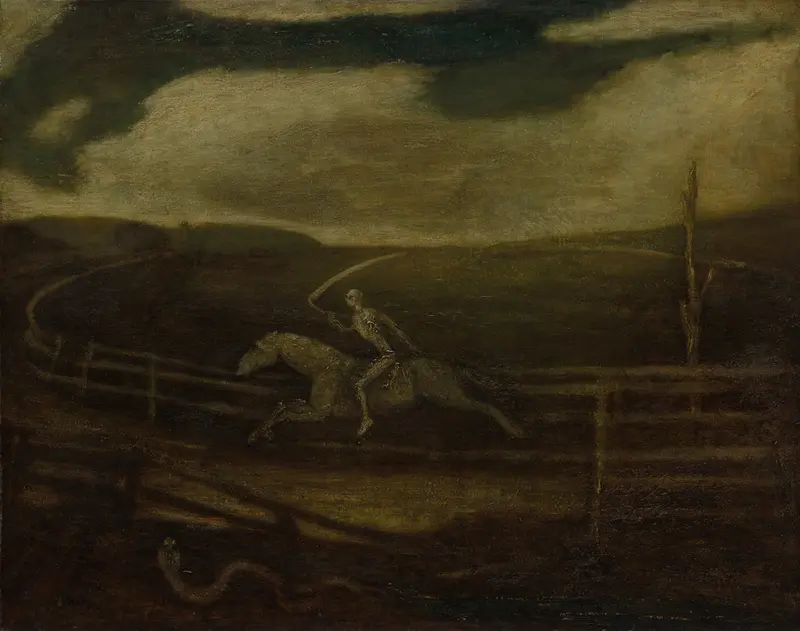
The Race Track (Death on a Pale Horse)
Albert Pinkham Ryder
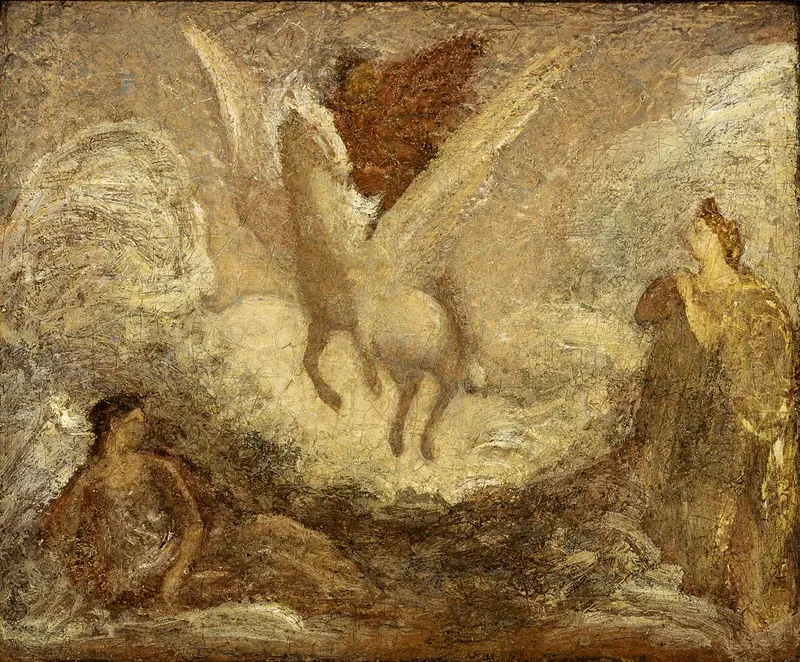
Pegasus Departing
Albert Pinkham Ryder
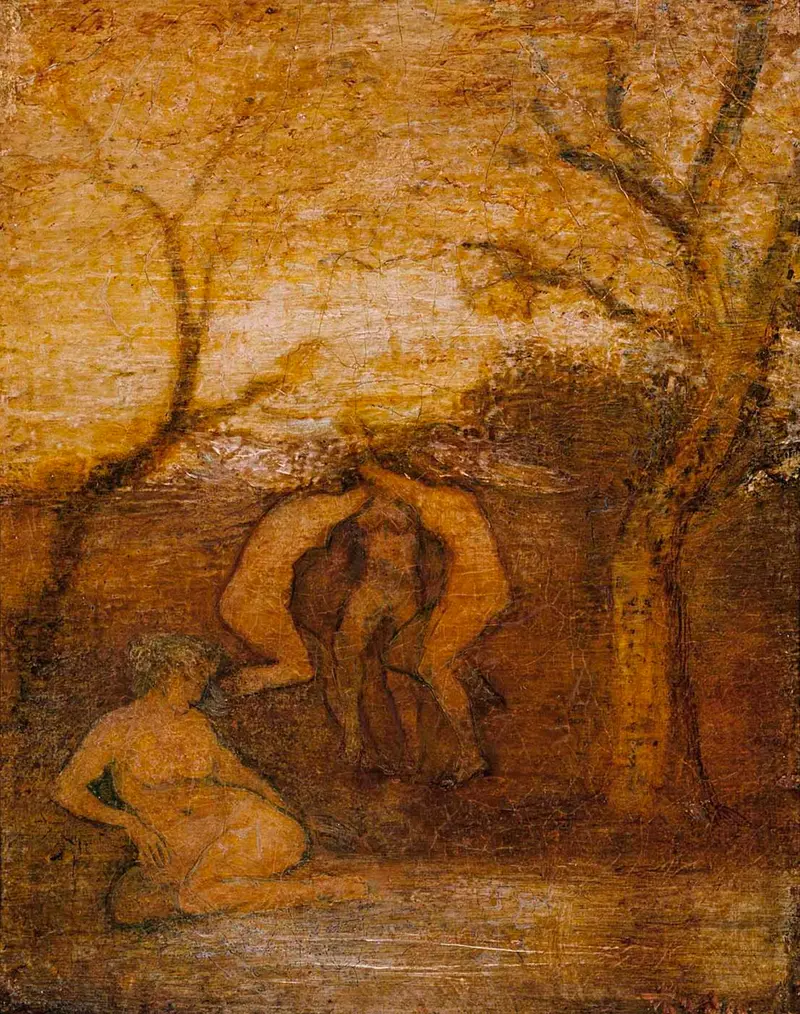
Dancing Dryads
Albert Pinkham Ryder
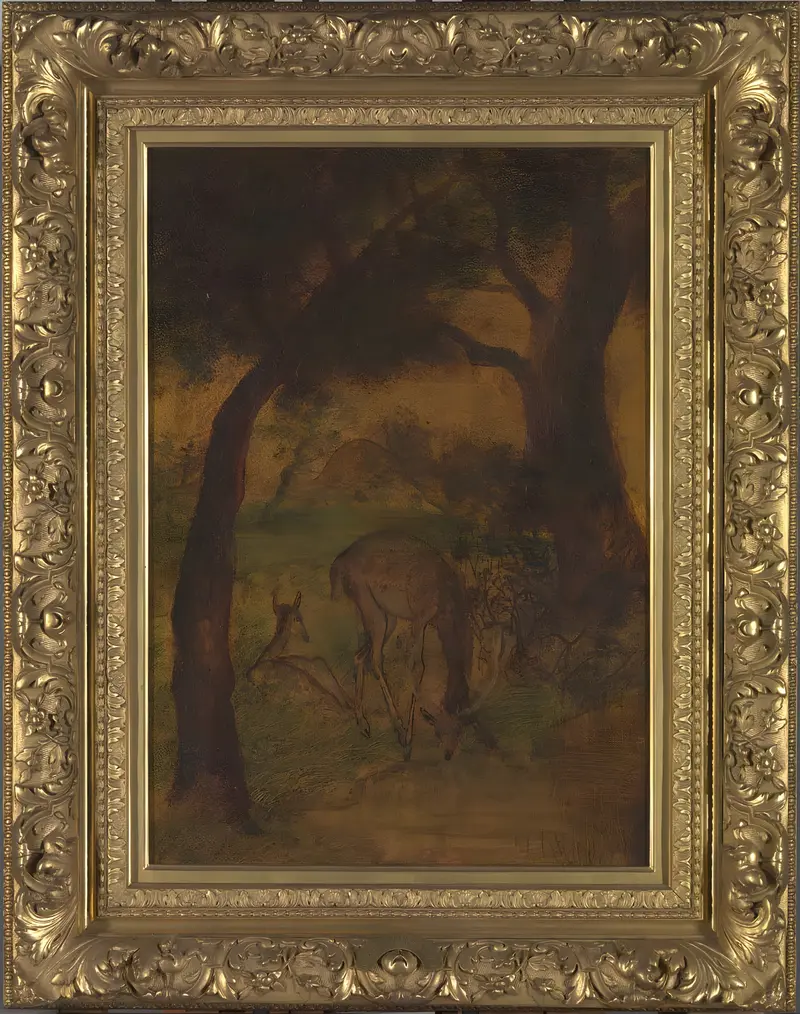
A Stag Drinking
Albert Pinkham Ryder
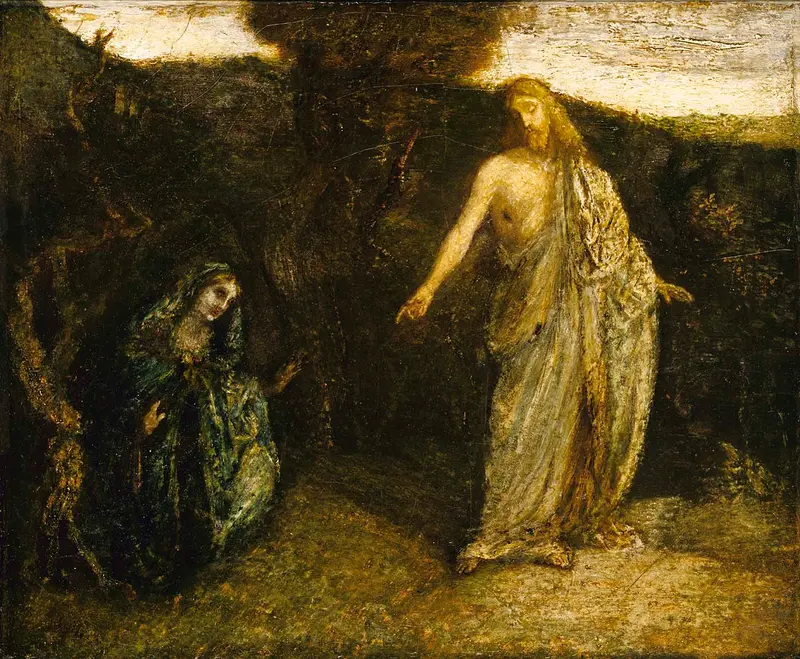
Christ Appearing to Mary
Albert Pinkham Ryder
More Landscape Art

The Starry Night
Vincent van Gogh

View of Delft
Johannes Vermeer

Water Lilies
Claude Monet

The Grand Canal, Venice, looking north-west from the Ca' Corner to the Ca' Contarini degli Scrigni, with the campanile of Santa Maria della Carità
Canaletto

Windsor Castle
Canaletto

The Grand Canal looking North-East from the Palazzo Dolfin-Manin to the Rialto Bridge
Canaletto