
Three Breton Women with Infants — History & Facts
What first draws the eye in Three Breton Women with Infants is the quiet gravity of the women’s stance, their bodies turned toward the sea, their faces hidden beneath the distinctive headdresses of Brittany. The artist, Armand Seguin, has chosen a moment of stillness, but not of rest: the women’s backs are straight, their arms full with bundled infants, their feet planted firmly on the uneven ground. The lines of their garments echo the ripples of the water behind them, binding figure and landscape together.
The palette is reduced to two tones, heightening the sense of unity and focusing attention on the rhythm of shapes—the sweeping curves of skirts, the looping folds of cloth, the gentle arc of a mother’s embrace. There is no distraction from the central drama: the shared burden and dignity of these women, set against the vastness of sea and sky. Works like this, created in 1894, belong to a period when artists across Europe were seeking new ways to represent rural life, often turning to woodcut and other print techniques for their bold, graphic effects. In Brittany, the region’s distinctive costumes and customs became a favorite subject for painters and printmakers drawn by its perceived authenticity and distance from urban modernity.
Armand Seguin was part of this movement, working alongside others who were fascinated by the rituals and resilience of Breton women. Little is recorded about the specific origins or journey of this print, now held by the National Gallery of Art, but its presence in a major collection speaks to the enduring fascination with these scenes of everyday endurance. The image invites us to linger, to trace the lines of care and kinship that bind its figures together.
More Artworks by Armand Seguin
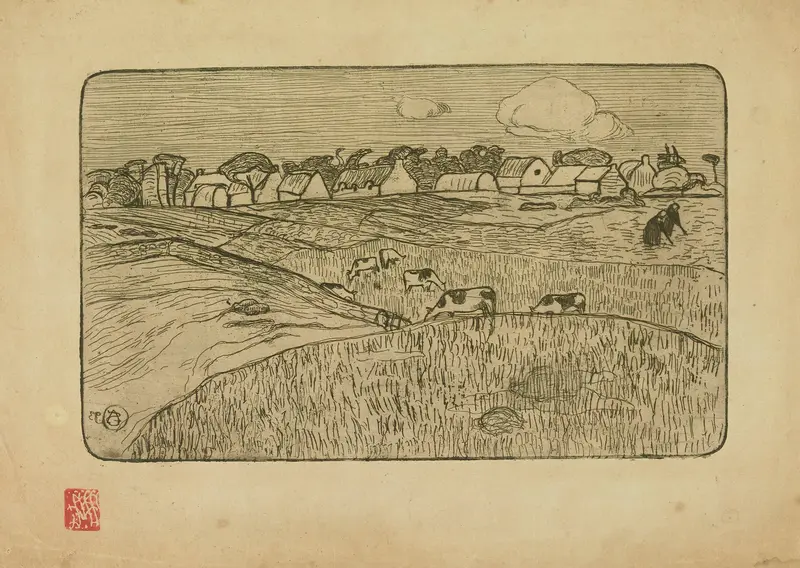
Femmes et vaches dans les champs en Bretagne
Armand Seguin

La Route du Pouldu
Armand Seguin
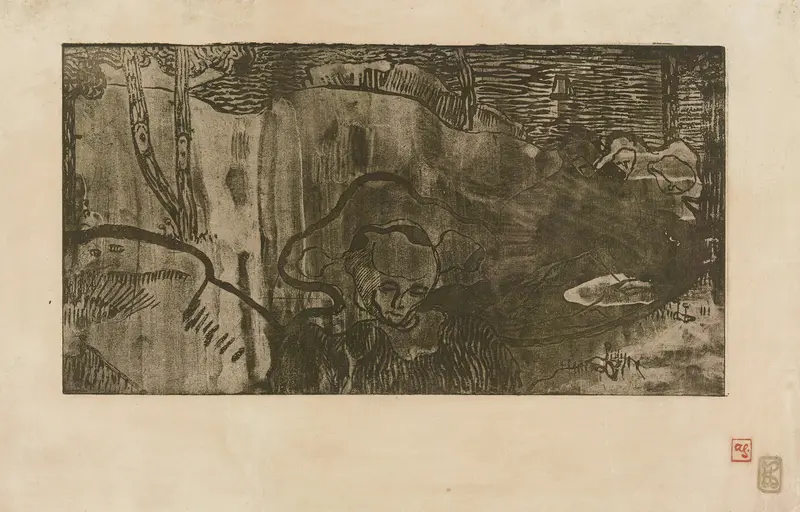
Décoration de Bretagne – Bretonnes au bord de la mer
Armand Seguin
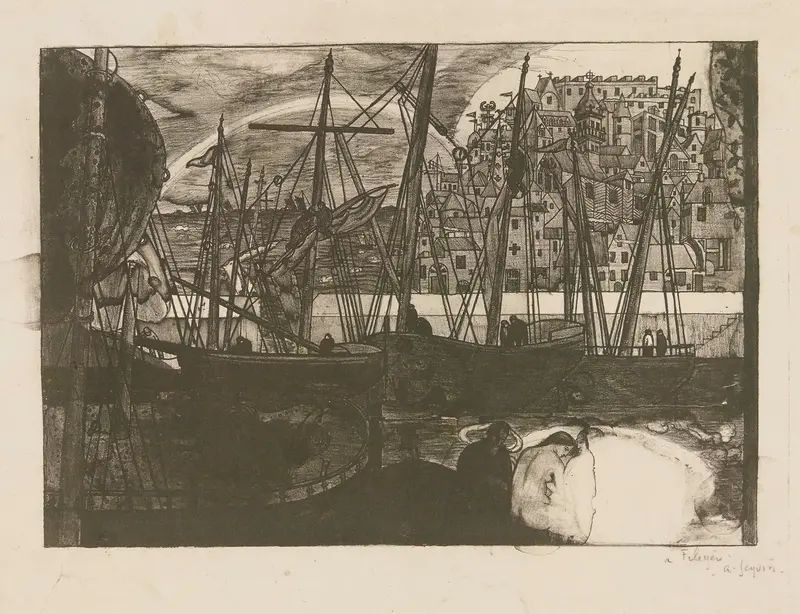
Pêcheurs de goémons
Armand Seguin
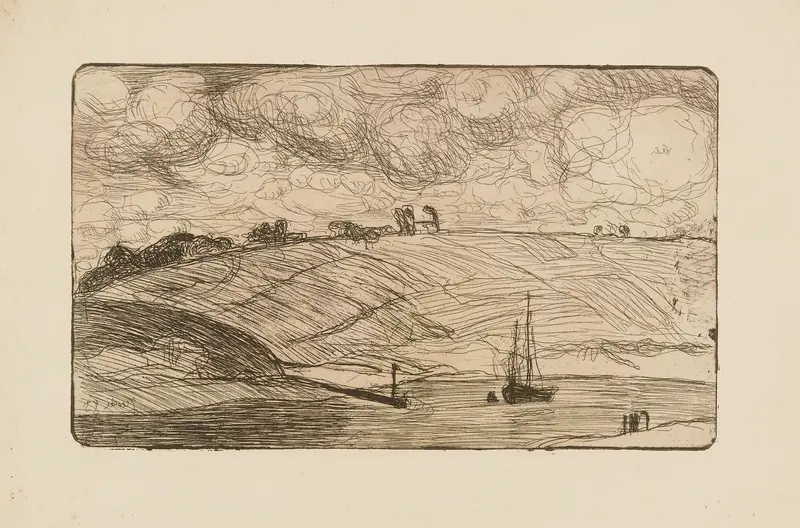
L’entrée de la rivière
Armand Seguin
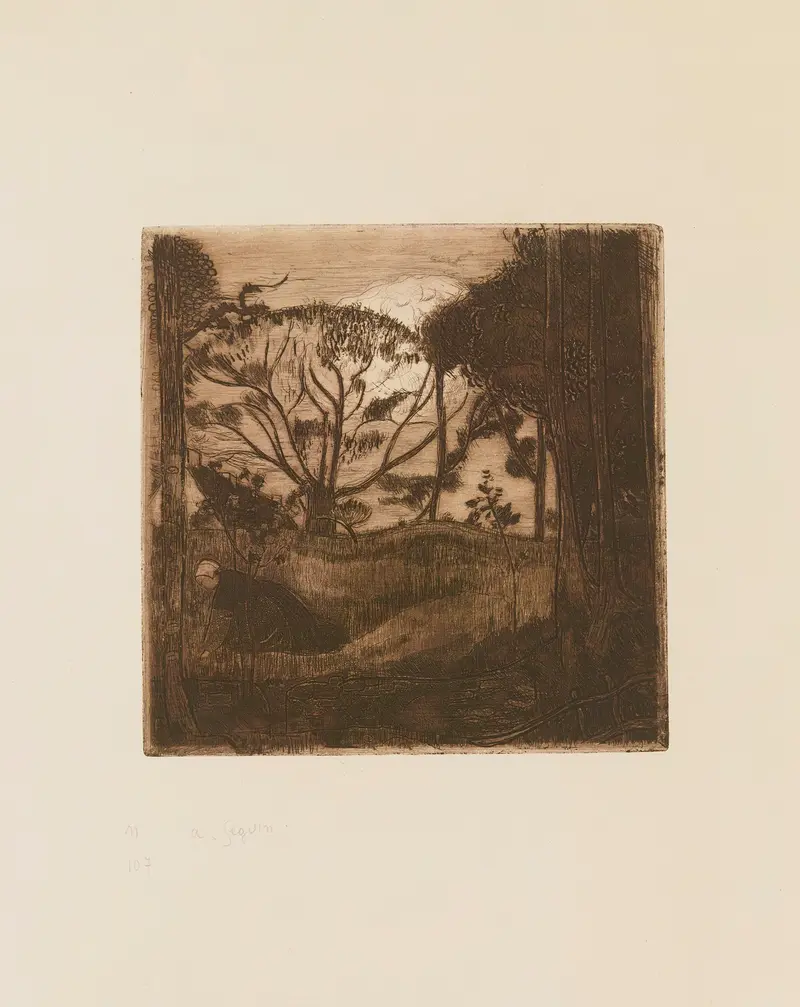
Le soir ou La glaneuse
Armand Seguin
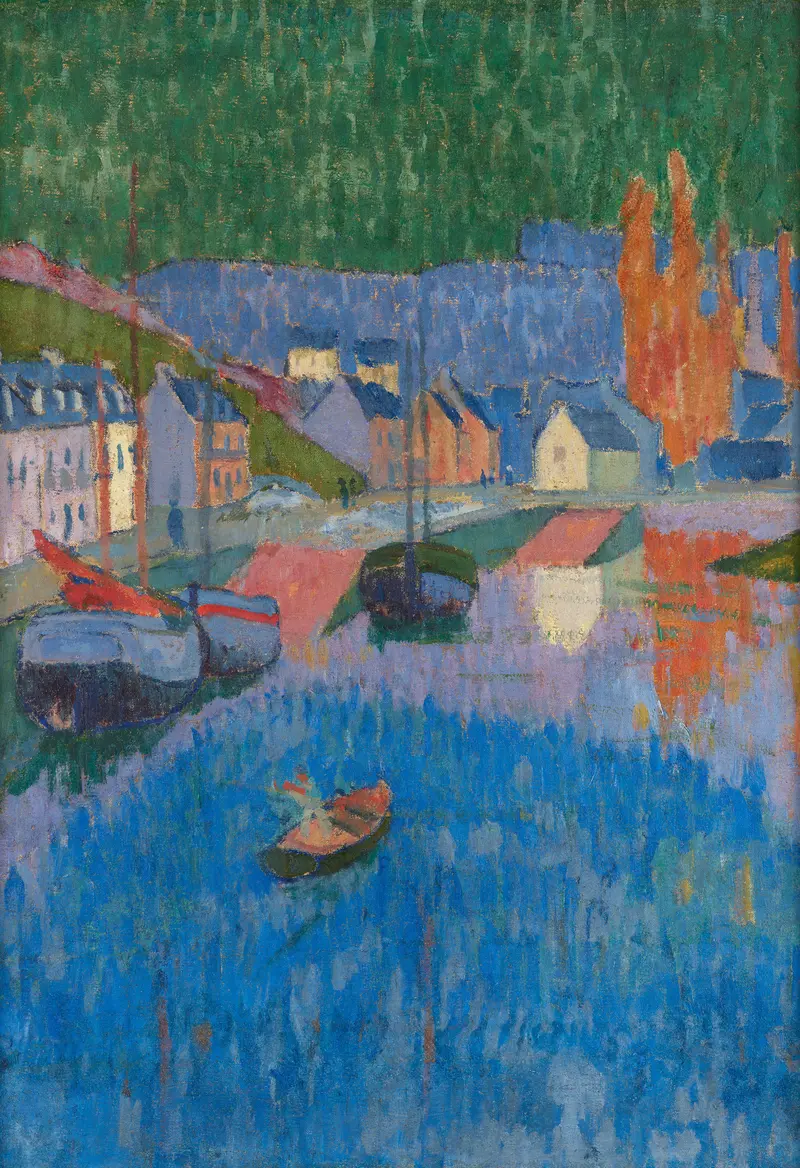
Seaport
Armand Seguin
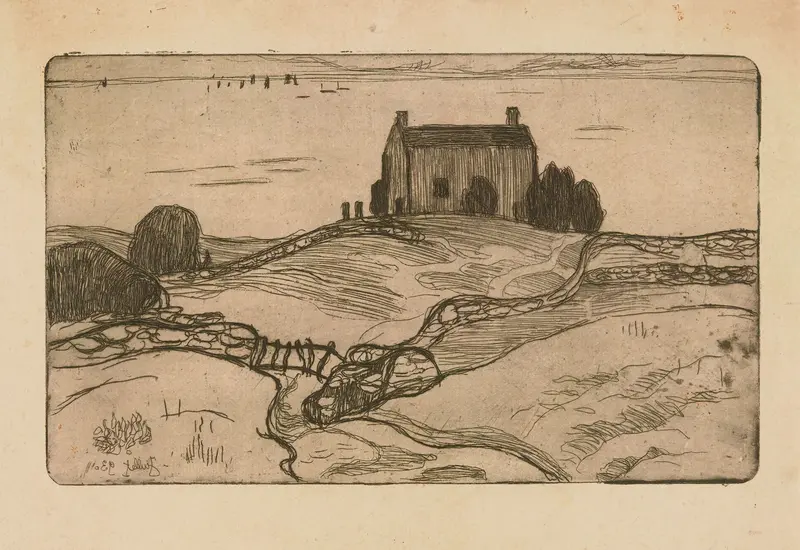
La maison du pendu
Armand Seguin
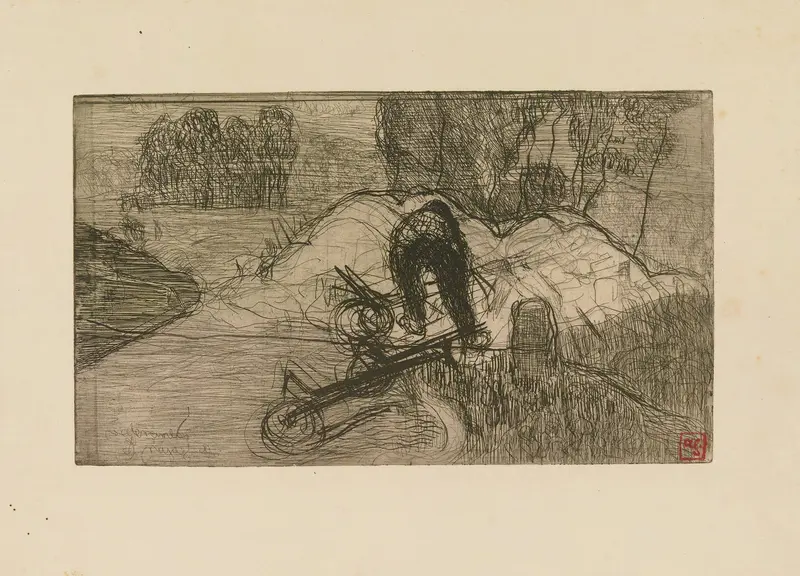
Le débardeur
Armand Seguin
La pêche
Armand Seguin
More Genre Scene Art

Banquet of the Officers of the St George Civic Guard
Frans Hals

Rembrandt and Saskia in the Scene of the Prodigal Son
Rembrandt van Rijn

Bal du moulin de la Galette
Pierre-Auguste Renoir

Quadrille at the Moulin Rouge
Henri de Toulouse-Lautrec

A Burial at Ornans
Gustave Courbet

When Will You Marry?
Paul Gauguin