
Three Peasants in a Tavern, round a Fire — History & Facts
What draws the eye first is not the flicker of the fire, but the triangle of roughened faces, each caught in a different rhythm of talk, rest, and watchfulness. In Three Peasants in a Tavern, round a Fire, Adriaen van Ostade arranges his figures with the intimacy of a stage set: one man leans forward, pipe in hand, as if making a point that will not be hurried; another slumps, half-turned away, lost in his own thoughts or perhaps the heat of the flames. The third, back to us, anchors the scene, his posture both companionable and closed.
The light, golden and smoky, pools around them, picking out the battered jug and the glint of the dog’s fur as it noses a discarded object—a reminder that in this world, nothing is wasted. This is the world of the Dutch Golden Age, where painters like van Ostade found endless drama in the daily rituals of the working poor. Scenes like this, painted in 1667, were prized by a growing class of urban collectors who saw themselves reflected, in jest or in warning, in the earthy humor and sharp observation of tavern life. The genre painting, with its low ceilings and battered benches, tells us as much about changing tastes as it does about rural reality: these were pictures for city walls, not village inns.
Little is recorded about the specific journey of this painting, now in the Royal Collection, but its survival lets us step into a moment as ordinary as it is absorbing—one that rewards a second look at every gesture and shadow.
More Artworks by Adriaen van Ostade

Dans in de herberg
Adriaen van Ostade
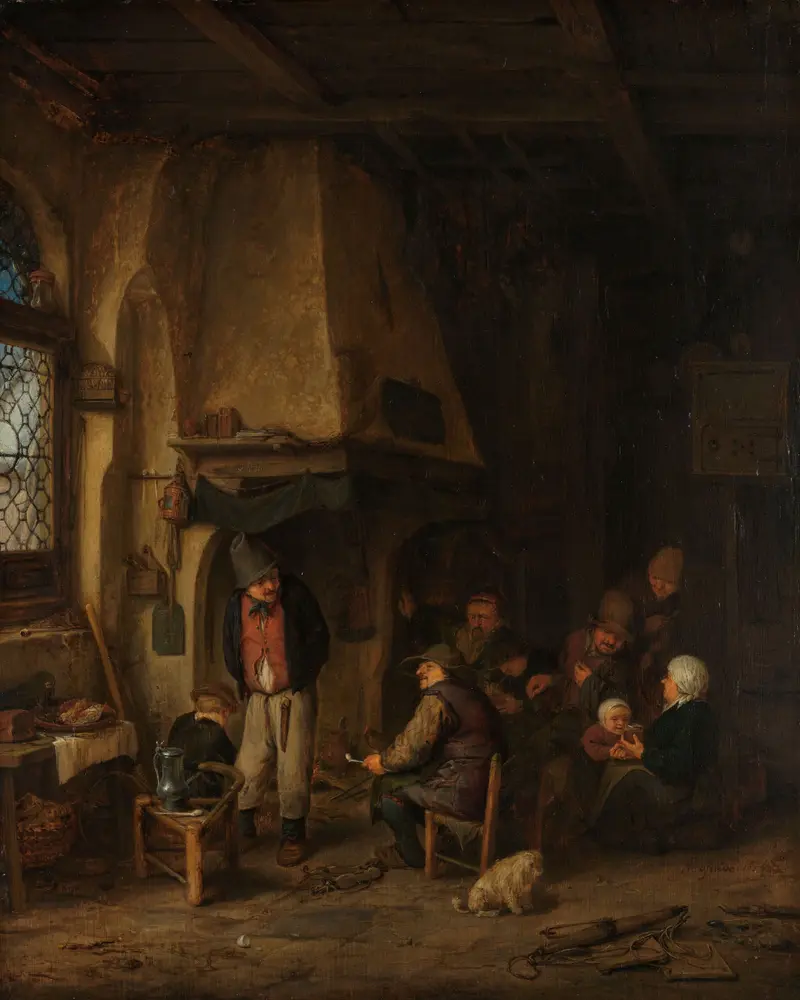
‘The Skaters’: Peasants in an Interior
Adriaen van Ostade
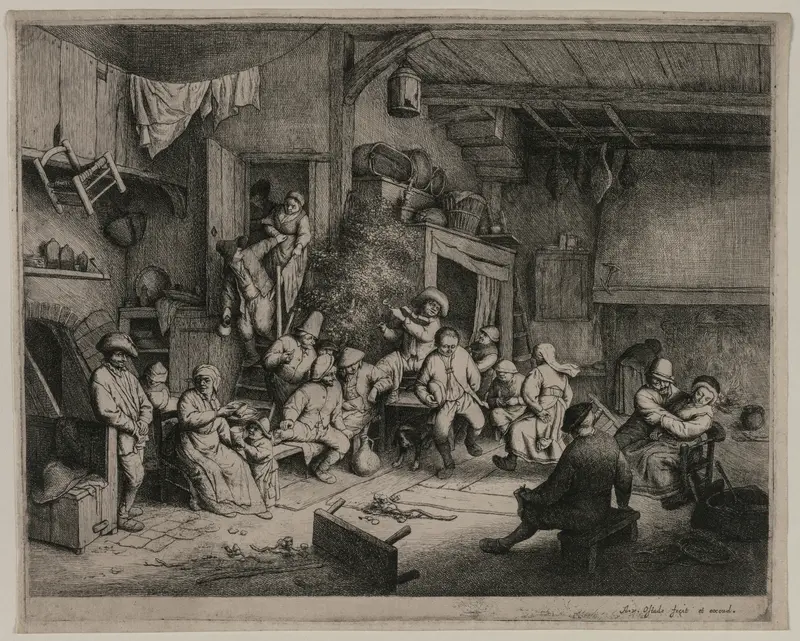
Dance at the Inn
Adriaen van Ostade
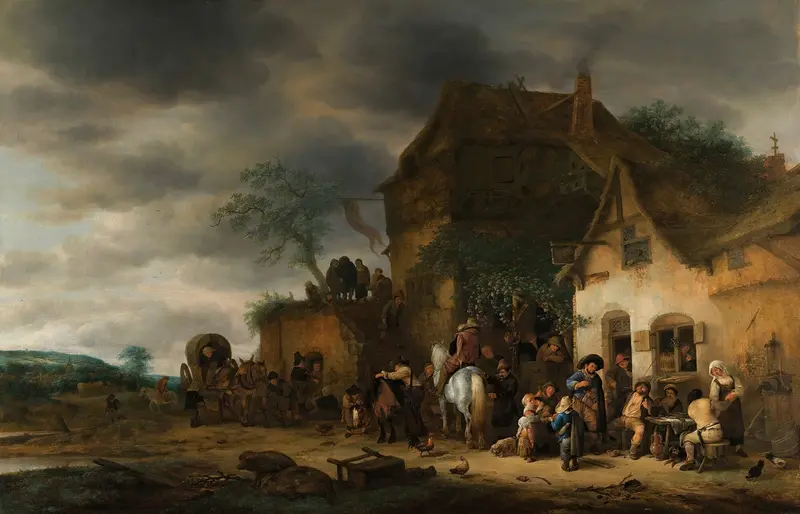
Travellers Halted At A Country Inn
Adriaen van Ostade
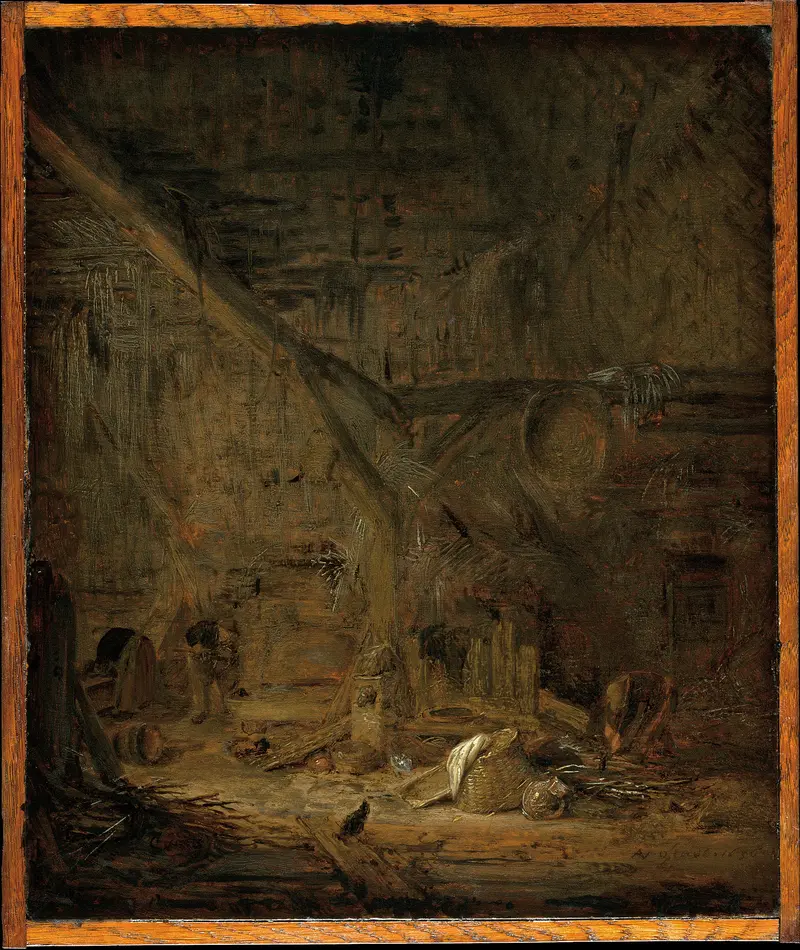
Interior of a Barn
Adriaen van Ostade
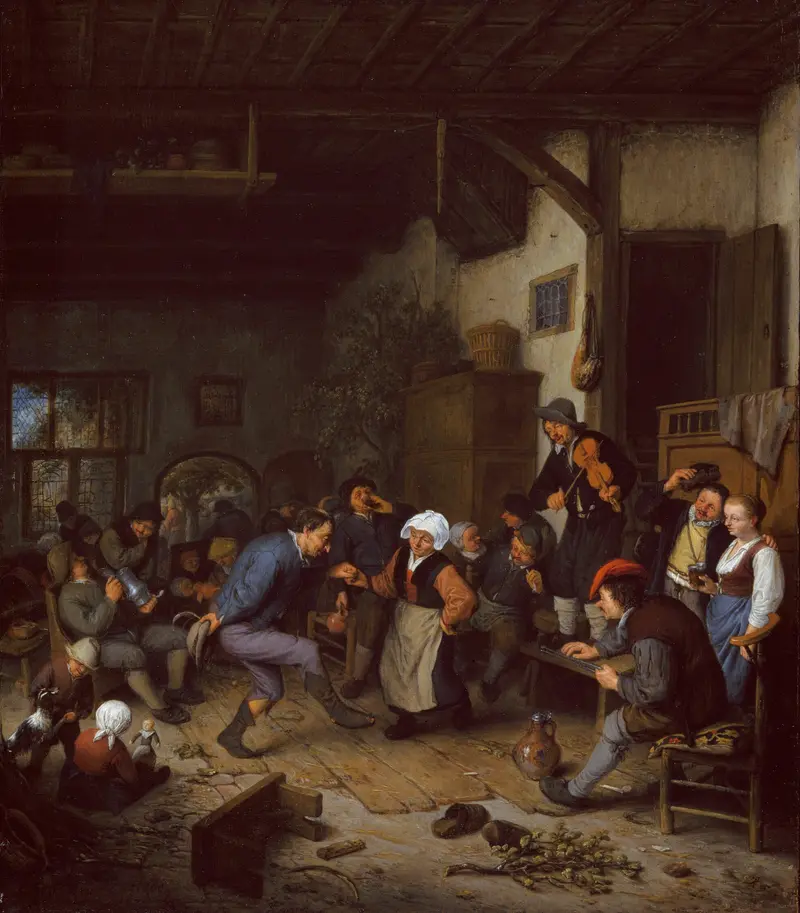
Merrymakers in an Inn
Adriaen van Ostade
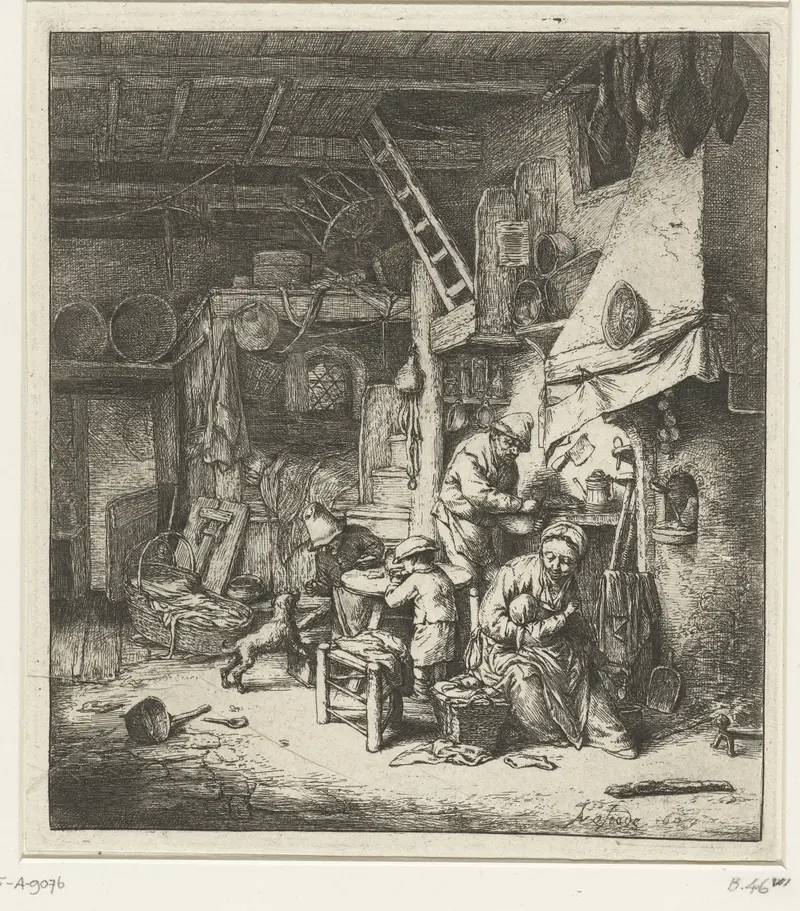
Boerengezin in interieur
Adriaen van Ostade
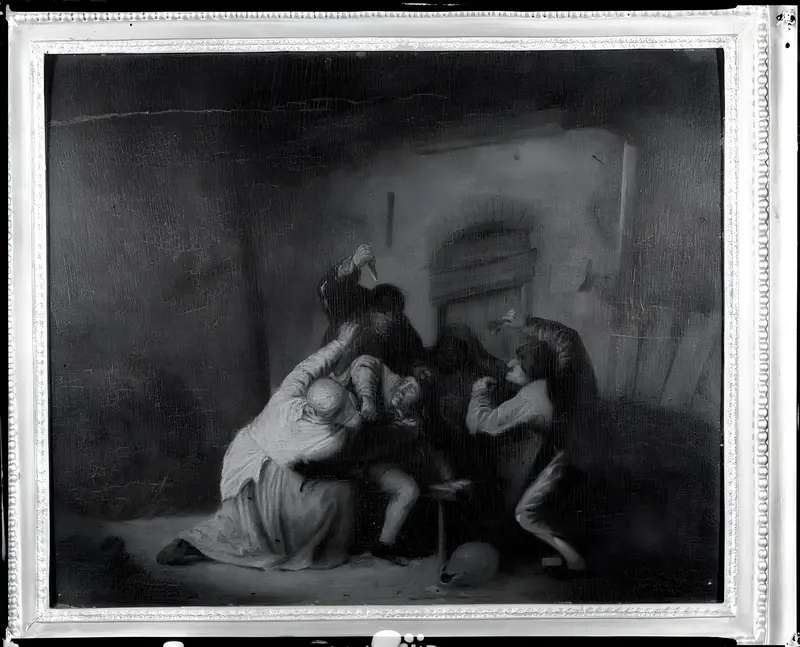
Peasants Brawling in a Tavern
Adriaen van Ostade
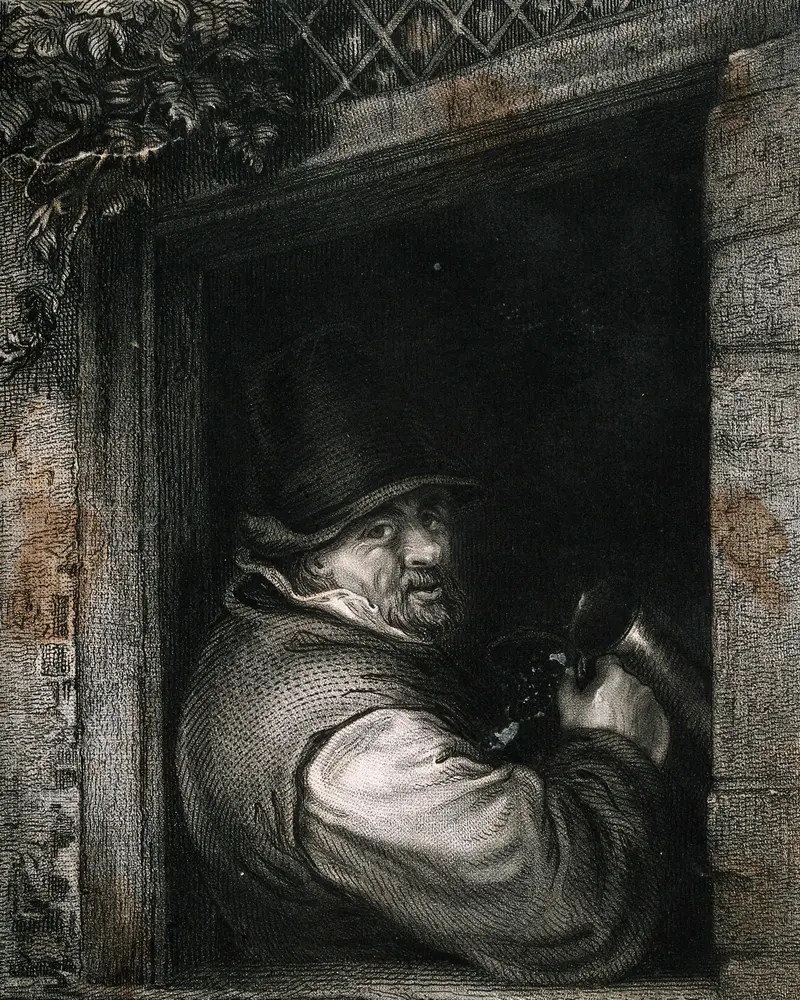
Man with a Tankard at a Window
Adriaen van Ostade
Dans in de herberg
Adriaen van Ostade
More Genre Scene Art

Banquet of the Officers of the St George Civic Guard
Frans Hals

Rembrandt and Saskia in the Scene of the Prodigal Son
Rembrandt van Rijn

Bal du moulin de la Galette
Pierre-Auguste Renoir

Quadrille at the Moulin Rouge
Henri de Toulouse-Lautrec

A Burial at Ornans
Gustave Courbet

When Will You Marry?
Paul Gauguin