
Étretat — History & Facts
Where does light end, and longing begin? It is in this delicate balance that we find ourselves drawn into the luminous world of a coastal landscape, a moment poised between the ephemeral and the eternal. Look to the horizon in Étretat, where soft, billowing clouds embrace the sun’s fading light, casting a warm glow over the cliffs and the sea below. The muted palette of pastel blues and gentle golds creates an ethereal quality that beckons the viewer to linger. Notice how the brushstrokes merge seamlessly, invoking a sense of tranquility yet hinting at the tumultuous waves that lap at the shore, suggesting a dance between calm and chaos. In this scene, the juxtaposition of solid cliffs against the fluidity of the sea symbolizes the struggle between permanence and transience.
The light playing across the water evokes a sense of yearning, as if the land itself is reaching for something just out of grasp. This tension hints at the larger questions of fate and longing, inviting contemplations of the human experience—how we strive to hold onto moments even as they drift away. George Inness painted Étretat in 1874 during a period of great personal and artistic transformation. Living in America, he had recently embraced the influence of the Barbizon school, which emphasized capturing nature's essence in a more profound and emotional way.
This painting reflects not only his evolving style but also the broader shift in the art world towards Impressionism, where light and emotion became central to the artistic narrative.
More Artworks by George Inness
Browse all →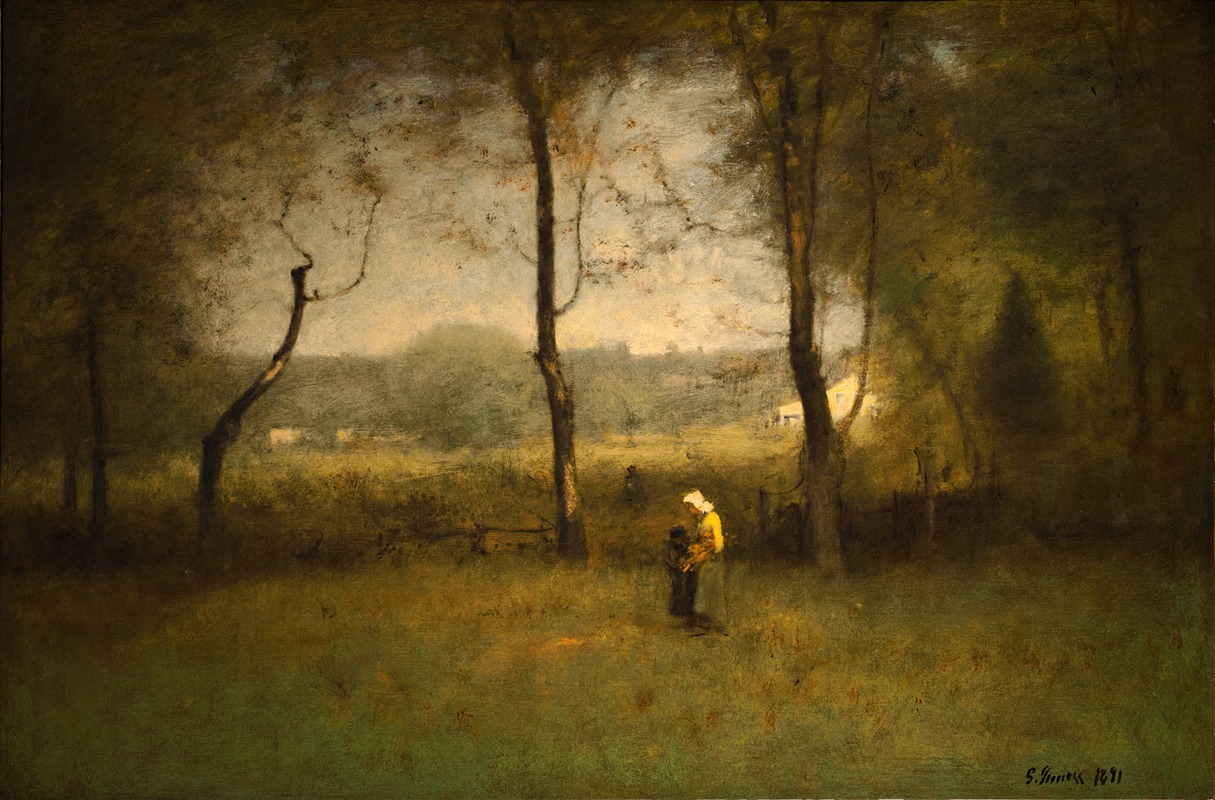
Autumn Woods
George Inness
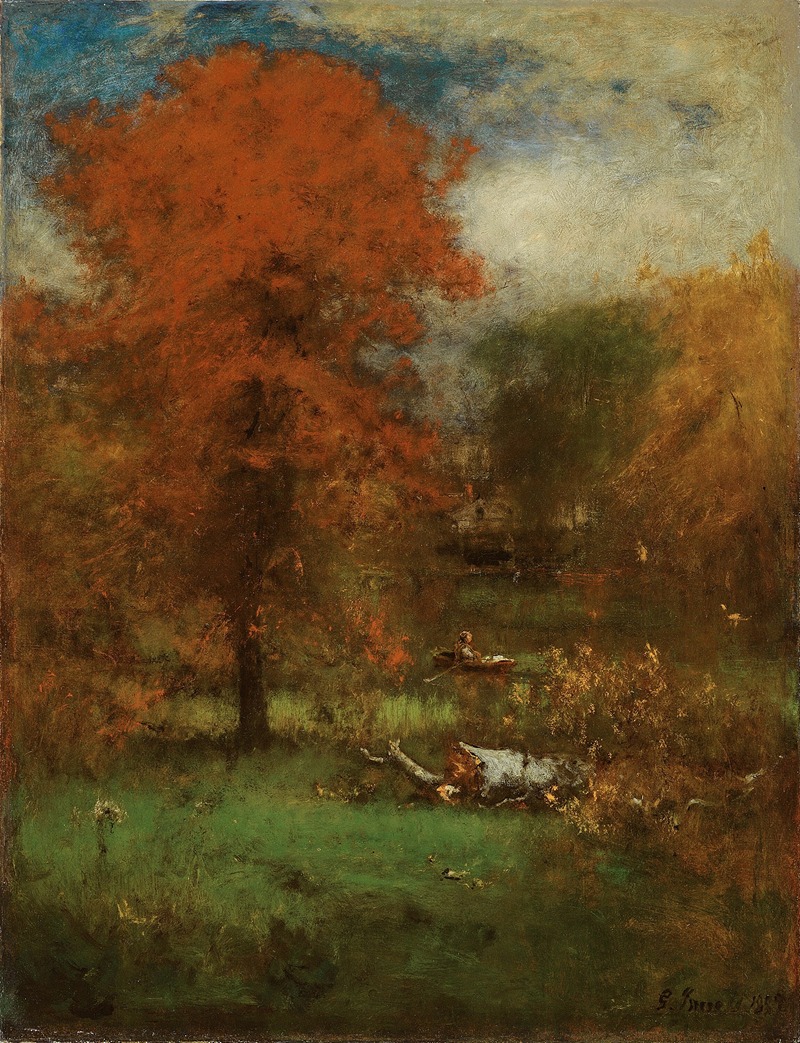
The Mill Pond
George Inness
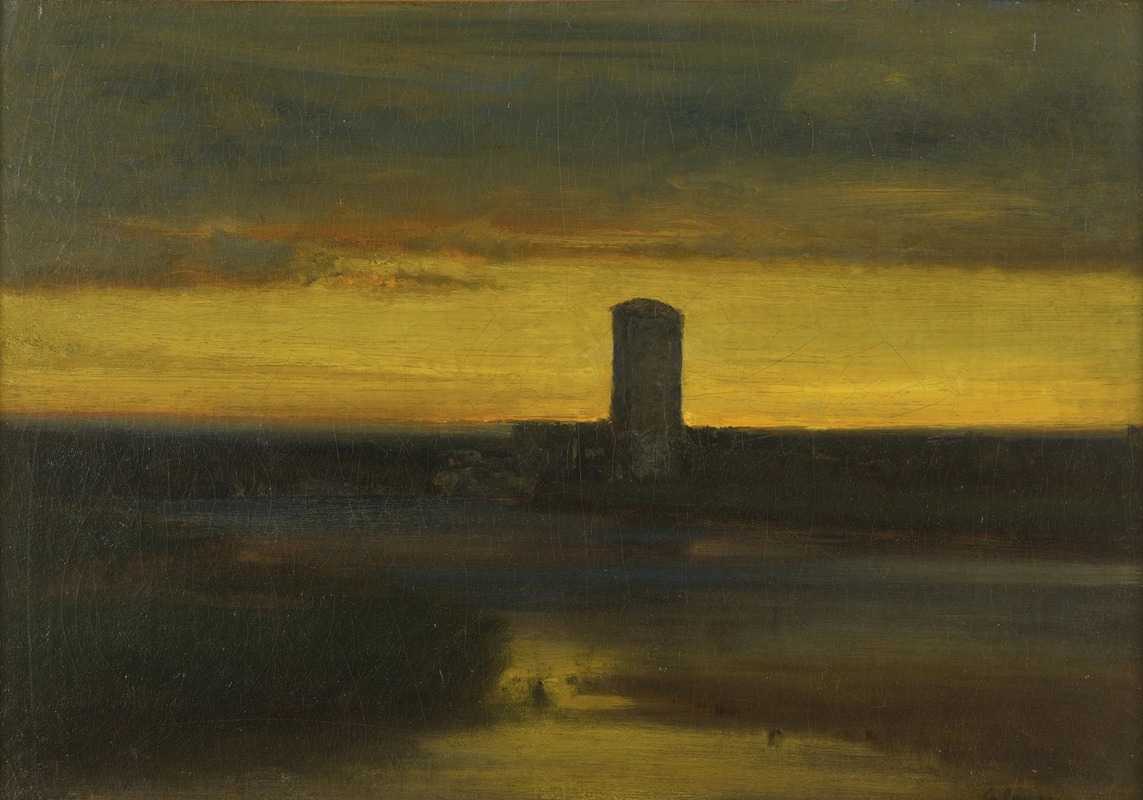
Afterglow
George Inness
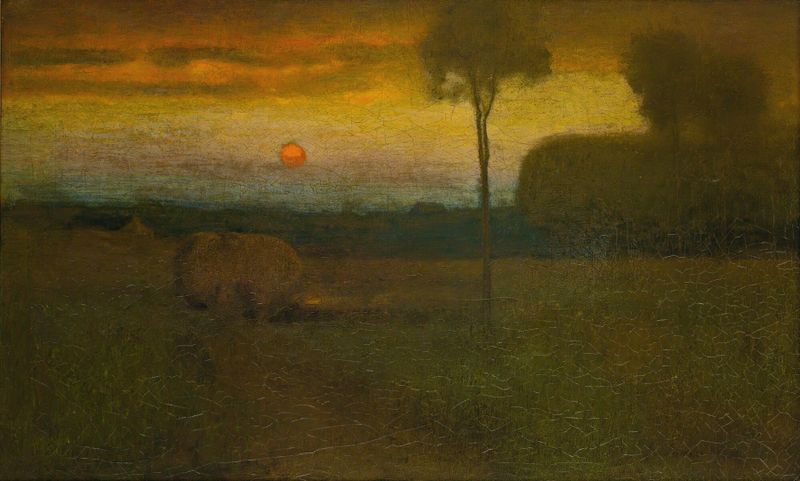
Landscape (Evening Landscape)
George Inness

Montclair
George Inness

View in Berkshire County, Massachusetts, Clearing Off after a September Storm
George Inness

October
George Inness
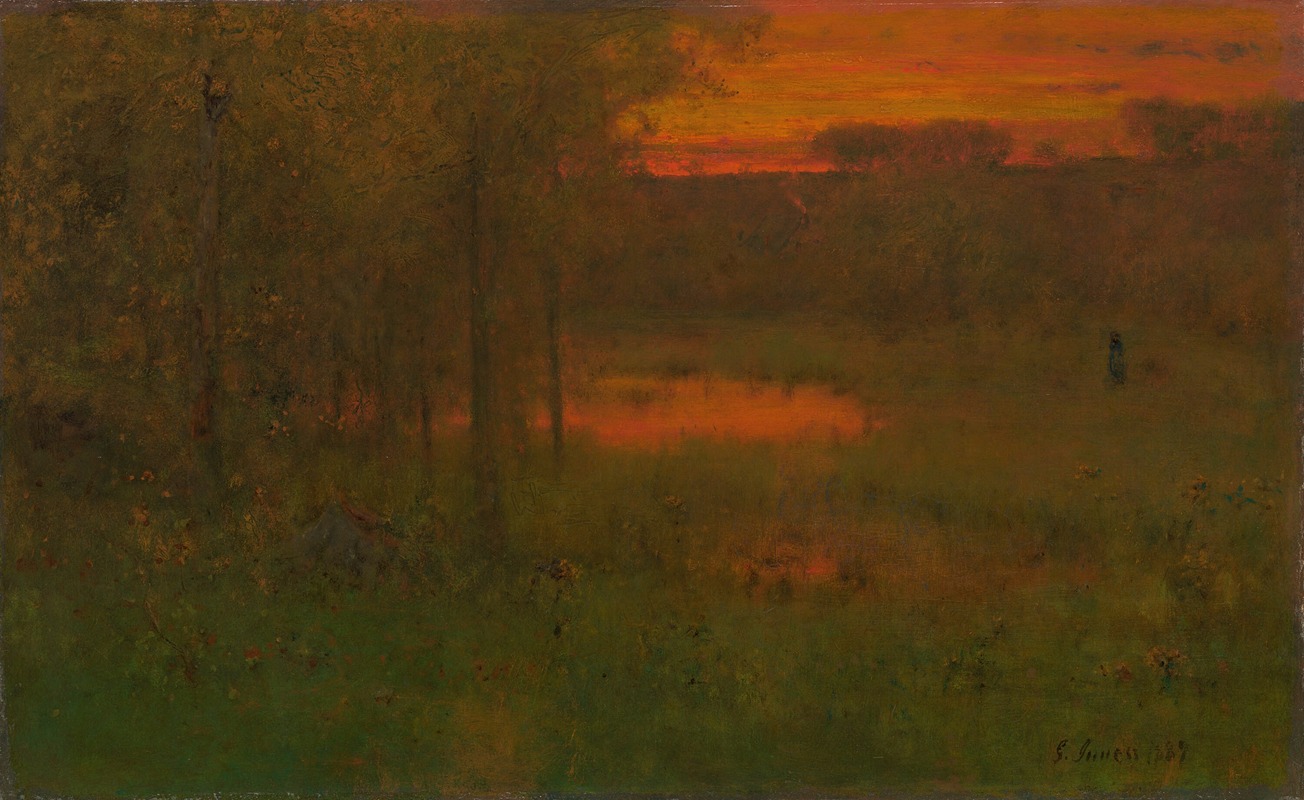
Landscape, Sunset
George Inness
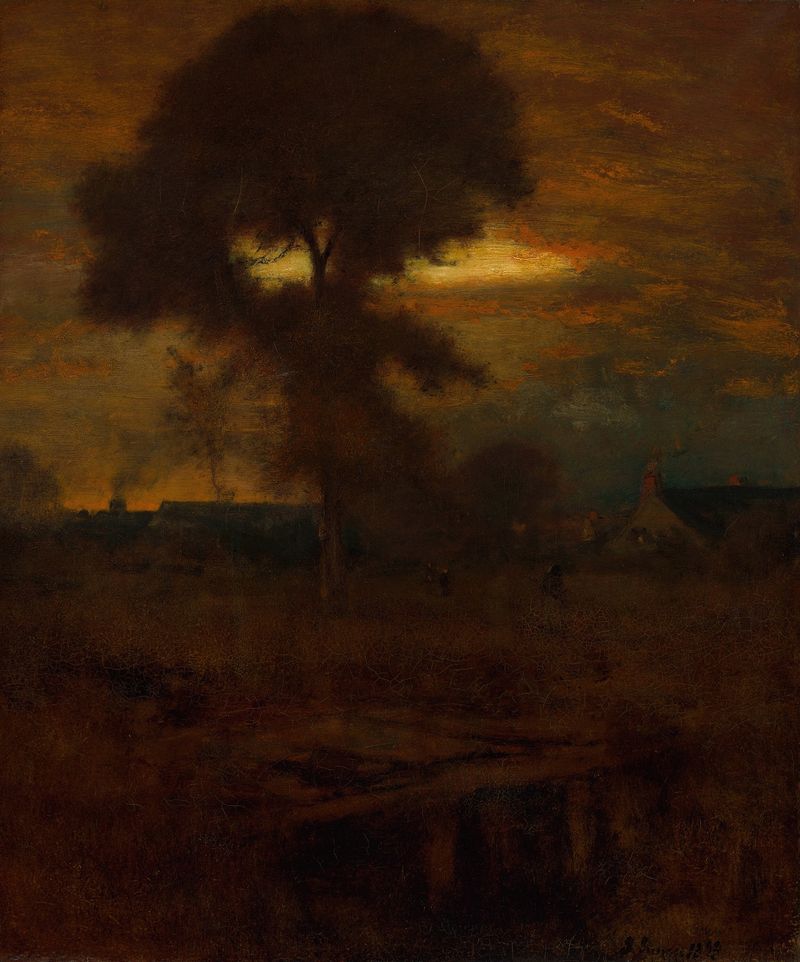
Afterglow
George Inness
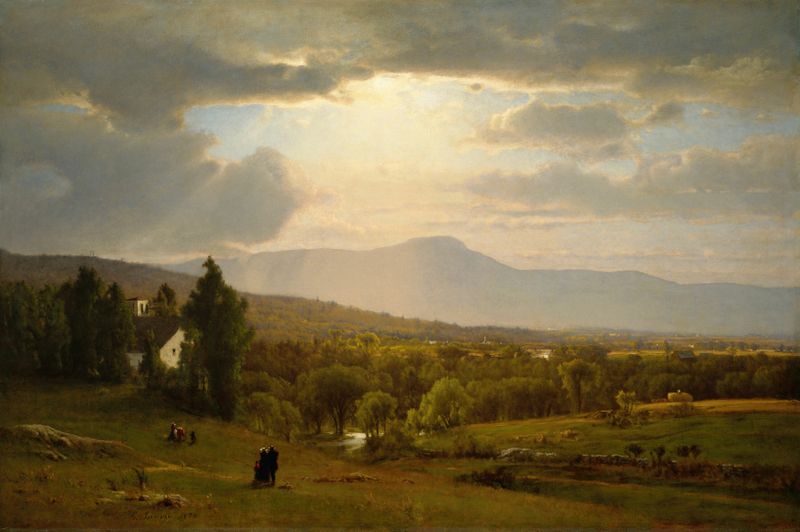
Catskill Mountains
George Inness





