
Triton blowing through a shell in the surf — History & Facts
What first seizes the eye in Triton blowing through a shell in the surf is the sheer force of nature, caught in a moment where myth and sea collide. The powerful figure of Triton rises from the churning water, his torso gleaming as if carved from wet bronze, his shell pressed to his lips in a gesture that commands attention. The sweep of his tail curves into the foam, anchoring him to the surge, while the water arcs and crashes around him, caught in a wild, luminous spray.
Böcklin’s brushwork turns the sea into a living, restless presence—each stroke of white and green surges with energy, framing Triton as both master and child of the elements. Created in 1879, this painting belongs to a world where mythological subjects offered artists a way to explore the untamed and the mysterious. In the late nineteenth century, figures like Böcklin were drawn to ancient gods and nature spirits, not as distant relics but as living forces, shaping the imagination of an era fascinated by the unknown. The source notes that here, the nature god blows his shell to calm the waters—a reminder that myth was often a way to explain and control the unpredictable power of nature.
While little is recorded about the journey of this particular work, its raw energy and mythic subject place it firmly within the Symbolist fascination with dreams, legends, and the wildness beneath the surface of the everyday. Stand before this image, and the sea’s roar seems almost audible.
More Artworks by Arnold Böcklin

Die Toteninsel III
Arnold Böcklin
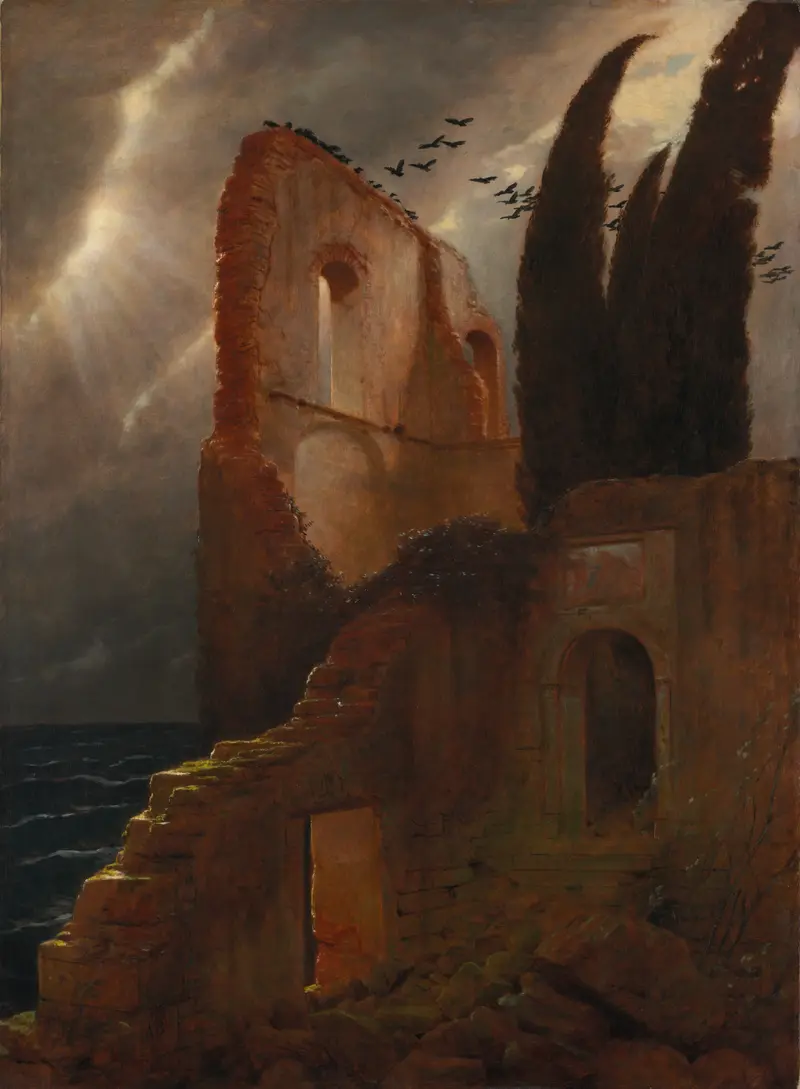
Ruin by the Sea
Arnold Böcklin
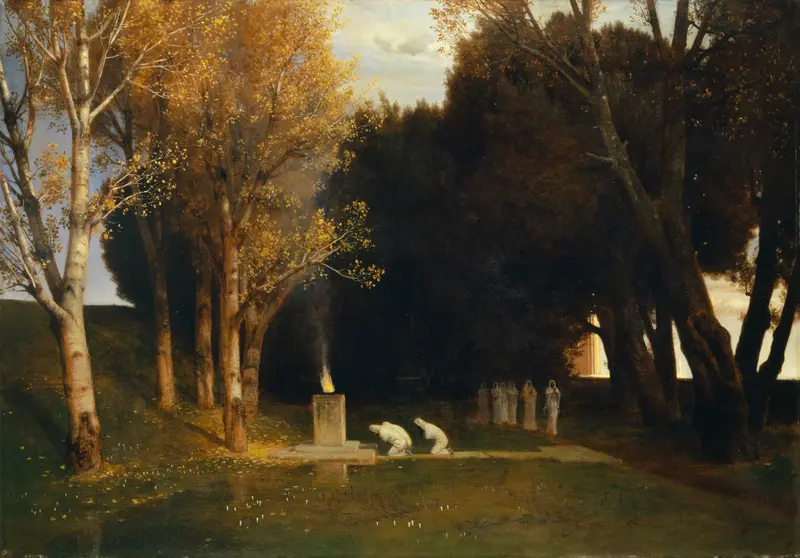
The Sacred Grove
Arnold Böcklin
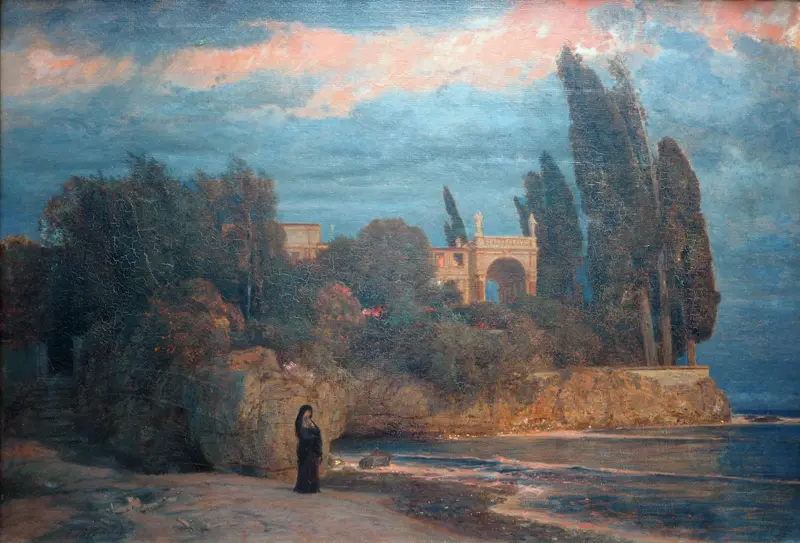
Villa by the Sea
Arnold Böcklin
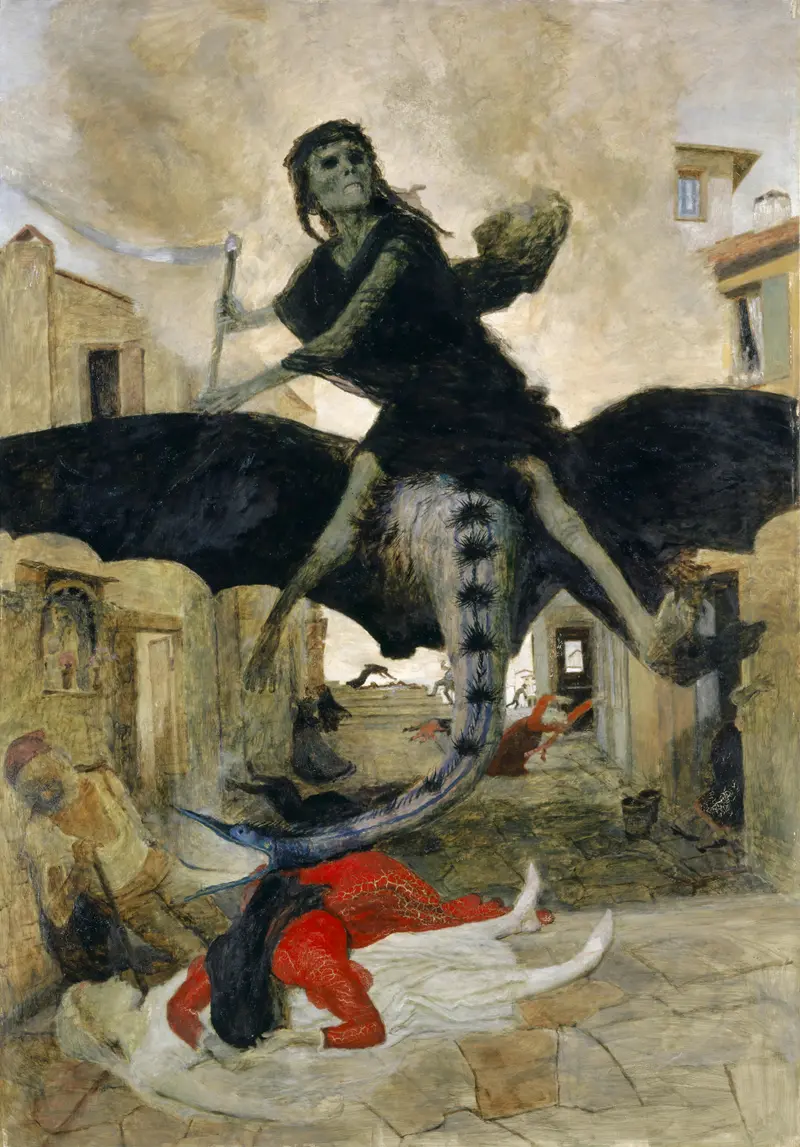
The Plague
Arnold Böcklin
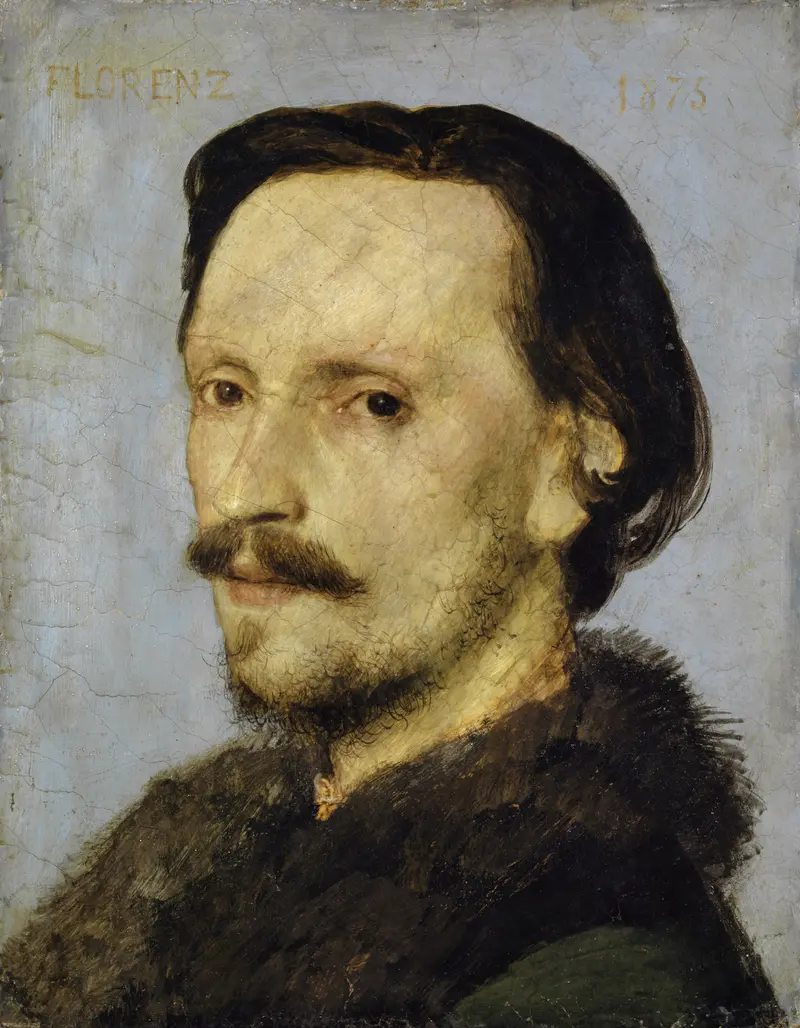
Böcklin Bildnis des Kunsthistorikers Adolph Bayersdorfer, 1875
Arnold Böcklin
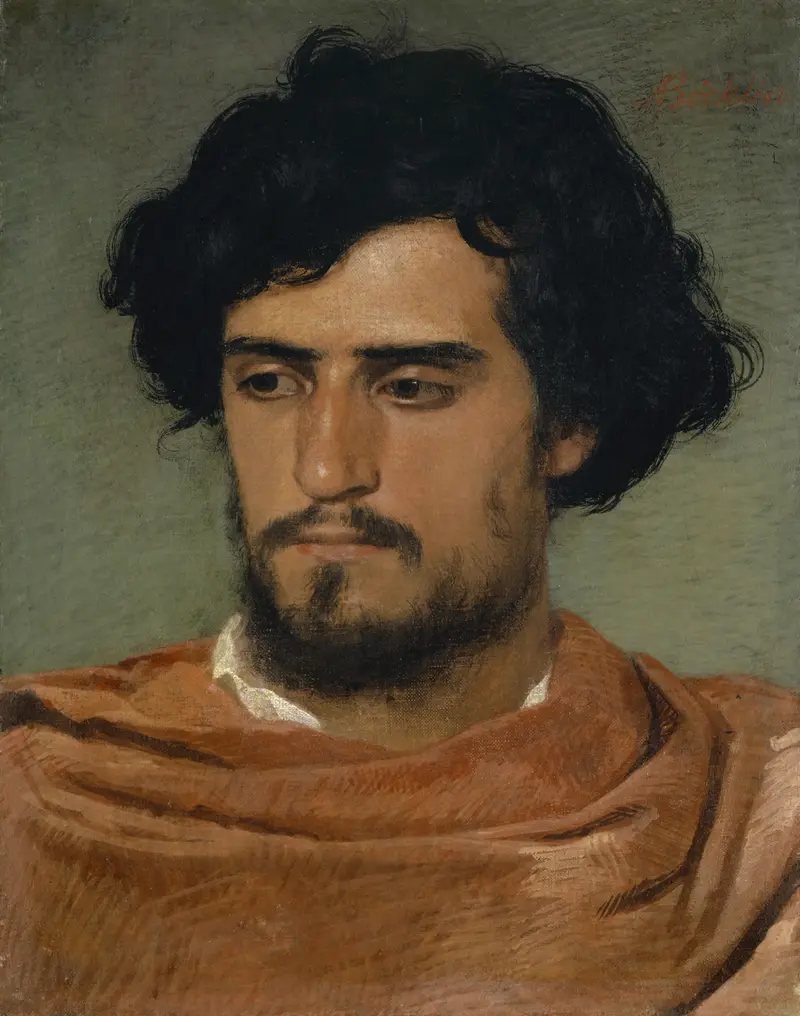
Head of a Roman
Arnold Böcklin
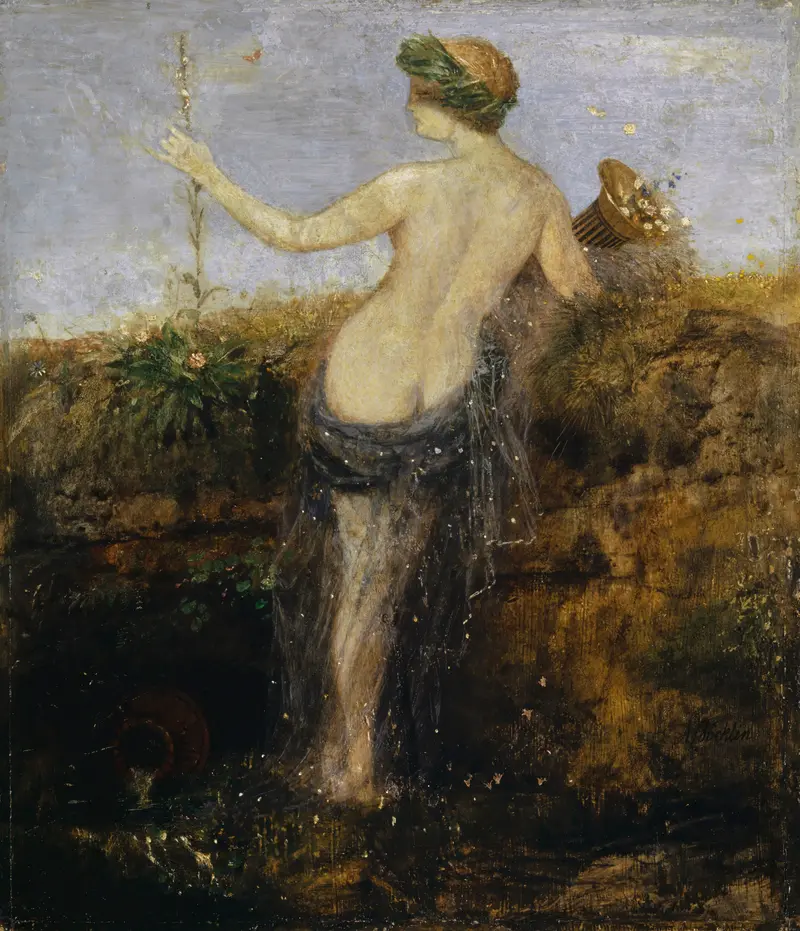
Nymphe with Horn of Plenty
Arnold Böcklin
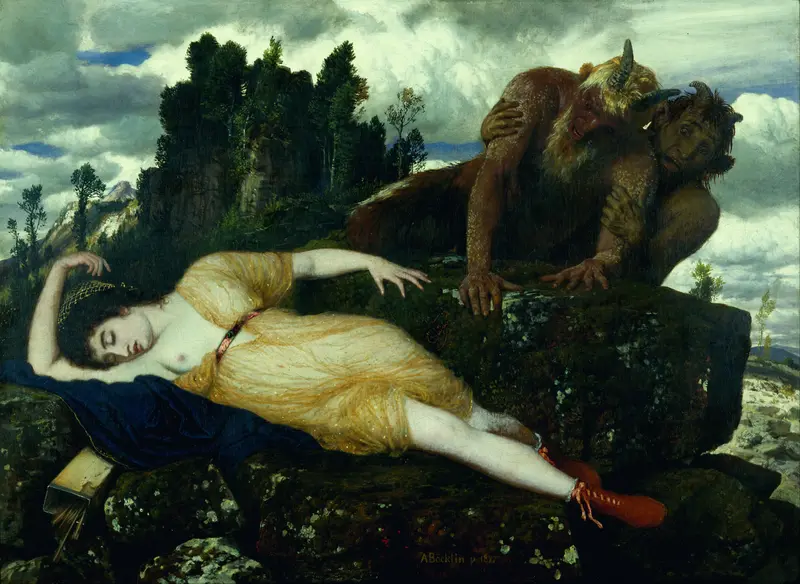
Sleeping Diana Watched by Two Fauns
Arnold Böcklin
Spring (Songs of Spring)
Arnold Böcklin





