
Twee ruiters pleisteren op de voorhoof van een herberg — History & Facts
In a world where allegiances shift like the wind, the canvas becomes a refuge for truths hidden beneath the surface. Look towards the center, where two horsemen engage in an intimate yet ambiguous moment. The soft interplay of warm browns and muted greens envelops the figures, drawing your gaze to the nuanced gestures of their hands. One man, clad in a rich crimson cloak, lifts a tankard, his expression a blend of camaraderie and suspicion.
The slightly dim light casts shadows that dance across the stable, amplifying the tension within this seemingly serene setting. As you immerse yourself in the painting, consider the underlying themes of trust and deception. The horsemen might share a moment of joviality, but their body language suggests a brewing storm — the tilt of the tankard may not toast friendship but rather signal a pact bound by betrayal. The neglected corner, obscured in shadow, adds emotional depth, hinting at a third presence, perhaps a witness to the impending treachery.
Here, simplicity conceals complexity, and the viewer is left to ponder the consequences of unspoken words. Painted during the mid-17th century, this work emerged from a tumultuous period in the Netherlands, where social upheaval and power struggles permeated everyday life. Johann Heinrich Roos was influenced by the baroque style, which sought to convey emotion through dramatic contrasts and rich detail. This was a time of evolving artistic expression, as Roos sought to capture not just the visible but the intricacies of human relationships, forever entwining art with the realities of betrayal.
More Artworks by Johann Heinrich Roos
Browse all →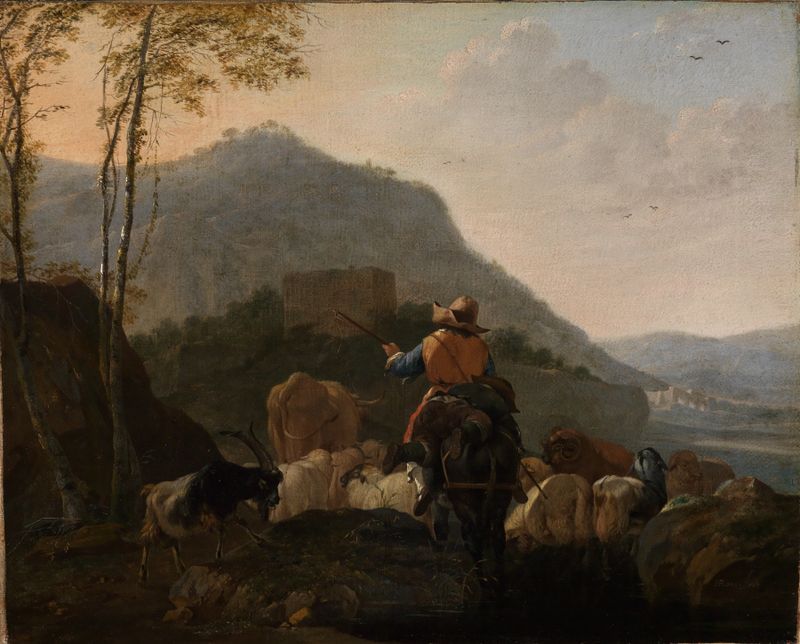
Ausziehende Hirten mit ihrer Herde in südlicher Berglandschaft
Johann Heinrich Roos
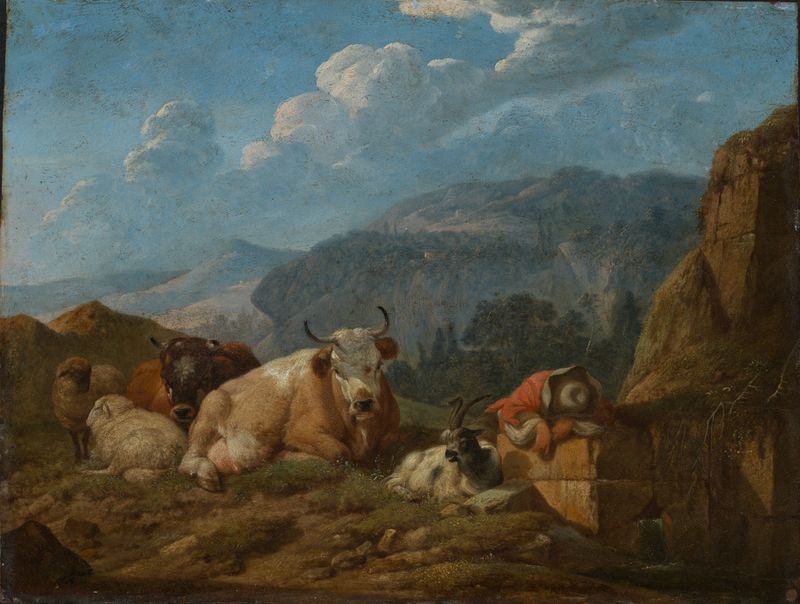
Italienische Berglandschaft
Johann Heinrich Roos
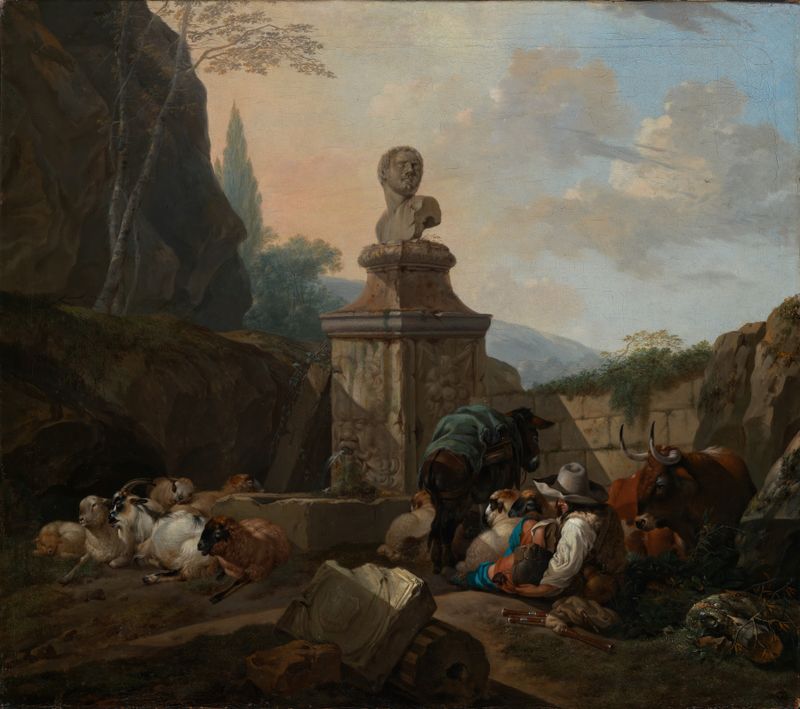
Ruhender Hirt und Herde an römischem Brunnen
Johann Heinrich Roos
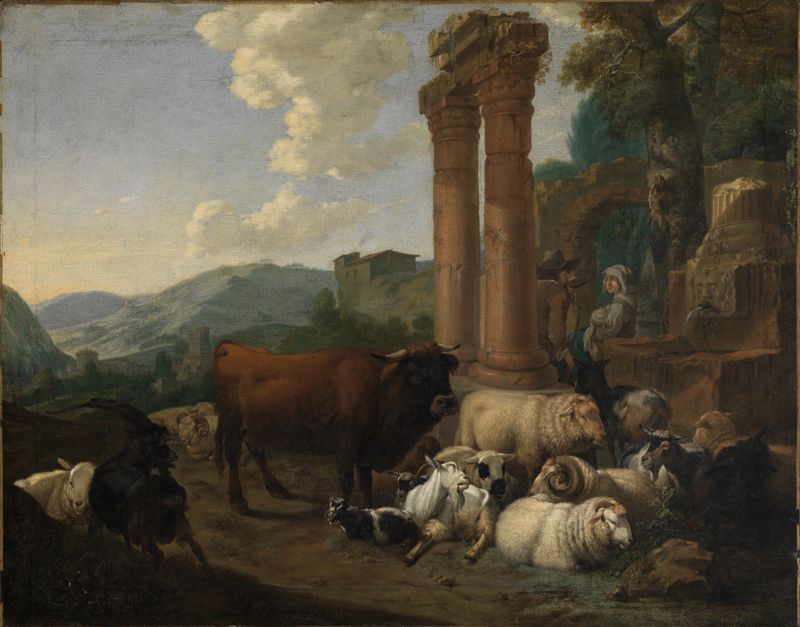
Hirtenszene in römischer Ruinenlandschaft
Johann Heinrich Roos
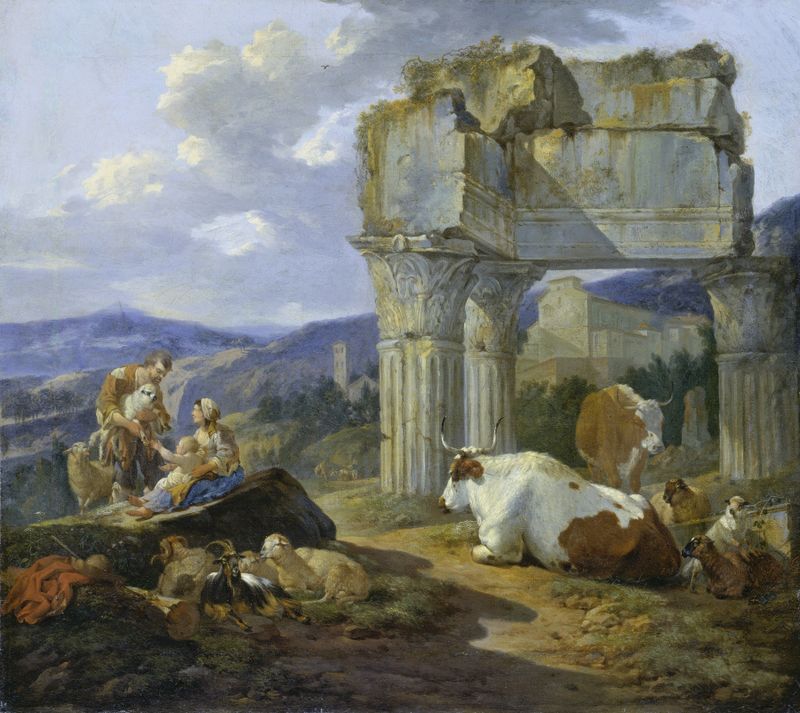
Shepherd’s Family at the Ruins of the Temple of Vespasian
Johann Heinrich Roos
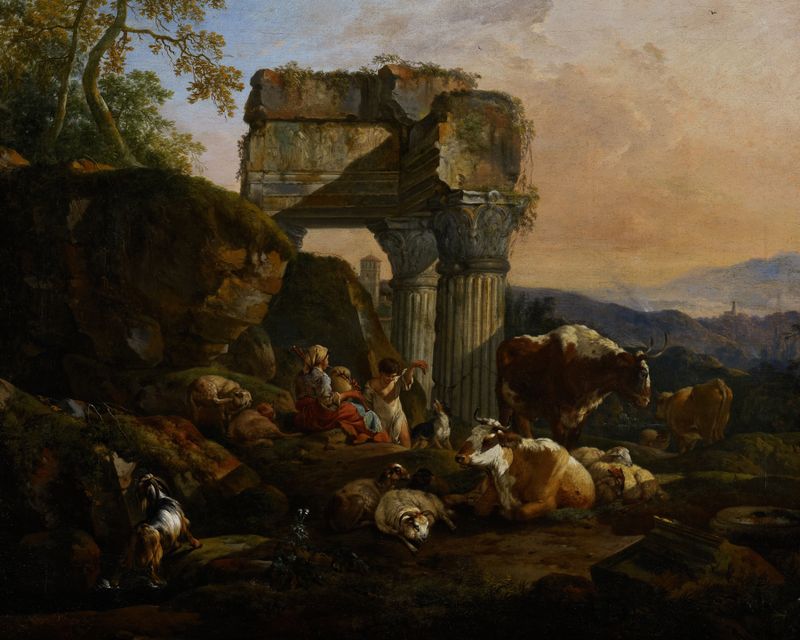
Roman Landscape with Cattle and Shepherds
Johann Heinrich Roos
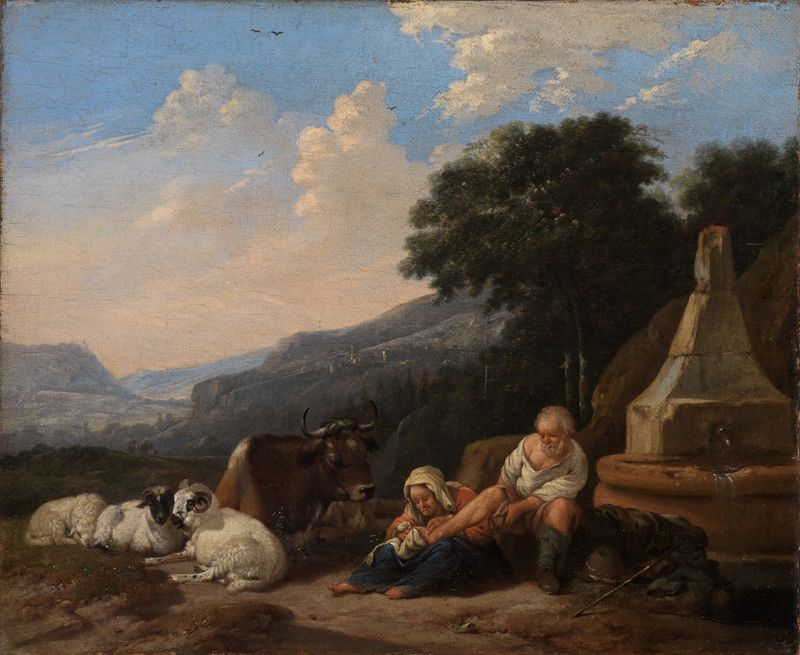
Berglandschaft mit Hirten am Brunnen
Johann Heinrich Roos
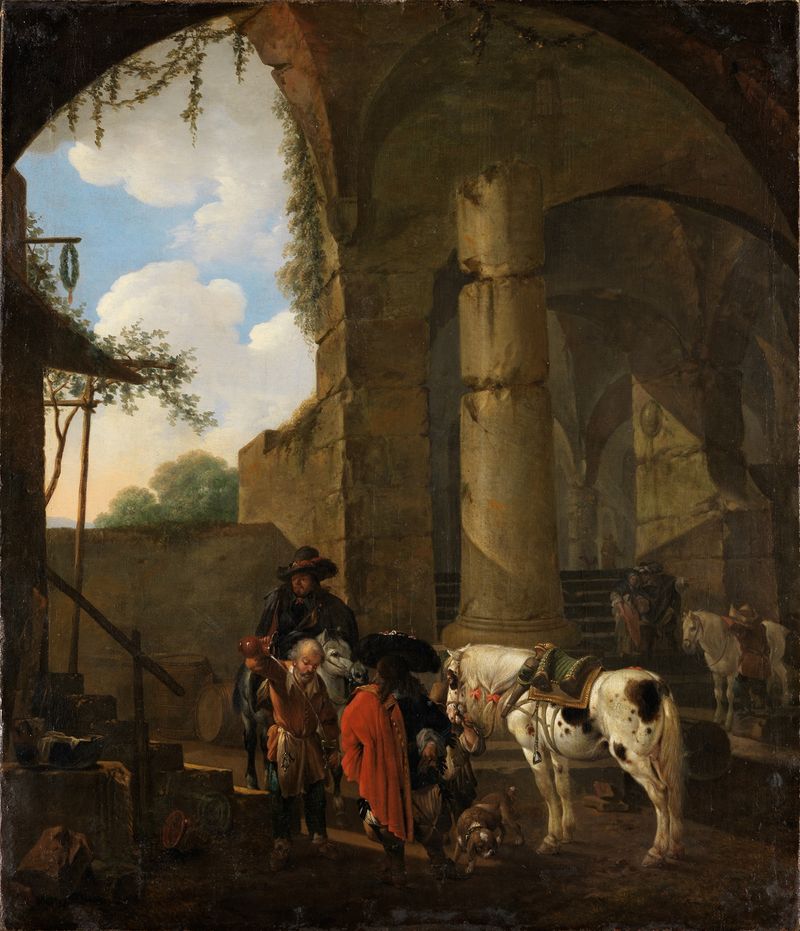
Osteria in römischer Ruine
Johann Heinrich Roos
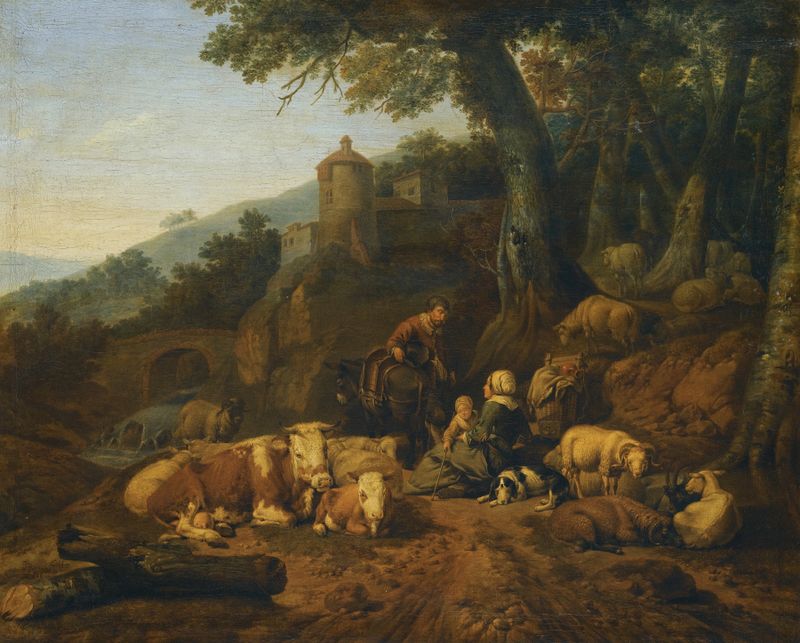
A Landscape With Drovers And Their Flock At Rest
Johann Heinrich Roos
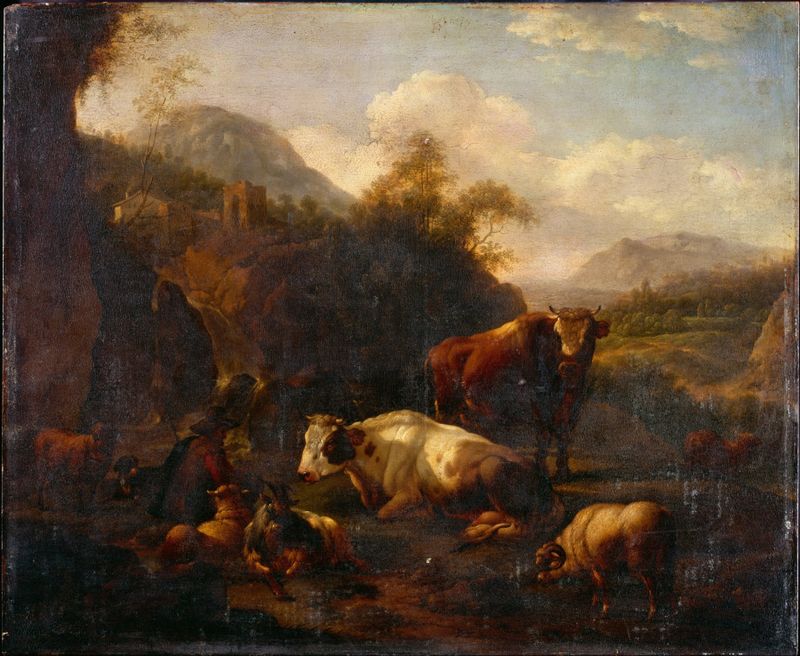
Landscape
Johann Heinrich Roos





