
Two Horsemen on a Ridge — History & Facts
What first catches the eye is not the riders or their sturdy horses, but the vastness of the world they survey. Perched on a ridge, the two figures lean into the horizon, their attention fixed on the distant spires and winding river that stretch beneath a sky alive with shifting light. The painter, Aelbert Cuyp, draws us into this moment of quiet anticipation: the horses, still harnessed, wait patiently as their masters consult a stone marker or table, perhaps plotting a journey or simply pausing to admire the land.
The broad sweep of ochre and blue, the glint of water, and the tiny silhouettes of birds in flight all lend the scene a sense of openness and possibility. Painted between circa 1646 and circa 1648, Two Horsemen on a Ridge belongs to a world where landscape painting was coming into its own in the Dutch Republic. In this era, prosperous merchants and landowners commissioned such works to celebrate both the beauty and the order of their homeland—a place shaped by human ingenuity and the steady rhythm of daily life. Cuyp was renowned for his ability to capture not just the likeness of a place, but the atmosphere and mood that lingered in the air.
Though little is recorded about the specific journey of this painting, it now resides in a private collection, a quiet testament to a moment when the land itself seemed to pause and breathe. The longer you look, the more the eye finds: the play of shadow on the horses’ flanks, the distant sails, the promise of stories just beyond the horizon.
More Artworks by Aelbert Cuyp

The Maas at Dordrecht
Aelbert Cuyp
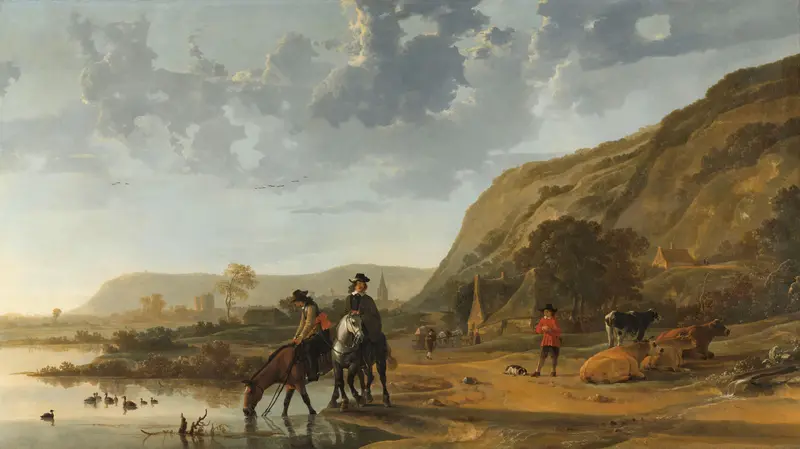
River Landscape with Riders
Aelbert Cuyp

The Maas at Dordrecht
Aelbert Cuyp
Gezicht op Dordrecht
Aelbert Cuyp
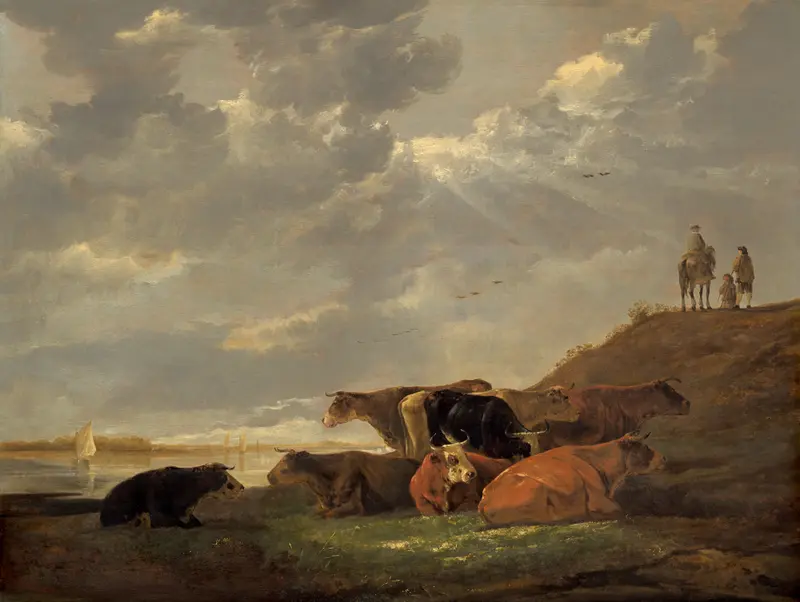
River Landscape with Cows
Aelbert Cuyp
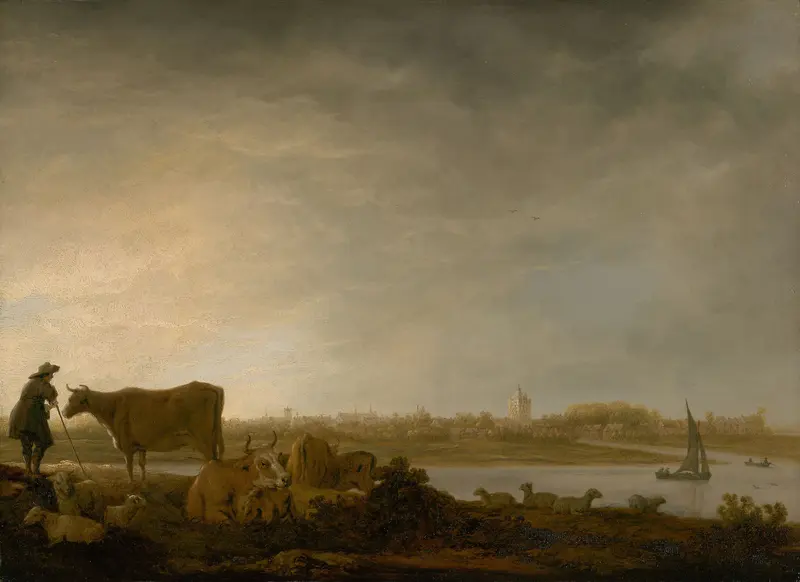
A View of Vianen with a Herdsman and Cattle by a River
Aelbert Cuyp
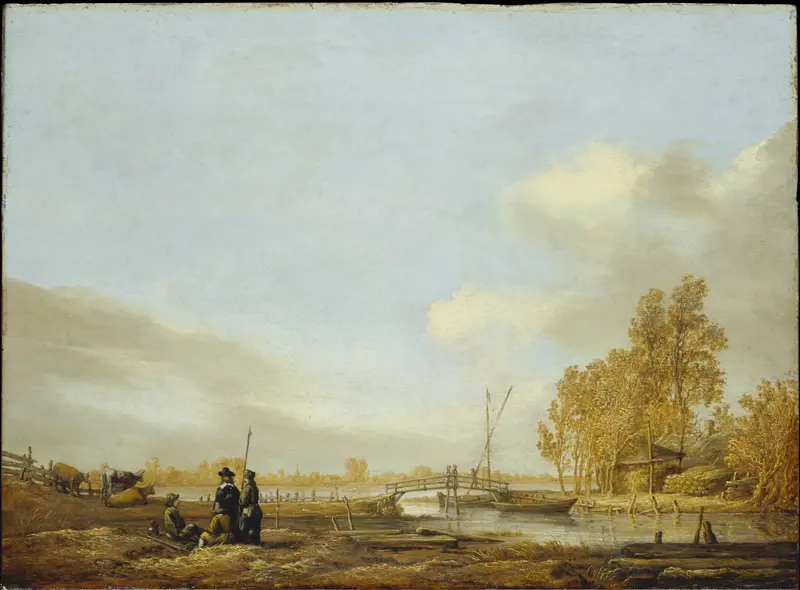
River Landscape with Footbridge
Aelbert Cuyp
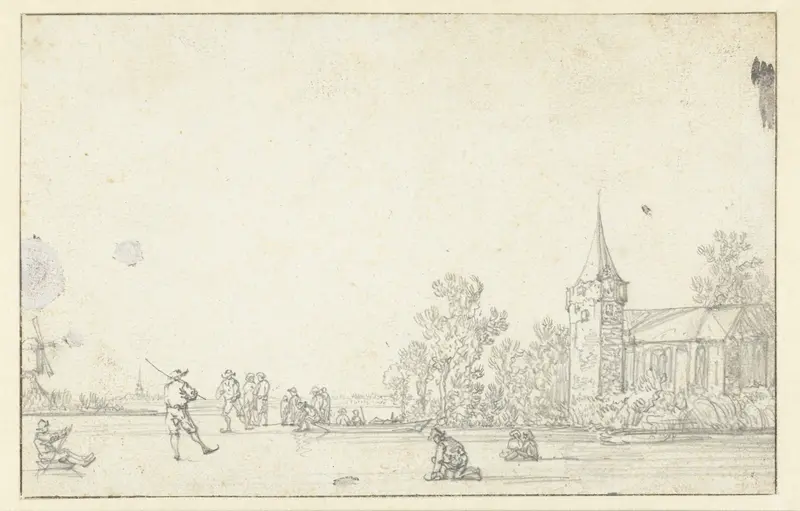
Bevroren rivier met schaatsers bij een kerk
Aelbert Cuyp

Cattle near a River
Aelbert Cuyp
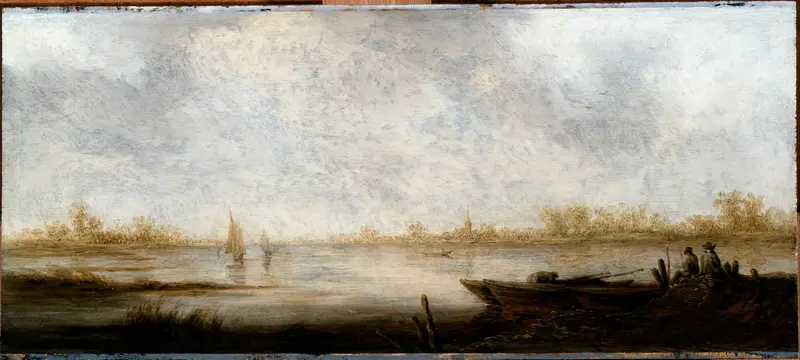
River Landscape
Aelbert Cuyp
More Landscape Art

The Starry Night
Vincent van Gogh

View of Delft
Johannes Vermeer

Water Lilies
Claude Monet

The Grand Canal, Venice, looking north-west from the Ca' Corner to the Ca' Contarini degli Scrigni, with the campanile of Santa Maria della Carità
Canaletto

Windsor Castle
Canaletto

The Grand Canal looking North-East from the Palazzo Dolfin-Manin to the Rialto Bridge
Canaletto