
Two Men at a Gate — History & Facts
A winding path draws the viewer’s eye into the hush of a wooded landscape, where two small figures pause at a gate—almost swallowed by the dense, tangled foliage that arches above them. The gate is not merely a barrier, but a meeting point, a pause in the journey, where the world of the wild and the world of the road touch for a moment. The artist, Antonie Waterloo, uses the intricate web of branches and the play of light and shadow to guide us gently toward this quiet human encounter.
Notice how the figures, dwarfed by the trees, seem to converse or perhaps contemplate, their presence a fleeting interruption in the slow life of the forest. Works like Two Men at a Gate belong to a tradition of Dutch landscape art that flourished in the seventeenth century, when artists and collectors alike found new fascination in the everyday countryside. Such images were prized for their ability to conjure the peace and subtle drama of rural life, often intended for the homes of city dwellers hungry for reminders of nature’s calm. While little is recorded about this specific drawing—its date and original purpose lost to time—it now resides in the National Gallery of Art’s collection, made accessible through a project to share these quiet treasures with the world.
The next time you look, let your gaze linger in the thicket, and imagine the stories that might begin at a simple gate.
More Artworks by Antonie Waterloo
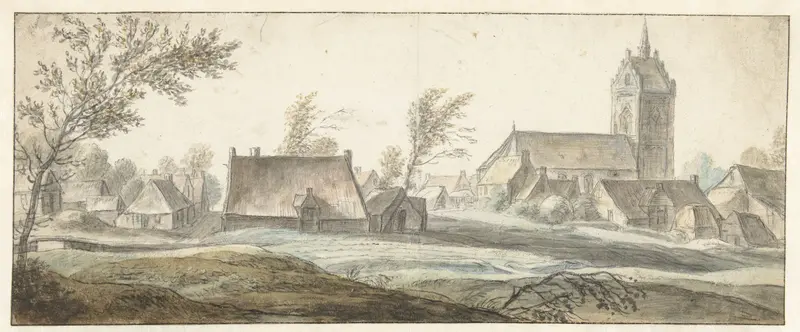
Gezicht op het dorp Soest
Antonie Waterloo
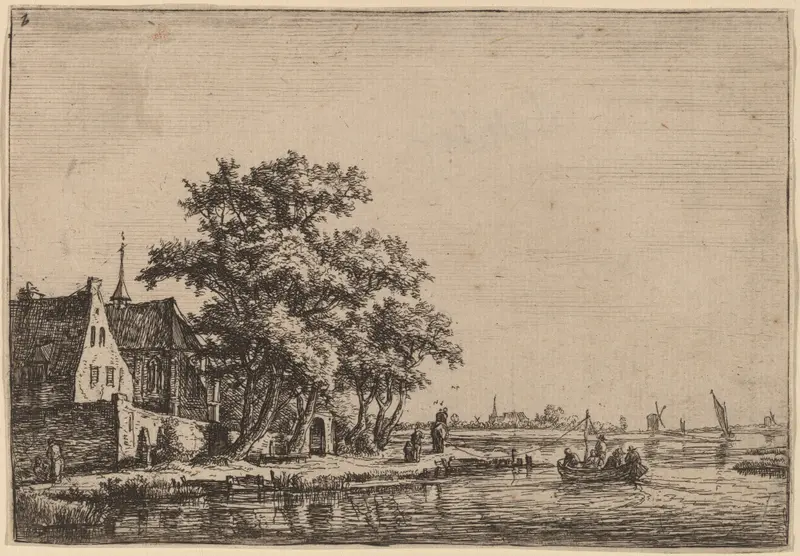
Churchyard at the Waterside
Antonie Waterloo
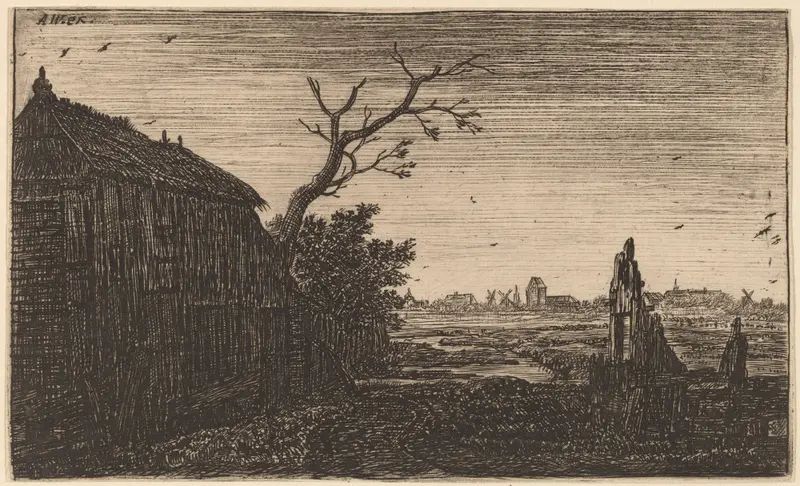
The Sluice
Antonie Waterloo
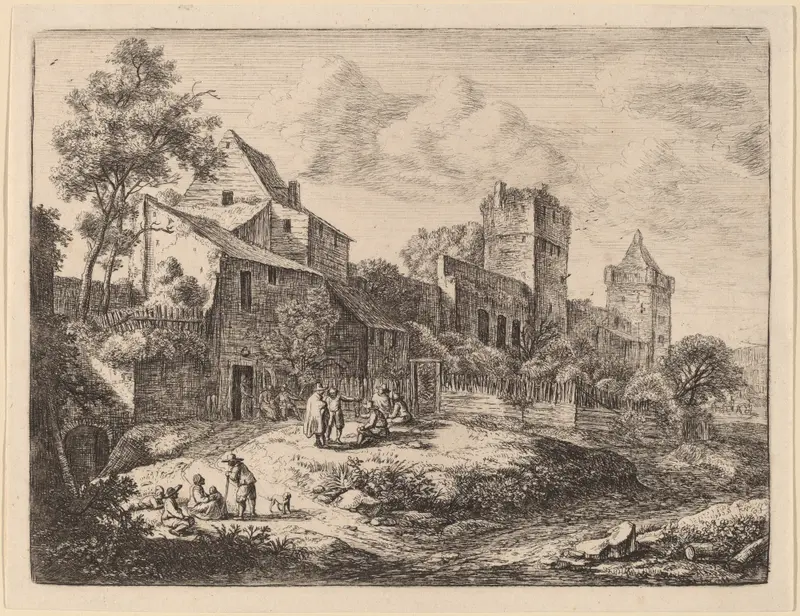
Square in Front of an Inn
Antonie Waterloo
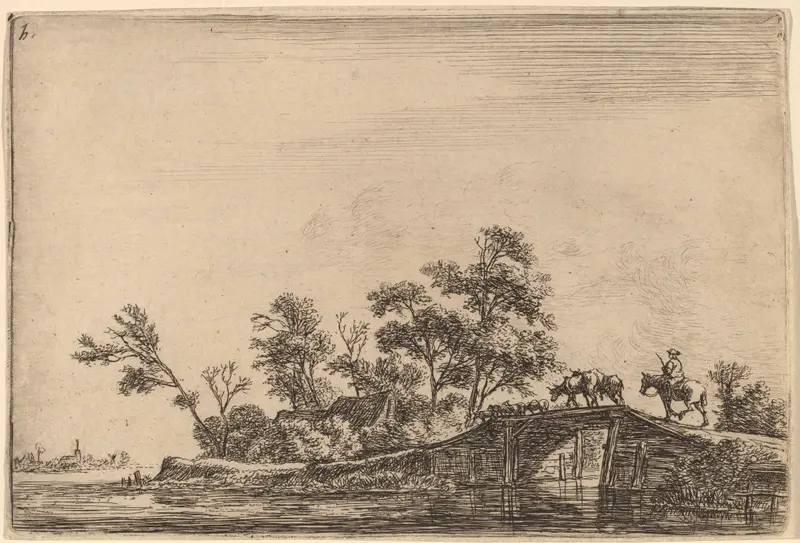
Rider and Flock on a Bridge
Antonie Waterloo
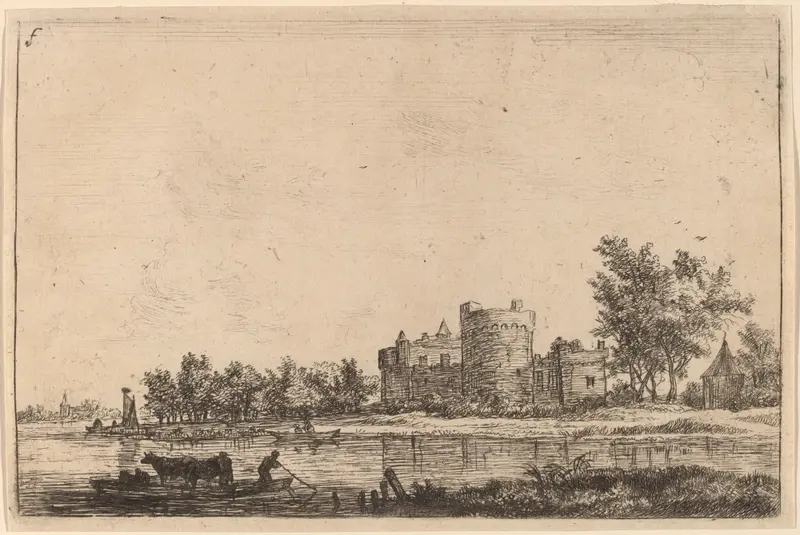
Two Cows on a Ferry
Antonie Waterloo
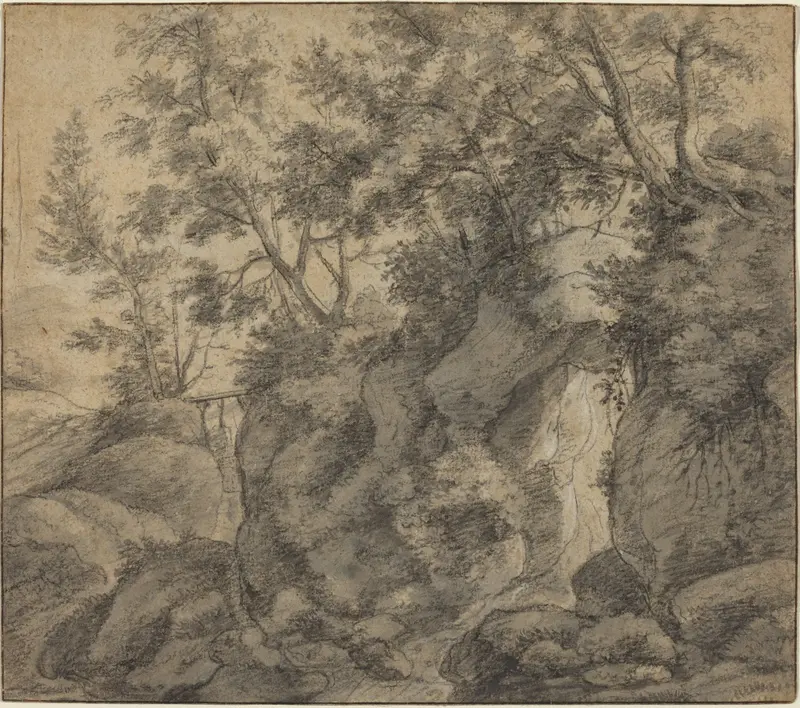
Landscape with a Wooded Ravine
Antonie Waterloo
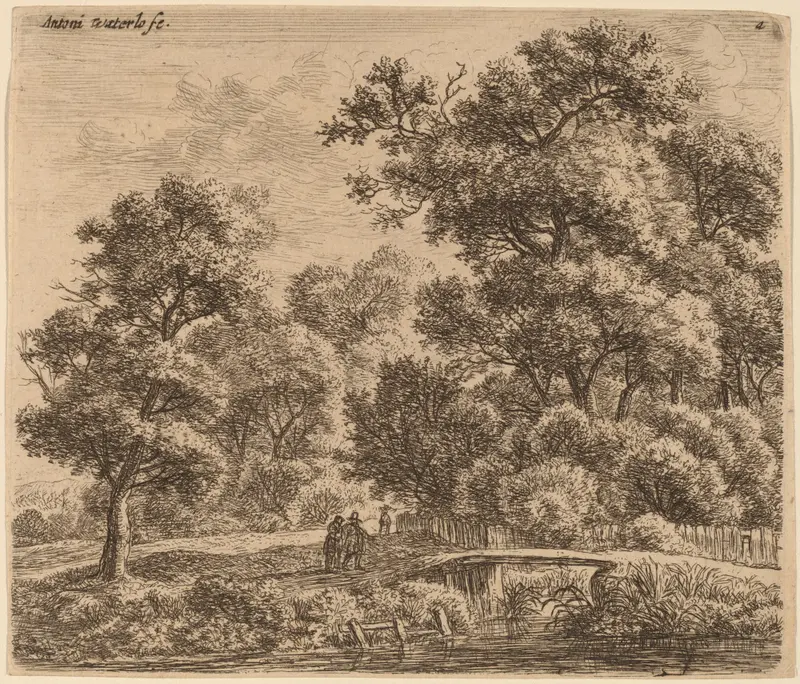
Wooded Landscape with a Bridge
Antonie Waterloo
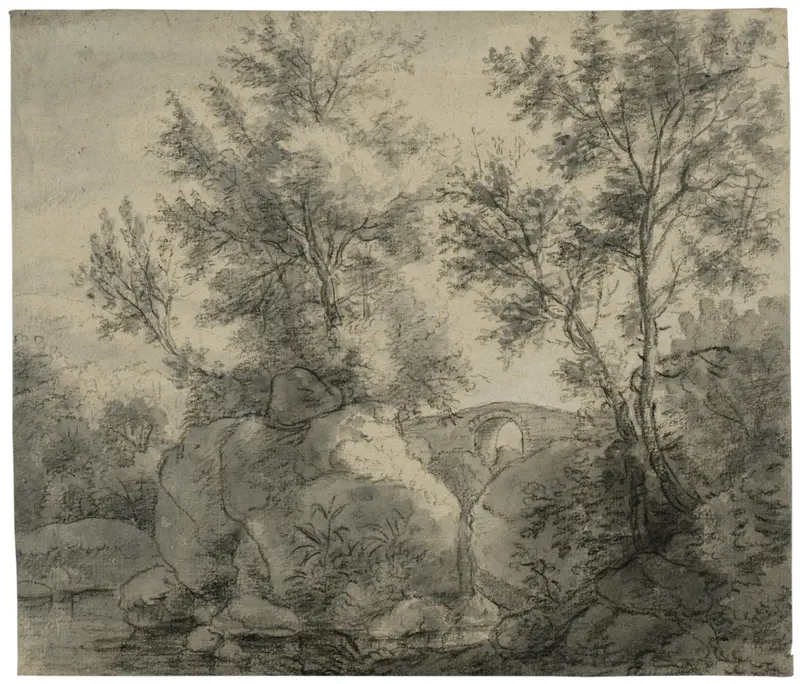
Rocky Landscape with a Stone Bridge
Antonie Waterloo
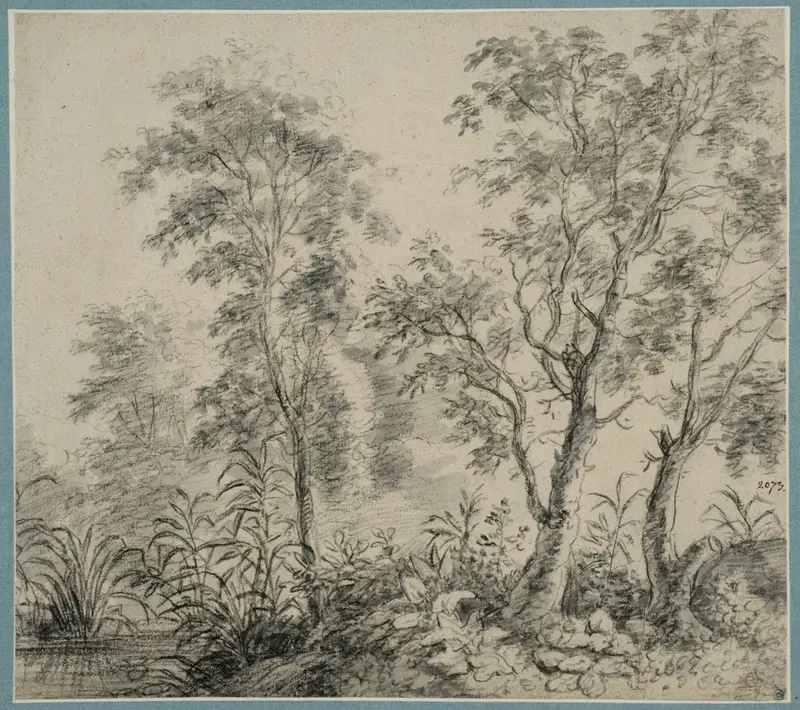
River Bank with a Row of Trees
Antonie Waterloo
More Landscape Art

The Starry Night
Vincent van Gogh

View of Delft
Johannes Vermeer

Water Lilies
Claude Monet

The Grand Canal, Venice, looking north-west from the Ca' Corner to the Ca' Contarini degli Scrigni, with the campanile of Santa Maria della Carità
Canaletto

Windsor Castle
Canaletto

The Grand Canal looking North-East from the Palazzo Dolfin-Manin to the Rialto Bridge
Canaletto