
Two Shepherds in a Hilly Landscape — History & Facts
What first draws the eye in Two Shepherds in a Hilly Landscape is the quiet conversation between figures and land. The shepherd standing, staff in hand, gazes outward, his companion seated beside a pack-laden donkey, while a dog noses the earth nearby. Light pours in from the left, gilding the backs of the animals and the folds of the men’s cloaks, then spilling across the rocky ground to illuminate the distant, castle-dotted hills.
The composition’s low horizon gives the sky a commanding presence, its clouds drifting in a pale, endless blue, lending the scene a sense of pause and openness. The careful arrangement—figures, animal, and rock—guides the viewer from foreground detail to the sunlit expanse beyond, inviting us to linger in this moment of rural stillness. Painted circa 1646 by Aelbert Cuyp, this work belongs to the Dutch Golden Age, a period when landscapes like these found eager patrons among the prosperous urban elite. Such paintings offered viewers an idealized vision of the countryside, often blending real Dutch settings with Italianate light and imagined vistas.
Artists like Cuyp responded to a growing taste for scenes that balanced everyday labor with harmony and order, reflecting a society in transition from medieval feudalism to modern commerce. While history has kept few traces of this painting’s early journey, its presence in a modern collection reminds us how the quiet dignity of rural life, once a novelty for city dwellers, still holds the power to draw us in—back to the shepherds, their animals, and the golden hills behind.
More Artworks by Aelbert Cuyp

The Maas at Dordrecht
Aelbert Cuyp
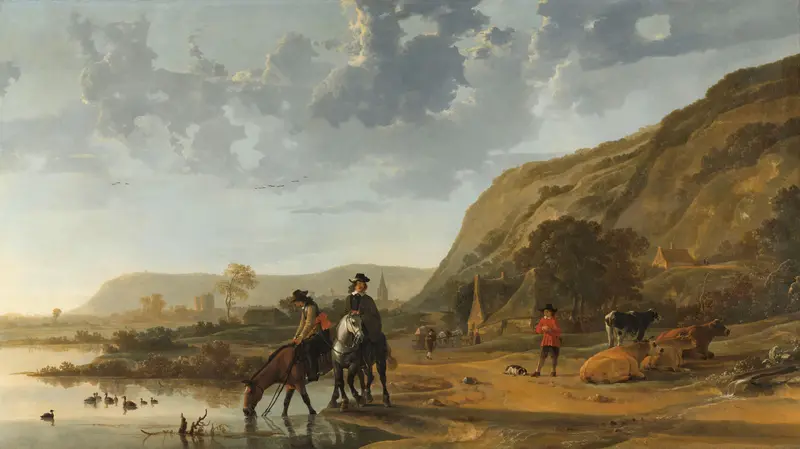
River Landscape with Riders
Aelbert Cuyp

The Maas at Dordrecht
Aelbert Cuyp
Gezicht op Dordrecht
Aelbert Cuyp
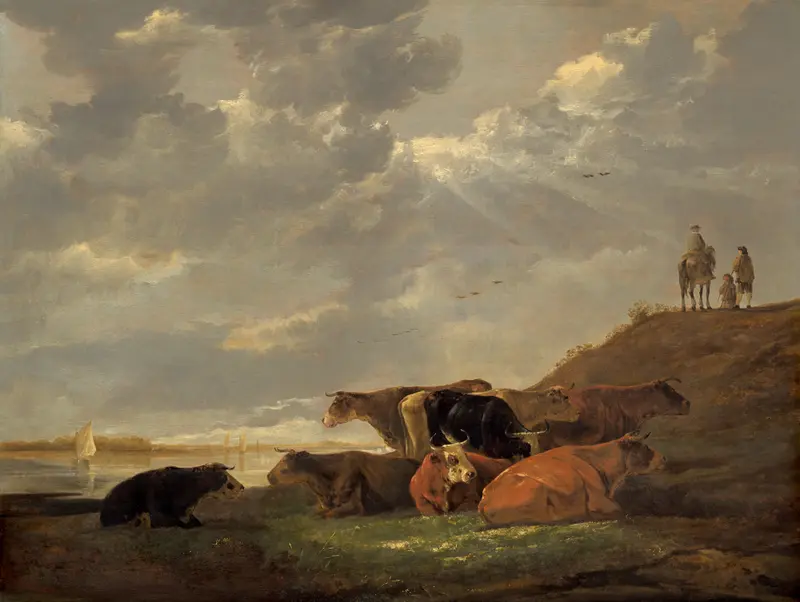
River Landscape with Cows
Aelbert Cuyp
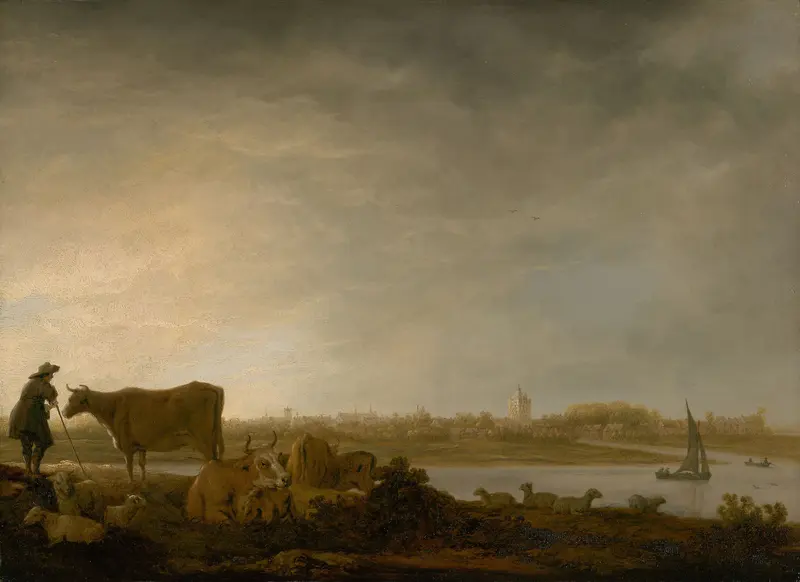
A View of Vianen with a Herdsman and Cattle by a River
Aelbert Cuyp
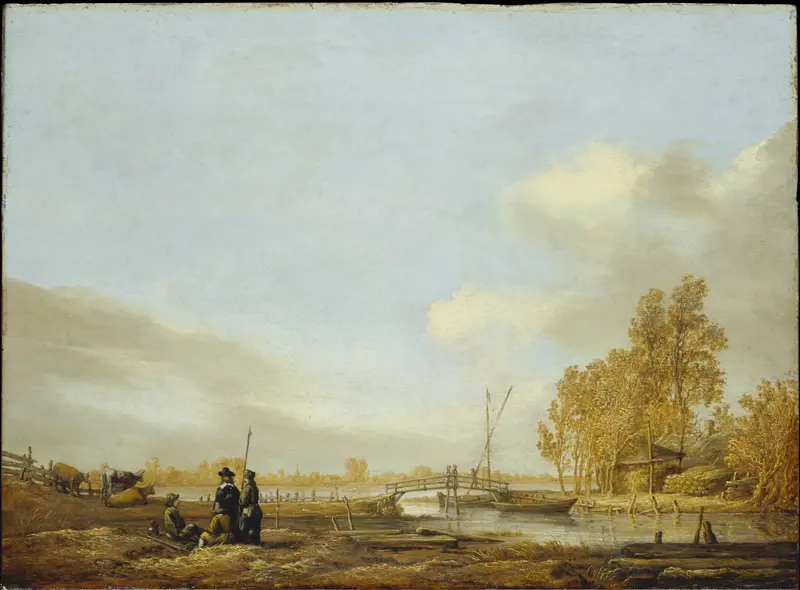
River Landscape with Footbridge
Aelbert Cuyp
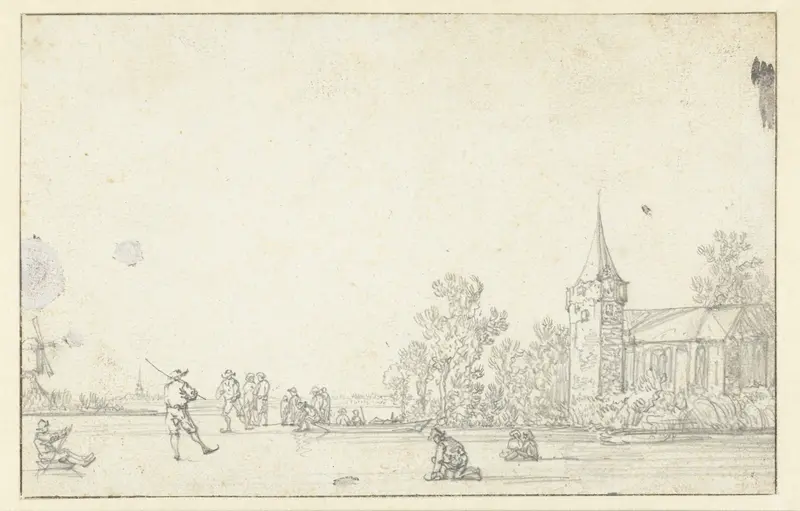
Bevroren rivier met schaatsers bij een kerk
Aelbert Cuyp

Cattle near a River
Aelbert Cuyp
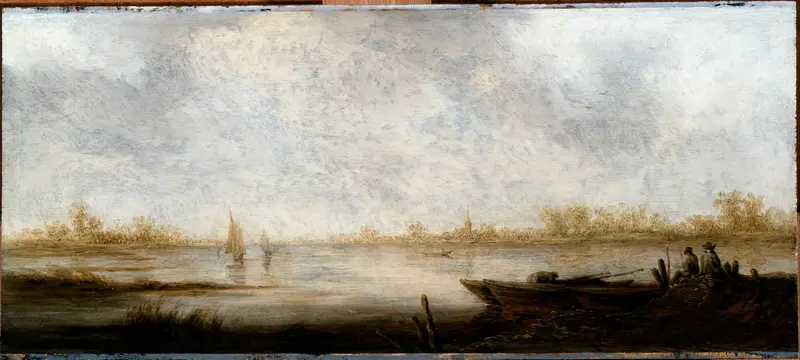
River Landscape
Aelbert Cuyp
More Landscape Art

The Starry Night
Vincent van Gogh

View of Delft
Johannes Vermeer

Water Lilies
Claude Monet

The Grand Canal, Venice, looking north-west from the Ca' Corner to the Ca' Contarini degli Scrigni, with the campanile of Santa Maria della Carità
Canaletto

Windsor Castle
Canaletto

The Grand Canal looking North-East from the Palazzo Dolfin-Manin to the Rialto Bridge
Canaletto