
U.S. Army Transport "Warren" — History & Facts
What first seizes the eye in U.S. Army Transport "Warren" is the ship’s crisp silhouette, stretched taut against an expanse of sky that seems to dwarf even this proud vessel. The ship glides across a choppy green sea, its hull rendered in a pale, almost luminescent white, punctuated by the rhythmic pattern of portholes and the sharp geometry of lifeboats.
A plume of black smoke unfurls from the single funnel, a dark ribbon marking the ship’s progress and the era’s embrace of steam power. Flags snap at the masts—the American flag at the stern and a signal flag at the fore—signaling both identity and allegiance. The low horizon gives the sky the leading role, lending the scene an air of clarity and purpose, as if the ship is setting out on a mission that the viewer is invited to imagine. Painted in 1900 by Antonio Jacobsen, this work belongs to a tradition of ship portraiture that flourished in the age of steam and sail, when vessels were both lifelines and symbols of national reach.
Shipowners, captains, and even governments commissioned such paintings to commemorate new launches or important voyages, and artists like Jacobsen—himself a prolific chronicler of American maritime life—became specialists in capturing the technical precision and pride of these floating machines. The painting’s detailed rigging, careful rendering of the funnel’s stripes, and the subtle play of light on water all speak to the era’s fascination with progress and order. History has kept few traces of individual ships like the Warren, but in works like this, the aspirations and anxieties of a changing world are preserved—inviting us to linger on every line and cloud.
More Artworks by Antonio Jacobsen

Het stoomschip met hulpzeilvermogen ‘Kroonland’
Antonio Jacobsen

The Barque Vigilant
Antonio Jacobsen
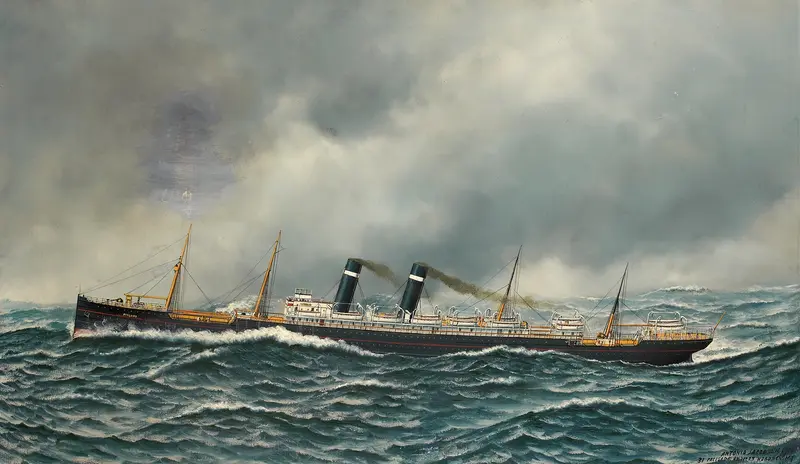
Het stoomschip ‘Finland’ te New York
Antonio Jacobsen
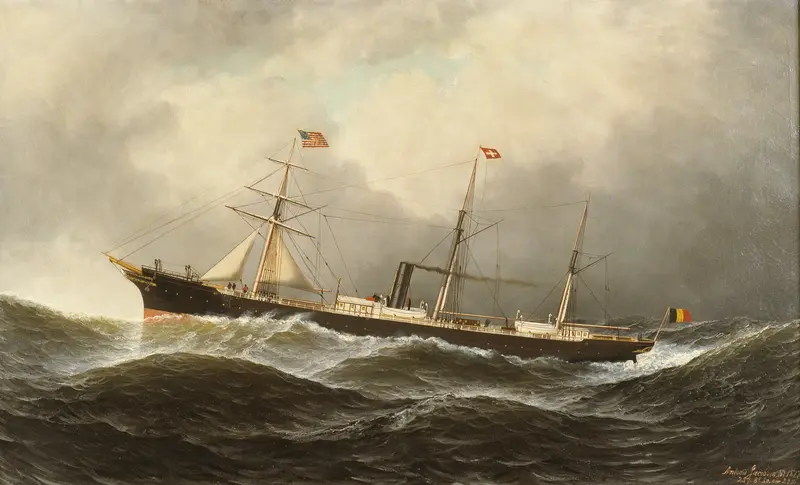
Het Belgische stoomschip met hulpzeilvermogen ‘Ludwig’ op zee
Antonio Jacobsen
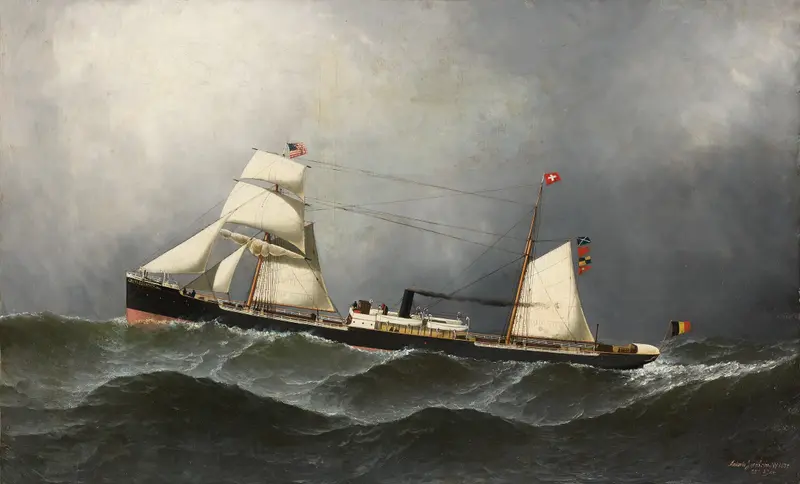
Het stoomschip met hulpzeilvermogen ‘Daniel Steinmann’ van de White Cross Line
Antonio Jacobsen
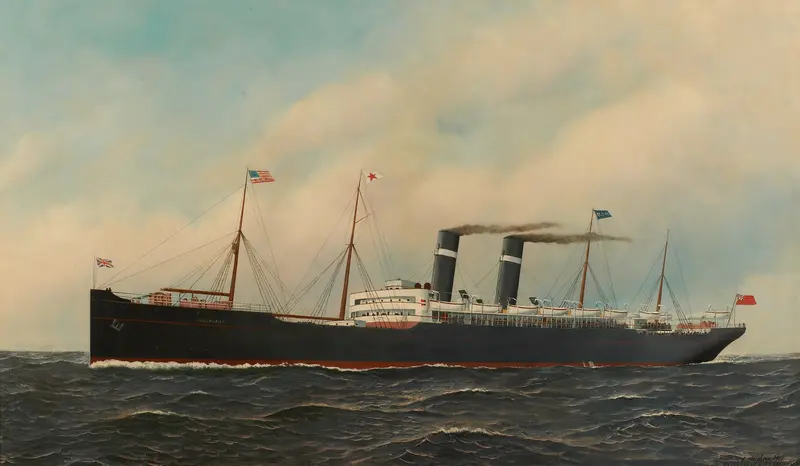
Het passagiersstoomschip Vaderland
Antonio Jacobsen
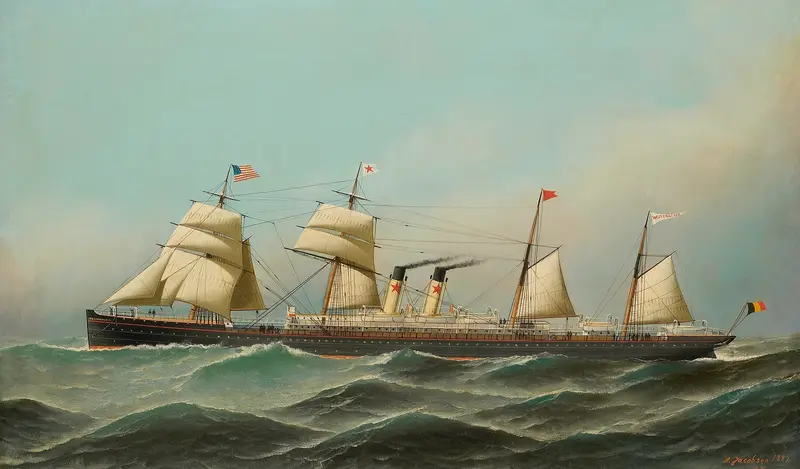
Het stoomschip met hulpzeilvermogen ‘Westernland’
Antonio Jacobsen
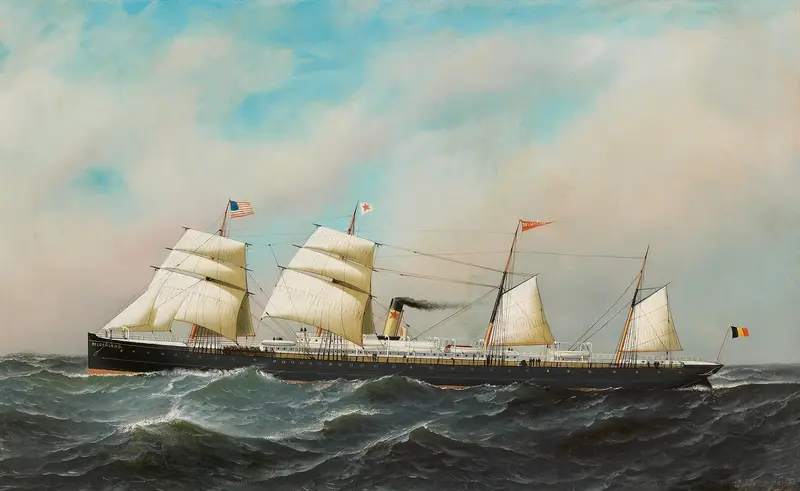
Het stoomschip met hulpzeilvermogen Belgenland
Antonio Jacobsen
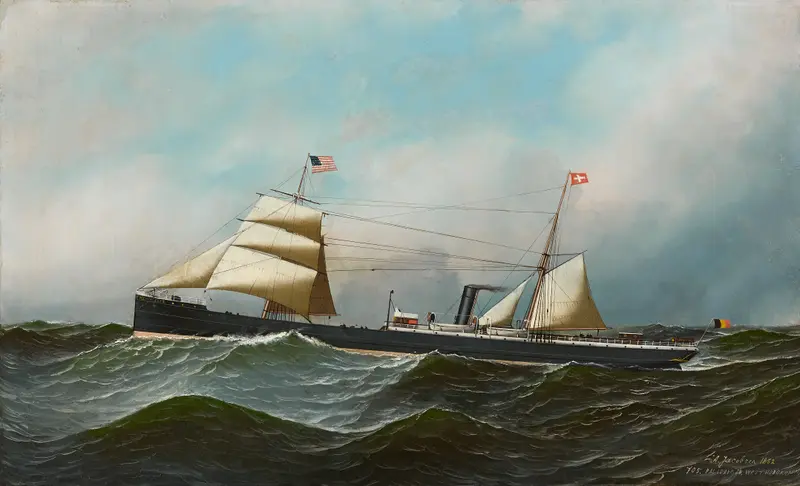
Het stoomschip met hulpzeilvermogen ‘Henry Edye’ van de White Cross Line
Antonio Jacobsen
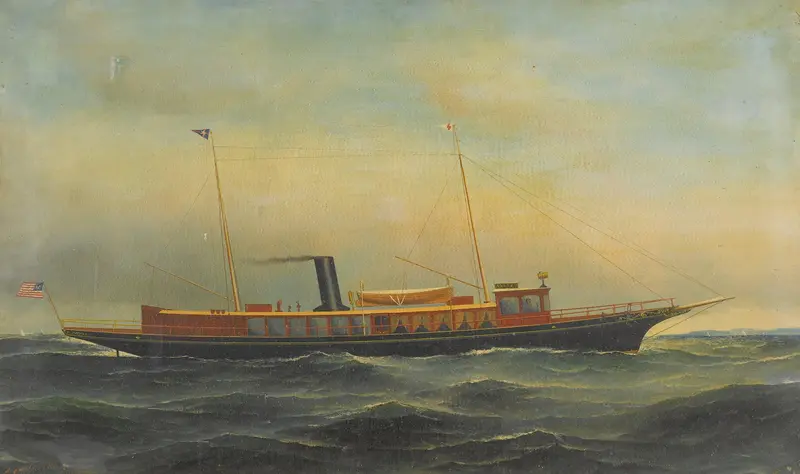
The Yacht ‘aztec’
Antonio Jacobsen





