
Ulverstone Sands, Cumbria — History & Facts
Can paint confess what words never could? The subtle shadows in Ulverstone Sands, Cumbria whisper secrets of a landscape untouched, evoking a dialogue between nature and the human spirit. Look to the left at the gentle undulations of the hills, where soft greens merge seamlessly with the sandy shore. The artist’s deft brushwork captures the fluidity of water, as light dances across its surface, creating a shimmering path that draws the eye toward the horizon. Notice how the delicate play of sunlight and shadow enhances the depth, inviting contemplation of the vastness that lies beyond the frame. Yet, within this serene tableau lies a tension between light and shadow, a symbolic representation of life's contrasts.
The bright, welcoming shore contrasts sharply with the dark clouds forming in the sky, suggesting an impending storm or emotional turmoil. Each figure, though small against the grand backdrop, holds an air of solitude — their presence a mere whisper in the face of nature's might, amplifying the sense of isolation inherent in the landscape. David Cox painted Ulverstone Sands in 1836 while living in England, a time marked by the burgeoning Romantic movement that celebrated nature's beauty and sublimity. The artist was deeply engaged with the landscape tradition, striving to convey not just the visual, but also the emotional resonance of the scene.
His works reflect a period of personal introspection and exploration, as he sought to express the relationship between humanity and the natural world, often revealing the complexity of human experience within the simplicity of the landscape.
More Artworks by David Cox
Browse all →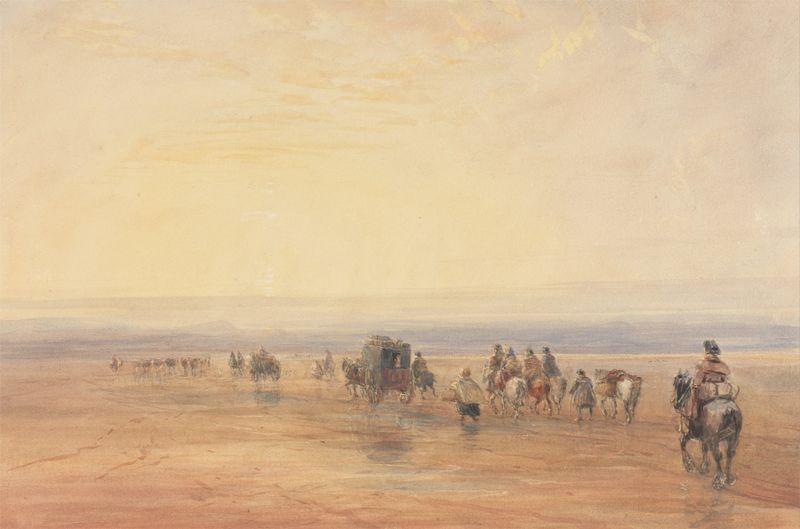
Crossing Lancaster Sands
David Cox
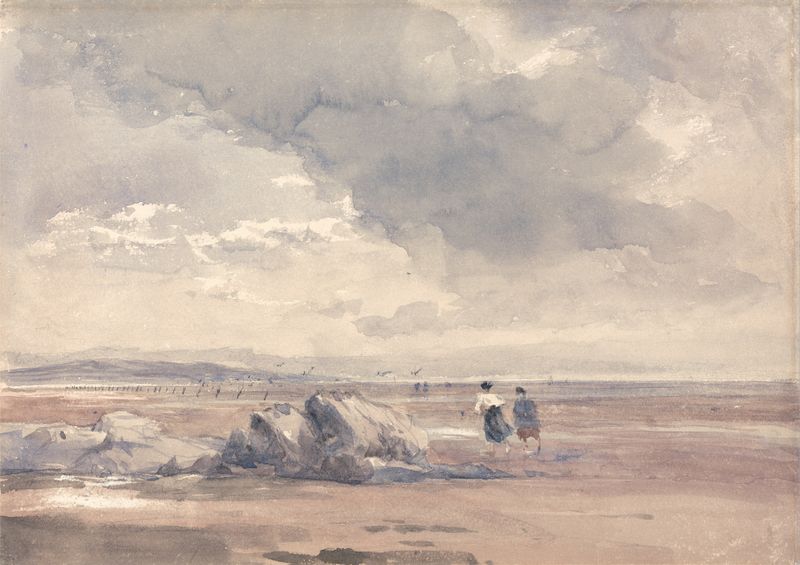
On Lancaster Sands, Low Tide
David Cox

Lincoln Cathedral from Brayford Pool
David Cox

View in Wales
David Cox
Mountain Heights, Cader Idris
David Cox

Bergen op Zoom
David Cox

Boating Before Lambeth Palace, London
David Cox
Bolton Abbey
David Cox

London Bridge
David Cox
Westminster from Lambeth
David Cox





