
Un carabinier, vu à mi-corps — History & Facts
In the turbulent year of 1814, as Napoleon’s empire crumbled and Paris braced for invasion, Théodore Géricault turned his gaze not to the grand sweep of battle, but to the solitary figure of a French carabinier. While most artists of the time glorified victory or lamented defeat, Géricault captured a soldier in the uncertain space between action and aftermath. This work stands out for its intimacy: rather than the full regalia of parade or the chaos of the battlefield, we find a man suspended in a moment of reflection, his fate tied to the fortunes of a nation in crisis. The carabinier, shown from the waist up, is clad in the distinctive uniform of the heavy cavalry—polished cuirass, plumed helmet, and bold red epaulettes.
His gaze, turned slightly away, suggests both vigilance and weariness, as if he listens for distant orders or contemplates the cost of war. The light falls across the metal of his armor, catching the tension between duty and vulnerability. Unlike Jacques-Louis David’s heroic cavalrymen, Géricault’s subject is not an idealized symbol, but an individual caught in history’s current.
The carefully rendered details—the curve of the helmet, the glint of brass—invite the viewer to see the soldier as both emblem and person. The precise circumstances of Un carabinier, vu à mi-corps’s creation are not fully documented, and the medium itself remains uncertain, though it is likely oil on canvas or paper. It is one of several studies Géricault made of military figures, a theme that would culminate in his later masterpiece, The Raft of the Medusa. The painting’s current whereabouts are not widely publicized, and it may reside in a private collection or remain in storage.
Nonetheless, this work marks a pivotal moment in Géricault’s early career, when he was forging a new, more personal vision of heroism that would help define the Romantic movement in France.
More Artworks by Théodore Géricault
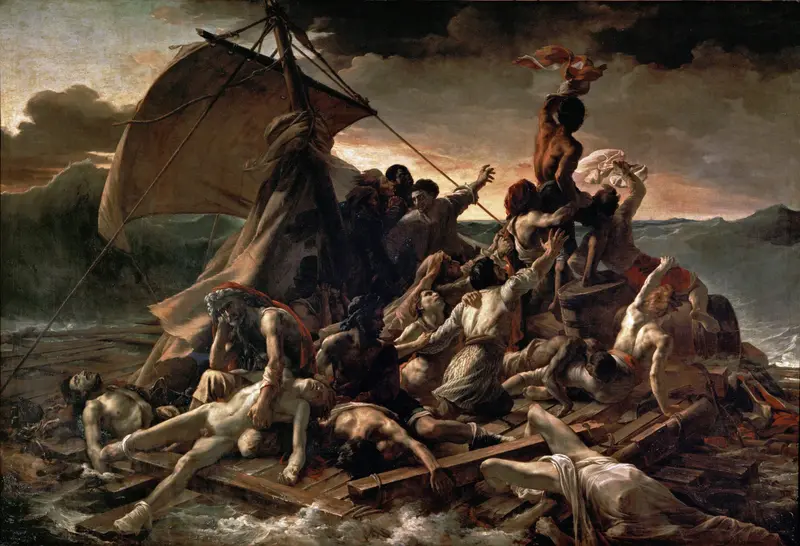
The Raft of the Medusa
Théodore Géricault

Géricault - Le naufrage du radeau de la Méduse, MBA 790
Théodore Géricault
Cattle Market
Théodore Géricault
Evening; Landscape with an Aqueduct
Théodore Géricault
Horse Race
Théodore Géricault

Horses Standing in a Mews
Théodore Géricault
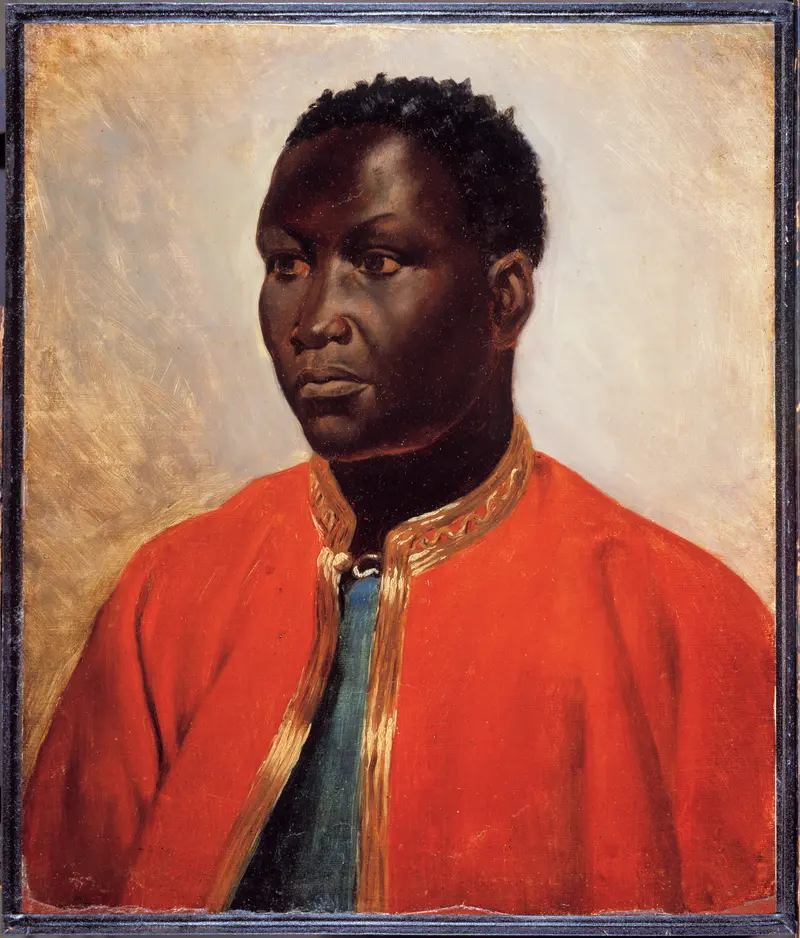
Portrait of a Negro
Théodore Géricault
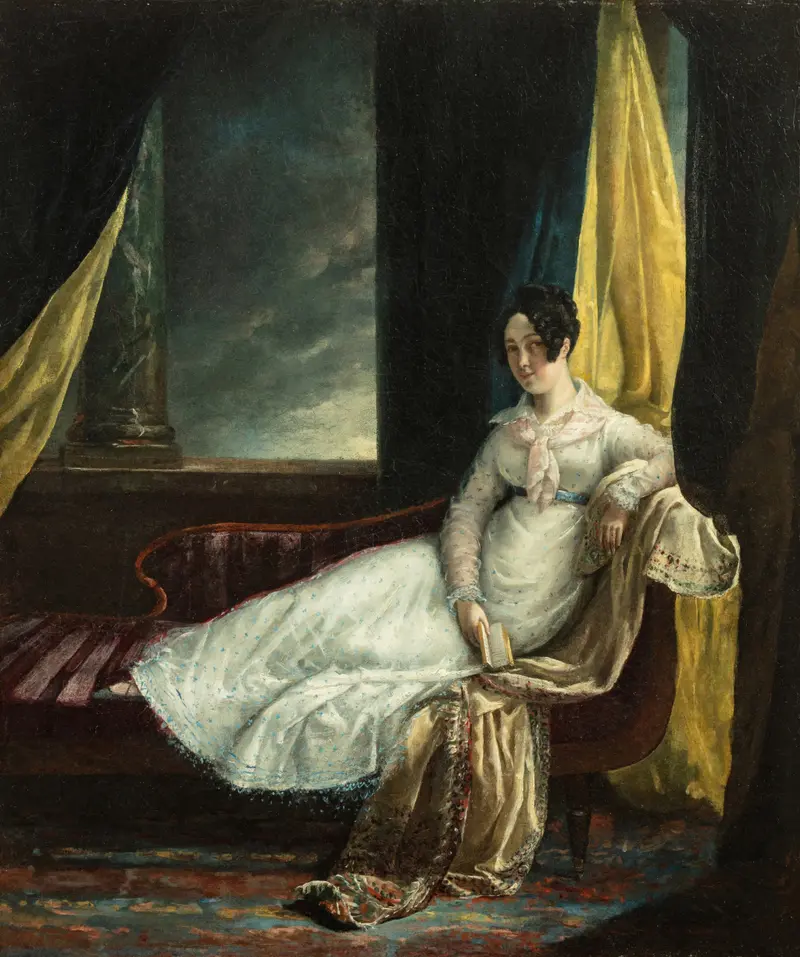
Portrait of Zoë Elmore
Théodore Géricault
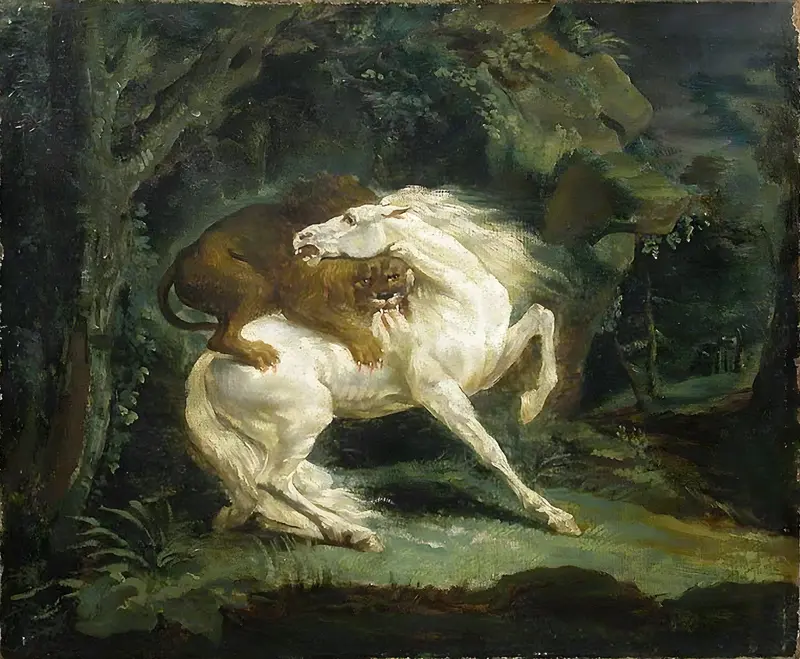
Cheval attaqué par un lion
Théodore Géricault
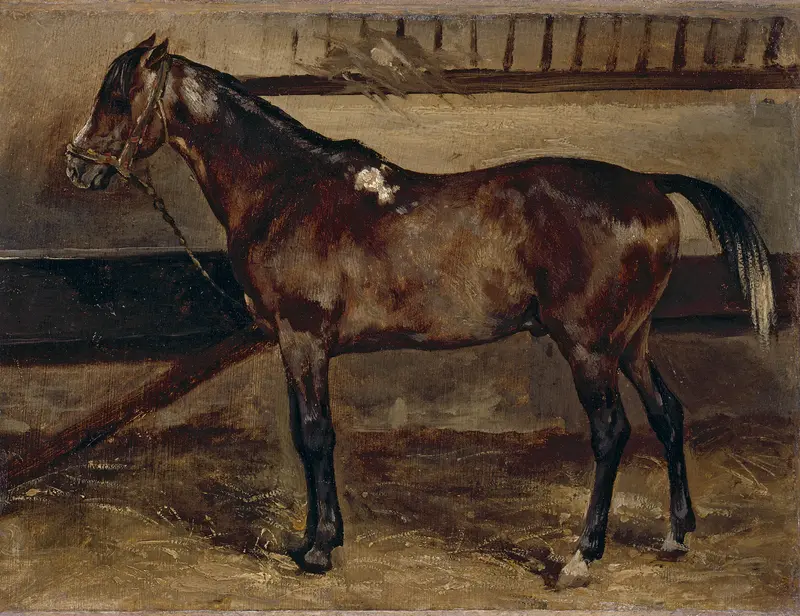
Cheval brun à l'écurie
Théodore Géricault





