
Un quai à Lorient — History & Facts
A single figure in white draws the eye down the sunlit quay, her presence dwarfed by the sweep of sky and the busy geometry of masts and rigging. The brushwork is quick and searching, as if Berthe Morisot were intent on capturing a fleeting impression rather than a fixed reality. The palette is all cool blues and warm earths, the water reflecting the haze of the sky, the stone embankment catching the pale gold of afternoon.
Flags flicker at the tops of the ships, signaling the life of the port, while the curve of the breakwater leads the gaze out to sea, where more vessels drift on the horizon. Every element seems to breathe with movement and light, yet the scene is suffused with a gentle stillness, as if time itself has paused. Painted in 1869, this work belongs to a moment of rapid change in French art, when painters like Morisot turned away from grand historical narratives to embrace the immediacy of everyday life. The port of Lorient, rendered here with such economy and freshness, was a site of commerce and travel, a place where the modern world pressed up against tradition.
Such scenes were rarely commissioned; instead, artists sought them out, eager to record the shifting rhythms of the new urban and coastal landscapes. Today, the painting resides in the Yale University Art Gallery, a quiet testament to Morisot’s early vision—inviting us to linger, to follow the light, and to imagine the stories unfolding just beyond the frame.
More Artworks by Berthe Morisot

The Harbor at Lorient
Berthe Morisot
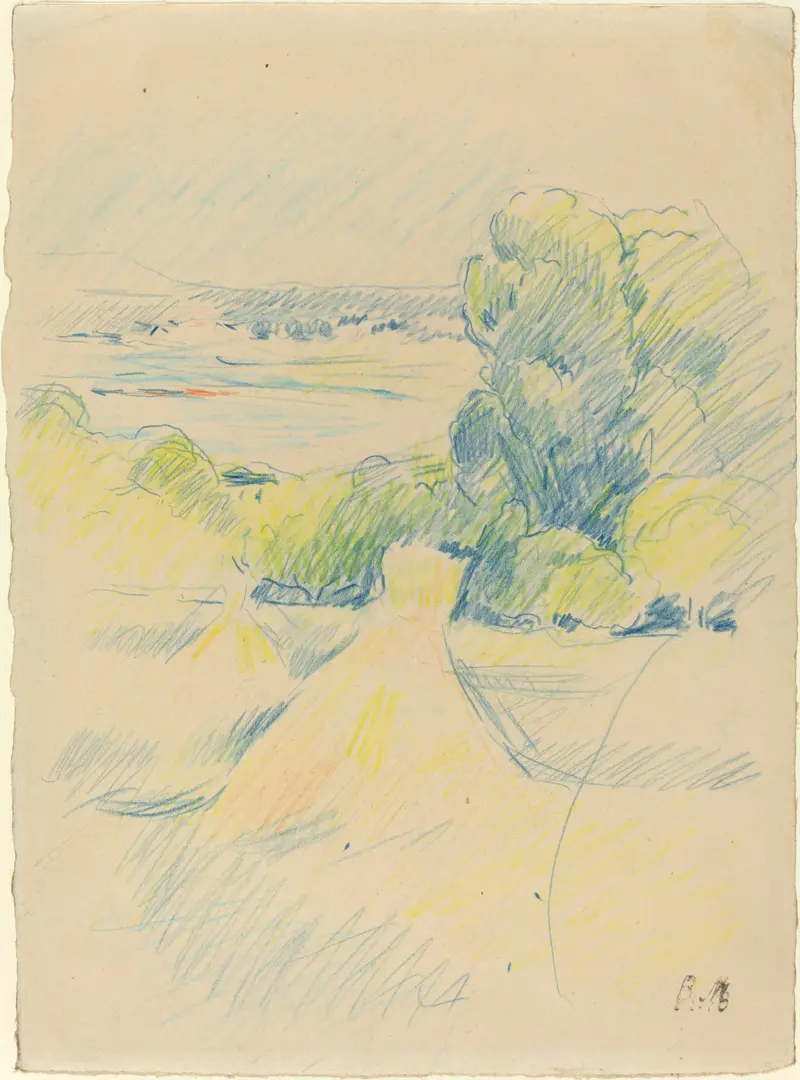
Landscape
Berthe Morisot

Hanging the Laundry out to Dry
Berthe Morisot

Woman in a Garden
Berthe Morisot

Young Girl with Hat
Berthe Morisot
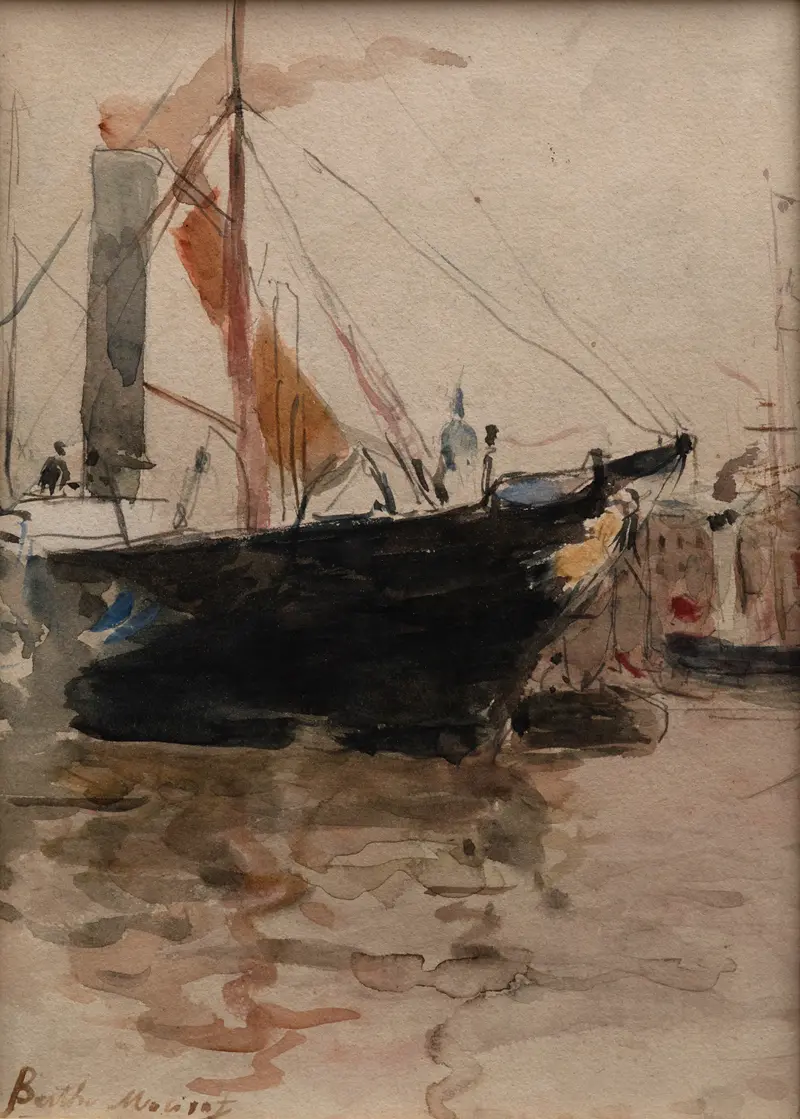
Harbor Scene, Isle of Wight
Berthe Morisot
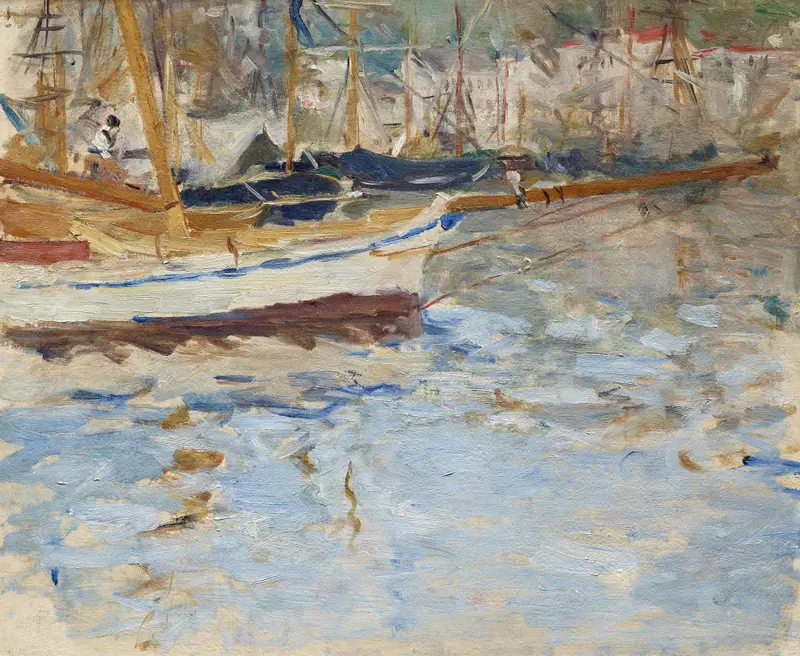
The Port of Nice
Berthe Morisot
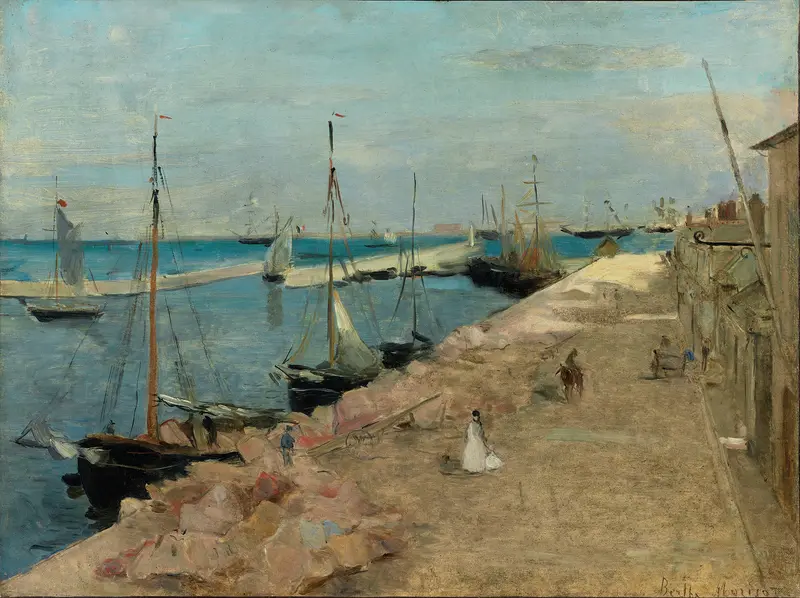
The Harbor at Cherbourg
Berthe Morisot

The Mother and Sister of the Artist
Berthe Morisot
Les Poires
Berthe Morisot





