
Ungarische Husaren — History & Facts
The sweep of cavalry across open ground pulls the viewer instantly into the world of Ungarische Husaren, where the crisp blue of the riders' uniforms slices through a landscape alive with movement and sky. The horses, alert and forward, seem almost to pulse with readiness as they fan out in a loose, practiced formation. The artist, Alexander Von Bensa, chooses a moment of anticipation rather than chaos: the lead riders are poised, their bodies upright, their faces set with focus, while the vastness of the field and the low horizon grant the sky a commanding presence.
The light, cool and clear, glances off the polished saddles and highlights the proud bearing of both men and mounts, guiding the eye from foreground to the distant, shadowy ranks behind. Works like this, painted by 1902 and now in the Dorotheum collection, belong to a tradition that celebrated the romance and discipline of cavalry regiments at the turn of the twentieth century. The Husaren—Hungarian hussars—were legendary for their dash and their distinctive dress, and artists of the era often painted such scenes for officers, regiments, or patriotic collectors who sought to capture a vanishing military world. By the time this painting was made, the cavalry charge was already becoming a symbol of the past, as new technologies and new wars loomed on the horizon.
Little is recorded about this specific work’s commission or early journey, but its energy and detail invite us to linger, to imagine the pride and spectacle of a regiment in its prime, and to trace each figure as it emerges from the sweep of grass and sky.
More Artworks by Alexander Von Bensa

Historisches Karussell
Alexander Von Bensa
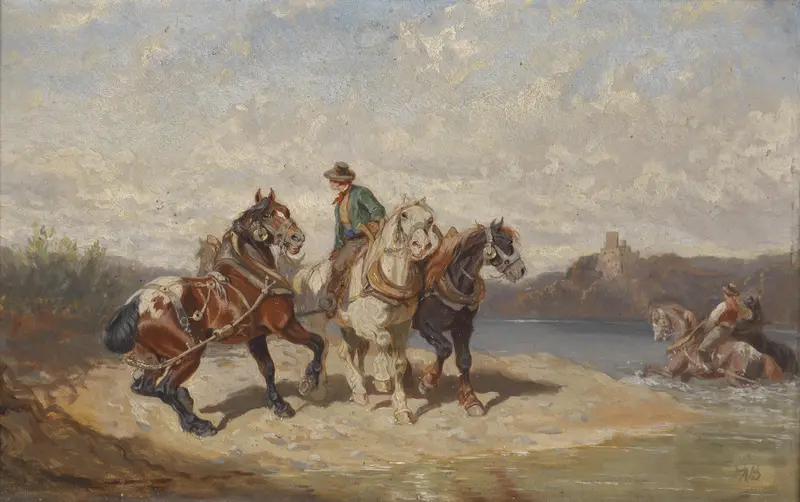
Treidelpferde an der Donau
Alexander Von Bensa
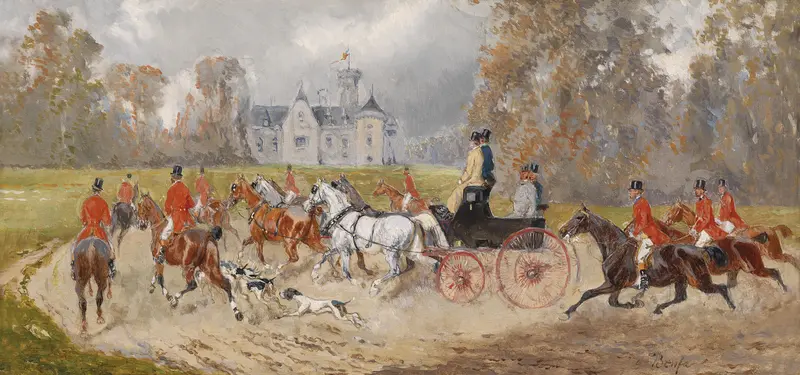
Rückkehr ins Schloss
Alexander Von Bensa
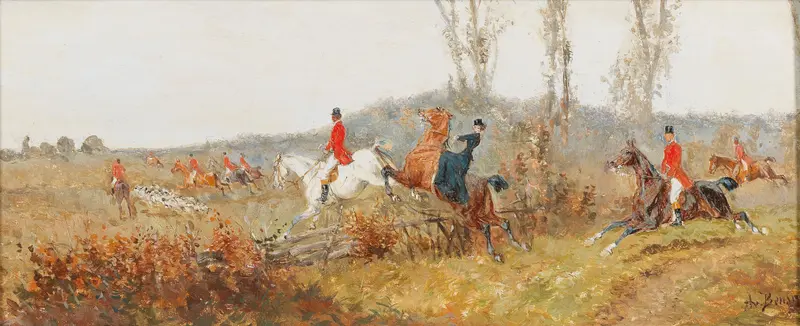
On the Scent
Alexander Von Bensa
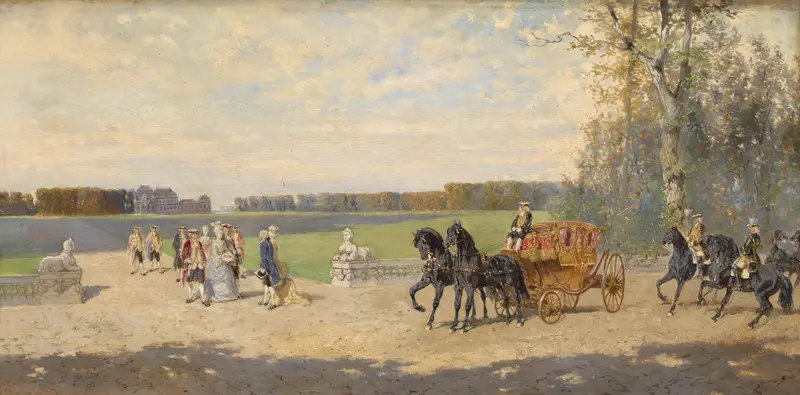
Ausfahrt vor dem Schloss
Alexander Von Bensa
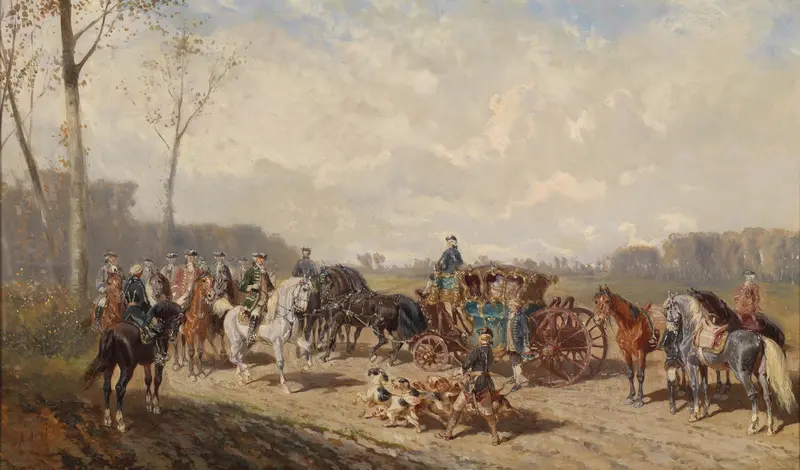
Begegnung beim Ausritt
Alexander Von Bensa
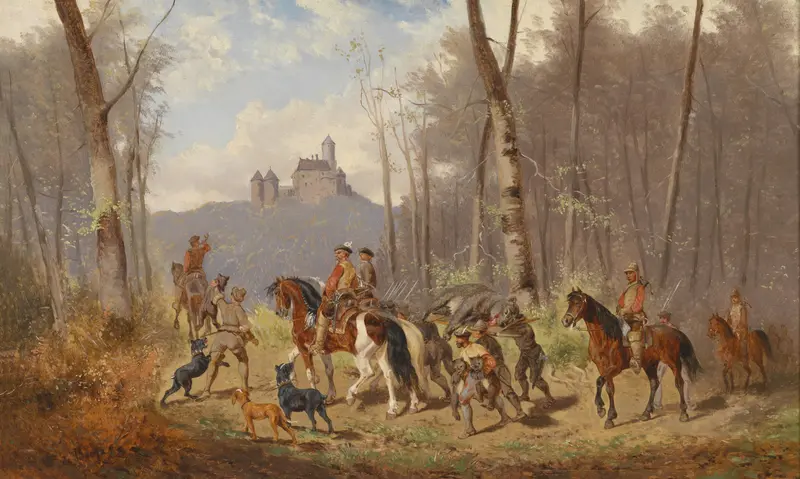
Heimkehr nach der Bärenjagd
Alexander Von Bensa
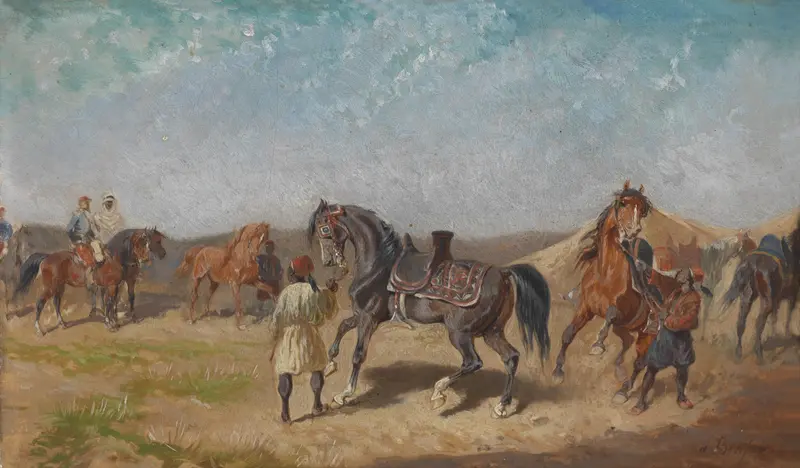
Nordafrikanisches Reiterlager
Alexander Von Bensa
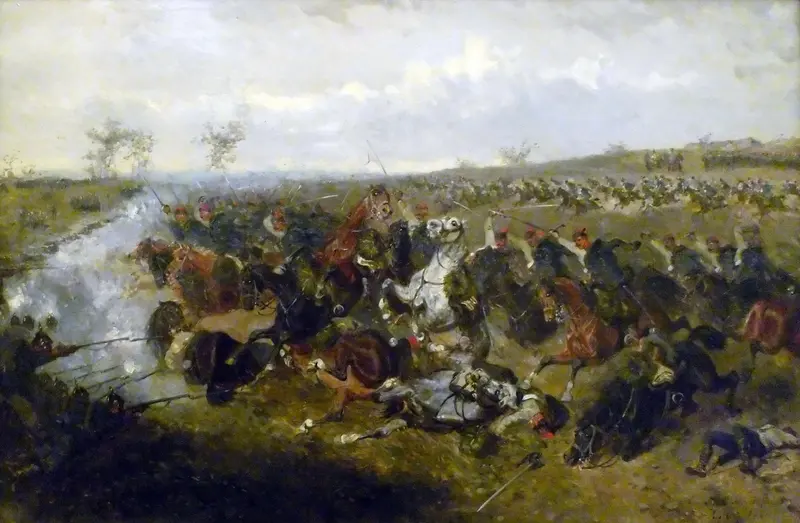
Battle of Schweinschädel.
Alexander Von Bensa
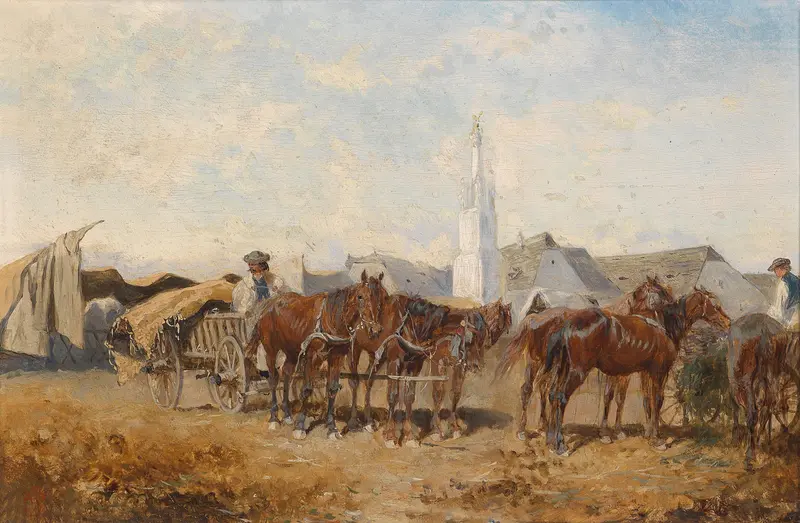
Markttag in Szolnok
Alexander Von Bensa





