
Heimkehr nach der Bärenjagd — History & Facts
The first thing that seizes the eye in Heimkehr nach der Bärenjagd is the sense of triumphant return, the entire scene organized around the moment when the hunters emerge from the shadowy woods into the open, castle-crowned distance. The painter, Alexander Von Bensa, leads us straight into the aftermath of a bear hunt: the victorious party, horses and dogs bristling with energy, the heavy prize slung between two men. The light pours in from the left, catching the proud, upright rider and the bear’s fur, while the castle on the hill—bathed in a gentle haze—signals the end of the journey and the promise of reward.
Every figure, from the attentive hounds to the men straining under their burden, is caught in motion, their glances and gestures weaving a web of camaraderie and accomplishment. Painted by 1902, this work belongs to a long European tradition of hunting scenes, once favored by aristocrats and landowners to celebrate their dominion over nature and their estates. In the late nineteenth and early twentieth centuries, such images were already tinged with nostalgia, recalling a world of ritual and hierarchy that was slipping away in the face of modernity. Von Bensa’s composition, with its careful balance of pageantry and labor, reflects both the pride and the exhaustion of the hunt.
Today, housed in the Dorotheum collection, the painting stands as a window onto a vanished world—one where the forest, the castle, and the hunt formed a single, unbroken story. The viewer is left to wonder what tales the returning party will tell as they cross the threshold into the castle’s embrace.
More Artworks by Alexander Von Bensa

Historisches Karussell
Alexander Von Bensa
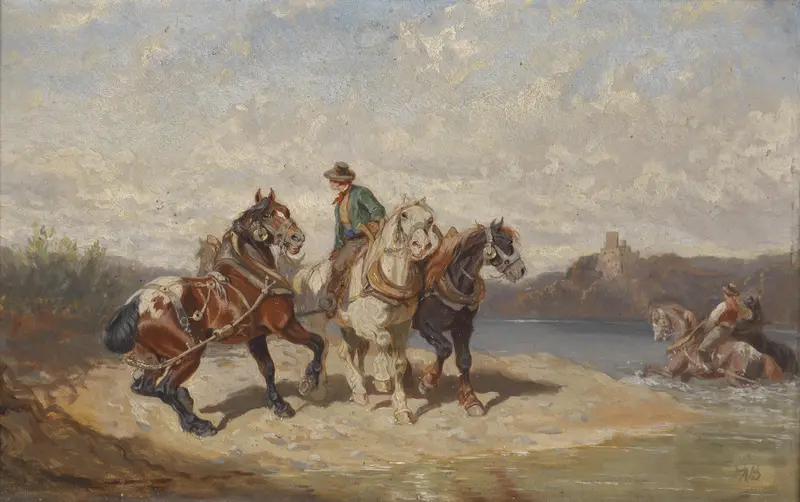
Treidelpferde an der Donau
Alexander Von Bensa
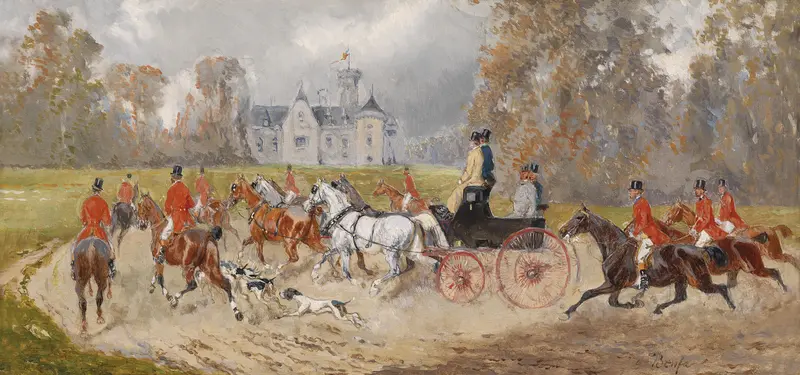
Rückkehr ins Schloss
Alexander Von Bensa
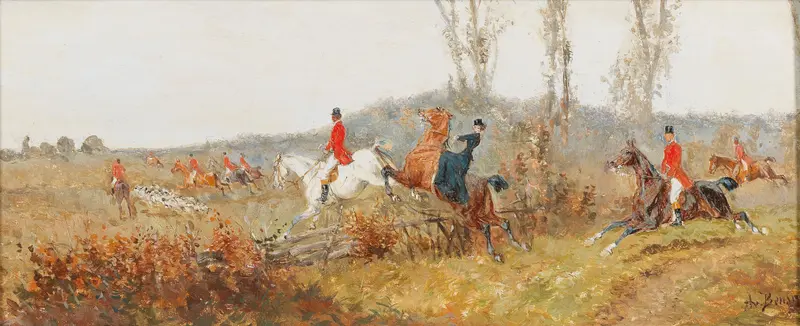
On the Scent
Alexander Von Bensa
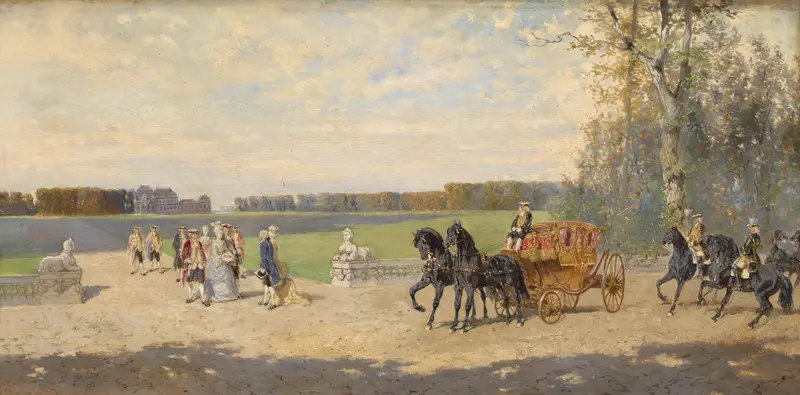
Ausfahrt vor dem Schloss
Alexander Von Bensa
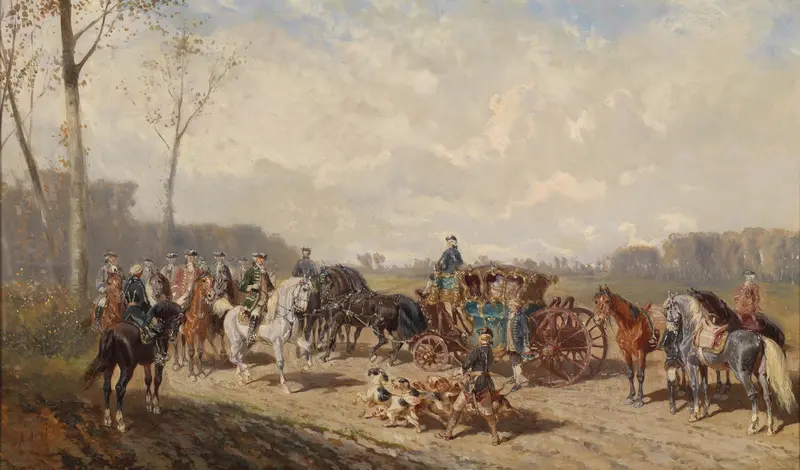
Begegnung beim Ausritt
Alexander Von Bensa
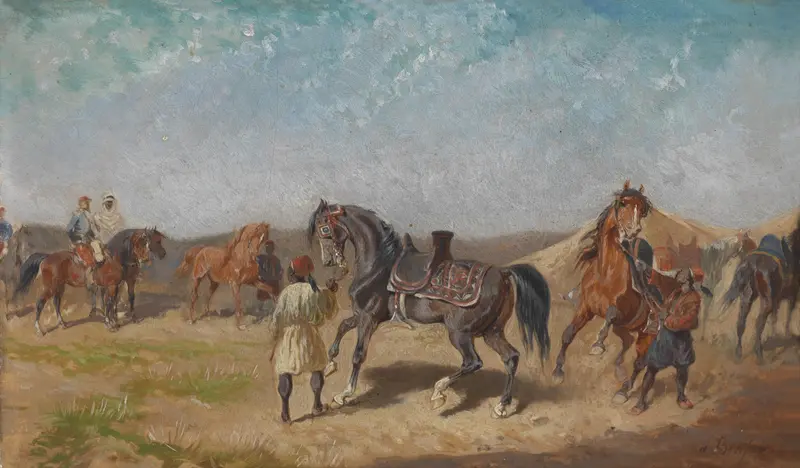
Nordafrikanisches Reiterlager
Alexander Von Bensa
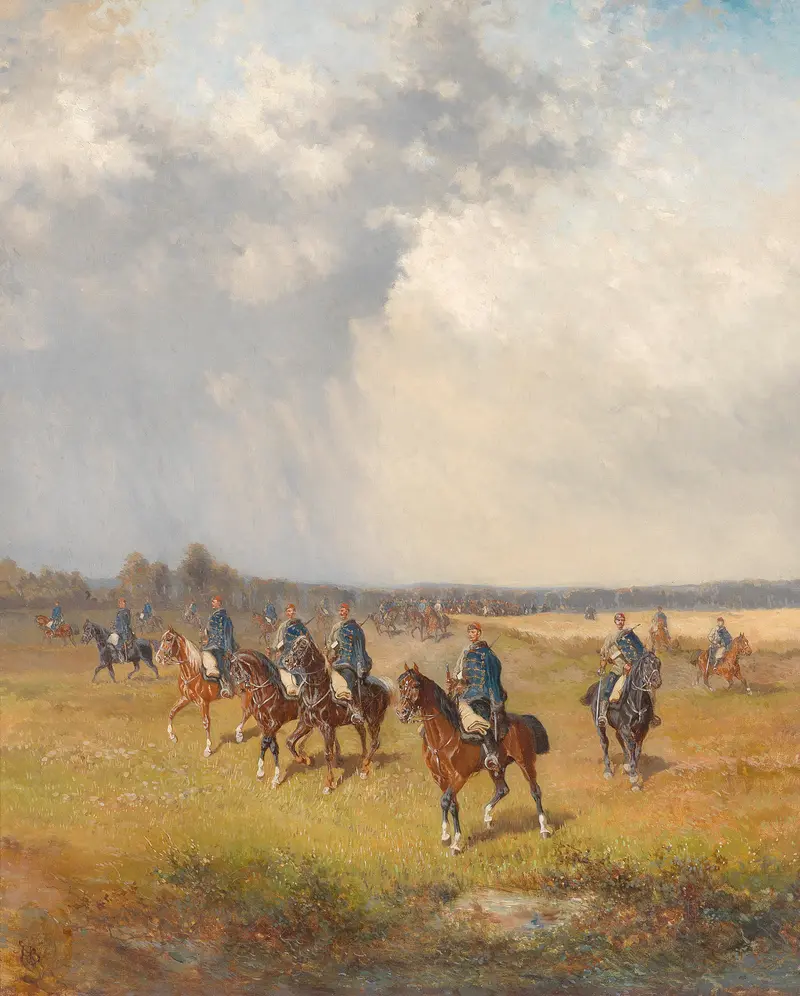
Ungarische Husaren
Alexander Von Bensa
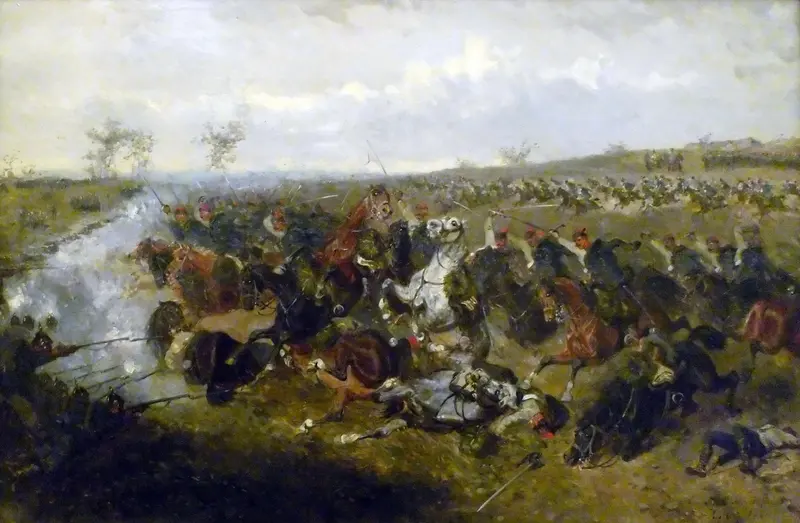
Battle of Schweinschädel.
Alexander Von Bensa
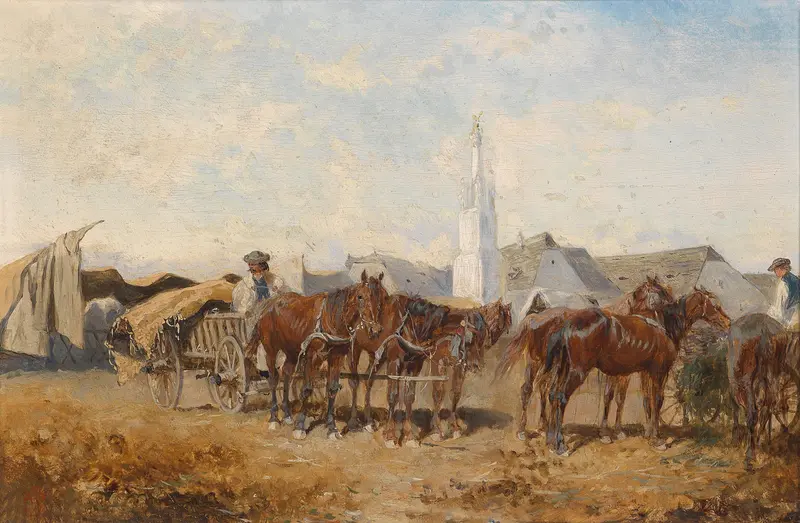
Markttag in Szolnok
Alexander Von Bensa
More Genre Scene Art

Banquet of the Officers of the St George Civic Guard
Frans Hals

Rembrandt and Saskia in the Scene of the Prodigal Son
Rembrandt van Rijn

Bal du moulin de la Galette
Pierre-Auguste Renoir

Quadrille at the Moulin Rouge
Henri de Toulouse-Lautrec

A Burial at Ornans
Gustave Courbet

When Will You Marry?
Paul Gauguin