
Nordafrikanisches Reiterlager — History & Facts
The restless energy of horses and men draws the viewer immediately into the heart of Nordafrikanisches Reiterlager. Here, the painter seizes a moment of anticipation: horses prance and rear, their handlers straining to keep control, while riders and onlookers gather at the edge of a sandy encampment. The low horizon gives the sky a sweeping presence, its pale blue streaked with clouds, hinting at the vastness beyond the camp.
The artist’s brisk brushwork animates every muscle and gesture—note the tension in the lead horse’s legs, the vivid reds and ochres of the men’s clothing, and the intricate saddle blankets. Each detail is a clue to the scene’s purpose: this is not just a gathering, but a display of skill, pride, and perhaps rivalry. Painted by Alexander Von Bensa by 1902, this work belongs to a tradition of late nineteenth-century European fascination with North African subjects—what art historians call Orientalism. Such paintings were often created for collectors hungry for scenes of exotic life, filtered through a Western gaze.
The Dorotheum collection, where this work now resides, preserves it as a testament to that era’s appetite for distant landscapes and dramatic encounters. History has kept few traces of this particular painting’s journey, but its lively surface invites us to imagine the world it conjures: a place where the horse is both companion and symbol, and every gathering is a stage for spectacle.
More Artworks by Alexander Von Bensa

Historisches Karussell
Alexander Von Bensa
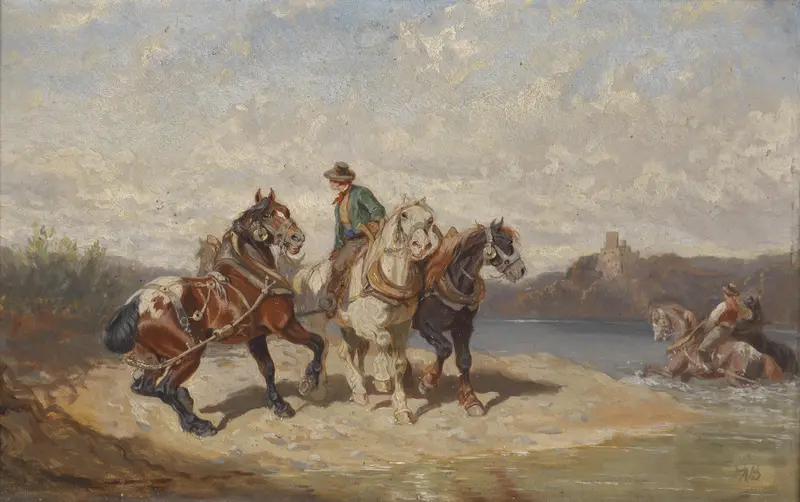
Treidelpferde an der Donau
Alexander Von Bensa
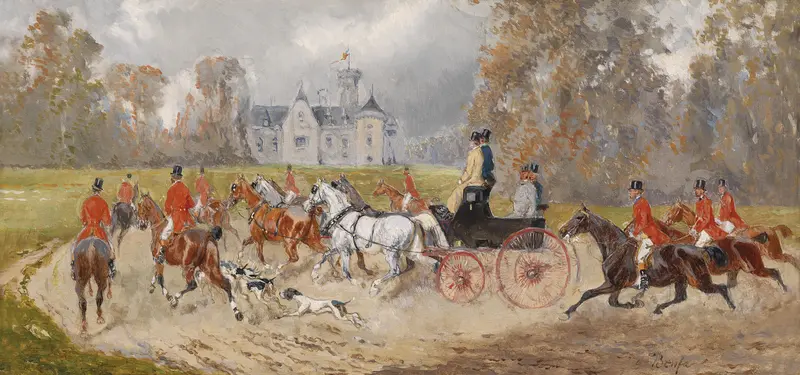
Rückkehr ins Schloss
Alexander Von Bensa
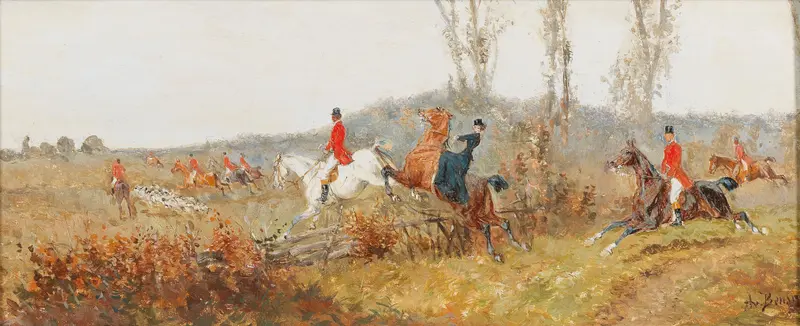
On the Scent
Alexander Von Bensa
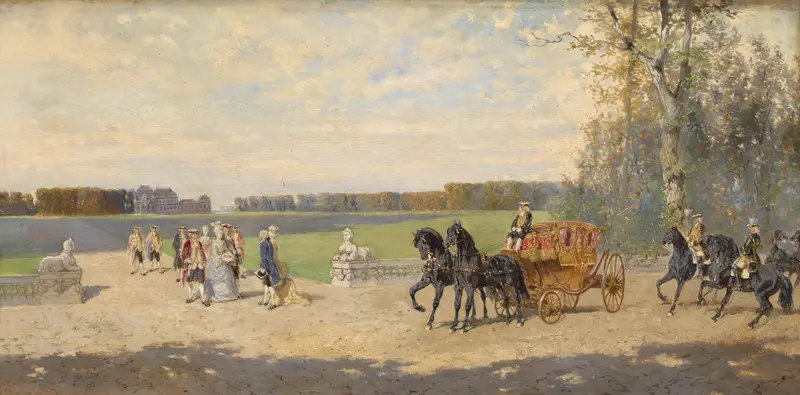
Ausfahrt vor dem Schloss
Alexander Von Bensa
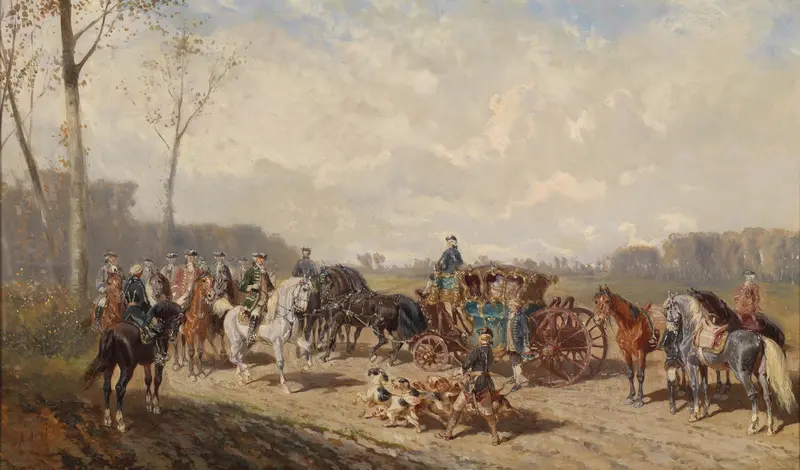
Begegnung beim Ausritt
Alexander Von Bensa
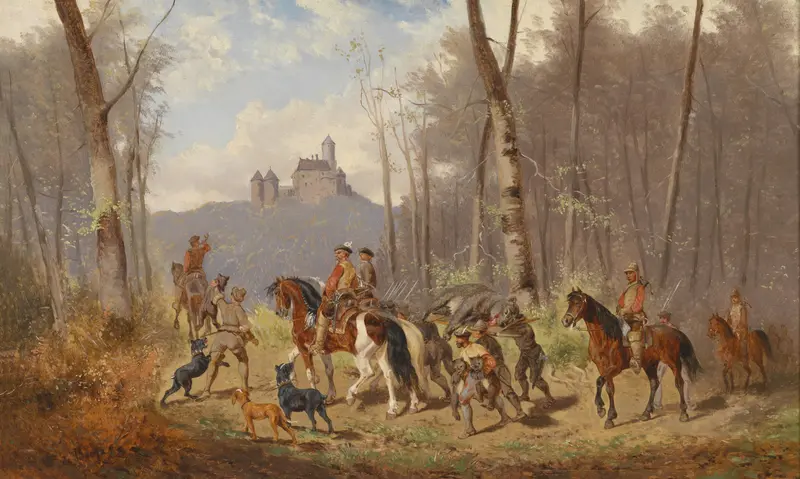
Heimkehr nach der Bärenjagd
Alexander Von Bensa
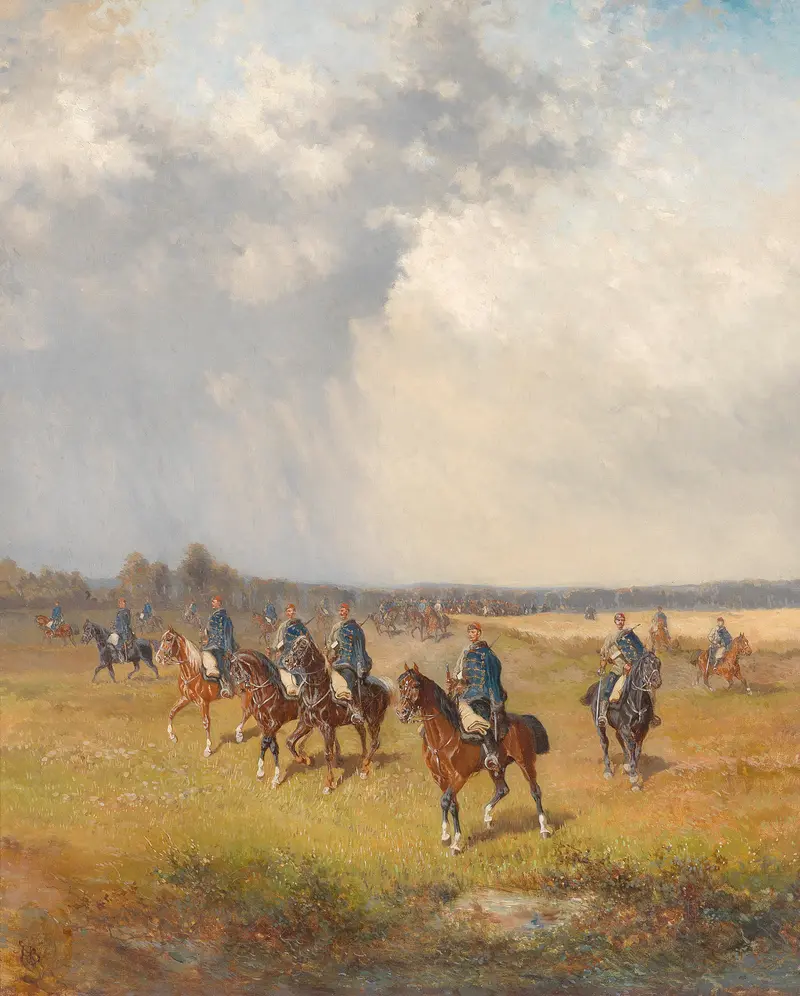
Ungarische Husaren
Alexander Von Bensa
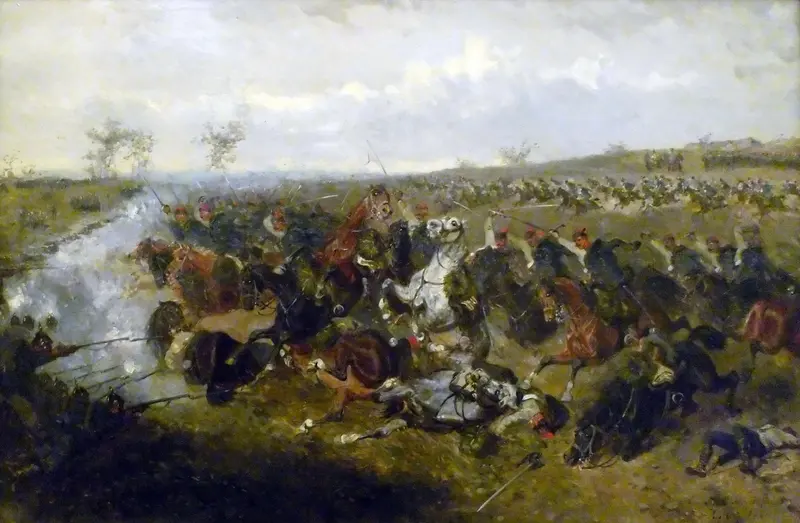
Battle of Schweinschädel.
Alexander Von Bensa
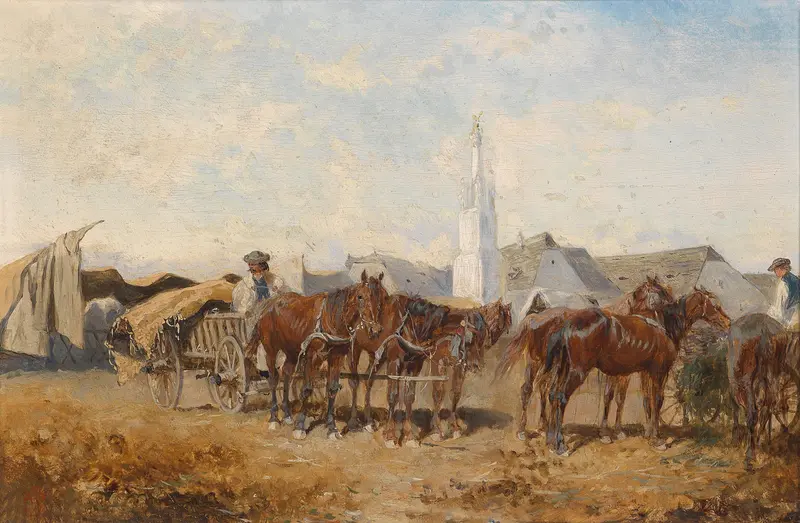
Markttag in Szolnok
Alexander Von Bensa
More Genre Scene Art

Banquet of the Officers of the St George Civic Guard
Frans Hals

Rembrandt and Saskia in the Scene of the Prodigal Son
Rembrandt van Rijn

Bal du moulin de la Galette
Pierre-Auguste Renoir

Quadrille at the Moulin Rouge
Henri de Toulouse-Lautrec

A Burial at Ornans
Gustave Courbet

When Will You Marry?
Paul Gauguin