
Rückkehr ins Schloss — History & Facts
What first catches the eye in Rückkehr ins Schloss is the sheer choreography of movement: a cavalcade of riders in bright red coats, hounds bounding at their hooves, and a carriage drawn by gleaming white horses, all sweeping in a grand arc toward the distant castle. The artist, Alexander Von Bensa, sets the pace with a swirl of dust and a flurry of legs—human, equine, and canine—each figure animated by the thrill of return. The castle itself, pale and aloof beneath a heavy sky, waits at the end of the procession, its flag a small but insistent note of welcome.
The eye is drawn from the restless energy of the foreground to the calm solidity of the architecture, as if the drama of the hunt finds its resolution in the promise of home. Painted by 1902, this work belongs to a world where the rituals of aristocratic life were both spectacle and statement. Scenes of the hunt and triumphant returns were popular subjects among the European elite, who commissioned such paintings to commemorate their privileges and traditions. The brisk, impressionistic brushwork and autumnal palette evoke the fading grandeur of the era, just as the Dorotheum collection—where this painting is documented—preserves these glimpses into a vanished social order.
Few traces remain of Von Bensa’s individual sitters or patrons, but the spirit of ceremony and belonging is still palpable in every detail, inviting the viewer to follow the riders’ path back to the castle and into the heart of a lost age.
More Artworks by Alexander Von Bensa

Historisches Karussell
Alexander Von Bensa
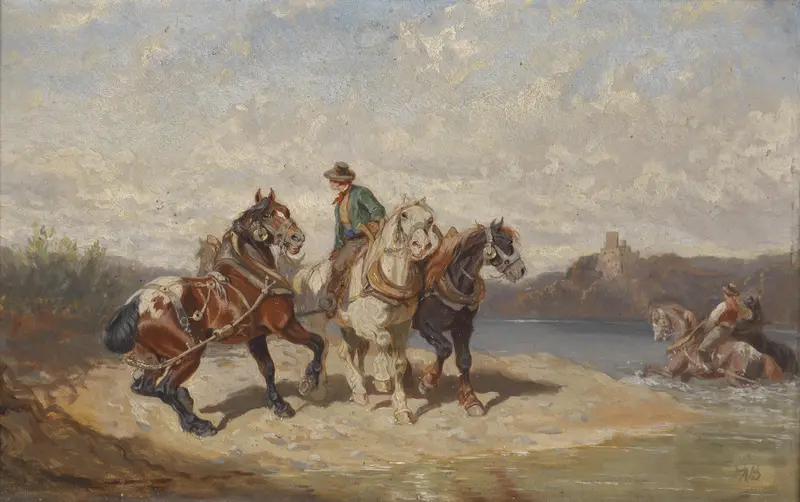
Treidelpferde an der Donau
Alexander Von Bensa
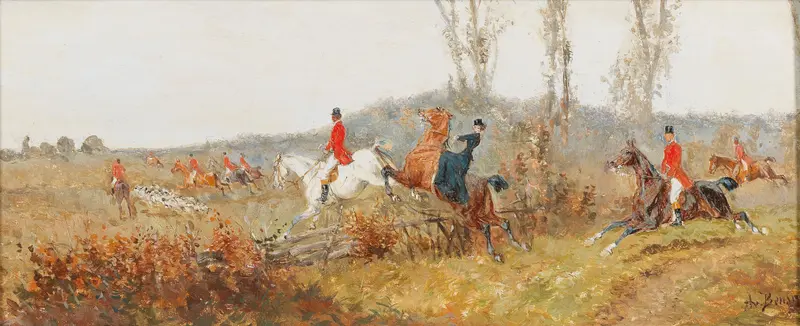
On the Scent
Alexander Von Bensa
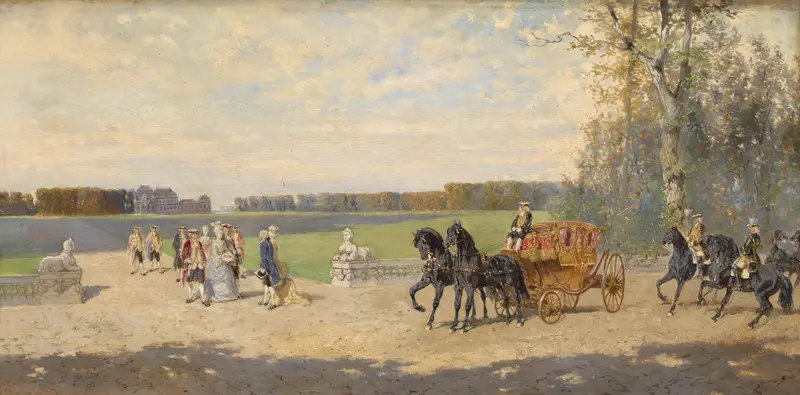
Ausfahrt vor dem Schloss
Alexander Von Bensa
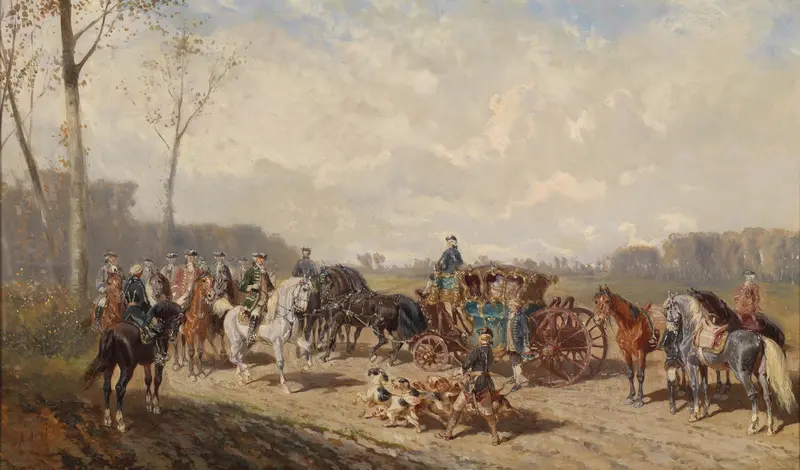
Begegnung beim Ausritt
Alexander Von Bensa
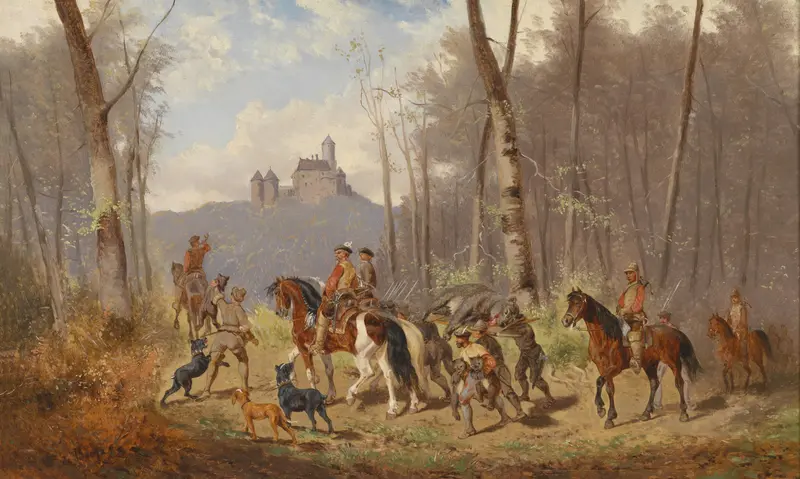
Heimkehr nach der Bärenjagd
Alexander Von Bensa
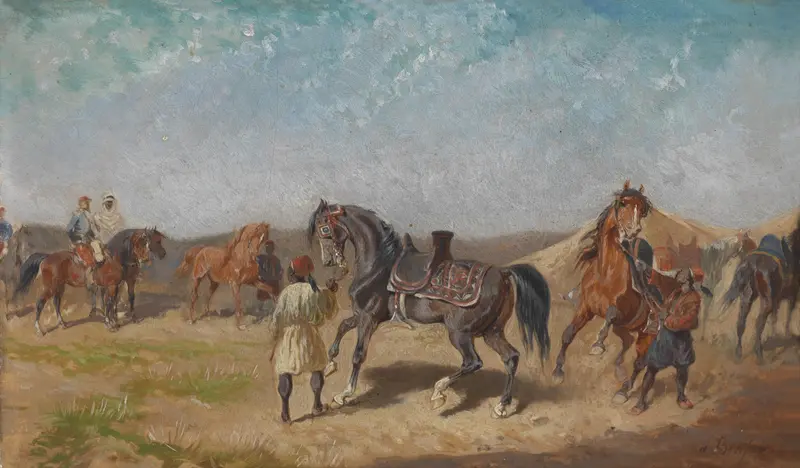
Nordafrikanisches Reiterlager
Alexander Von Bensa
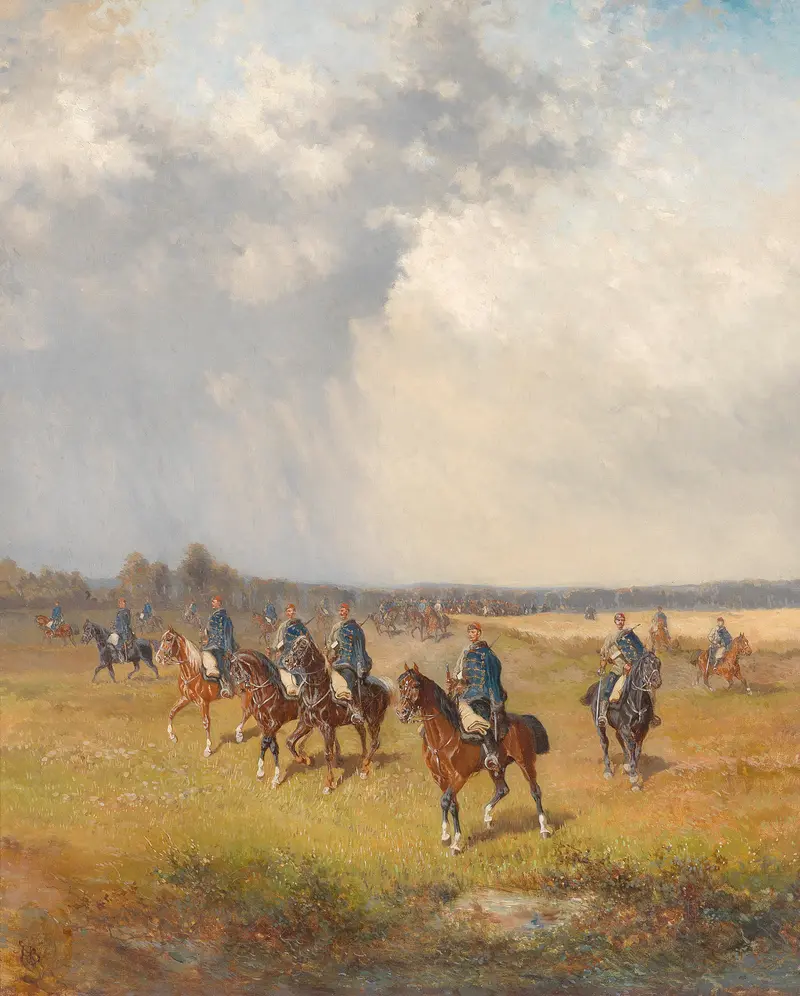
Ungarische Husaren
Alexander Von Bensa
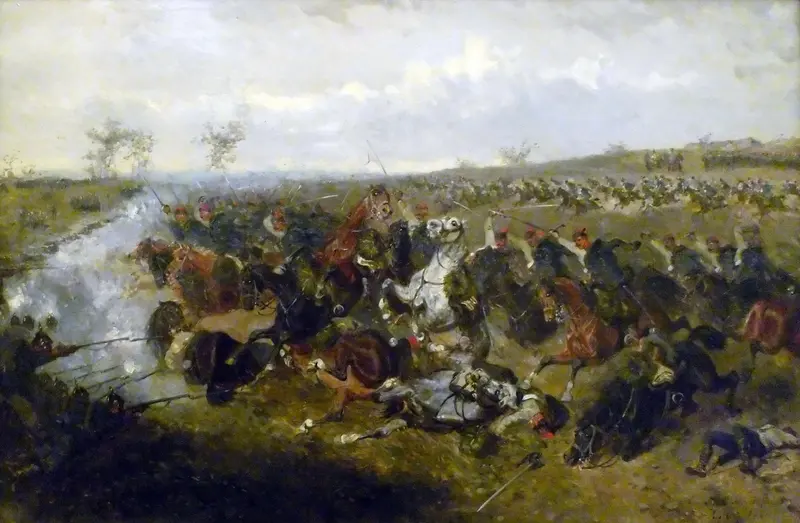
Battle of Schweinschädel.
Alexander Von Bensa
Markttag in Szolnok
Alexander Von Bensa





