
Historisches Karussell — History & Facts
The eye is instantly drawn to the whirl of horses and uniforms, a choreography of motion and color set before a grand pavilion draped in banners. The central riders, poised in mid-action as their mounts leap over striped barriers, seem to perform not just for the dignitaries beneath the purple canopy but for the entire crowd lining the arena. The striped poles and the careful arrangement of the horses create a rhythm across the foreground, guiding the viewer’s gaze from left to right, while the dense foliage in the background frames the spectacle and intensifies the focus on the arena itself.
The sunlight glances off polished helmets and the glossy coats of the horses, lending a sense of occasion and pageantry to the scene. Every detail—the fluttering ribbons, the crisp uniforms, the spectators in shadow—signals a moment of ceremonial display, where the boundaries between military discipline and festive entertainment blur. Painted by Alexander Von Bensa by 1902, this work belongs to a world where public demonstrations of horsemanship and military prowess were both social highlight and political theater. Such scenes were popular in late nineteenth- and early twentieth-century Europe, often commissioned to commemorate royal events, military anniversaries, or civic celebrations.
The presence of the pavilion and the sheer number of onlookers suggest a carefully staged event, perhaps a tournament or a parade, reflecting the era’s fascination with spectacle and order. Now held in the Dorotheum collection, Historisches Karussell stands as a lively document of its time, inviting us to imagine the sounds, the cheers, and the thundering hooves that once filled such arenas. Look again at the riders mid-leap, and the painting itself seems to pulse with the energy of a vanished age.
More Artworks by Alexander Von Bensa
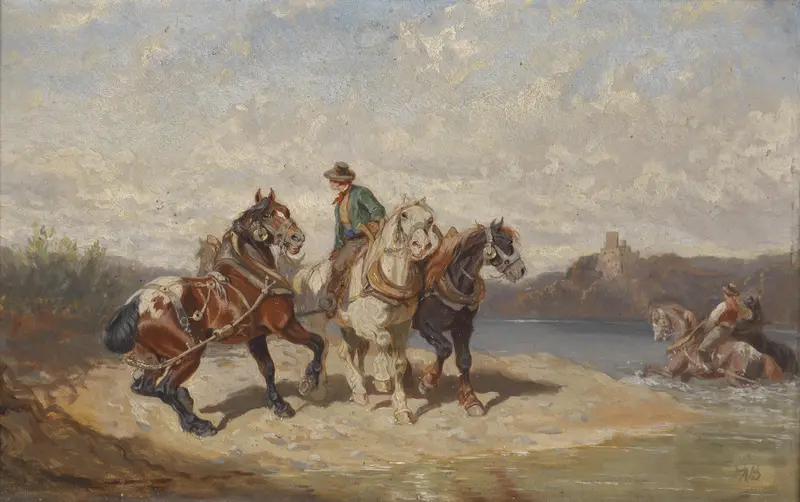
Treidelpferde an der Donau
Alexander Von Bensa
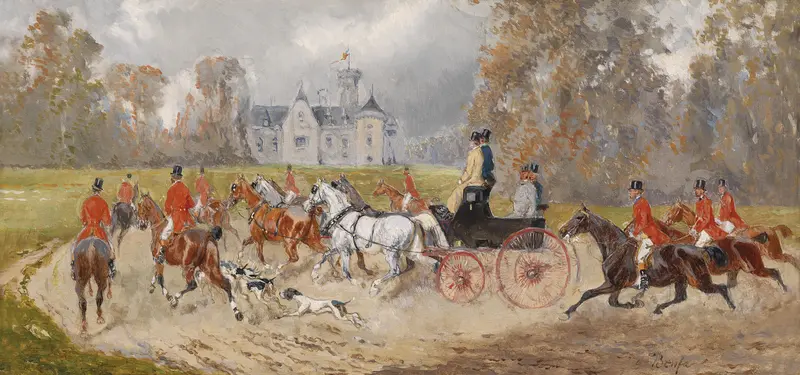
Rückkehr ins Schloss
Alexander Von Bensa
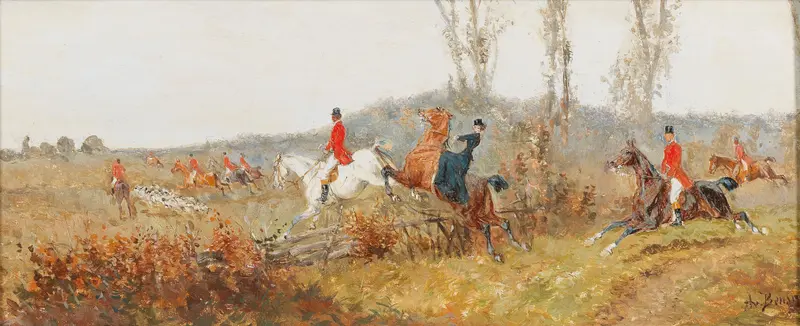
On the Scent
Alexander Von Bensa
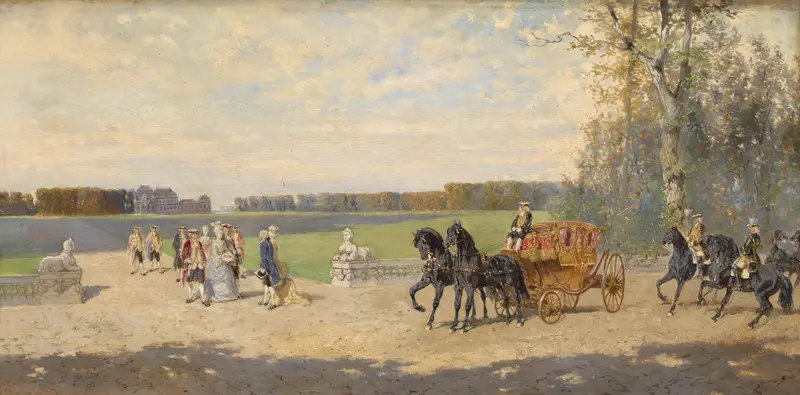
Ausfahrt vor dem Schloss
Alexander Von Bensa
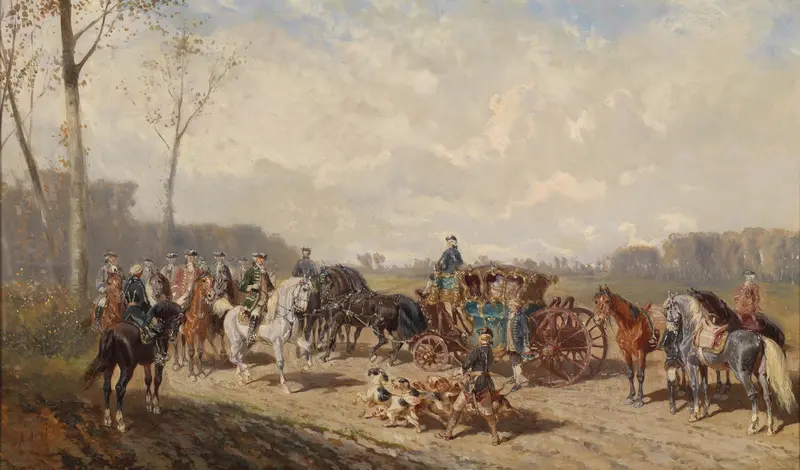
Begegnung beim Ausritt
Alexander Von Bensa
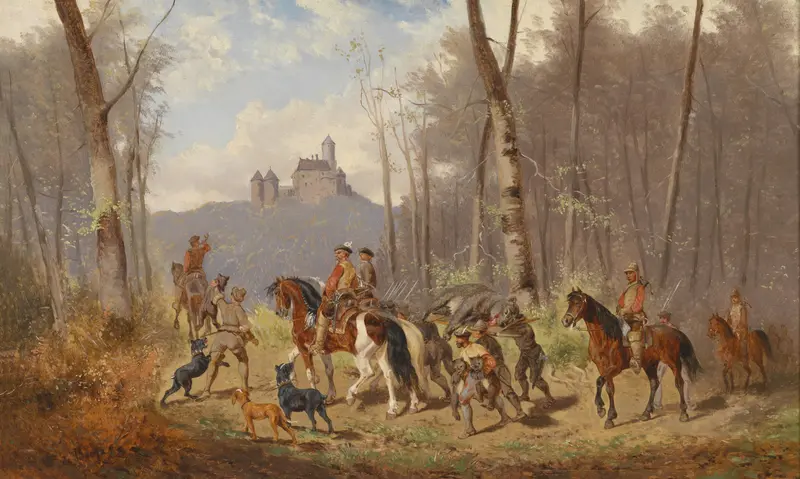
Heimkehr nach der Bärenjagd
Alexander Von Bensa
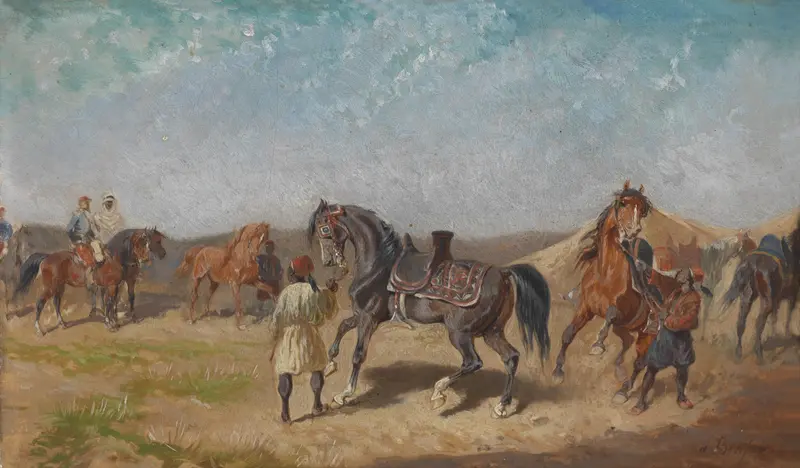
Nordafrikanisches Reiterlager
Alexander Von Bensa
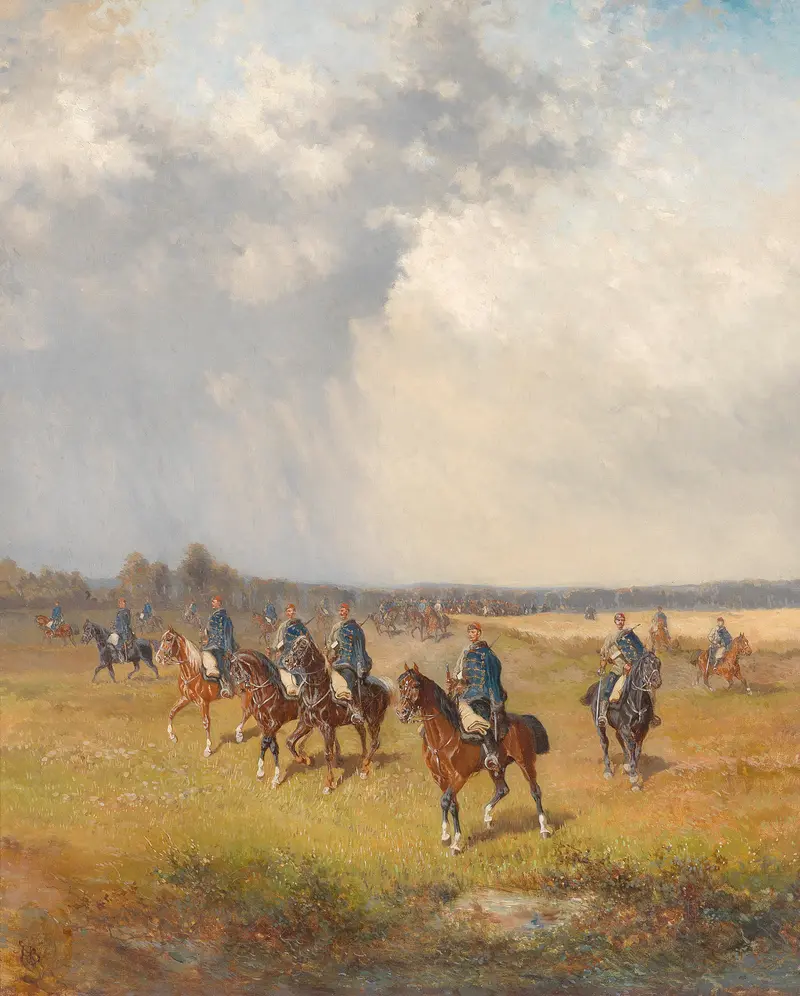
Ungarische Husaren
Alexander Von Bensa
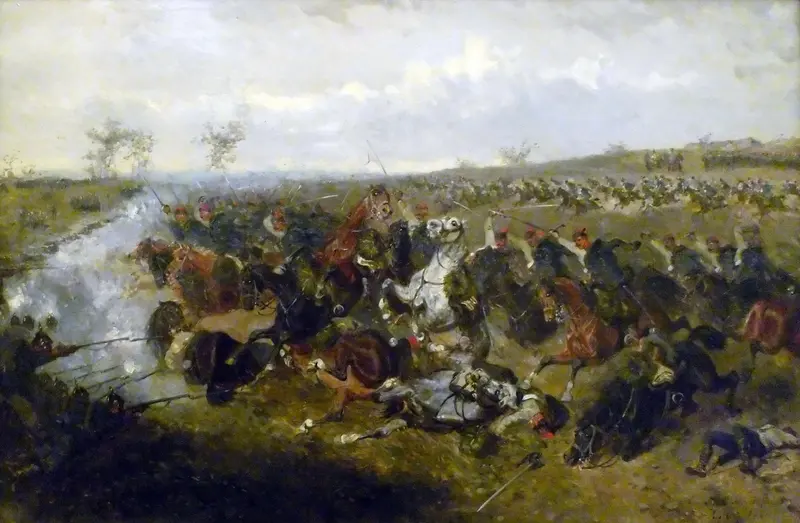
Battle of Schweinschädel.
Alexander Von Bensa
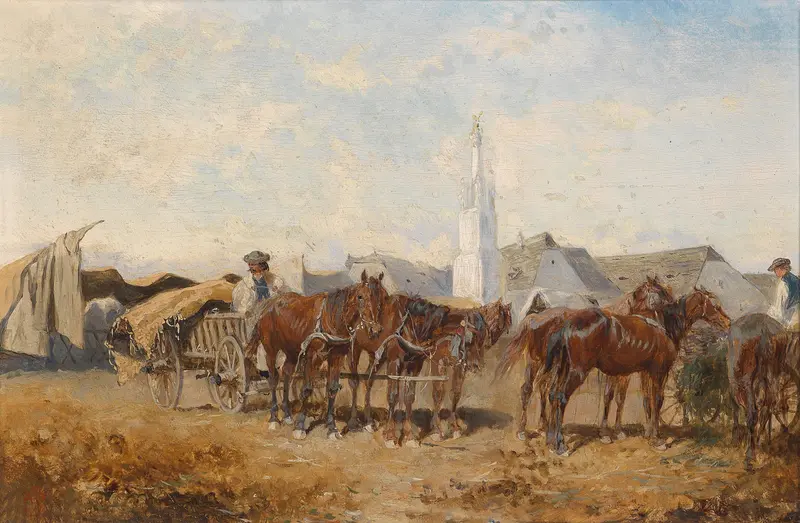
Markttag in Szolnok
Alexander Von Bensa





