
Treidelpferde an der Donau — History & Facts
What first seizes the eye in Treidelpferde an der Donau is the muscular tension of the horses, caught mid-stride as they haul unseen cargo along the riverbank. The lead horse, chestnut and white, plants its hoof with a sense of stubborn resistance, while the man astride the pale horse leans forward, his posture both commanding and wary. The sky, broad and cloud-streaked, presses down with a weight that echoes the labor on the ground, and the distant ruin on the hill hints at histories layered behind this moment of toil.
Every harness strap and muddy hoof is rendered with a directness that insists we notice the physical reality of work—there is nothing romanticized here, only the daily negotiation between man, animal, and river. This scene belongs to a world where riverbanks were highways and horsepower meant muscle, not machinery. In the decades before 1902, when Alexander Von Bensa painted this, the sight of draft horses towing barges along the Danube was as common as the castles that watched from above. Such images were cherished by a public fascinated by both the picturesque and the practical—collectors and patrons alike sought reminders of a vanishing rural order as industrialization crept ever closer.
Today, the painting resides in the Dorotheum collection, its exact journey through time largely unrecorded, but its subject still quietly monumental. Look again at the horses’ straining necks, and you see not just a moment, but the memory of a whole way of moving through the world.
More Artworks by Alexander Von Bensa

Historisches Karussell
Alexander Von Bensa
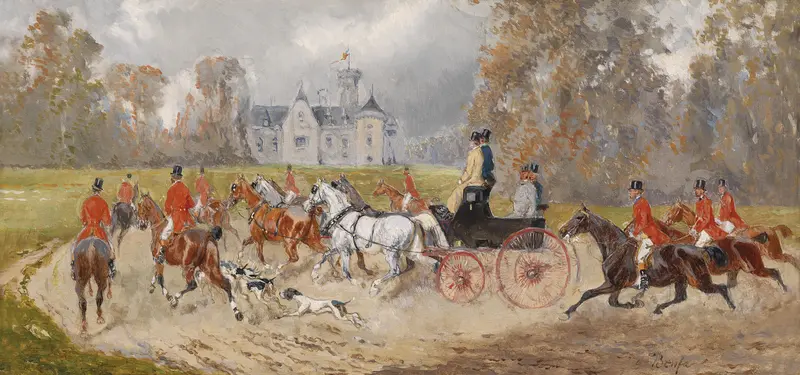
Rückkehr ins Schloss
Alexander Von Bensa
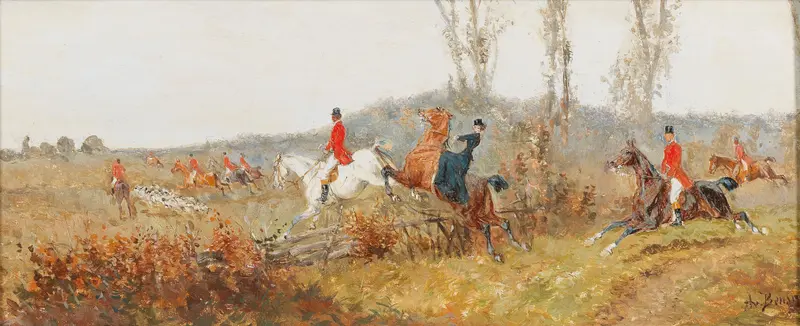
On the Scent
Alexander Von Bensa
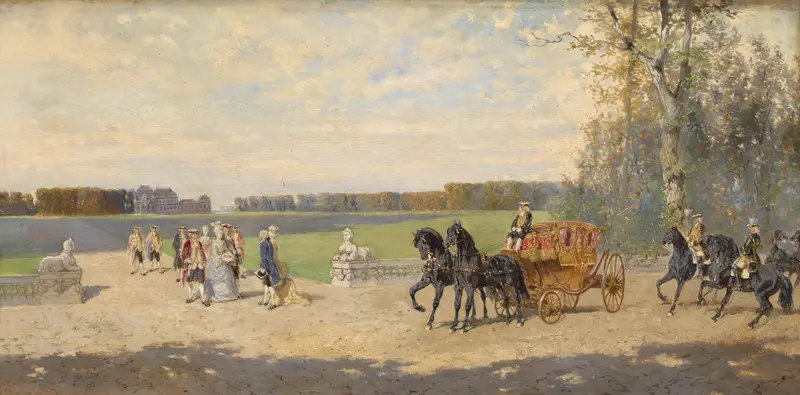
Ausfahrt vor dem Schloss
Alexander Von Bensa
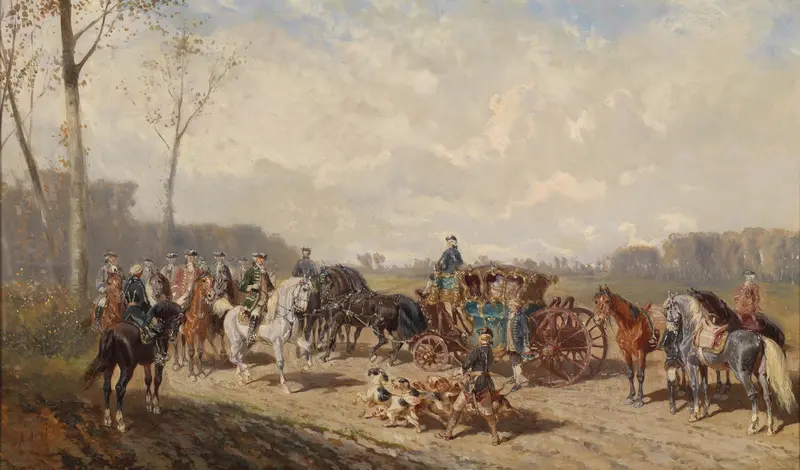
Begegnung beim Ausritt
Alexander Von Bensa
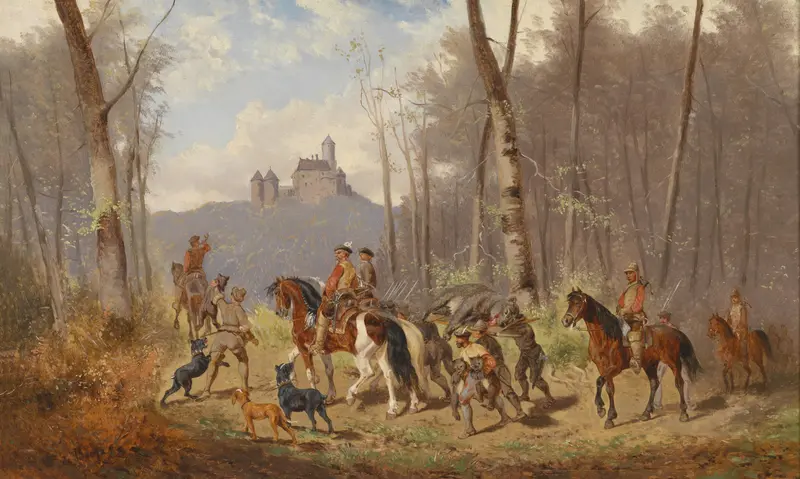
Heimkehr nach der Bärenjagd
Alexander Von Bensa
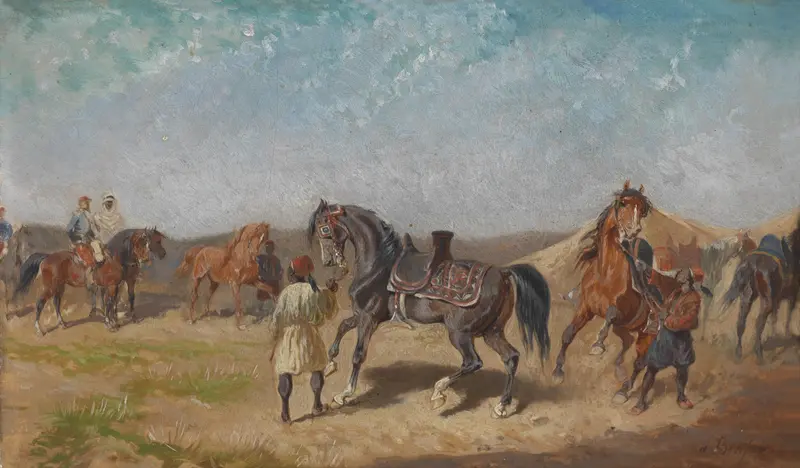
Nordafrikanisches Reiterlager
Alexander Von Bensa
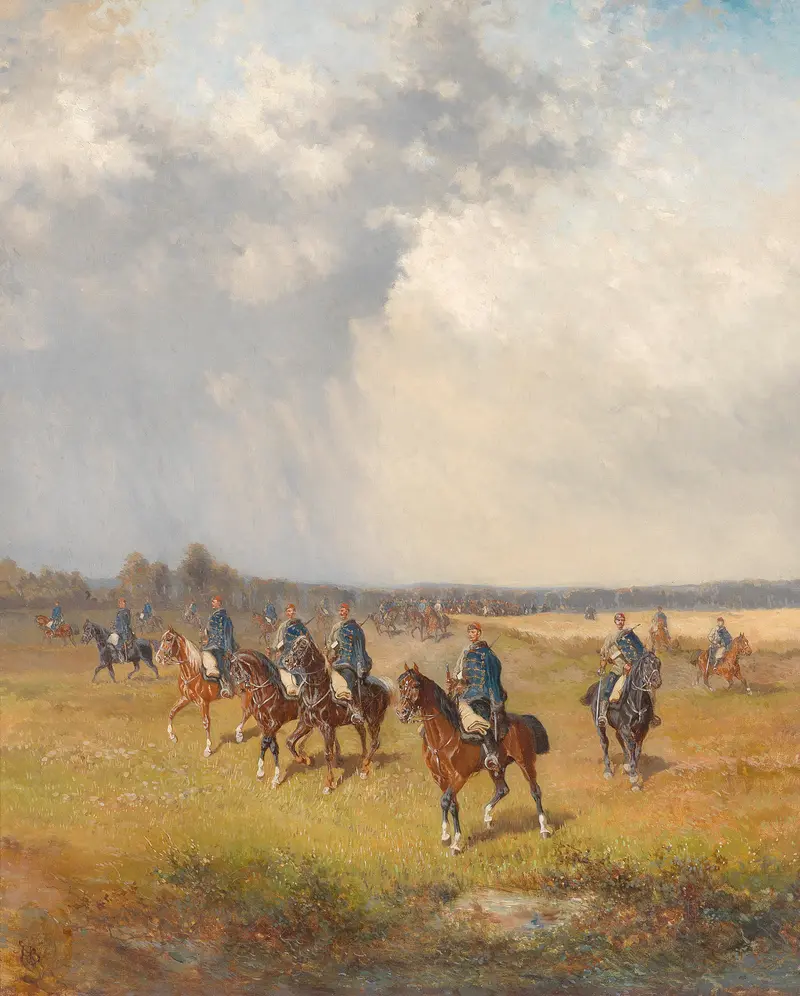
Ungarische Husaren
Alexander Von Bensa
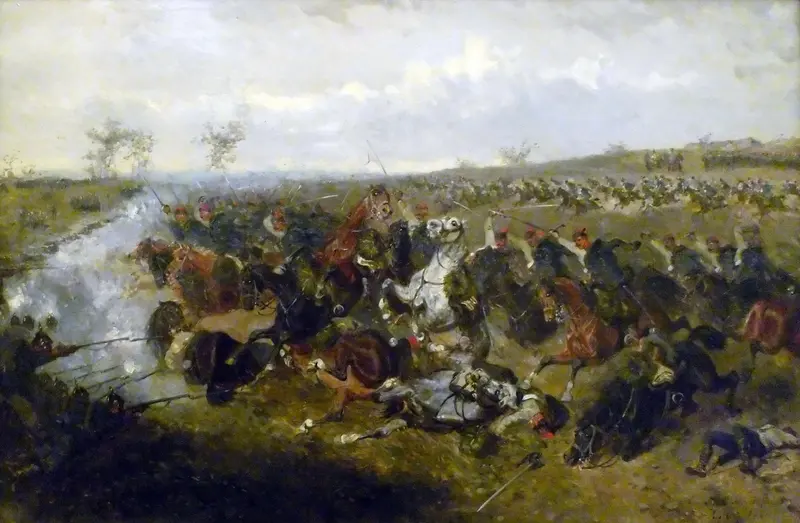
Battle of Schweinschädel.
Alexander Von Bensa
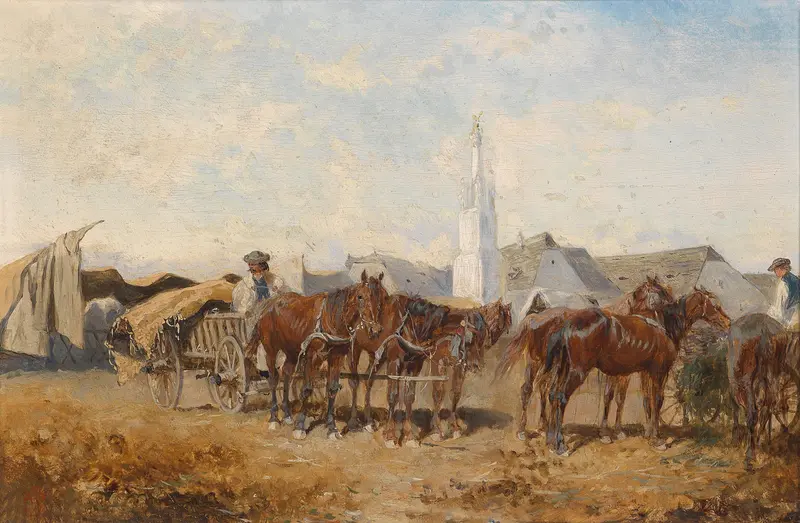
Markttag in Szolnok
Alexander Von Bensa
More Genre Scene Art

Banquet of the Officers of the St George Civic Guard
Frans Hals

Rembrandt and Saskia in the Scene of the Prodigal Son
Rembrandt van Rijn

Bal du moulin de la Galette
Pierre-Auguste Renoir

Quadrille at the Moulin Rouge
Henri de Toulouse-Lautrec

A Burial at Ornans
Gustave Courbet

When Will You Marry?
Paul Gauguin