
Ausfahrt vor dem Schloss — History & Facts
A golden carriage waits at the edge of a sunlit avenue, horses restless, as a small procession of elegantly dressed figures makes its way from the distant palace. The painter, Alexander Von Bensa, draws the viewer’s gaze first to the interplay between the poised figures and the opulent vehicle, then out across the sweeping lawns to the stately building on the horizon. The light is gentle, almost theatrical, illuminating powdered wigs and embroidered coats, while the shadows of trees on the right anchor the scene in a moment of anticipation.
Every detail — from the sphinx-like sculptures marking the balustrade to the crisp trim of the coachmen’s uniforms — signals a world of ceremony and rank, where every gesture and accessory is a declaration of status. Painted by 1902, Ausfahrt vor dem Schloss belongs to a tradition that looked back to the grandeur of the eighteenth-century court, even as the old order was fading. Scenes like this were favored by collectors and the rising bourgeoisie, who sought reminders of a vanished aristocratic world: its rituals, its pageantry, and the calm order of its landscapes. The painting’s current home in the Dorotheum collection is a reminder of how such works passed through the hands of connoisseurs and auctioneers, their precise histories often lost to time.
Yet the scene invites us to linger, to imagine the stories behind each figure, and to wonder at the quiet drama of departure and arrival that once defined life at the palace gates.
More Artworks by Alexander Von Bensa

Historisches Karussell
Alexander Von Bensa
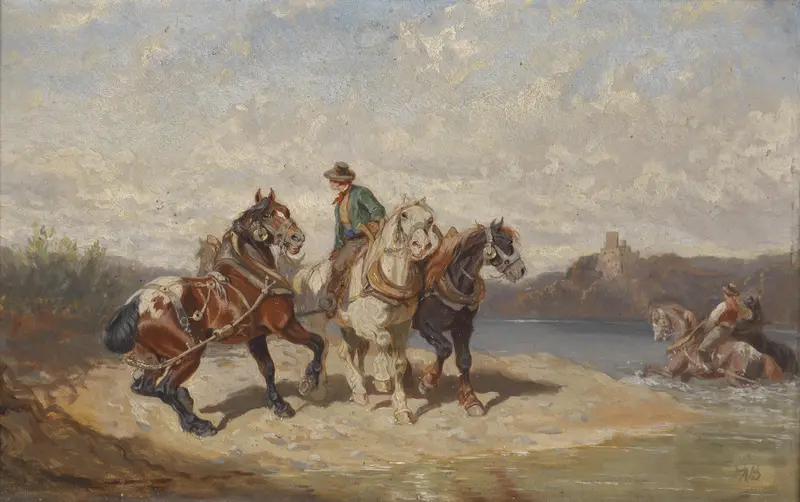
Treidelpferde an der Donau
Alexander Von Bensa
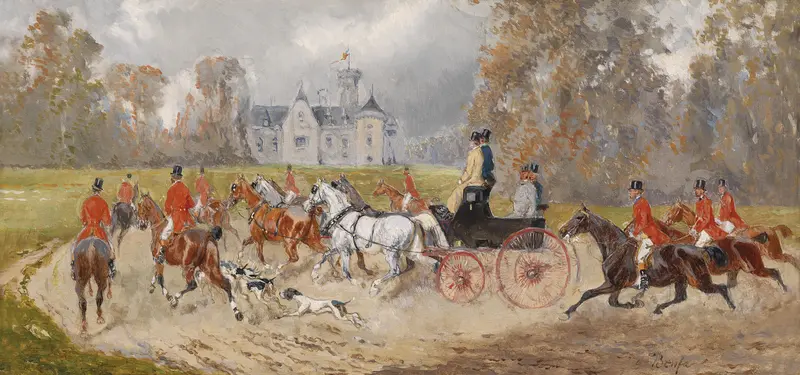
Rückkehr ins Schloss
Alexander Von Bensa
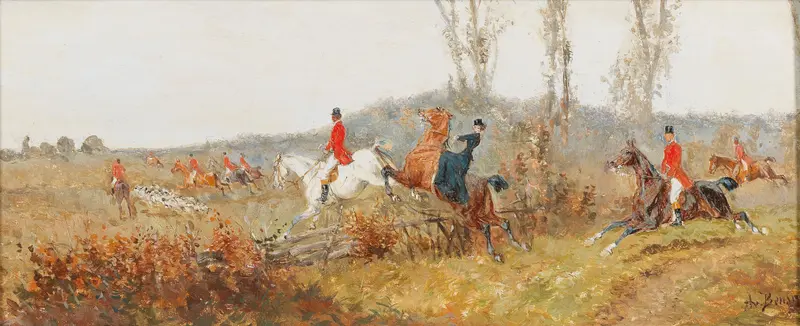
On the Scent
Alexander Von Bensa
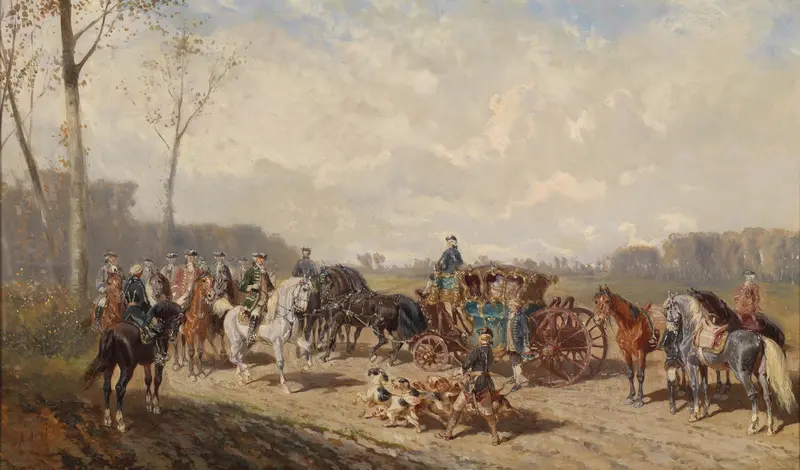
Begegnung beim Ausritt
Alexander Von Bensa
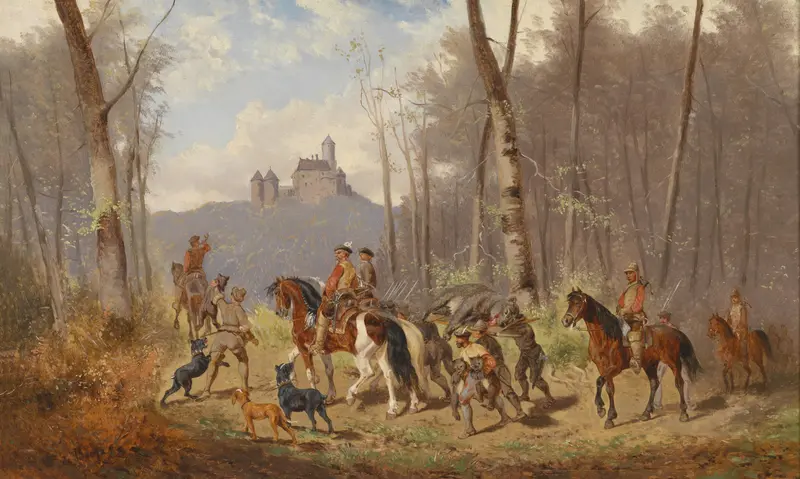
Heimkehr nach der Bärenjagd
Alexander Von Bensa
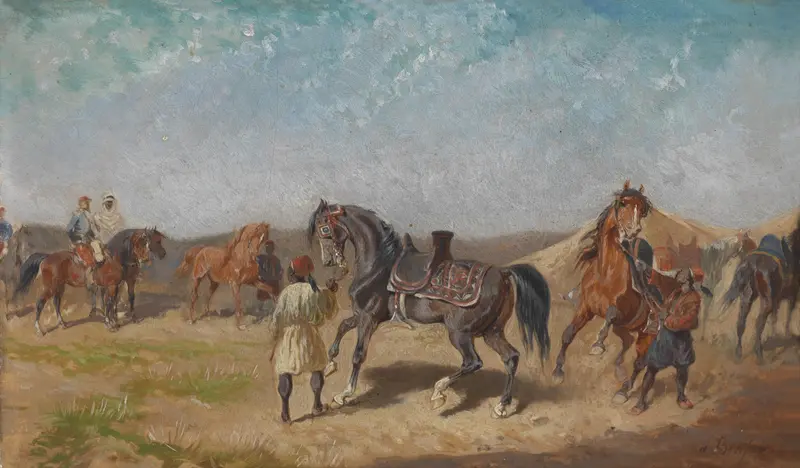
Nordafrikanisches Reiterlager
Alexander Von Bensa
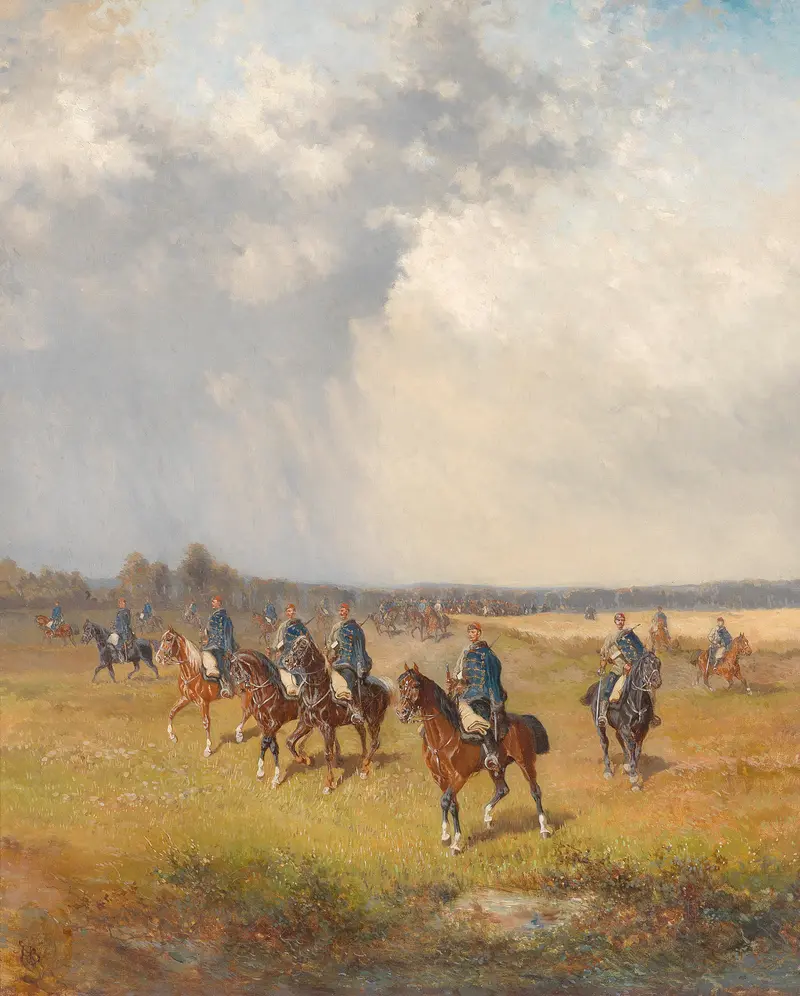
Ungarische Husaren
Alexander Von Bensa
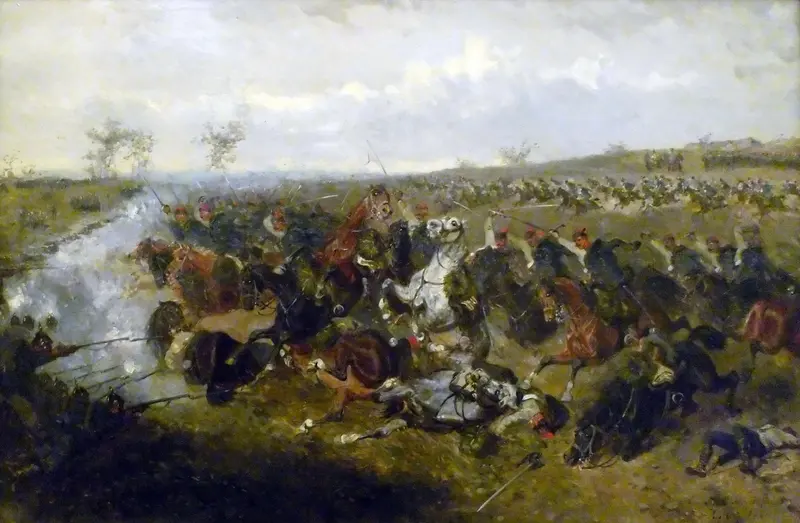
Battle of Schweinschädel.
Alexander Von Bensa
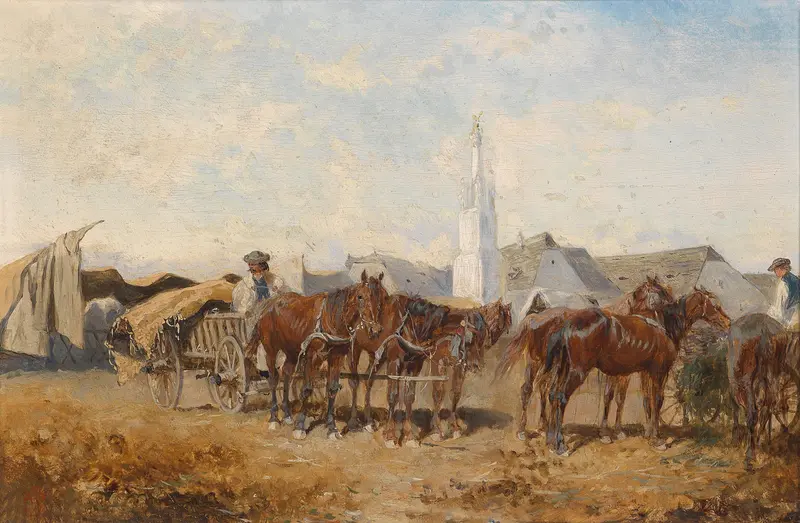
Markttag in Szolnok
Alexander Von Bensa
More Genre Scene Art

Banquet of the Officers of the St George Civic Guard
Frans Hals

Rembrandt and Saskia in the Scene of the Prodigal Son
Rembrandt van Rijn

Bal du moulin de la Galette
Pierre-Auguste Renoir

Quadrille at the Moulin Rouge
Henri de Toulouse-Lautrec

A Burial at Ornans
Gustave Courbet

When Will You Marry?
Paul Gauguin