
Begegnung beim Ausritt — History & Facts
What first draws the eye in Begegnung beim Ausritt is the sense of anticipation, as if the entire company—riders, carriage, and hounds—has paused at the very threshold of a story. The painter, Alexander Von Bensa, arranges his figures in a loose arc beneath a sky that seems to stretch forever, the pale light catching on satin jackets, glossy horses, and the gilded trim of the carriage. The meeting itself is ambiguous: is this a chance encounter, a rendezvous, or the ceremonial start of a hunt? The dogs, alert and eager, cluster at the center, their energy a foil to the composed elegance of the riders.
The careful choreography of glances and gestures suggests a world governed by ritual, yet open to the unpredictable drama of the countryside. Painted by 1902, this work belongs to a tradition that looked back to the pageantry and leisure of the eighteenth-century aristocracy, even as Europe itself was on the brink of modern transformation. Such scenes were favored by collectors who sought to evoke a vanished order, where landowners asserted their status through displays of horses, carriages, and retinues. The Dorotheum collection, which holds this painting, is itself a testament to the enduring appeal of these images—windows onto a world of ceremony and privilege.
History has kept few traces of Begegnung beim Ausritt beyond its date and its passage through the Dorotheum, but the painting invites us to linger, to imagine the conversations and ambitions that once animated this poised assembly.
More Artworks by Alexander Von Bensa

Historisches Karussell
Alexander Von Bensa
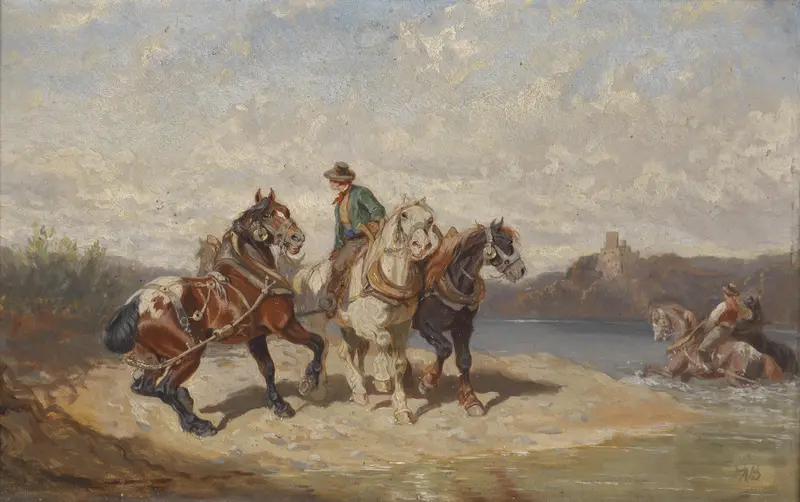
Treidelpferde an der Donau
Alexander Von Bensa
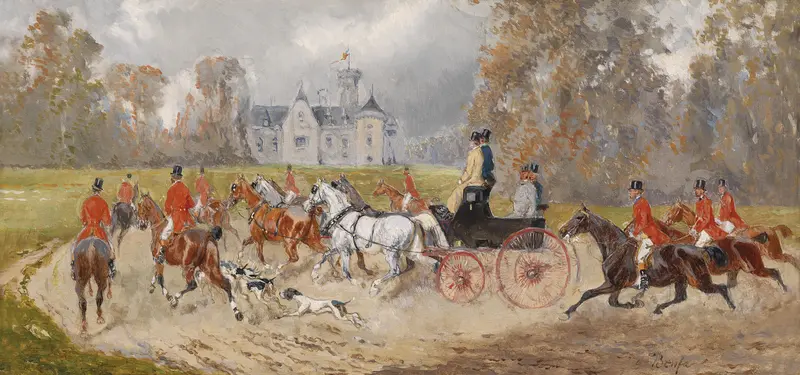
Rückkehr ins Schloss
Alexander Von Bensa
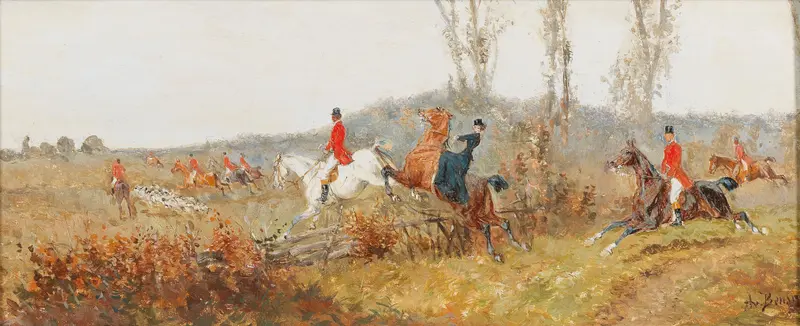
On the Scent
Alexander Von Bensa
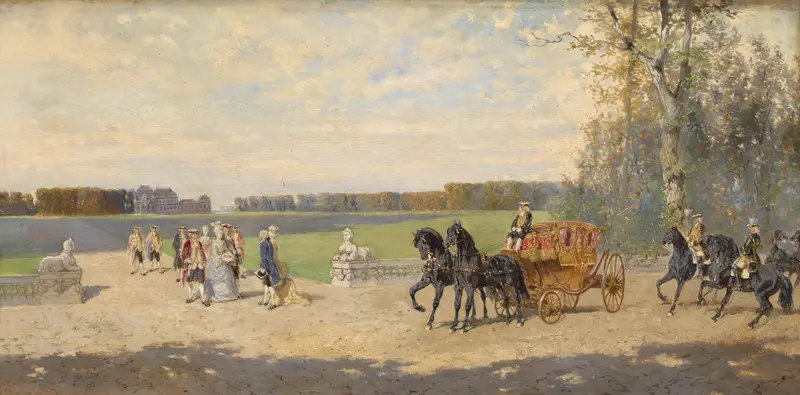
Ausfahrt vor dem Schloss
Alexander Von Bensa
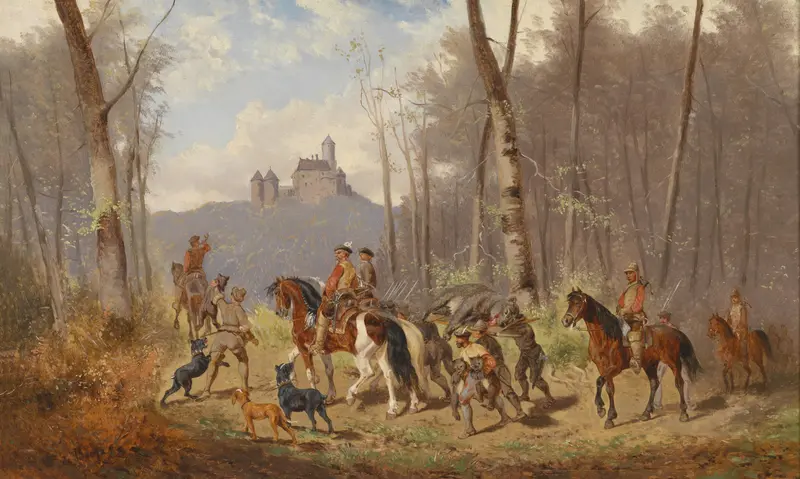
Heimkehr nach der Bärenjagd
Alexander Von Bensa
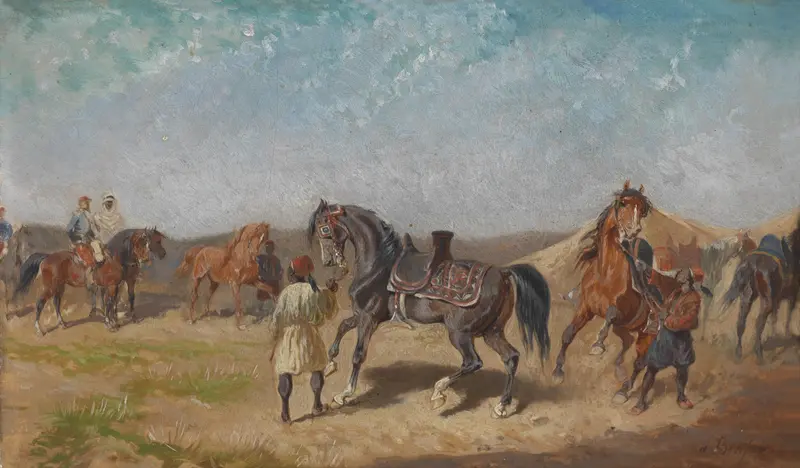
Nordafrikanisches Reiterlager
Alexander Von Bensa
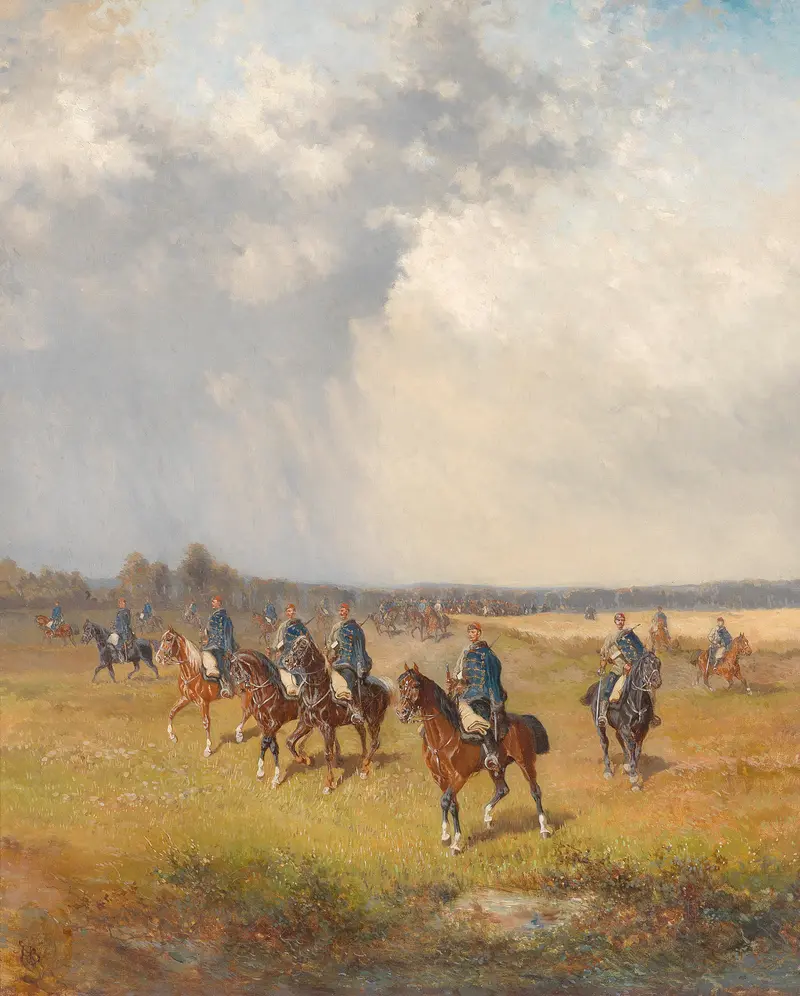
Ungarische Husaren
Alexander Von Bensa
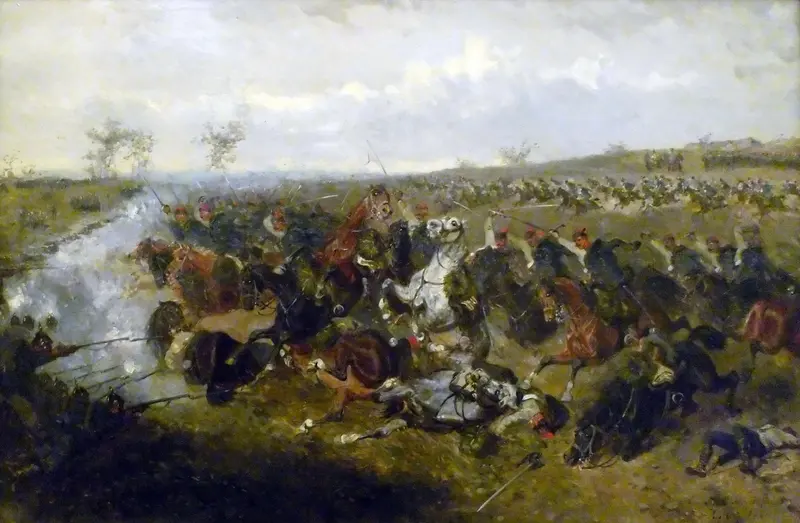
Battle of Schweinschädel.
Alexander Von Bensa
Markttag in Szolnok
Alexander Von Bensa
More Genre Scene Art

Banquet of the Officers of the St George Civic Guard
Frans Hals

Rembrandt and Saskia in the Scene of the Prodigal Son
Rembrandt van Rijn

Bal du moulin de la Galette
Pierre-Auguste Renoir

Quadrille at the Moulin Rouge
Henri de Toulouse-Lautrec

A Burial at Ornans
Gustave Courbet

When Will You Marry?
Paul Gauguin