
Upland Pasture — History & Facts
Can paint confess what words never could? In Upland Pasture, the canvas breathes with a yearning that transcends the confines of language, inviting us to immerse ourselves in its tranquil embrace. Focus on the rolling hills in the background, where shades of green blend seamlessly into whispers of gold and amber. Notice how the soft light bathes the pasture, filtering through the ethereal sky, creating an atmosphere of serene contemplation. The composition invites your gaze to wander, with the gentle curvature of the land leading you to the distant horizon, where nature seems to converge in an embrace of infinite possibility. The emotional tension within the painting is palpable, stemming from the contrast between the lush, inviting pasture and the lingering sense of solitude it conveys.
Small details—a lone tree standing sentinel, a flock of birds taking flight—speak to the quiet dance of life and the ache of longing for connection. Inness captures a moment suspended in time, eliciting a sense of nostalgia, as if this idyllic scene whispers tales of dreams yet to be fulfilled. Created in 1862, during a pivotal moment in American art, this work reflects George Inness's embrace of the Hudson River School's ideals while also pushing towards a more personal, impressionistic style. It was a time when he was influenced by European masters, as well as the spiritual interpretations of nature that began blooming in the art world.
His work during this period marks a significant transition, as he sought to convey deeper emotional truths through the interplay of light and landscape.
More Artworks by George Inness
Browse all →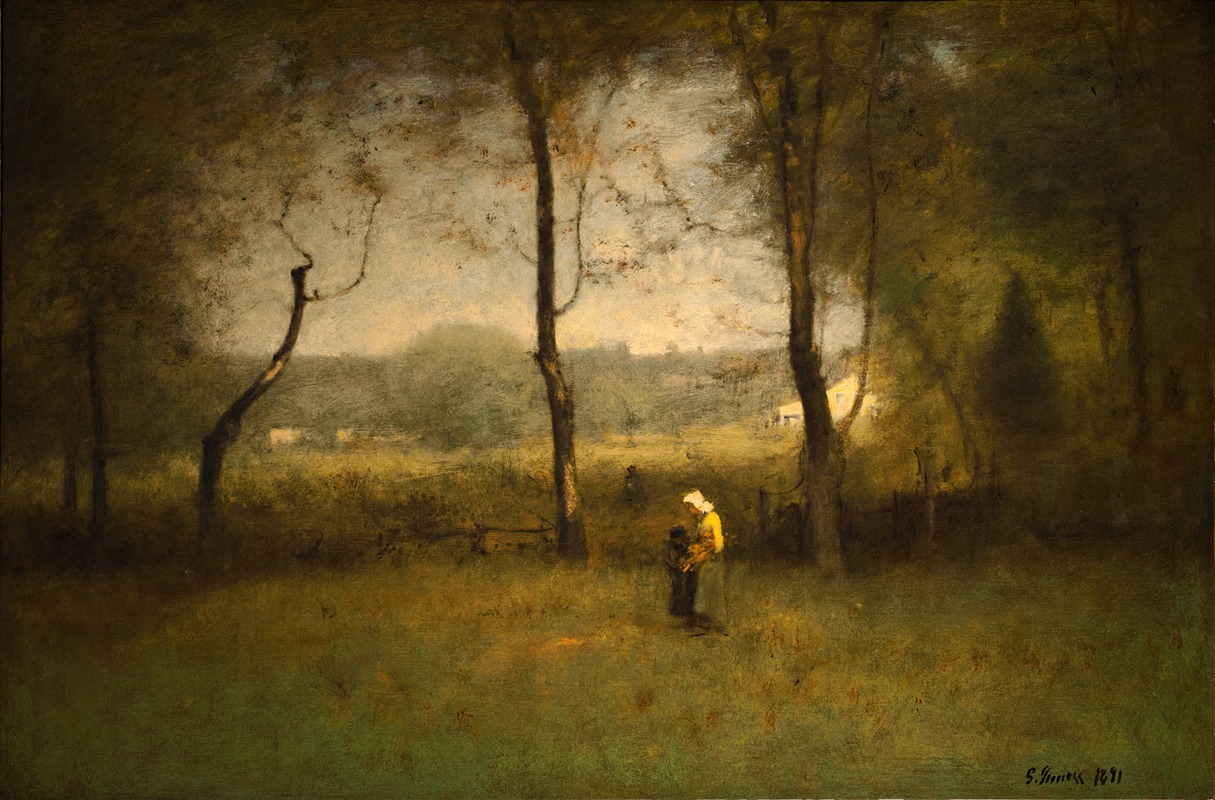
Autumn Woods
George Inness
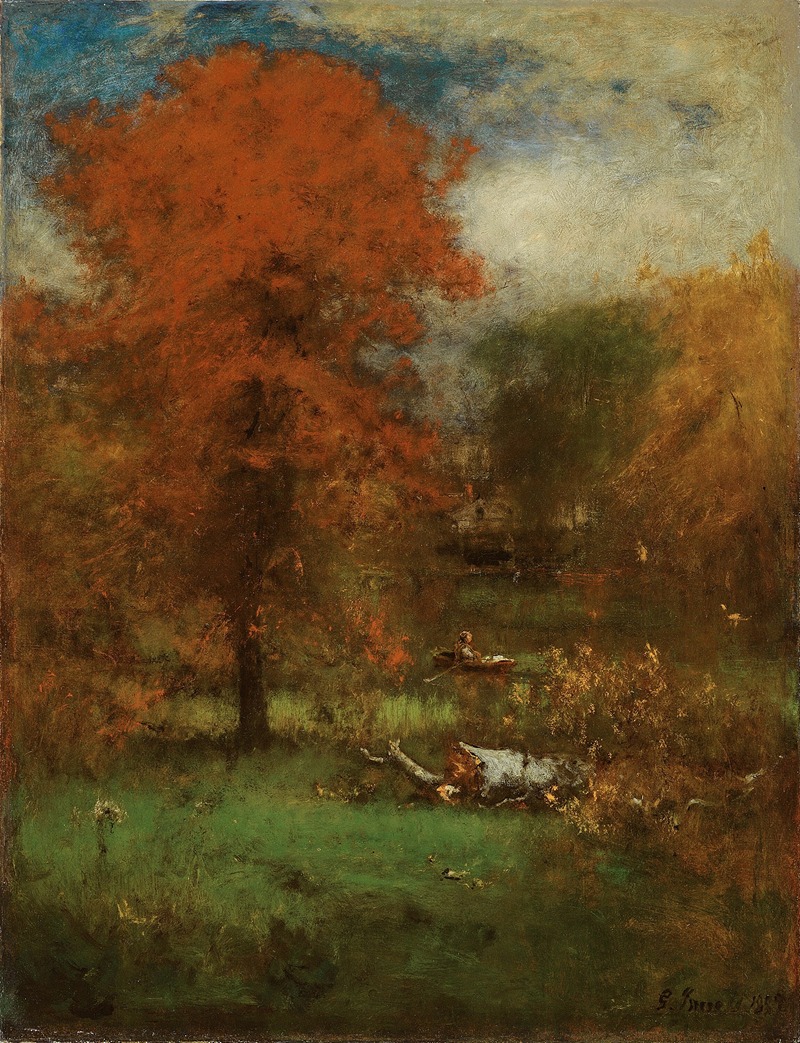
The Mill Pond
George Inness
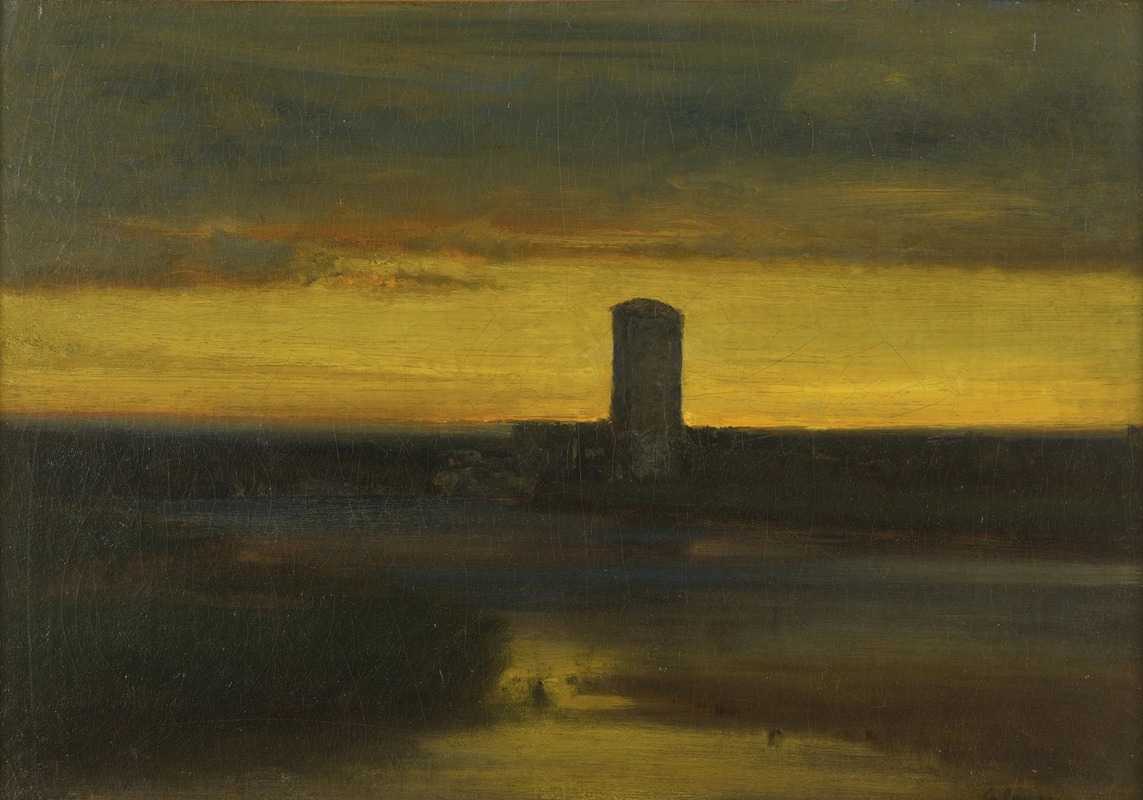
Afterglow
George Inness
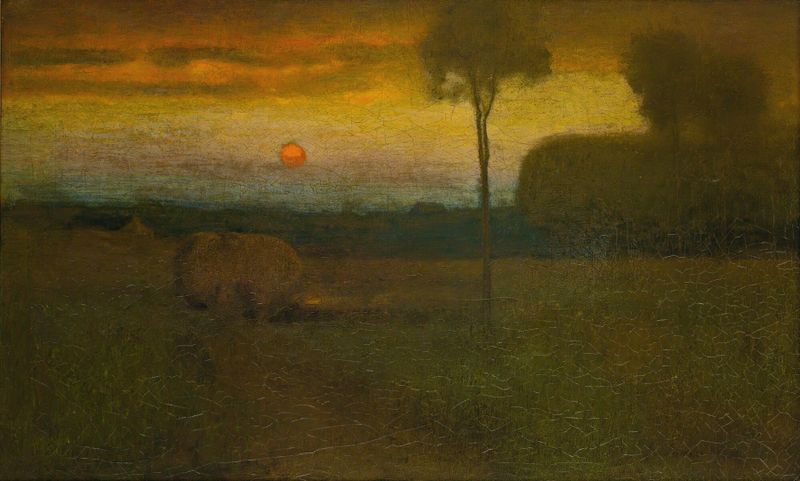
Landscape (Evening Landscape)
George Inness

Montclair
George Inness

View in Berkshire County, Massachusetts, Clearing Off after a September Storm
George Inness

October
George Inness
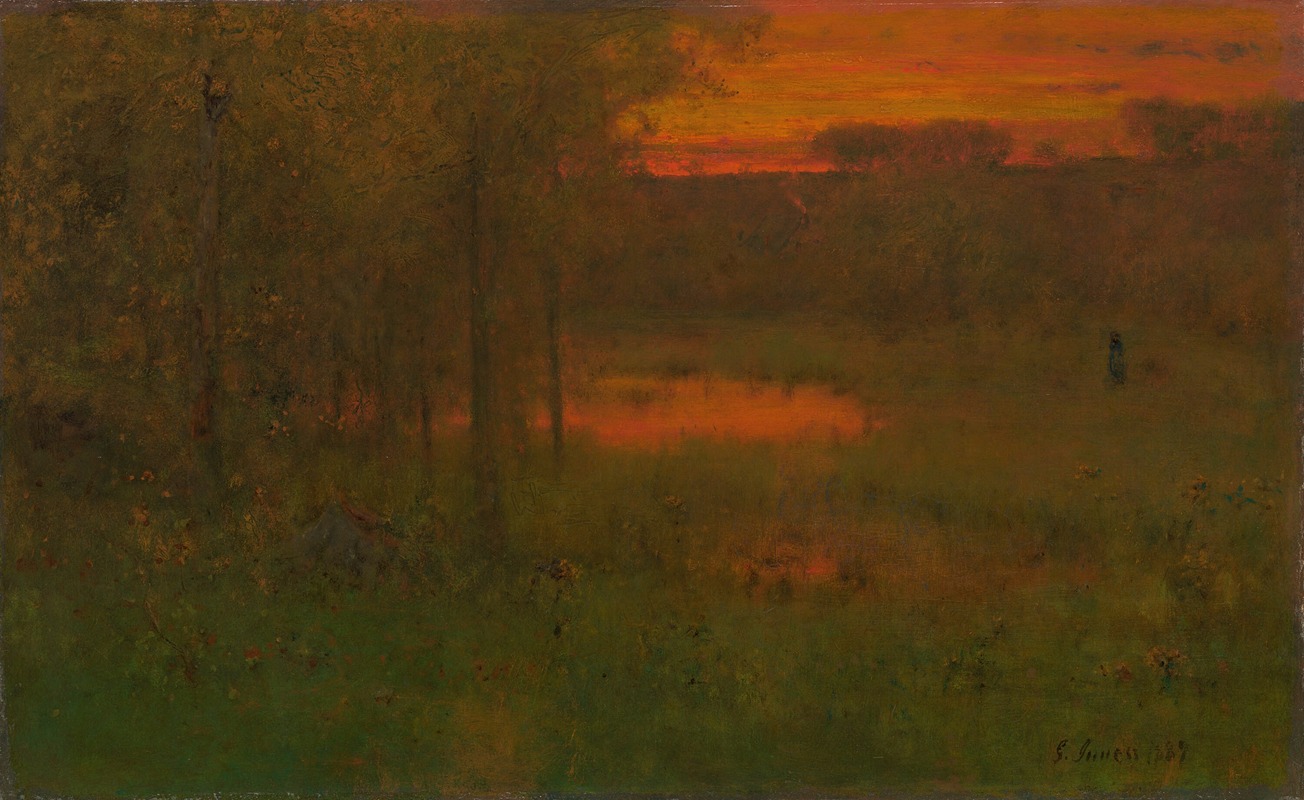
Landscape, Sunset
George Inness
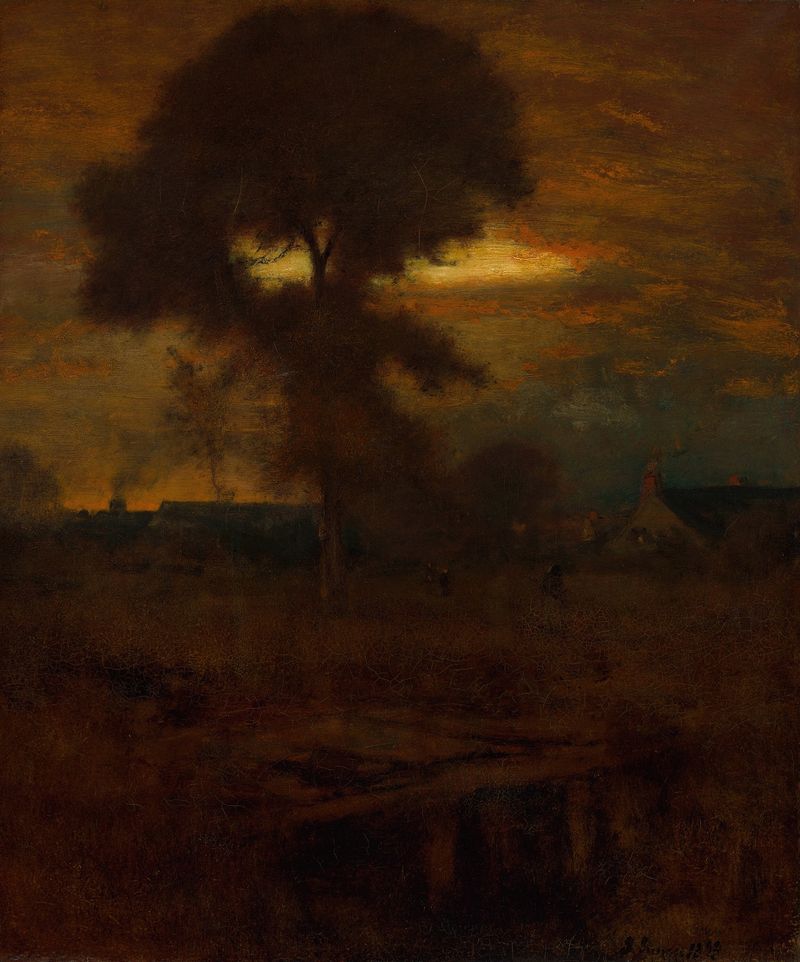
Afterglow
George Inness
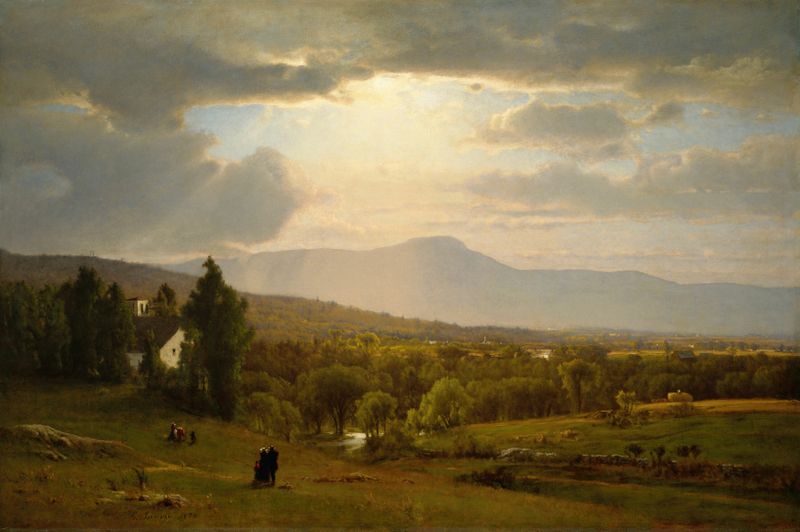
Catskill Mountains
George Inness





