
Vase of flowers — History & Facts
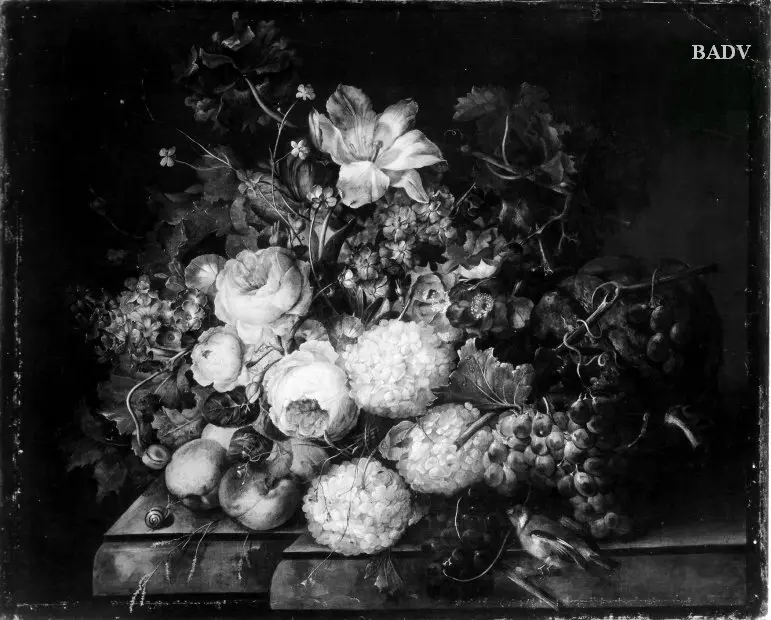
A riot of color bursts from the darkness, each petal and stem competing for the viewer’s gaze. At first, the sheer abundance is overwhelming: tulips streaked with crimson, roses heavy with dew, and poppies that seem to tremble on the edge of decay. The light is carefully rationed, spotlighting the velvet texture of a peony or the glassy curve of the vase, while the background recedes into shadow, making the bouquet appear almost luminous.
Every insect and droplet is rendered with such precision that the viewer is drawn in close, compelled to trace the curling vine or the glint of a beetle’s shell. This is less a simple arrangement than a stage, where life and death, beauty and transience, perform in delicate balance. Painted between 1665 and 1679, Vase of flowers by Abraham Mignon belongs to a world where flowers were more than mere decoration—they were status, science, and symbol. In the Dutch Golden Age, such works adorned the homes of prosperous merchants, testifying both to their wealth and their taste for natural wonders.
Collectors prized these paintings for their encyclopedic detail and coded messages: the fleeting bloom of a tulip, the lurking insect, the droop of a petal—all reminders of time’s passage and the fragility of pleasure. Today, this piece resides in the collection of Museum Boijmans Van Beuningen, inviting viewers to lose themselves in its lush, meticulously painted tangle, just as its first admirers did centuries ago.
More Artworks by Abraham Mignon

Still Life with Flowers and a Watch
Abraham Mignon
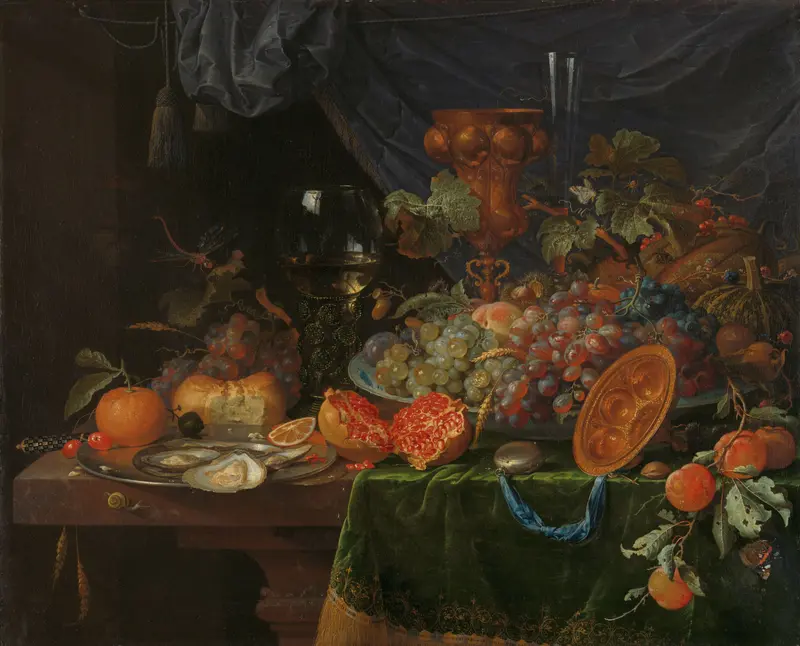
Still Life with Fruit and Oysters
Abraham Mignon
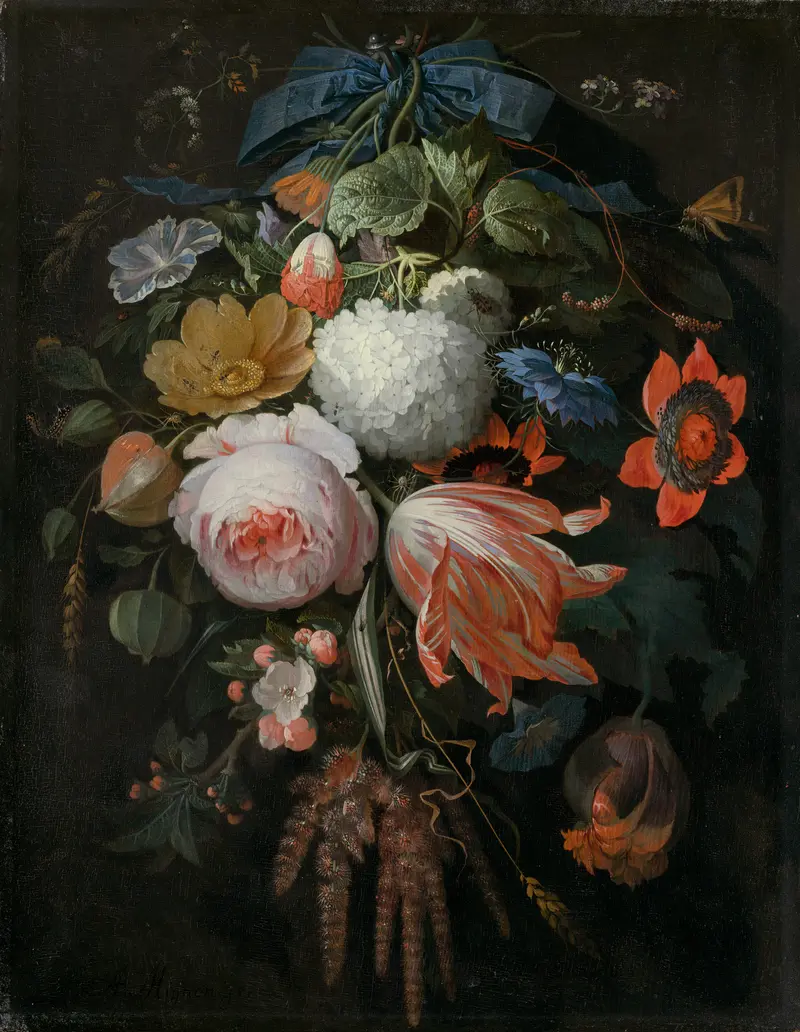
A Hanging Bouquet of Flowers
Abraham Mignon
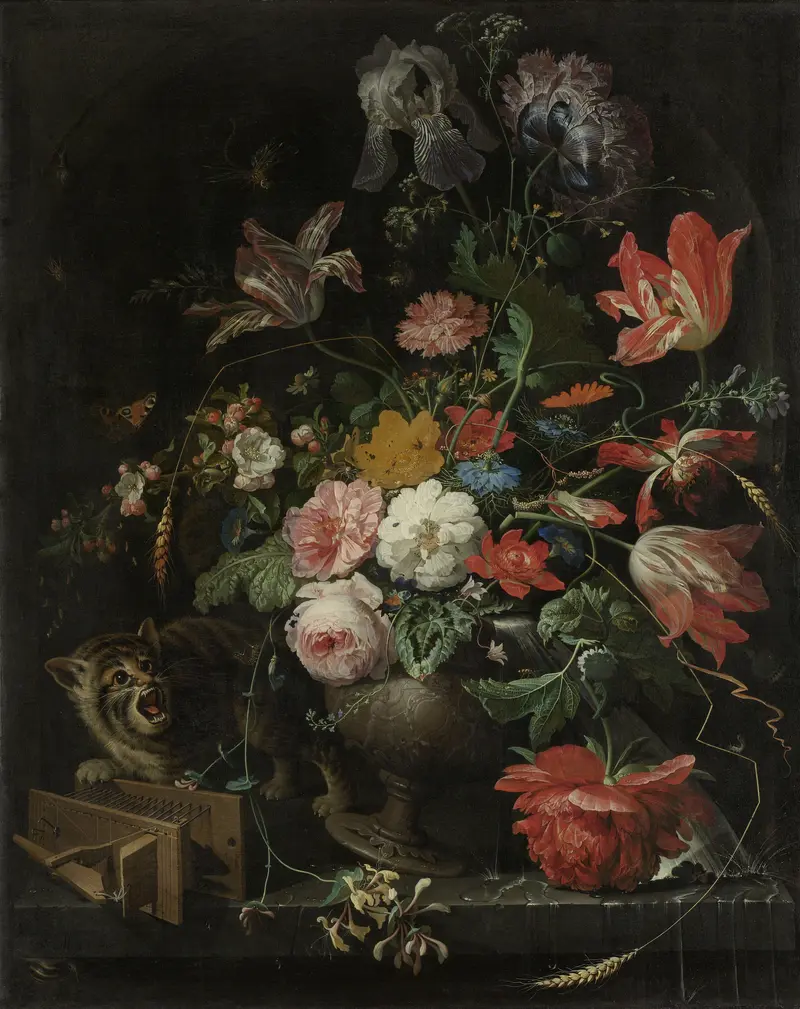
Bouquet with cat and mousetrap
Abraham Mignon
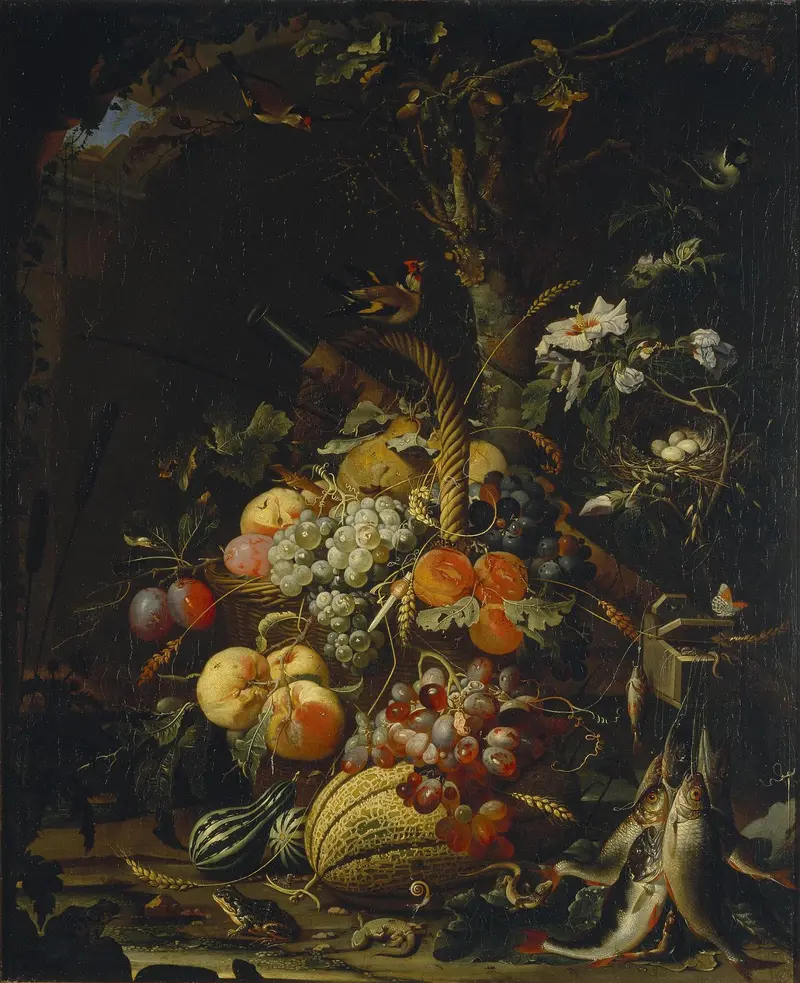
Forest floor still life with fruit, fish and a bird's nest
Abraham Mignon
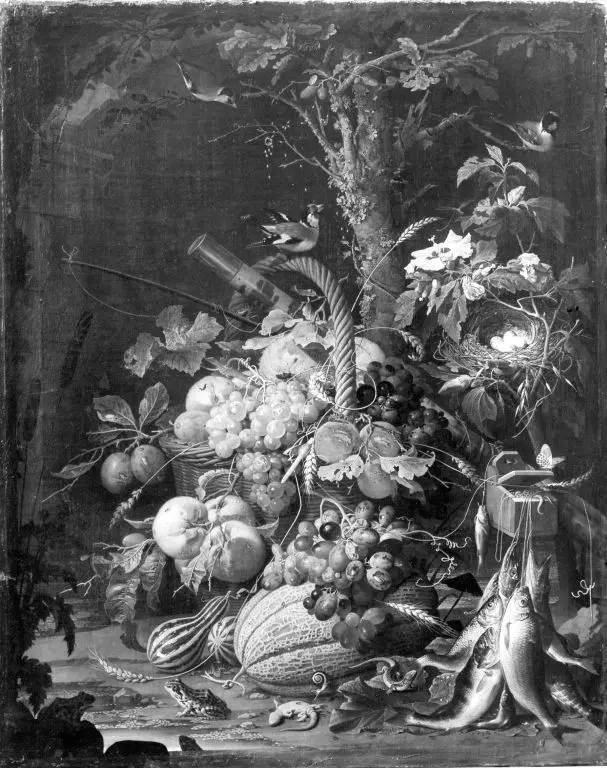
Still life with fruit, fish and a bird's nest
Abraham Mignon
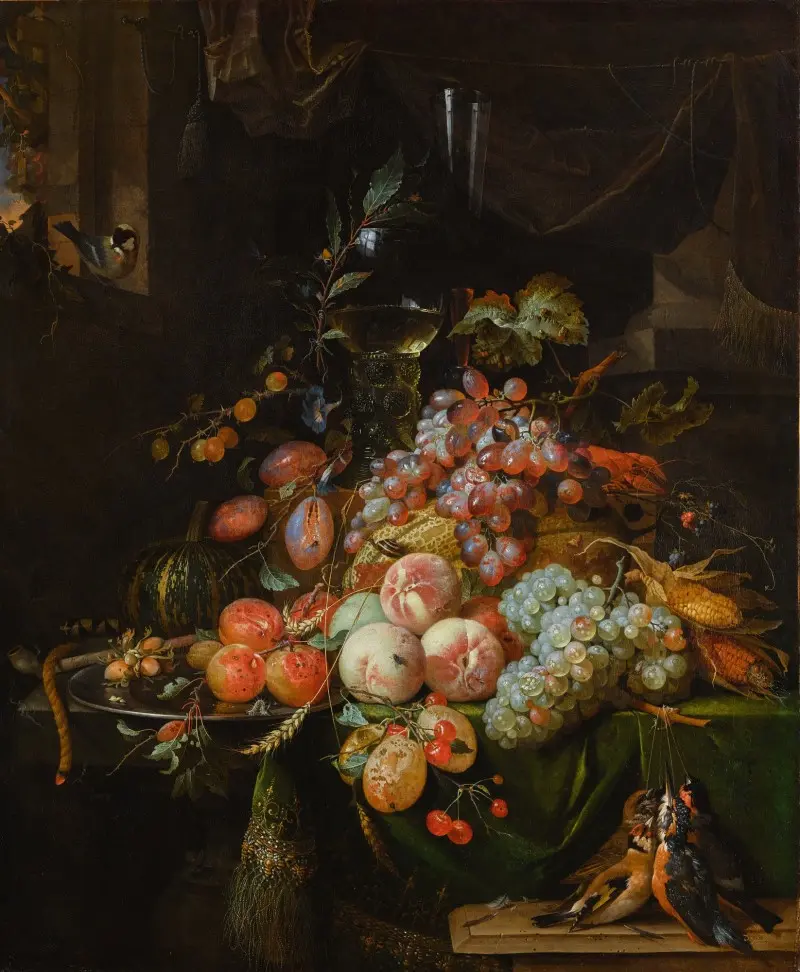
Still Life with Plums, Peaches, Apricots, Grapes and a Melon
Abraham Mignon
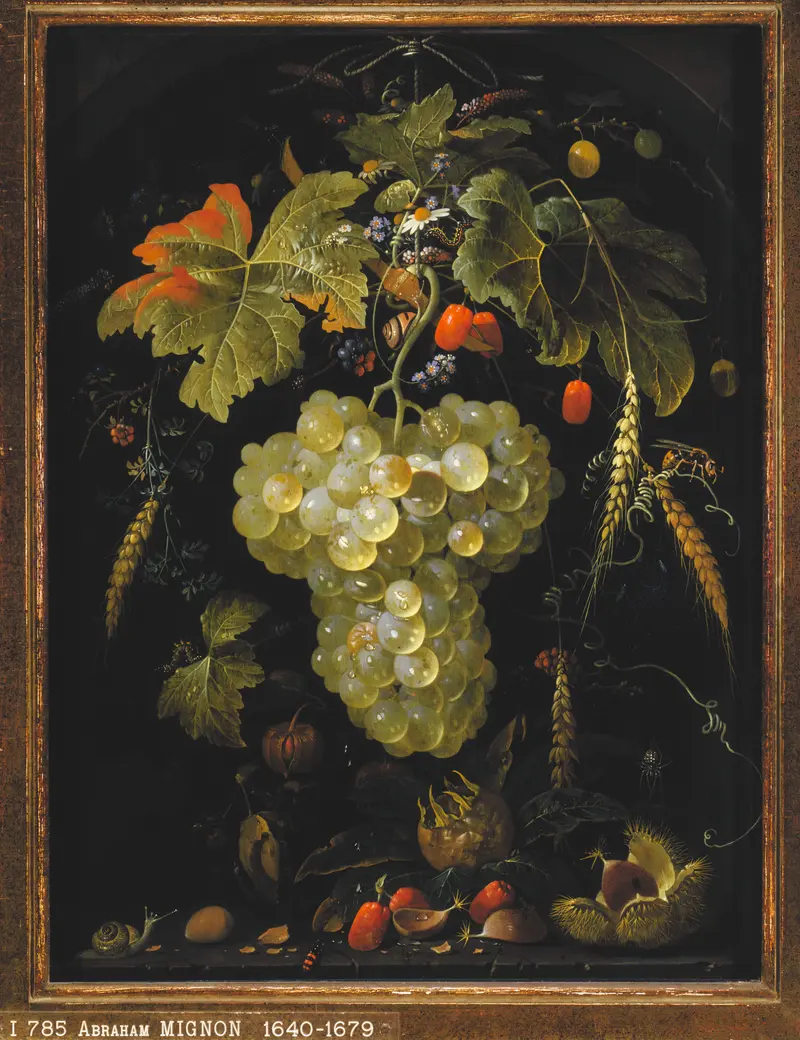
Festoon of fruit suspended from a rope, in a niche
Abraham Mignon
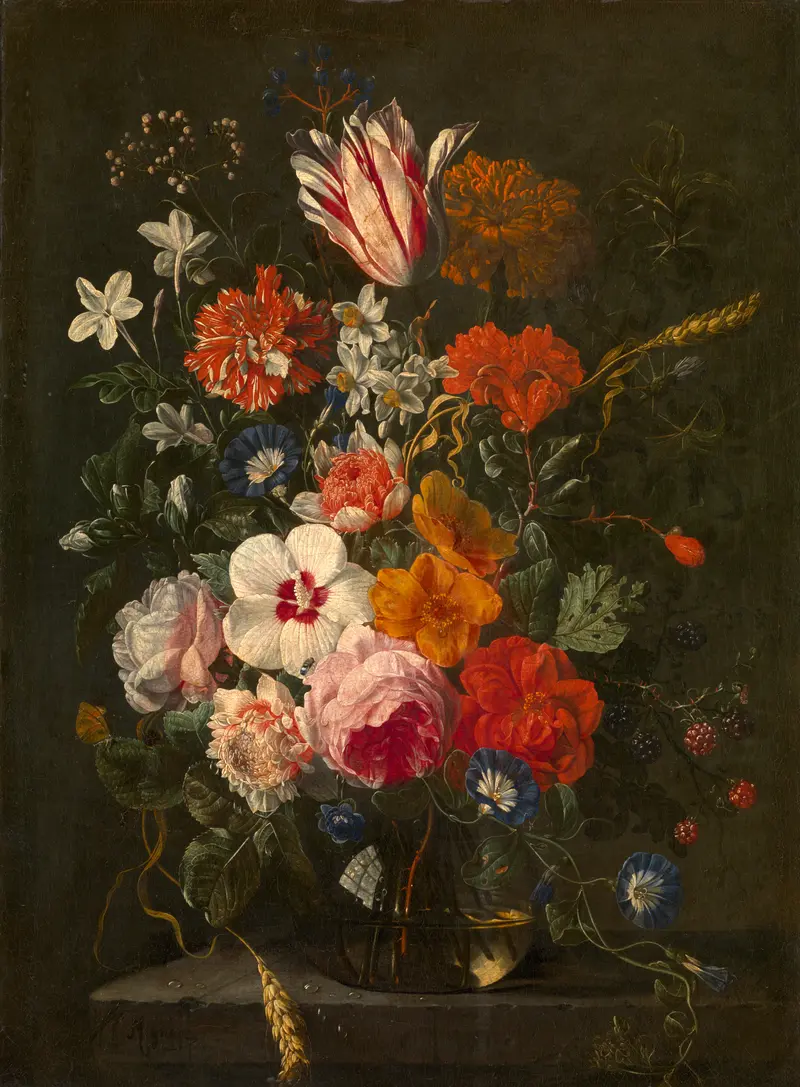
Flowers and a branch of berries in a glass vase on a stone ledge
Abraham Mignon
Flowers and fruit on a plinth
Abraham Mignon





